List Posts

View All
Society

Gov’t Equips CONAC, Audit Chamber With Vehicles To Scale Up Anti-Corruption Fight

By Etienne Mainimo Mengnjo The government of Cameroon through the Ministry of Economy, Planning and Regional Development (MINEPAT) has handed…

Sports

LOYOC Celebrates Impact Of 2025 NAWEWE Sports Jamboree In Bertoua

By Etienne Mainimo Mengnjo Local Youth Corner (LOYOC) has revealed that the 2025 NAWEWE Sports Jamboree that took place in…

Society

Prioritizing Telemedicine In Community Settings Can Enhance Mental Health Intervention – Collins Tanyuy

Collins Tanyuy, a mental health specialist, has said that prioritizing telemedicine in both community and urban settings can significantly enhance…

Sports

Bello Bourdanne Triumphs In Landslide Re-Election As President Of FECAVOLLEY

By Etienne Mainimo Mengnjo Bello Bourdanne has secured a second term as president of the Cameroon Volleyball Federation (FECAVOLLEY), winning…

Vatican Confirms Pope Leo XIV To Visit Yaoundé, Douala & Bamenda In April 2026

By Etienne Mainimo Mengnjo

The Vatican has officially confirmed that Pope Leo XIV will undertake a historic apostolic journey to Africa this April, with Cameroon serving as a central pillar of his four-nation tour. From April 15 to 18, the Holy Father is scheduled to visit Yaoundé, Douala, and the restive city of Bamenda.

Pope Leo XIV

This journey marks the first time the American-born pontiff will set foot on African soil since his election last year, signaling a deep pastoral commitment to a continent where the Catholic faith is seeing its most rapid growth.

For many Cameroonians, the announcement brings a sense of profound spiritual relief. The nation has a long and storied relationship with the papacy, having hosted several historic visits in the past.

The first was the landmark 1985 visit by Saint John Paul II, which cemented the bond between the Vatican and the “Africa in miniature” nation. John Paul II returned in 1995 to launch the fruits of the African Synod, emphasizing the role of the Church in promoting justice and peace.

Most recently, in 2009, Pope Benedict XVI visited Yaoundé to deliver the Instrumentum Laboris for the Second Special Assembly for Africa, focusing on the Church’s role in reconciliation.

However, the arrival of Pope Leo XIV comes at a much more fragile moment in the country’s history. Cameroon continues to navigate a complex and multi-layered crisis that has tested its national unity. In the Far North, the persistent threat of insurgency has displaced thousands, while the North-West and South-West regions remain gripped by a protracted conflict that has entered its tenth year.

More recently, the socio-political climate has been further strained by a deeply contested presidential election in late 2025, which has left the population divided and the security apparatus stretched to its limits.

The expectation among the faithful and the general public is immense. In a country where the Catholic Church often serves as the last bastion of social welfare and moral authority, many see the Pope’s visit not just as a religious ceremony, but as a potential catalyst for peace.

In the English-speaking regions, particularly Bamenda, there is a fervent hope that the Holy Father’s presence will shine a global spotlight on the humanitarian suffering and perhaps nudge warring factions toward a genuine, mediated dialogue.

For the ordinary Cameroonian struggling with rising food costs and insecurity, the Pope represents a voice for the voiceless—a leader who might speak truth to power in a way that local actors cannot.

Yet, the visit is not without its controversies. Some civil society leaders and members of the clergy have expressed concern that the trip could be used by the long-standing administration to gain international legitimacy amidst accusations of human rights abuses.

There are debates regarding whether the country’s infrastructure and security can truly guarantee the safety of such a high-profile guest. Critics argue that a visit at this time might provide a “veneer of stability” over a nation that is actually bleeding.

Despite these tensions, the prevailing sentiment remains one of eager anticipation. The Vatican has been clear that this is a pastoral mission intended to bring “healing and solidarity” to a suffering people.

By choosing to visit both the political capital and areas affected by conflict, observers say Pope Leo XIV is sending a deliberate message: the Church does not shy away from the peripheries or the pain of its flock.

Medical Report Denies Foul Play In Ekane’s Death Amidst Growing Public Distrust

By Etienne Mainimo Mengnjo

The death of a prominent Cameroonian opposition figure Ekane Anicent Georges, who died in military detention in December last year, has been officially attributed to natural causes, according to a recent press release from the Ministry of Defence.

The findings made public in a press release assert a “complete absence of traumatic injuries” and point to “serious underlying medical conditions” as the cause of death for the 74-year-old political leader, who died in military detention in December 1, 2025.

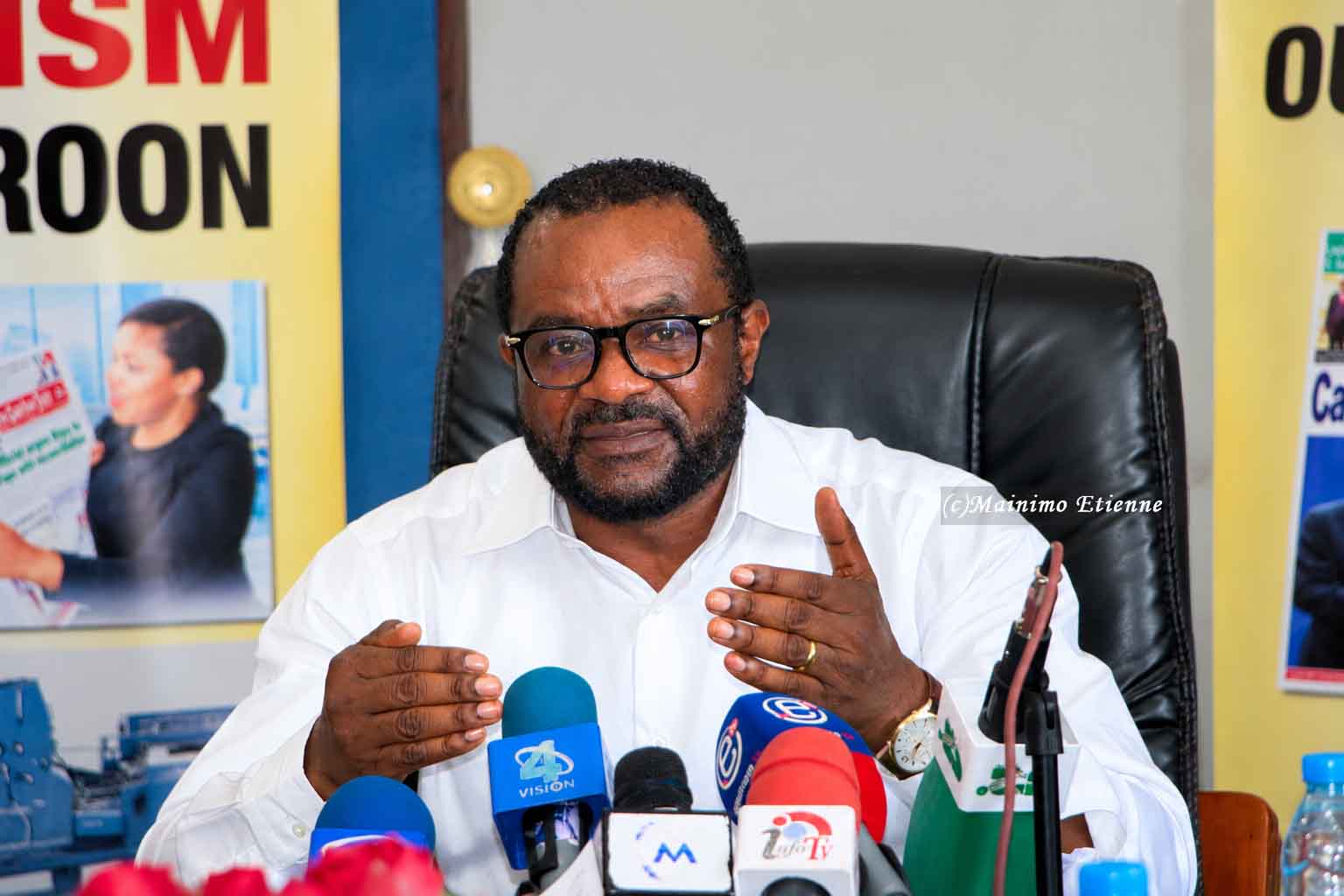
Ekane Anicent Georges speaking at a press conference on July 19, 2025 after his party endorsed Prof. Kamto for the 2025 Elections (Photo Credit: Mainimo Etienne)

Ekane, President of the African Movement for the New Independence and Democracy (MANIDEM) and a pivotal figure in the Union for Change coalition in the last Presidential Elections, died at the Military Center of the National Gendarmarie in Yaounde.

His passing came nearly two months after his arrest in Douala in late October, an event many observers say was part of a broader series of detentions targeting opposition members following the disputed 2025 presidential election.

The Ministry of Defence’s statement, disseminated by its communication division, outlined that a panel of medical experts, including a professor and two doctors, conducted the post-mortem examination.

Their report aimed to definitively address the swirling rumors and public speculation of foul play that have intensified since Ekane’s death. The official declaration emphasizes that Ekane, described as a patient with a “delicate medical history,” succumbed to pre-existing health issues rather than any external violence.

Despite the government’s efforts to close the chapter on the controversy, the official narrative has been met with considerable skepticism. Family members had previously voiced serious concerns about Ekane’s health during his incarceration, including allegations that a vital respiratory device was confiscated – claims consistently refuted by authorities. The protracted delay in releasing the autopsy results, nearly three months after his death, further fueled public distrust and calls for transparency.

For 85 days, Ekane’s body remained under a judicial seal at the Yaounde Central Hospital mortuary. This measure was in place to facilitate comprehensive investigative procedures, including the crucial autopsy.

However, the legal impasse was finally resolved on Feb. 23, when the State Counsel issued an order for the removal of the seal, permitting the transfer of Ekane’s remains to his family. This decision cleared the way for his family to undertake the necessary funeral arrangements, bringing a degree of closure to a prolonged and emotionally charged period.

It is worth noting that the detention and subsequent death of Ekane triggered profound reactions across Cameroon’s political and civil society spectrum. Rene Emmanuel Sadi, the Minister of Communication and Government Spokesperson, offered a remarkably candid personal perspective on the events.

In an interview, Sadi expressed deep personal sorrow, referring to Ekane as a “friend” and suggesting that the decision to arrest and detain the MANIDEM leader might have been made without the full consensus or consultation of all relevant state actors.

He was quoted as saying, “There are some decisions which are taken by people who think that it is… for the interest of the country. Sometimes they do not consult those who can have a different position.” Sadi added, “I think we should regret what happened. If I was there, I would not have allowed that. It’s my own point of view.”

Leading legal figures and human rights advocates have also voiced their strong disapproval. Akere Muna described Ekane’s death as “a wound upon a wound,” criticizing the authorities for failing to release a gravely ill individual.

Human rights lawyer Alice Nkom condemned the death as a “criminal national disgrace,” accusing the state of denying him essential medical support. Christopher Fomunyoh of the National Democratic Institute highlighted the international community’s dismay, particularly given that Ekane was detained for challenging election results widely believed by many Cameroonians to be questionable.

Ekane, a steadfast veteran of the 1990s democratic movement, dedicated his life to championing multiparty politics and challenging authoritarian governance. Colleagues and friends remember his unwavering resolve, even in his final weeks, despite battling a debilitating illness.

According to also aid, an erroneous report of his death three weeks before his actual demise had already prompted urgent pleas for his release, pleas that ultimately went unheeded by the state.

The Ministry of Defence maintains that a formal investigation into the circumstances surrounding Ekane’s death is ongoing. However, for his devoted supporters, the political opposition, and civil society organizations, his death transcends a mere personal tragedy; it has become a powerful symbol and a rallying cry for enhanced accountability and transparency within Cameroon’s political framework.

The poignant sentiment, “They extinguished the man, but his fight will outlive all of us,” widely circulated across social media platforms, encapsulates the collective grief and the persistent demand for justice among those who mourn his passing.

As Cameroon navigates this period of heightened political sensitivity and public scrutiny, the trajectory forward – whether it leads to genuine inquiry, robust accountability, meaningful reform, or a continuation of official silence – remains uncertain. The enduring legacy of Ekane Anicent Georges, even in death, continues to resonate as a potent emblem in the nation’s ongoing struggle for democratic principles and justice.

FECAVOLLEY President, Bello Bourdanne Honoured As 2025 Best Sporting Manager

By Etienne Mainimo Mengnjo

The President of the Cameroon Volleyball Federation (FECAVOLLEY) and President of the CAVB Zone 4, Bello Bourdanne, has been recognized as the 2025 Best Sporting Manager.

Bello Bourdanne, President of the Cameroon Volleyball Federation (FECAVOLLEY)   (Picture Credit: Mainimo Etienne)

Bello Bourdanne received this honor on February 24 from the International Association of Press Publishers (AIEP), an organization representing more than 500 press editors worldwide. The award acknowledges his significant efforts in revolutionizing Cameroonian volleyball.

In presenting the recognition, Cyrille Kuete, representing AIEP, praised the remarkable journey of this sporting leader, whose commitment, discipline, sense of responsibility, and strength command admiration. He emphasized that the association is honoring not only administrative performance but also a structured vision and exemplary sports governance demonstrated by Bourdanne.

Cyrille Kuete handing recognition to Bello Bourdanne, Cameroon Volleyball Federation (FECAVOLLEY)    (Picture Credit: Mainimo Etienne)

Highlighting key achievements under Bourdanne’s leadership since he assumed the presidency of FECAVOLLEY, the AIEP representative noted that his recent re-election as head of the federation reflects the renewed confidence of stakeholders in his disciplined approach and confirms the relevance of his leadership.

“The International Association of Press Publishers decided to select the president of African Volleyball and President Bello Bourdanne because they realized that he is a man of republican values, who respects hierarchy and has worked to restore the image of Cameroonian volleyball in collaboration with governmental institutions,” Cyrille Kuete stated.

Recognition handed to FECAVOLLEY President, Bello Bourdanne (Picture Credit: Mainimo Etienne)

He added: “We see these efforts: they succeed in federating and uniting everyone to think unanimously about the development of Cameroonian volleyball. We see compatriots investing in the image of Cameroon.”

Upon receiving the award, Bourdanne expressed deep gratitude to AIEP, noting that the recognition reinforces a deep conviction that has guided his actions since his first day in leadership.

“Receiving this distinction from an organization representing the international press is particularly significant because it concerns not only results but also a method—that of dialogue, responsibility, and respect for ethical principles. This reward is not an end; it is an invitation to do more, to aim higher, and to continue building an ambitious, credible, and inspiring model of African sports governance,” he said.

Cyrille Kuete, representative of AIEP  (Picture Credit: Mainimo Etienne)

He further emphasized: “A manager is not a position; it is a responsibility—a responsibility toward athletes, managers, partners, institutions, but above all toward the youth who see in sport a hope, a path, and sometimes a destiny.”

Dedicating the award to the entire federation and its stakeholders, Bourdanne highlighted that under his leadership, FECAVOLLEY has chosen rigor, transparency, and a long-term vision. “We have chosen to build, unite, and innovate, convinced that long-term sporting performance first rests on the quality of governance.”

This marks the second distinction for Bourdanne in two years.

FECAVOLLEY and AIEP officials posed for a family picture (Picture Credit: Mainimo Etienne)

Rev. Father Peter Mbiydzenyuy Honored With ”Sàh Nchelav Nwerong” Nso Title

By Etienne Mainimo Mengnjo

Rev. Father Peter Mbiydzenyuy has been honored with the gift of “Nchelav Nwerong Nso” title. He received this distinction on February 21st in Yaoundé during a ceremony attended by family members, friends, and other Priests of his congregation.

Rev. Father Peter Mbiydzenyuy wearing his new gift offered by “Nchelav yee Yaoundé,” (Photo Credit: Mainimo Etienne)

While presenting the gifts, Nchelav Joseph Tatah, chairman and spokesperson for “Nchelav yee Yaoundé,” highlighted Father Mbiydzenyuy’s reputation as a man of peace and noted the unique contributions of his family.

“Rev. Father Peter Mbiydzenyuy embodies peace. We felt it fitting for him to wear this cap and cup, as a reminder of how his father lived and the environment in which he was raised,” Tatah remarked.

Accompanied by fellow clergy members, Rev. Father Mbiydzenyuy expressed his gratitude. He emphasized that this recognition is a significant acknowledgment of his service to the community and his faith.

“Nchelav yee Yaoundé,” speaking during the ceremony  (Photo Credit: Mainimo Etienne)

“I deeply appreciate this honor, as it signifies that the ” Ngwerong community” recognizes the work I am doing for God and for the Nso people. It’s a source of great pride to be recognized by my people,” he shared.

He profoundly connected the gift to the concept of inculturation, differentiating it from syncretism. “Inculturation involves integrating the Word of God into our culture. All of us are traditional people and Christians. Therefore, there should be no distinction. The Word of God is intended to illuminate our cultural practices,” he explained.

Rev. Father Peter Mbiydzenyuy iin his new gift  (Photo Credit: Mainimo Etienne)

Rev. Father Mbiydzenyuy also expressed pride in his identity. “I am proud to be a Nso person and a Christian. This signifies that the Nso culture embraces the impact of Christianity and the missionary work we undertake,” he stated.

In his perspective, the essence of his mission revolves around themes of peace, love, unity, and justice. “When we observe our reality, it is evident that our efforts are directed toward promoting these values,” he noted.

“Nchelav yee Yaoundé,” and Rev. Father Peter Mbiydzenyuy posed for a family picture with notables (Photo Credit: Mainimo Etienne)

Having served in various regions, including the Northwest and West, Father Mbiydzenyuy has also spent time in Rome before being assigned to Equatorial Guinea. He is the grandson of the late Mfoome Bamgha from Nkim-Rong Kimbo in Bui Division of the North West Region of Cameroon.

This recent accolade serves not only as a testament to Father Mbiydzenyuy’s dedication and service but also as a reminder of the profound connection between faith and culture in his community. Through his work, he continues to inspire both spiritual and cultural harmony among the Nso people.

Rev. Father Peter Mbiydzenyuy (Middle) posed for a family picture with notables (Photo Credit: Mainimo Etienne)

U.S. Embassy, Cameroon American Football Federation Kick Off Season In Yaounde

By Etienne Mainimo Mengnjo

The Cameroon American Football Federation officially launched its new season Saturday February 21 with a “Flag Football Jamboree,” an event designed to expand the sport’s footprint through a display of national excellence and diplomatic camaraderie.

Both teams facing each other (Photo Credit: Mainimo Etienne)

The season-opening ceremony at Ahmadou Ahidjo Stadium featured a marquee matchup between the Cameroon American Football Federation (CCAFF) and a team from the U.S. Embassy Yaounde Mission.

The contest served as a high-energy introduction to the “American Football ” Culture for local spectators, many of whom were experiencing American football Sports for the first time.

The match was contested in two 20-minute halves with an accelerated clock, a format that prioritized situational intensity over traditional endurance. The fast-paced structure forced both rosters to abandon conservative strategies in favor of aggressive, no-huddle offenses.

Both teams posed for a family picture (Mainimo Etienne)

Defensive play dominated the early going. The U.S. Embassy squad stifled two deep-threat attempts by the CCAFF but finally broke in the closing two minutes when the U.S. team capitalized on a defensive lapse. The second half saw the CCAFF mount a spirited comeback attempt as the crowd cheered, though the U.S. Embassy team remained steadfast.

Officials posed for a family picture (Photo Credit: Mainimo Etienne)

The U.S. roster featured notable figures, including John G. Robinson, (Chargé d’Affaires ad interim at the U.S. Embassy in Yaounde), and British High Commissioner to Cameroon, Matt Woods, Joseph Love (Regional Security Officer, RSO), Harisson (ARSO), Public Affairs Director, Gaina Davila and the youngest 11-year-old American Footballer JJ Love among others.

Both teams facing each other (Photo Credit: Mainimo Etienne)

Speaking after the game, John G. Robinson praised the sportsmanship on display, noting the event’s timing shortly after Super Bowl LX in the United States. The US interim Ambassador to Cameroon John G Robinson, emphasized that the game also served as an early celebration of the 250th anniversary of United States Independence Day.

“We are so glad to see so many students here today who are interested in American Football,” Robinson said. “. We’re counting on you because we don’t have a lot of people that we can play against. We are looking forward to having many, many football matches with Cameroonian Clubs during this year.”

Joseph Love, a key participant who helped and organized the event, noted that both teams spent a month preparing for the clash. Joseph Love characterized the game as a blend of “blood, sweat, and tears” with a foundation of friendship and Camederie in international Relationship.

John G. Robinson signing symbolic football after the match (Photo Credit: Mainimo Etienne)

“I endured the football grit and the determination that went through the game,” Love said. “In the end, it doesn’t matter who won or lost. We competed and we celebrated the game as a family.” He added that playing at the historic Ahmadou Ahidjo Stadium is an honor, especially as he was able to share the field with his 11-year-old son JJ Love.

CCAFF President Awasum Junior hailed the match stating that it was a dual celebration of the federation’s growth and the U.S. semi quincentennial.  He used the opportunity to outlined an ambitious program to bring flag football or American football to every region of Cameroon.

Both teams facing each other (Photo Credit: Mainimo Etienne)

“We want to embody the ability for youth to use sports and education as a tool for development and growth,” Awasum Junior said.  “It’s an ambitious program for us to grow our season and continue to develop the sport through competitions and events.”

The students from the various who witnessed the game expressed their appreciation and a desire to learn more about the American football, even though some of them were initially unsure about what was happening. They stated that they wanted to discover more and become involved in the sport.

The Flag Football Showdown attracted 14 high school students from various Yaounde colleges who participated in clinics to learn the fundamentals. Foundation Révélation Sainte Thérèse (FRST) was among the schools alongside Ayembe Investment Credit and Cooperative Society (AICCO).

Cross section of students during the kick off ceremony (Photo Credit: Mainimo Etienne)


The federation confirmed it will continue to emphasize the development of both tackle and flag football throughout the season.


Nso’Ba’Ti Yaoundé President Urges VDAs To Actively Integrate For Enhanced Collective Efforts

By Etienne Mainimo Mengnjo

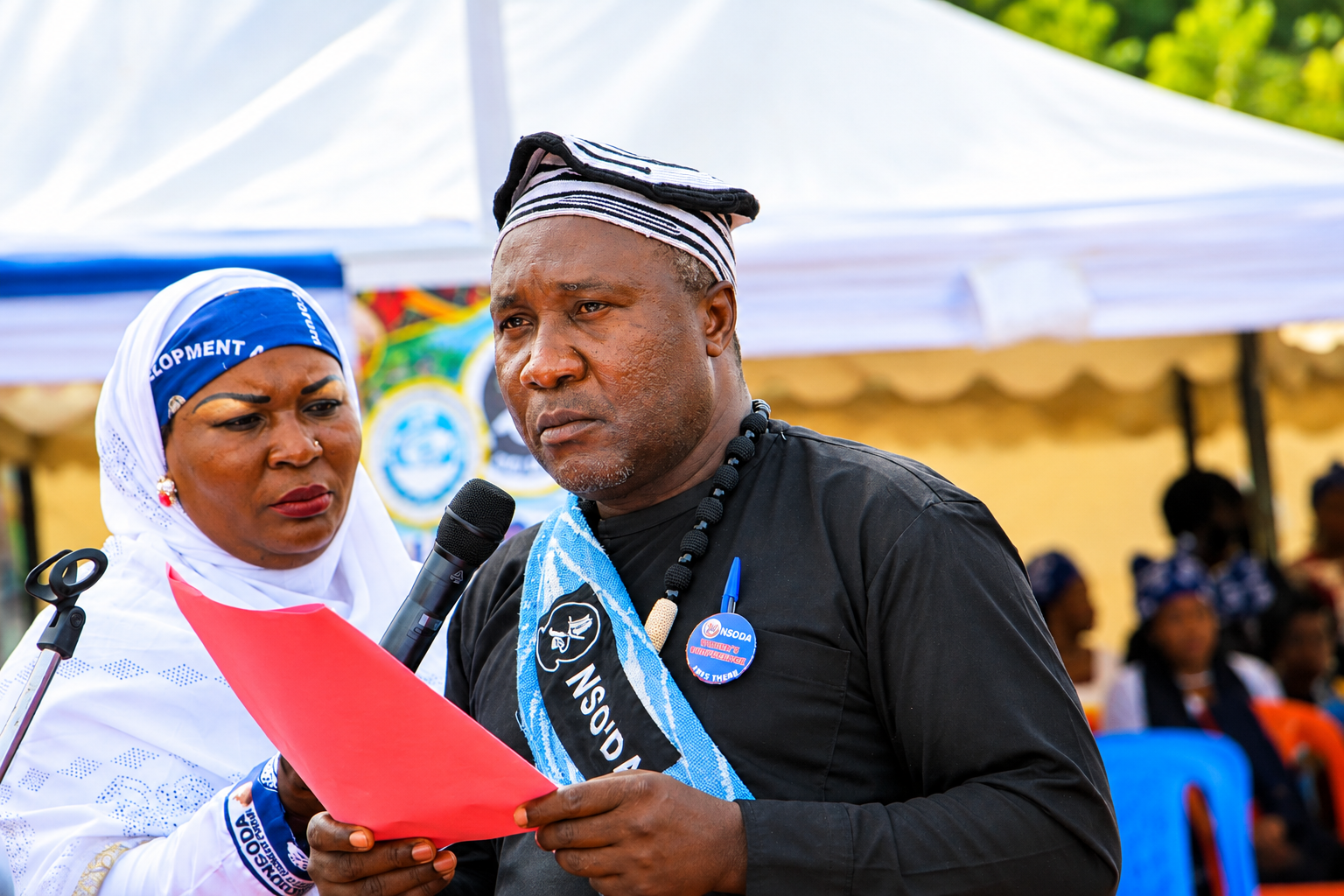
The President General of Nso’Ba’Ti Yaounde, Shey Romanus Maisah, has issued a rallying cry to all Village Development Associations (VDAs) within the city to actively integrate their efforts for the sake of collective strength.

Cross section of members during the general meeting (Photo Credit: Mainimo Etienne)

Speaking on February 22 at Ngaynso Yaounde during the first General Meeting of the year 2026, Shey Maisah addressed a diverse gathering of dignitaries and members representing various Nso’Ba’Ti groups from across the capital.

During the session, Shey Maisah emphasized that it is time for all VDAs to come on board and move forward in unity. He noted that since these associations fall under the umbrella of both Nso’Ba’Ti and NSODA, and considering that the Fons are already registered members, it has become a necessity for these local groups to formalize their involvement.

“It is time for VDAs to come on board so that we can move ahead together. They are under Nso’Ba’Ti as well as NSODA and they can affort to stay behind while our Fons are registered in Nso’Ba’Ti. I think it is a matter of must. They have to come on board,” Shey Maisah said.

Shey Romanus Maisah, President of Nso’ba’ti Yaounde speeking during the general meeting (Photo Credit: Mainimo Etienne)

To facilitate this integration, the President General directed all Quarter Heads, known as “aTaa Nte,” to ensure that the names of every VDA President within their respective jurisdictions are submitted for documentation by the end of March 2026.

Infrastructural progress remains a top priority for the 2026 agenda, with Shey Maisah highlighting the urgent need to complete the uncompleted Ngaynso Yaounde building before the year concludes.

Looking toward the year 2026, he also announced that elections for the Nso’Ba’Ti Youth Wing are scheduled for April, a move intended to expand the broader vision of NSODA.

Cross section of members during the general meeting (Photo Credit: Mainimo Etienne)

Furthermore, the President General expressed his and the executive’s shared ambition to see every Nso’Ba’Ti group in Yaounde secure its own dedicated hall, noting with satisfaction that progress toward this goal is already well underway.

The general meeting served as a vital forum for the Nso community to interact directly with their leadership. Beyond the President General’s keynote address, the event featured remarks from the President of the Council of Elders, a detailed financial report, and the presentation of the strategic roadmap for the Bongazem Nso’Ba’Ti women’s wing.

Cross section of officials during General Meeting (Photo Credit: Mainimo Etienne)

Members utilized the opportunity to pose questions and offer constructive proposals aimed at improving the association’s internal operations and community impact.

Ten-Year Maximum Sentences For Ngarbuh Massacre Spark Outrage Over Leniency

By Etienne Mainimo Mengnjo

The Yaoundé Military Court has finally broken its silence on the Ngarbuh Massacre, but the echoes of its gavel have triggered a seismic wave of public fury rather than a sense of closure.

Children that were killed during the incident in Ngarbu

On Thursday, February 19, 2026, the court handed down sentences for the 2020 slaughter of at least 22 civilians—including children and a pregnant woman—in Ngarbuh located in Ntumbaw, Ndu Subdivision, Donga Mantung Division of Cameroon’s North-West Region.

Yet, far from being hailed as a landmark for justice, the verdict has been met with a total outcry, as citizens and legal experts alike brand the punishment a “slap on the wrist” that mocks the memory of the dead.

The convicted individuals—Baba Guida, Sanding Sanding Cyrille, Haranga Gilbert, and Tata Nfor Maxwell Alias “Bullet”—were found guilty of chilling charges, including joint murder and violence against a pregnant woman.

Despite the gravity of these crimes, the sentences appeared to many as a betrayal of the legal system. Baba Guida was handed an eight year term, while Sanding Sanding Cyrille received five years. Ten-year sentences were given to Haranga and Maxwell were slammed on them for their roles.

Across the streets of Yaoundé and the grieving hills of Donga Mantung, the atmosphere is one of bitter disbelief. For many, the math of the military tribunal simply does not add up. Under Cameroonian law, premeditated murder typically carries a life sentence or the death penalty.

To see men convicted of a mass killing receive terms shorter than those often given to petty thieves or political protesters has ignited accusations of a state-sponsored cover-up according to city dwellers.

Lawyers representing the victims’ families have been vocal in their condemnation, arguing that these “insignificant” penalties fail to reflect the depravity of the acts committed on February 14, 2020.

One woman along the streets of Yaounde expressed profound doubt, stating she was unsure whether these four were the true perpetrators responsible for the brutal massacre of small children, and labeling the verdict overly soft.

“The skepticism runs deeper than the length of the prison terms,” a woman along the streets of Yaounde said. “There is a prevailing sense that the four men are sacrificial lambs, strategically offered to satisfy international donors and human rights organizations while the high-ranking architects of the raid remain untouched.”

Another resident accused the government of dragging its feet on the case for years, suggesting the convicted men might be serving as mere scapegoats while those responsible for the gruesome act as sitting in well-furnished offices or roaming the streets.

Cameroon Opens Bidding For Nine Oil & Gas Blocks In Major Licensing Round

By Etienne Mainimo Mengnjo

Cameroon has launched a licensing round offering nine exploration and production blocks in two proven hydrocarbon basins, aiming to attract fresh investment as mature fields experience natural decline.

The tender, managed by the National Hydrocarbons Corporation (SNH), opened August 1, 2025, and remains open for proposals until March 30, 2026. Final awards are expected in late April. The round includes three blocks in the Rio del Rey basin: Ndian River, Bolongo Exploration and Bakassi. Six blocks are in the Douala/Kribi-Campo basin: Etinde Exploration, Bomono, Nkombe-Nsepe, Tilapia, Ntem and Elombo.

These blocks lie near existing producing fields, feature prior drilling, 2D and 3D seismic coverage, and identified leads and undrilled prospects. Such attributes provide investors with clear insights into exploration and development potential, reducing technical risks and entry barriers in these established provinces.

According to African Energy Chamber the licensing framework offers flexibility through multiple contractual options, including concession contracts, production sharing contracts and risk service contracts. Exploration periods vary by block. Bolongo Exploration, Bomono, Etinde Exploration, Tilapia, Ntem and Elombo carry an initial three-year term, renewable twice for two years each. Bakassi, Nkombe-Nsepe and Ndian River have five-year initial terms, also renewable.

Bidders must submit detailed proposals encompassing technical evaluations, minimum work programs, budgets, environmental and social commitments, and local content plans. Minimum work programs typically include drilling exploration wells, seismic acquisition and geoscience studies. Fiscal terms, such as profit-oil or profit-gas shares, royalties and cost recovery provisions, remain negotiable to ensure competitive conditions.

This approach underscores SNH’s efforts to rebuild investor confidence through greater transparency. The agency has published comprehensive data packages and bid criteria, while data rooms are accessible in Yaoundé and internationally.

“What makes Cameroon’s licensing round so compelling is the quality of the technical data available,” NJ Ayuk, executive chairman of the African Energy Chamber, said. “Investors can clearly see the reservoir potential, plan their drilling strategies and structure financing with confidence. Beyond the data, Cameroon has created a transparent and competitive framework, with clear contract terms and open negotiations, giving companies the certainty they need to move capital and execute projects effectively.”

The Rio del Rey and Douala/Kribi-Campo basins represent proven hydrocarbon provinces supported by existing infrastructure. Proximity to production facilities lowers costs and accelerates potential monetization. Comprehensive data enables companies to develop robust economic models and financing plans before the March deadline.

The round appeals to both independent operators and major international companies. Blocks with confirmed leads offer opportunities for material discoveries, while negotiable terms and incentives in exceptional circumstances provide advantages over more inflexible licensing regimes elsewhere.

“Both onshore and offshore, Cameroon possesses immense and largely untapped energy potential, underpinned by proven oil reserves and significant gas resources,” Ayuk continued. “These gas assets present a major opportunity not only to support domestic development and diversify the country’s energy mix, but also to position Cameroon as a competitive exporter to global markets. The current licensing round reflects this dual opportunity: unique onshore projects tailored to serve domestic demand are well suited to independents and African operators, while the LNG potential of large offshore gas discoveries should attract major international companies.”

The timing aligns with major African energy investment platforms. The Invest in African Energy Forum is scheduled for April 22-23 in Paris, convening investors, development finance institutions and technical partners to evaluate opportunities and form partnerships. The event has a history of leading to signed commitments and early-stage engagement.

Discussions from Paris can advance at African Energy Week, set for Oct. 12-16 in Cape Town. That gathering facilitates high-level interactions across the energy value chain to secure financing, partnerships and project execution.

With data consultations ongoing and the bid deadline approaching, the round stands as a timely opportunity in Central Africa. Leveraging the Paris and Cape Town events can help convert technical prospects into operational successes.

“Realizing the full value of Cameroon’s oil and gas resources will require strategic planning for both discovered and yet-to-find reserves, alongside a clear vision for their role in domestic and international energy markets,” Ayuk said. “We are confident this licensing round provides that pathway and strongly encourage investors to take a close look at Cameroon.”

Paradigm Initiative Condemns, Urges Immediate Restoration Of Social Media Services In Gabon

By Etienne Mainimo Mengnjo

Paradigm Initiative (PIN) a prominent digital rights watchdog has condemned and called for the immediate restoration of social media services in Gabon, following a state-ordered suspension that has stifled public discourse and cost the national economy millions of dollars.

The pan-African social enterprise, issued a formal condemnation Friday, February 20 against the Haute Autorité de la Communication (HAAC) for its Feb. 17 directive to restrict access to major platforms. The ongoing blackout affects Meta-owned services including Facebook, WhatsApp, and Instagram, as well as TikTok and YouTube.

While Gabonese authorities claimed the measures were necessary to curb hateful or defamatory content threatening national stability, PIN noted that the government has failed to provide specific evidence of violations or a legal timeline for restoring access.

Technical data from the internet monitor NetBlocks and independent observers confirmed the disruptions are widespread, forcing many citizens to use virtual private networks to bypass the restrictions.

The timing of the suspension coincides with a period of heightened social tension, including anti-government protests and a national labor strike. Critics argue the move is a deliberate attempt to silence dissent and disrupt the coordination of civic action.

The economic toll of the blackout is also mounting. Using the NetBlocks cost-of-shutdown tool, the PIN estimated the two-day impact at nearly $3 million. This figure represents a significant blow to the country’s informal sector, where entrepreneurs, freelancers, and small business owners rely on social media for digital payments, customer engagement, and daily commerce.

Given that Article 9 of Gabon’s Constitution guarantees freedom of expression and information, Digital rights advocates pointed out that Gabon is a state party to the International Covenant on Civil and Political Rights (Article 19) and the African Charter on Human and Peoples’ Rights (Article 9).

Both instruments require that any restriction on expression must be legal, necessary, and proportionate. The United Nations has previously declared that blanket internet shutdowns are inherently disproportionate and violate international human rights law.

Similarly, PIN states that the African Commission on Human and Peoples’ Rights Principle 38(2) of the Declaration of Principles on Freedom of Expression and Access to Information in Africa, clearly guides that States shall not engage in or condone any disruption of access to the internet and other digital technologies for segments of the public or an entire population.

“As such, Gabon’s actions violate fundamental rights and freedoms as obligations under these instruments require the government to protect, not curtail, digital civic space,” Paradigm Initiative states.

PIN also challenged internet service providers operating within the country to uphold their responsibilities under the United Nations Guiding Principles on Business and Human Rights. The group urged these companies to remain transparent regarding government orders and to avoid complicity in rights violations.

The watchdog demanded that the Haute Autorité de la Communication publish the specific legal basis for the order and called on service providers to issue transparency notices to their users. The group maintains that the recurring pattern of digital disruptions in Gabon undermines the country’s democratic governance and constitutional guarantees of freedom of information.

Registration Opens For 2026 Digital Rights & Inclusion Forum In Côte d’Ivoire

By Etienne Mainimo Mengnjo

Digital Rights and Inclusion Forum (DRIF26) has been scheduled to take place from April 14 to 16, 2026, at the Radisson Blu Abidjan Airport Hotel. Registration has began and this year marks a significant milestone as the forum will be held in a Francophone nation for the first time, attracting hundreds of delegates from around the globe.

Themed “Building Inclusive and Resilient Digital Futures,” DRIF26 aims to address the pressing challenges posed by rapid digital expansion, uneven internet access, escalating surveillance, diminishing civic spaces, and funding inequalities, particularly in the Global South.

According to the organisers, this theme builds on the previous year’s focus on “Promoting Digital Ubuntu in Approaches to Technology,” which emphasized the need for collaboration and inclusivity in advancing digital rights.

Hosted by the Paradigm Initiative in partnership with the Coalition Ivoirienne des Défenseurs des Droits Humains (CIDDH), this year’s forum is backed by prominent sponsors, including the Ford Foundation, International Development Research Centre, Human Rights Foundation, and several others.

Since its inception in 2013, the forum has evolved from its earlier incarnation as the Internet Freedom Forum (IFF), altering its name to DRIF in 2019 to include the dimensions of digital inclusion.

Over the years, attendance has grown remarkably, with almost 3,000 delegates representing over 70 countries. The inaugural event convened just 53 attendees from 30 nations, highlighting the forum’s exponential growth and its relevance in the global conversation on digital rights.

This year, Paradigm Initiative has received an impressive 449 session proposals, a notable increase from last year’s 346. Proposed sessions will encompass a variety of formats, including workshops, tech demonstrations, product launches, and panel discussions. Session hosts can expect feedback regarding their proposals by February 28, 2026.

The forum will feature a diverse range of participants, including representatives from civil society, NGOs, academia, and the private sector. It serves as a vital platform for discussing sensitive global issues related to digital rights and inclusion, facilitating dialogue among stakeholders from various sectors including technology, funding, governance, and media.

As digital landscapes continue to evolve, the DRIF26 aims to bolster collective efforts towards creating more equitable and inclusive digital environments, transcending geographical barriers and fostering collaboration among all stakeholders involved.