



List Posts

View All
Society

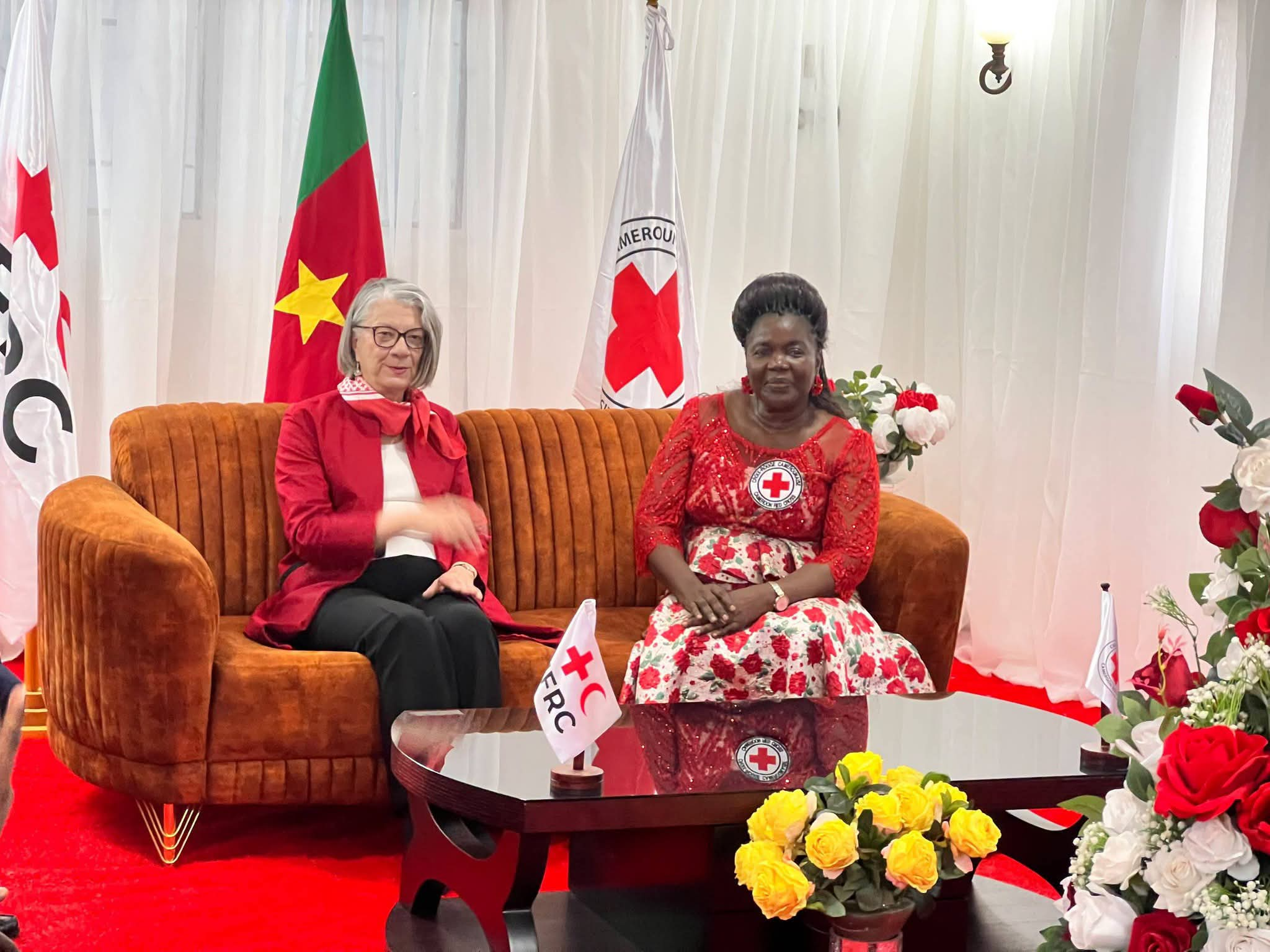
At Working Visit: IFRC, Cameroon Red Cross Strengthen Ties To Boost Crisis Relief

By Etienne Mainimo Mengnjo The International Federation of Red Cross and Red Crescent Societies (IFRC) and the Cameroon Red Cross…
Society

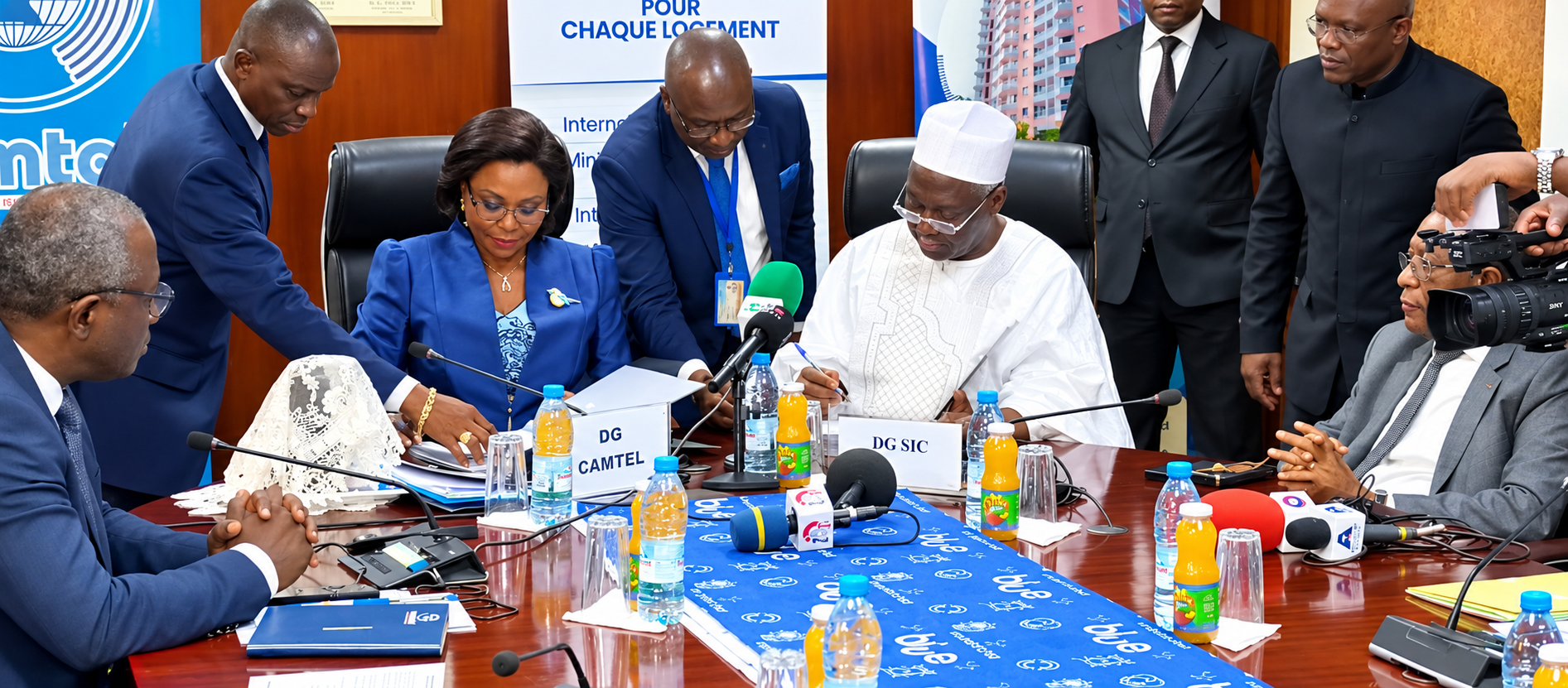
CAMTEL, SIC Partner To Bring Smart Connectivity To Residential Homes In Cameroon

By Etienne Mainimo Mengnjo Cameroon Telecommunications (CAMTEL), and Cameroon Real Estates Cooperation, better known in French as Société Immobilière du…

General

Sahndra Fon Dufe Makes History As First Cameroonian At Authentica Series Lab

 By Doc Moore Cameroonian filmmaker, writer, actress and cultural entrepreneur Sahndra Fon Dufe has made history as the first Cameroonian…
EducationTech

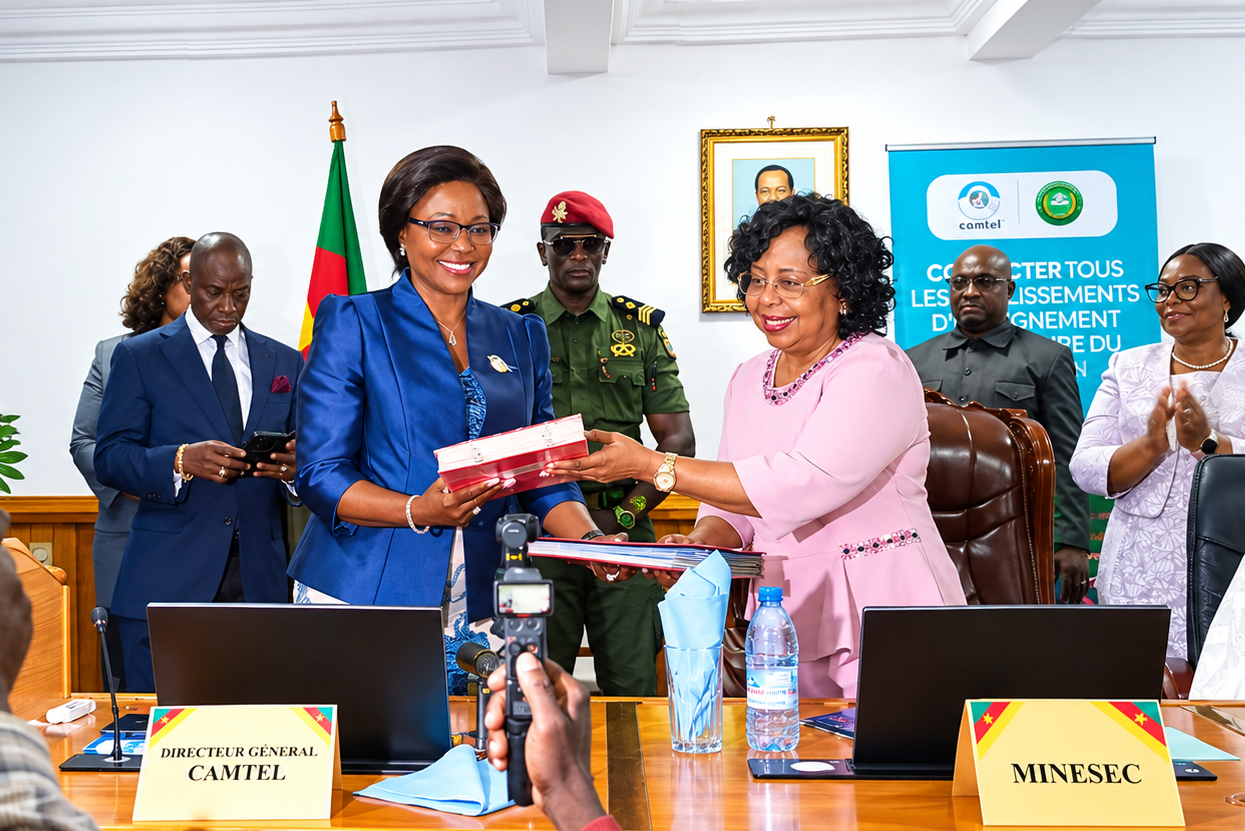
CAMTEL, MINESEC Seal Landmark Agreement To Mordernise & Digitally Transform Secondary Schools

By Etienne Mainimo Mengnjo Cameroon Telecommunications (CAMTEL) and the Ministry of Secondary Education (MINESEC) have signed a framework agreement aimed…
Free Specialist Care Comes Home: Indian Doctors Bring Kidney & Digestive Health Clinics to Cameroon

By Etienne Mainimo Mengnjo

Cameroonians are getting access to free consultations with Indian specialists in digestive and kidney diseases, as the Cameroon Red Cross Society and India’s Apollo Hospitals Navi Mumbai hold a second round of joint medical clinics.

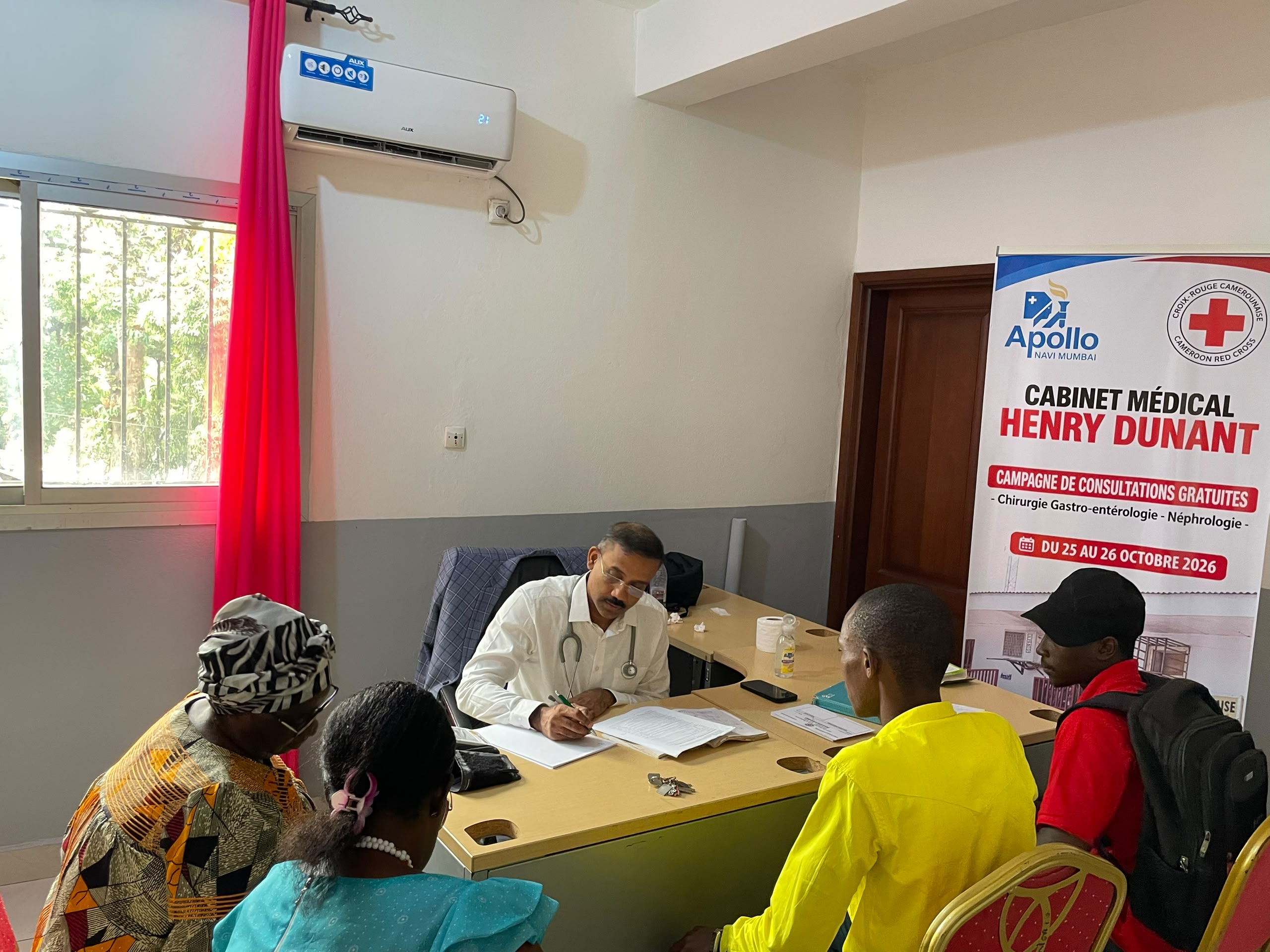
Indian specialists engage with Cameroon Red Cross officials on the first day of the campaign in Yaoundé (Photo: CRC)

The consultations took place in Yaoundé on 25 and 26 October, followed by Douala from 27 to 28 October. They are led by Dr. Guruprasad Shetty, a specialist in general surgery and surgical gastroenterology, and Dr. Amit Langote, a nephrologist with expertise in kidney transplantation, home haemodialysis and the management of high blood pressure.

Speaking to journalists in Yaoundé, Dr. Shetty said the team came with a clear purpose: meeting the needs of patients with digestive complaints.

Dr. Guruprasad Shetty attends to patients during the campaign  (Photo: CRC)  

“We’re seeing there’s a lot of patients who require gastroenterology support,” he said. “A lot of them suffer from a lot of acid peptic disease, some of them suffer from some liver diseases also.”

The clinics covered diseases of the liver, pancreas and bile ducts, tumours of the liver and pancreas, gallstones, and conditions requiring specialist surgery. On the kidney side, doctors advised patients on preventing and monitoring chronic kidney disease, as well as managing high blood pressure.

Dr. Shetty explained that the goal was to bring care closer to people in their own communities, and that the response so far had encouraged the team to plan further clinics.

“The intent was to come and provide this service to them at a local community level,” he said. “I think it’s been a very good response and we expect to do many such more clinics in the future.”

Dr. Guruprasad Shetty attends to patients during the campaign (Photo: CRC) 

He added that patients needing more advanced treatment could be supported in travelling to India to receive care at Apollo Hospitals.

Red Cross Secretary General, Bodiong Bombang Renault Gilles praised the Apollo hospital’s contribution and described the campaigned as a continuation of a partnership that began in 2023. He noted that more than 450 Cameroonians received free consultations that year, and said he hoped even more would come forward this time.

The collaboration dates back to July 2023, when the Cameroon Red Cross hosted three Indian physicians from Apollo’s training programme from 11 to 16 July. During that visit, the doctors delivered a conference at the Red Cross event hall and held free consultations in oncology, cardiology, and orthopaedic and spinal surgery.

2027 AFCON Qualifiers: Pagou Calls Up 5 Newcomers, Recalls Ebosse & Drops Kofane For Namibia Clash

By Etienne Mainimo Mengnjo

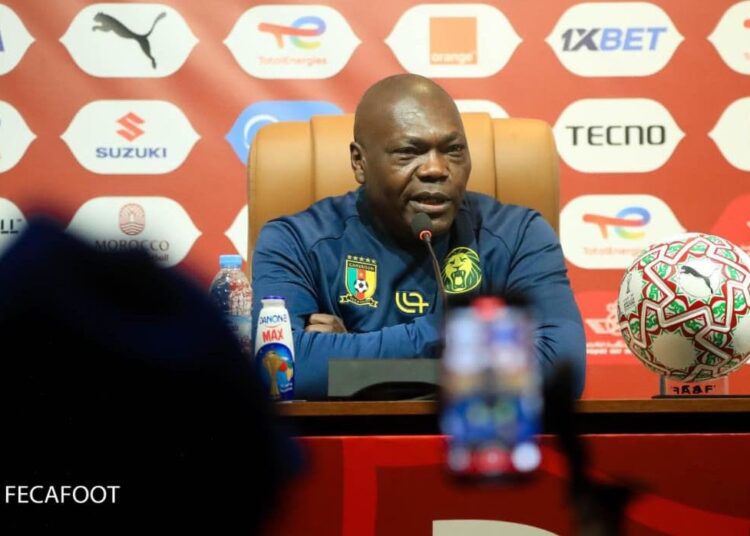
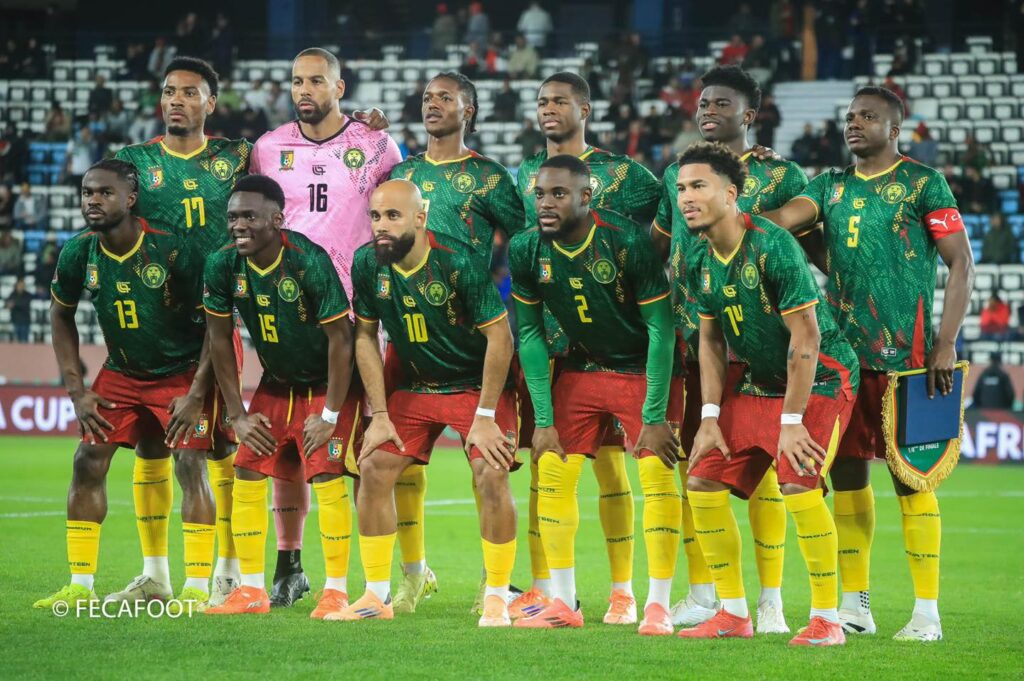
Cameroon coach David Pagou has handed first senior call-ups to five players and brought back defender Enzo Ebosse for a pair of 2027 Africa Cup of Nations (AFCON) qualifiers against Namibia in November.

David Pagou, Coach of the Cameroon Indomitable Lions

Pagou announced his squad on Monday October 26 for the third and fourth rounds of qualifying for the 2027 tournament, scheduled for Nov. 12 and 16.  The 28-man squad has four goalkeepers, 10 defenders, 10 midfielders and four forwards.

The biggest talking point is the attack. Bayer Leverkusen forward Christian Kofane and Levante striker Karl Etta Eyong who are both left out. Pagou gave no public reason for Etta Eyong’s omission, though it may be meant to give him more time to recover fully.

In their absence, Pagou will lean on Dorinel Yondjo, Nsongo Tonfack, Geovanni Vianney Agbor Ndjee and Ivan Cedric Bikoue Embolo.

Among the newcomers, 19-year-old Ivan Jordan Nana recently captained Cameroon’s Under-20 side to the UNIFFAC title. Agbor Ndjee, a forward, plays for Copenhagen. The other three debutants were not identified in the reports reviewed for this article.

Ebosse’s recall ends a long absence. The Udinese defender has not played for Cameroon since the 2022 World Cup in Qatar. Manchester United midfielder Carlos Baleba also returns after recovering from an ankle injury that kept him out of the first two group games.

Domestic players got a look as well. Colombe Sportive goalkeeper Edouard Sombang and midfielder Jean Hugues Eyango Priso were both included. Bryan Mbeumo is also in the midfield group.

Former Cameroon defender Aaron Mbimbe said the selection fits Pagou’s plans. He described it as a mix of stability and renewal rather than wholesale change.

Group G: Cameroon lead, but the margin is thin

Cameroon’s group also contains Namibia, Comoros and Congo. In round one, Cameroon beat Comoros 3-1 and Namibia beat Congo 1-0. In round two, Comoros beat Namibia 1-0 and Congo held Cameroon to a 1-1 draw.

That leaves Cameroon first with four points. Comoros and Namibia follow with three each, and Congo have one.  A win over Namibia would lift Cameroon to seven points. A stumble would leave the group tightly bunched.

The top two teams in the group qualify for the finals, which will be co-hosted by Kenya, Tanzania and Uganda.

What to watch

Pagou’s approach is to test new players in competitive games rather than friendlies. The matches against Namibia will show whether a young, reshaped attack can score without Kofane and Etta Eyong, and whether Ebosse’s return steadies the defence.

Cameroon’s U-20 Lions Reclaim UNIFFAC Crown and Book a Ticket to Ghana

By Etienne Mainimo Mengnjo

Cameroon’s youngest Lions have ended a painful wait. The U-20 squad won the 2026 UNIFFAC tournament, staged in Cameroon from October 15 to 24, and the title brings a return to the continental stage after two editions on the sidelines.

Cameroon’s U-20 Lions celebrate their UNIFFAC triumph in Yaoundé

A single strike settles the final

In front of a home crowd in Yaoundé, Cameroon edged the Central African Republic 1-0 in the decider. Jean François Manguele made the difference in the 19th minute, curling home a free kick that proved to be the only goal of the afternoon.

The visitors thought they had levelled just before the half-hour mark, in the 36th minute, but the referee ruled the effort out. Cameroon then defended their advantage until the final whistle.

The result was also a repeat of an earlier meeting. The two sides had already faced each other in the group stage on October 18, when the hosts won 2-0.

A flawless campaign

Cameroon were consistent throughout, winning all four of their matches. They scored ten goals and conceded just one. Samuel Achu led the attack with five goals, making him the squad’s standout performer.

Redemption for a team with a point to prove

For coach Yvan Kenmoe and his players, the trophy carries extra meaning. Cameroon had not featured at the U-20 Africa Cup of Nations since the 2021 edition in Mauritania, where they went out in the quarter-finals. Qualification then slipped away twice.

In the run-up to the 2023 tournament in Egypt, a 1-0 loss to the Central African Republic ended their hopes. For the 2025 edition, they topped their group in Brazzaville but were beaten by DR Congo on penalties in the semi-final after a 1-1 draw.

The Central African Republic, for their part, will still be heading to Ghana, where they will appear at the U-20 AFCON for the fourth edition in a row.

What awaits in Ghana

The 2027 tournament will feature twelve teams, and Ghana will host it for only the second time, after 1999. The four semi-finalists will earn places at the 2027 U-20 World Cup, jointly hosted by Azerbaijan and Uzbekistan.

Ten teams have already secured their places:

  • Ghana (hosts) and Burkina Faso (WAFU Zone B)
  • Morocco and Egypt (UNAF)
  • Cameroon and the Central African Republic (UNIFFAC)
  • Sudan and Tanzania (CECAFA)
  • South Africa and Mozambique (COSAFA)

The last two berths will be decided within WAFU Zone A, where Guinea, The Gambia, Senegal, Sierra Leone and Mauritania are still in contention.


Late Drama As US Embassy’s Striking Eagles Outlast UN System Team In Yaoundé

By Etienne Mainimo Mengnjo

The Striking Eagles of the U.S. Embassy in Yaoundé beat the UN System Team in Cameroon 7-6 in a hard-fought friendly football match on Oct. 24 at the Yaoundé Military Stadium. The high-scoring contest ended in a dramatic finish, with the winning goal coming only minutes before the final whistle.

Striking Eagles of the U.S. Embassy in Yaoundé and the UN System Team in Cameroon battle for supremacy during a thrilling friendly match (Picture: Mainimo Etienne)


The game showcased the competitive spirit of both sides and underscored the enduring partnership between the two institutions, which work side by side in Cameroon on diplomatic, humanitarian and development priorities.

Both teams played with intensity from the opening whistle, each looking to impose its style on the game. Just minutes in, the Striking Eagles took the lead from the penalty spot, converting calmly to settle early nerves and set the tone for an open, attacking match. The UN team responded with composure and equalized shortly after, bringing the contest level.

Striking Eagles of the U.S. Embassy in Yaoundé and the UN System Team in Cameroon battle for supremacy during a thrilling friendly match (Picture: Mainimo Etienne)

The Striking Eagles then regained the initiative, scoring twice more before the break to lead 3-1 at halftime.

The second half was wide open as both teams raised their level of play. The UN team kept pushing to close the gap, while the Striking Eagles held their grip on the match. The sides traded goals in a back-and-forth exchange that kept spectators on the edge of their seats and drew regular applause from the sidelines.

Striking Eagles FC of the U.S. Embassy in Yaoundé  (Picture: Mainimo Etienne)

With only minutes remaining, the score stood at 6-6, and both teams pushed forward in search of a decisive goal. It was the Striking Eagles who found it, scoring the winner from a free kick to seal a dramatic victory.

After the match, officials from the U.S. Embassy and the UN System team praised the quality of play and the spirit in which it was contested. They said the fixture strengthened relations between the two institutions and opened the way for further cooperation, including possible future events that bring staff from both sides together outside the workplace.

UN System Team in Cameroon during a thrilling friendly match (Picture: Mainimo Etienne)

The match was more than a game. It was a celebration of Freedom 250, the yearlong commemoration of the United States’ 250th anniversary, and an occasion to mark UN Day. Diplomats, staff and their families came together for an afternoon of friendly competition, shared community and true sportsmanship.

Striking Eagles of the U.S. Embassy in Yaoundé and the UN System Team in Cameroon posed for a family picture after the thrilling friendly match (Picture: Mainimo Etienne)


John G. Robinson, Chargé d’Affaires, ad interim of the U.S. Embassy in Cameroon handing gifts to the UN System official    (Picture: Mainimo Etienne)


As AI Threats Rise, Cameroonians Need a Culture of Proactive Verification – Cyber Security Experts Warns

Kome Mohamad, a cybersecurity expert, has said Cameroonians need to foster a cultural shift towards proactive verification as Artificial Intelligence (AI) continues to advance. He made the statement in an exclusive interview with The Post recently. He noted that as voice cloning, deepfakes, and AI-written scams become cheap and widely accessible, the gap between what looks or sounds real and what is actually real will continue to shrink. The defense, he said, will not be merely technical but cultural—building a national habit of verification, such as calling back, checking sources, and slowing down before paying. To secure their digital lives, Cameroonians must enable a PIN or fingerprint lock on their phones, turn on two-factor authentication, and pause before clicking or paying. Read the excerpts:

Kome Mohamad, Cybersecurity Expert

Excerpts:

If you were explaining ‘cybersecurity’ to a street vendor in Douala or a student in Yaoundé who just bought their first smartphone, how would you describe it—and why should they care?

Kome Mohamad: Explaining cybersecurity in environments like a bustling market in Douala or a university campus in Yaoundé requires grounding technical concepts in everyday realities. Cybersecurity is simply the act of locking your digital shop. Just as a vendor would never leave their physical shop door wide open at night or hand a stranger the key to their cash box simply because they smiled, digital security is about ensuring that your phone, your mobile money PIN, your WhatsApp, and your photographs are not things a stranger can just walk into and take. This protection matters deeply, even for individuals who mistakenly believe they have nothing to hide. A smartphone today holds much more than personal data; it houses mobile money accounts, business contacts, family communication channels, and sensitive documents like school fee receipts. If an unauthorized person gains control of a device, the consequences extend far beyond compromised data to include stolen funds, damaged reputations, and shattered peace of mind. For instance, a local vendor who loses access to a mobile money account for just two days due to a SIM swap is not facing an abstract technical issue, but rather an immediate, painful loss of real income.

With Mobile Money, WhatsApp, and social media now central to daily life in Cameroon, what are the most common traps everyday people fall into online?

Common online traps frequently target these vulnerabilities across the country. Fraudsters routinely deploy fake promotional messages via SMS or WhatsApp claiming victims have won airtime, phones, or cash from telecommunications operators or banks, while demanding a PIN or code to confirm the prize, even though real promotions never require a PIN. Another prevalent tactic involves scammers impersonating customer support agents to claim there is an urgent account problem, tricking victims into reading out incoming one-time passwords, known as OTPs, which grant immediate access to funds. Account hijackers also compromise messaging applications like WhatsApp to impersonate trusted friends or family members in distress, soliciting urgent financial assistance for fabricated emergencies. Additional schemes include fraudulent job postings and investment advertisements demanding upfront processing fees, sophisticated SIM swap operations that intercept verification codes through manipulated telecom procedures, and cloned social media pages mimicking banks or utility providers. The common thread across all these deceptive practices is the deliberate creation of artificial urgency and fear, forcing targets to act quickly before they have time to think critically.

Many people log onto free Wi-Fi in cafes, hotels, or public spaces. What actually happens when we use public Wi-Fi, and how can we stay safe on open networks?

Public connectivity environments introduce distinct risks that demand caution. Connecting to free Wi-Fi networks in cafés, hotels, or airports means sharing a network infrastructure with numerous strangers, including potential bad actors. On unsecured networks, attackers can engage in eavesdropping to intercept unencrypted traffic and login credentials, deploy malicious evil twin hotspots disguised as legitimate venue networks, or quietly redirect users to fake login portals. To mitigate these risks, individuals should avoid accessing sensitive banking or mobile money services on public networks, rely instead on secure cellular data for sensitive transactions, ensure websites feature secure HTTPS encryption, utilize reputable virtual private networks when open networks are unavoidable, and disable automatic network connection settings on their devices.

If a regular citizen can only do three simple, practical things today to secure their phone and accounts, what should those be?

For everyday citizens looking to secure their digital lives efficiently, three practical habits make an immediate difference. First, users should activate strong device locks using a PIN or fingerprint, and maintain absolute secrecy regarding mobile money PINs and OTP codes, knowing that no genuine operator or bank will ever request them. Second, enabling two-factor authentication on messaging applications, email accounts, and social media profiles effectively halts the vast majority of account takeovers. Third, cultivating the habit of pausing before reacting to urgent demands allows individuals to spot manufactured crises and verify claims through official channels before taking action.

Agencies like ANTIC (National Agency for Information and Communication Technologies) frequently warn against identity theft and fake social media accounts targeting public figures and businesses. How serious is this issue in Cameroon, and why is identity theft so profitable here?

Institutional vulnerabilities mirror these individual challenges, particularly regarding identity theft and public impersonation. Agencies like the National Agency for Information and Communication Technologies, ANTIC have repeatedly flagged the rise of fake social media accounts targeting public figures and commercial entities. This illicit activity thrives because trust functions as a powerful currency. When a fraudulent profile impersonates a respected business owner, religious leader, or politician, followers readily dispatch funds for fake giveaways or emergency appeals simply because they trust the name associated with the profile. Furthermore, the low cost and minimal risk of creating fake profiles, combined with the complexities of cross-border digital enforcement, make these crimes highly lucrative. Businesses frequently suffer financial losses and brand damage through fake pages collecting payments for non-existent goods. Addressing this challenge requires a dual approach combining individual vigilance with proactive monitoring, rapid reporting, and clear public education from institutions and public figures.

Many small businesses and fintech startups across the country are moving their operations online, but many operate without dedicated IT security teams. What are the biggest security oversights local business owners are making right now?

Small businesses and fintech startups migrating online often face severe operational oversights by operating without dedicated IT security teams. Common missteps include failing to separate personal and business accounts by housing critical operations on a single personal device, utilizing weak or shared administrative passwords distributed casually among staff, omitting two-factor authentication on commercial pages, neglecting regular data backups, and failing to provide basic security awareness training for employees who serve as the primary entry point for social engineering attacks. Many organizations mistakenly treat security as an afterthought to be addressed later, rather than embedding protective habits from inception.

Cameroon—and Africa as a whole—faces a growing deficit in certified cybersecurity talent. How can we encourage and train young Cameroonians to build careers in cybersecurity to bridge this gap?

Overcoming the broader deficit of certified cybersecurity talent across Africa requires targeted strategies. Entry barriers can be lowered by promoting affordable, practical, and bilingual training programs focused on local scenarios like mobile money fraud and small business protection, which resonate far more effectively than abstract theories. Creating visible career pathways through structured internships and industry partnerships bridges the gap between training and employment, while community-driven peer learning initiatives such as mentorship cohorts and hackathons sustain long-term engagement. Introducing foundational digital safety concepts early within secondary and tertiary education further normalizes security awareness as a core life skill.

Artificial Intelligence is making scams look much more convincing. How is AI changing the threat landscape, and how can everyday citizens stay one step ahead?

Looking toward the future, artificial intelligence is radically transforming the threat landscape by lowering the technical and financial barriers for malicious actors. Threat actors now leverage advanced writing tools to craft fluent, grammatically correct phishing messages in multiple languages, employ sophisticated voice cloning technology to deceive family members through audio impersonation, deploy deepfake imagery to endorse fraudulent investment schemes, and execute automated, large-scale targeting. To stay ahead of these evolving threats, foundational defenses must adapt.

Looking ahead over the next few years, as AI tools become accessible to both bad actors and defenders, what is the single biggest digital threat Cameroonians should prepare for?

The single most critical preparation for Cameroonians is fostering a cultural shift toward proactive verification. As voice cloning, deepfakes, and AI-written scams become cheap and widely accessible, the gap between what looks or sounds real and what is actually real will continue to shrink. The defense will not just be technical, but cultural—building a national habit of verification, such as calling back, checking sources, and slowing down before paying. Just as generations learned to carefully inspect physical currency notes for counterfeits, society must develop an ingrained national habit of slowing down, verifying sources through independent channels, and questioning urgent financial requests, thereby building collective resilience against sophisticated digital manipulation.

Interviewed by Etienne Mainimo Mengnjo (First published in The Post Edition number 02595 of October 16, 2026)


The Guardian Post Announces Silver Jubilee Celebrations to Mark 25 Years of Impactful Journalism

By Etienne Mainimo Mengnjo

The Guardian Post, one of Cameroon’s leading English-language newspapers, is set to mark its 25th anniversary with a weeklong Silver Jubilee event from November 9 to 14 in Yaoundé.

Kristian Ngah Christian, Publisher and Editor-in-Chief speaking during the press conference (Photo: Mainimo Etienne)

Publisher and Editor-in-Chief Kristian Ngah Christian announced the schedule during a press conference in Yaoundé on Friday, October 16, aimed at informing the public about the celebrations.

Reflecting on the milestone, Ngah stated: “As we celebrate 25 years of serving as the voice of the voiceless, holding authority to account, and advancing Cameroon’s democracy, we are launching a weeklong Silver Jubilee programme, running from November 9 to November 14, 2026.”

He outlined that the schedule will feature thematic workshops and masterclasses for young print journalists to nurture the next generation of reporters, alongside “an Open Door and Community Outreach to engage directly with our readers, civil society and local communities.”

He added: “We also plan a sport walk to promote wellness and fraternity among media professionals and a Grand Jubilee celebration on November 14 at the Concord International Hotel in Yaounde.”

Kristian Ngah Christian, Publisher and Editor-in-Chief speaking during the press conference (Photo: Mainimo Etienne)

Looking ahead, Ngah emphasized that the publication will not rest on its laurels, declaring: “We will keep striving for higher heights. We are expanding digital presence on all social media platforms.”

Reaffirming the paper’s core values, he noted: “As captured by our motto: Cherished by many, haunted by some, read by them all, we remain committed to our middle-of-the-road editorial policy, fair, balanced, and fearless reporting.” He further pointed out: “We will remain a marketplace of ideas for all Cameroonian voices, regardless of political affiliation or social standing.”

The publisher also looked back at the outlet’s humble beginnings following its first edition on August 30, 2001. Born out of frustration and limited resources, what began as a desperate struggle to put food on the table has matured into an institution directly employing over 50 Cameroonians and supporting hundreds more indirectly.

Kristian Ngah Christian, Publisher and Editor-in-Chief (Right)  accompanied by the Managing Editor, Bertrand Doh (Left) during the press conference (Photo: Mainimo Etienne)

“When The Guardian Post debuted in the slippery, harsh, cash-strapped, and unpredictable print media landscape in Cameroon, many predicted its demise. Yet, through hard work, sacrifice, unyielding faith in God, and an absolute commitment to journalism integrity, we have refused to give up,” Ngah recalled.

He acknowledged the obstacles along the way, stating: “Our journey has been anything but a bed of roses. We have faced severe difficulties; sabotage, financial stress, online phishing, fake front-page fabrications, and threats from individuals who felt challenged by our daring and middle-of-the-road editorial policy.”

Despite sanctions levied by the National Communication Council in 2013, The Guardian Post emerged stronger, returning to newsstands as Cameroon’s very first English-language daily newspaper.

Kristian Ngah Christian, Publisher and Editor-in-Chief speaking during the press conference (Photo: Mainimo Etienne)

“It is this determination that has also enabled us to shatter national and international glass ceilings, establishing records that place us at the forefront of the media sector in Central Africa,” Ngah said.

“Today, we hold the distinction of being the only newspaper publishing seven days a week (Mondays to Sundays) in the CEMAC and ECCAS Subregions, supported by The Guardian Post Sports and The Guardian Post Magazine.”


Powering Connectivity: CAMTEL & SOCADEL Partner To Pool Infrastructure Across Cameroon

By Etienne Mainimo Mengnjo

Cameroon’s state-owned telecommunications provider, Cameroon Telecommunications (CAMTEL), and state electricity company, Cameroon Electricity Corporation (SOCADEL), have signed a strategic Memorandum of Understanding (MoU) to explore infrastructure and network sharing across the country.

Judith Yah Sunday, Director General of CAMTEL, and Oumarou Hamandjoda Director General of SOCADEL signing MoUs (Photo: Mainimo Etienne)

The agreement was officially signed on Friday, October 16, in Yaoundé by Judith Yah Sunday épouse Achidi, Director General of CAMTEL, and Oumarou Hamandjoda representing SOCADEL.

The MoU outlines a shared vision to evaluate the joint use of both companies’ respective assets. By pooling resources, CAMTEL and SOCADEL aim to optimize operational efficiency, curb deployment costs, and ultimately deliver higher-quality services to users nationwide.

For CAMTEL, the partnership offers a vital pathway to extend its national fiber-optic network and diversify transmission routes, reinforcing network resilience and connection uptime. For SOCADEL, the initiative promises to seamlessly interconnect its branch offices, operations centers, and key strategic sites while supporting the broader modernization of its power grid management.

Judith Yah Sunday, Director General of CAMTEL, and Oumarou Hamandjoda Director General of SOCADEL exchanging MoUs (Photo: Mainimo Etienne)

“This initiative aligns with a tangible goal: making better use of available infrastructure to extend connectivity and improve the quality of services,” said Judith Yah Sunday, Director General of CAMTEL. “The complementary nature of our respective networks can enable us to curb deployment costs and open up new possibilities for service delivery. The technical and economic studies we will carry out will clearly spell out the conditions governing this infrastructure pooling.”

Echoing these sentiments, Oumarou Hamandjoda highlighted the strategic alignment between the two public enterprises:

“SOCADEL and CAMTEL are both state-owned companies showing that they can work together to develop national infrastructure in a coordinated and coherent manner, as envisioned by the Head of State, His Excellency Paul Biya,” Hamandjoda noted. “Signing this Memorandum of Understanding confirms our intentions and compels our experts to speedily fine-tune this initiative. We hope to move very quickly from intention to a formal framework agreement, and from there to an initial implementation phase in pilot sites.”

Judith Yah Sunday, Director General of CAMTEL, and Oumarou Hamandjoda Director General of SOCADEL brandishing signed MoUs to the public (Photo: Mainimo Etienne)

Under the proposed arrangement, CAMTEL will leverage its extensive national fiber-optic backbone, international connectivity capabilities, and deep expertise in operating telecommunications networks. In turn, SOCADEL plans to contribute its widespread electrical grid infrastructure—including power poles, rights-of-way, and upcoming optical fiber-inclusive deployments.

Coordinated deployment between the two entities is expected to yield key environmental and municipal benefits, such as reducing redundant infrastructure and minimizing urban right-of-way clutter. Joint feasibility studies will evaluate technical, legal, and economic parameters, with a strict focus on public safety, regulatory compliance, and protecting each entity’s operational rights.

Officials posed for family picture after the signing ceremony  (Photo: Mainimo Etienne)

Officials emphasized that while the MoU represents an initial milestone, both parties are committed to moving swiftly toward a definitive framework agreement that will govern full-scale operational implementation.


AWS Instructor Banjika Ngo Launches Essential Cloud Networking Guide

By Etienne Mainimo Mengnjo

Amazon Web Services (AWS) Instructor and Founder of WirfonCloud Academy, Banjika Ngo (Mfòómé Bá’tí Europe), has released a new book designed to equip aspiring cloud engineers with fundamental technical skills.

Titled “Networking Fundamentals for Cloud Learners,” the book officially launched on October 14 as the second installment in his “Foundation First” series, following the release of Fundamentals of Linux for Cloud Learners.

Dedicated to every African engineer who was ever told that a career in cloud technology was out of reach, Ngo emphasizes the necessity of mastering core concepts prior to advanced application.

Drawing an analogy to home construction, he explains that building a cloud infrastructure requires a solid foundation before adding a roof, noting that while Linux provided the essential walls, networking supplies the critical wiring.

Ngo chose to focus on networking because every cloud service, regardless of complexity, relies entirely on an underlying network. From launching an EC2 instance into a specific subnet to restricting access to an S3 bucket by IP range or securing web browsers, networking forms the bedrock of cloud administration.

To ensure accessible learning, the book introduces each concept twice: first using relatable real-world metaphors, and then through practical commands that readers execute themselves.

This approach makes abstract protocols easy to grasp. For instance, the book compares DHCP to a hotel reception desk in Kigali that assigns your room, floor plan, and extension upon arrival. Similarly, DNS is likened to a smartphone contacts list where tapping a contact name resolves to a phone number just as typing “google.com” resolves to an IP address.

Banjika Ngo (Mfòómé Bá’tí Europe), AWS Instructor · Founder, WirfonCloud Academy

Furthermore, Network Address Translation (NAT) is illustrated as an office receptionist in Lagos managing calls for hundreds of employees through a single corporate line. Each chapter then connects these metaphors to real AWS services that engineers configure daily, including Virtual Private Clouds (VPCs), subnets, Route 53, Security Groups, and NAT Gateways.

Spanning twelve chapters, the guide takes readers on a journey from basic IP addressing to designing a production-ready VPC. It features eleven hands-on labs executed on an EC2 instance, a glossary of over 100 industry terms, twenty Linux networking commands, and fifteen practical troubleshooting scenarios.

Each chapter concludes with a knowledge check and answer key, all while answering one central question throughout the book: what actually happens when you type “google.com” into a browser? By the final chapter, readers gain the confidence and technical vocabulary to explain this end-to-end journey to prospective job interviewers.

Designed specifically for beginners with no prior networking experience, the book is available for purchase on Amazon, as well as in PDF format via WhatsApp at +250 791 921 156. As the founder of WirfonCloud Academy (www.wirfoncloud.com), Ngo continues to educate students across Africa and the global diaspora in Linux, networking, and cloud technologies, with the third installment in the series, Python for Cloud Automation, currently in development.


Bui Strikers Veteran FC Crowned Maiden Nso All-Veteran Champions

By Etienne Mainimo Mengnjo

Bui Strikers Veteran FC of Yaoundé have etched their name in the history books as the inaugural champions of the Nso All-Veteran Championship. In an electric final played in Bafoussam, West Region on October 11, Bui Strikers defeated Nso Veteran FC of Nkomkana 5-4 in a tense penalty shootout after a hard-fought 2-2 tie at the end of regulation time.

Shufai Ndzefoncho, founder of the competition handing trophy to Shey Gaston Dzemo, Team captain of Bui Strikers Veteran FC, Yaounde during the closing ceremony of the Nso All Veteran Tournament in Bafoussam (Photo: Mainimo Etienne)

The championship clash lived up to its high expectations, featuring exceptional tactical awareness and fiery determination from both sides. Bui Strikers seized the momentum early in the opening minutes, striking first to break the deadlock and take a 1-0 lead. However, Nso Veteran FC refused to back down, capitalizing on a defensive miscommunication within the Bui Strikers backline to score an equalizer before the halftime whistle.

Returning from the locker room tied at 1-1, both squads settled into a captivating second half. Bui Strikers once again showcased their attacking flair, breaking through the opposition defence to restore their lead at 2-1.

Yet, showing remarkable grit, Nso Veteran FC forced another turn of fortune by earning a penalty, which they calmly slotted past the goalkeeper to tie the game at 2-2. With no further goals scored before the final whistle, the destiny of the maiden trophy was decided from the penalty spot, where Bui Strikers held their nerves to claim a 5-4 shootout victory.

Bui Strikers Veteran FC of Yaounde celebrate after winning the 2026 edition of the Nso ALL Veterans Tournament

Speaking shortly after the emotional trophy presentation, the Emeritus President of Bui Strikers, Adamu Wirngo, expressed deep gratitude for his team’s unwavering commitment throughout the tournament.

“You can imagine the joy in me; I might not fully express it, but within me, I am truly happy because this trophy means a lot to us. We came prepared for this competition and today we are going back victorious,” Adamu Wirngo said.

Looking toward the future, he added, “We will start preparing for the next edition early so that we can achieve the same results we have achieved today. Knowing that we will be returning as defending champions, we need to be fully prepared.”

Players from Bui Strikers Veterans and Nso Veteran Nkomkana battle for supremacy during the final match of the Nso All-Veterans Tournament in Bafoussam (Photo: Mainimo Etienne)

The founder of the competition, Shufai Ndzefoncho, commended the overarching success of the tournament while reflecting on the broader purpose of bringing veterans together.

“It is going to be an annual competition. The initial plan was that we could have been playing it back at home, but unfortunately, because of the socio-political crisis, we cannot do it for now, but we are hoping that in time, the crisis will subside and we’ll take it back home,” he said.

Shufai Ndzefoncho went on to urge all community members and stakeholders to unify their efforts, noting that one hand cannot tie a bundle. “When all of us, we join hands together, I think we’ll succeed with our mission of trying to bring peace back home.”

Bui Strikers Veterans and Nso Veteran Nkomkana pose for a group picture after receiving their medals during the awards ceremony of the Nso All-Veterans Tournament in Bafoussam    (Photo: Mainimo Etienne)

Caster Berinyuy of the Nso Renaissance Sport Initiative (NSRI) emphasized how football continues to serve as a powerful vehicle for social cohesion, community development, and giving back.

“We are greatly happy that after two days of intensive competition, we have registered success and the success I think will continue to the next edition. The weather was good and also we started by giving back to the community through NSODA. We will continue,” he stated, highlighting the initiative’s commitment to fostering sportsmanship and local outreach.

Despite falling just short in the penalty drama, Dieudonné Mbiydzenyuy, President of Nso Veterans Nkomkana, remained upbeat and praised the organizers for constructing a platform centered on unity and mutual growth.

Nkomkana Veteran FC of Yaounde  (Photo: Mainimo Etienne)   

“I’m very fulfilled, I’m satisfied. It was not easy to come to this level. I’m okay, I’m okay, I’m fine,” Dieudonné Mbiydzenyuy said. He further reflected, “We believe that this is more than a tournament. We have learned a lot from many and we believe that in the future, this tournament will take us to another level. It will foster development, and growth will be enhanced in our community.”

The maiden edition brought together six veteran teams representing Bamenda, Bafoussam, Douala, and Yaoundé, organized into two competitive groups. In Pool A, Nso Veterans Nkomkana dominated the group stage with six points, securing their spot in the final by thrashing BihNso Veteran FC of Bafoussam 5-1 and edging Nso Veterans Bamenda FC 2-1.

Bui Strikers Veteran FC of Yaounde  (Photo: Mainimo Etienne)

Meanwhile, in Pool B, eventual champions Bui Strikers cruised to the top of their group with six points, outscoring Edu Sport Veterans 3-0 and putting on a goal fest against Nso Veterans Douala in a 6-2 victory to book their ticket directly to the final match. Organizers have confirmed that Bafoussam will once again host the next edition of the championship.

HRM Fon Sehm Mbinglo I Urges Women To Stay Resilient, Live Peacefully

By Etienne Mainimo Mengnjo

His Royal Majesty, the paramount Fon of Nso, Sehm Mbinglo I, has called on Nso women to remain resilient and live peacefully wherever they may be, declaring that a “new dawn” has arrived.

Fon of Nso, Sehm Mbinglo I during the conference   (Photo: Mainimo Etienne)

Sehm Mbinglo I made the call on October 10 in Bafoussam, located in the West Region of Cameroon. Speaking through an interpreter during the maiden edition of the Nso All Women Conference, the Fon emphasized the community’s path forward.

The conference—organized by the Women’s Forum of the Nso Cultural and Development Association (NSODA)—took place under the theme “New Dawn: ‘Ke’ Ye Fiyii’, Women Leading Change: Unity, Development, Impact.”

The event brought together key government officials, traditional leaders, and community elites to chart a path toward peace. It was co-chaired by Yaa Dr. Asheri Kilo, Secretary of State to the Ministry of Basic Education, alongside West Region Governor Augustine Awa Fonka. Other notable traditional dignitaries in attendance included the Fon of Oku.

Cross section of women dancing during the conference (Photo: Mainimo Etienne)

“His Royal Majesty says that he is with you, he will walk with you wherever you go, and he asks you to live peacefully wherever you are,” the interpreter stated on behalf of the Fon.

The interpreter continued, “What he asks of us all is that we live peacefully and tell our children, wherever they may be, that peace is worthwhile. Finally, he says he knows we will all return home. Whether it is a temporary visit or a permanent return, it will happen, so wait for the call.”

Reflecting on the conference, Sehm Mbinglo noted that he shed a tear when he saw the women march past, wondering when the men would step forward to do the same. “He will try to unite the men to follow this example,” the interpreter added. “Women never get tired.”

The Fon of Nso accompanied by other Fons during the conference (Photo: Mainimo Etienne)

The Fon added, “The throne, His Royal Highness, and his brothers are happy that we gathered here today. They thank you for this wonderful performance and ask you to never give up.”

The conference featured speeches, a march past, dance groups, and exhibitions, as well as a general call for peace to reign in the land of Nso.