By Etienne Mainimo Mengnjo
In the dimly lit neighborhood of Damas in Yaoundé, the hum of a generator is a more familiar sound than the whir of a ceiling fan. This mechanical drone echoes from house to house, a constant reminder of the daily blackouts that define the local struggle for power.
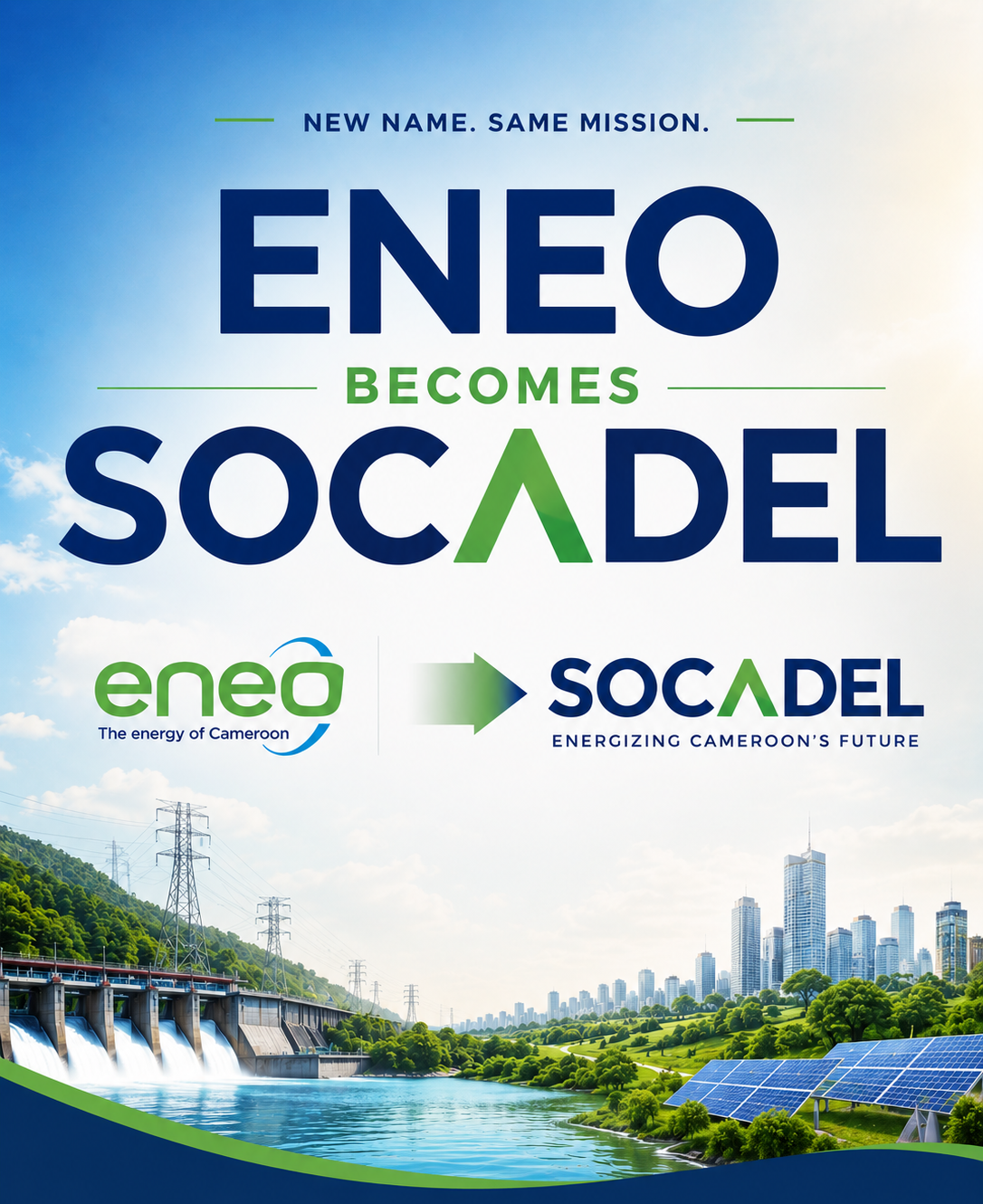
However, following a presidential decree signed on May 4, the narrative is shifting. For millions of Cameroonians who have spent years navigating the unpredictability of ENEO’s grid, the transition to the Cameroon Electricity Corporation (SOCADEL) represents more than a corporate handover; it signifies a desperate hope for consistency.
However, as ENEO logo is stripped from utility trucks and replaced by the SOCADEL insignia, citizens are questioning whether they are witnessing a genuine revolution or merely a fresh coat of paint on a crumbling wall.
For decades, terms like “blackouts” and “rationing” have been the vernacular of daily life. Now, as the state retakes the reins, the nation watches with a mix of cautious optimism and deep-seated fatigue. The new corporation steps into a spotlight that reveals a heavy inheritance of debt, aging infrastructure, and a public weary of waiting in the dark.
Expectations are immense as the public awaits the first moves of this state-led entity. Among the common citizens on the streets of Yaoundé, hope is a fragile commodity tempered by past disappointments.
“When I heard that ENEO had been transformed to SOCADEL, nothing much struck me because it is still managed by the same people,” said Ethel, a trader in Mendong Market. “For years we have been crying for electricity to be constant but that is not the case, so I am expecting no change.”
Others hold a more expectant view, fueled by recent national investments in energy production. Estalla, a street hawker in the capital, expressed a desire for tangible results. “The transition to SOCADEL is something that I am expecting to see much change from,” she said. “Given that so many dams have been constructed, I expect to see constant electricity supply.”
For many, the success of the new board hinges on its ability to earn the trust of a disillusioned population. The leadership must confront a history of high bills, financial scandals, and allegations of employees participating in fraudulent activities.
“The new board at the helm of SOCADEL has to be more proactive because there are a lot of malpractices in the institution,” said James Dudu. “Putting the interest of the nation should be their main agenda that will propel them to make sure that Cameroonians have constant electricity.”
To Marie Claire, the new board must prove the skeptics wrong by solving the blackout crisis. “They have not been appointed to enjoy our taxpayer money but to work for the growth of the corporation and Cameroonians as a whole,” she added.
This transition is the latest chapter in a long history for the sector, which began with the birth of the Société Nationale d’Électricité (SONEL) in 1974. Initially a state-owned monopoly, SONEL served as a symbol of national development during the 1970s and 80s, overseeing major projects like the Songloulou hydroelectric dam.
By the late 1980s, however, the company fell into crisis due to poor management and a severe economic downturn. Financial collapse led to the introduction of scheduled power outages, setting the stage for controversial reforms.
Under pressure from the World Bank and IMF, the government privatized the sector in 2001. The U.S.-based AES Corporation acquired a 56 percent stake to form AES-SONEL, a move intended to bring in private capital and efficiency.
Instead, the era was largely defined by a lack of transparency and persistent service issues. By 2014, the British investment fund Actis purchased the shares for approximately $202 million and rebranded the utility as Energy of Cameroon (ENEO).
While ENEO oversaw some infrastructure improvements, its tenure was ultimately stifled by massive debt, chronic collection issues, and mounting consumer complaints. These systemic failures prompted the state to buy back the 51percent stake from Actis for FCFA 78 billion in November 2025.
This move culminated on May 4, 2026, when President Paul Biya officially launched SOCADEL as a 100 percent state-owned company, beginning a new era in Cameroon’s quest for reliable energy.
According to many Cameroonians, the success of this new chapter will not be measured by the ink on a presidential decree or the rebranding of office facades, but by whether a child in the remote areas of Cameroon can finally study under a steady bulb without the roar of a generator in the background or flickering glow of a candle.
Observers hold that since the government has reclaimed the sector; now it must prove that it can also reclaim the light. They state that for a nation that has spent decades in the dark, the transition to SOCADEL is more than a policy shift but a final demand for the dignity of a constant current.
Under the watchful eyes of the nation, Cameroonians say the era of excuses has been privatized, leaving the responsibility for Cameroon’s future squarely in the hands of the state.