


List Posts

View All
Society

Fongoh & Partners Real Estate Named “Most Trusted Company of the Decade”

By Brian Mboh Fongoh and Partners Real Estate was honored with the "Most Trusted Company of the Decade" award on…

Society

AFRODAD Media Initiative Opens In Nairobi To Strengthen Debt Reporting Across Africa

By Etienne Mainimo Mengnjo The sixth edition of the AFRODAD Media Initiative (AFROMEDI VI) has commenced in Nairobi, Kenya, convening…

Sports

Minister Atanga Nji Urges Cameroonians To Make Daily Exercise A Vital Routine

By Brian Mboh The Minister of Territorial Administration (MINAT), Paul Atanga Nji, has issued a clarion call for Cameroonians to…

Society

Light Rain Marks 54th National Day In Yaounde As President Biya Presides

By Etienne Mainimo Mengnjo Thousands of Cameroonians gathered under light rains on Wednesday, May 20, in Yaoundé to mark the…

Cameroon Festival of Living Together,Takes Center-Stage in Washington DC

By Brian Mboh

It was in an electrifying atmosphere, marked by colour , rhythms and traditions from Cameroon, that a large number of Cameroonians in the  diaspora, gathered in Washington DC, for the pioneer edition of the mega  Cameroon Cultural Festival of North America, CCFNA.

Cultural display at living together festival

Organised by Christopher Tapa, the event was held under the  theme; ” Cameroon Culture and Living Together.” The three day event, that ran from May 29 to 31,2026,took place on the campus of the Catholic University of America.

More than a cultural celebration, the cultural  jamboree, served as a platform for dialogue, networking, and engagement among diplomats, traditional leaders, business executives, academics, and community stakeholders.

The presence of distinguished guests elevated the event into a showcase, of Cameroon’s rich  cultural diplomacy and national unity.


Cameroon Ambassador to USA ,communes with traditional rulers

High-Level Diplomatic Patronage

Opening the ceremony was His Excellency ,Henri Étoundi Essomba, Cameroon Ambassador  to the United States of America.

Leading the Cameroonian diplomatic delegation, Ambassador Étoundi Essomba brought the official support of the Cameroonian government to this diaspora-led initiative.

In his remarks, he commended the commitment of Cameroonians living across North America—including the United States, Canada, and Mexico, in preserving and promoting their cultural heritage.

He also emphasized on the crucial role of the diaspora as ambassadors of peace, national unity, and economic development.

Cameroonian traditional rulers at CCFNA in Washington DC

Festival Engages Diaspora Business Actors and investors

One of the festival’s highlights was the Business Forum, which explored investment opportunities between Cameroon and North America.

Moderated by Dr. Mimi Nkwepo, executive coach and transformational leadership expert, the forum brought together prominent voices from the worlds of business, academia, and innovation. Panelists included Dr. Elie Nkamgueu, President of Club Efficience and a leading advocate for diaspora investment; Dr. Bih, an expert in artificial intelligence and digital transformation; His Majesty Nfon Ekoko Mukete IV, Bafaw Paramount Chief, Senator, and respected business leader; Mr. Derrick Waters, infrastructure and international cooperation specialist; and Dr. Michael Williams, Dean at Thomas Edison State University.

Discussions focused on strengthening investment, entrepreneurship, innovation, and strategic partnerships between Cameroon and its diaspora communities abroad.

In the same spirit, Mr. Elvis Tognia presented the concept of the “Cameroonian Dream,” calling for a more united, organized, and engaged diaspora committed to contributing to Cameroon’s sustainable development and global competitiveness.

Cameroon Ambassador to USA ,communes with traditional rulers

Joseph-Antoine Bell: Football as a Unifying Force

Another memorable moment of the festival was the participation of Joseph-Antoine Bell, one of Cameroon’s most celebrated football legends. A two-time Africa Cup of Nations champion (1984 and 1988) and current Chairman of the Orientation Committee of the National Office of Sports Infrastructure and Equipment (ONIES), Bell received a warm and enthusiastic welcome from attendees.

Drawing from his remarkable career and public service experience, he shared his vision of football as a powerful tool for social cohesion and national unity. His presence inspired pride, patriotism, and a renewed sense of belonging among festival participants.

Tapa Christopher , President of Cameroon Cultural Festival of North America, CCFNA

Traditional Leaders Bring Cultural Authenticity

The festival also benefited from the presence of several traditional authorities who traveled from Cameroon, adding cultural depth and authenticity to the event.

Among them were Chief Mukete, Chief Lekunze, His Majesty Etoga, Her Majesty Thérèse Tsogo Nsengue, Third-Class Traditional Ruler of Mvila Yévol, and Her Majesty Véronique Mintamack.

Their participation reflected the enduring connection between the diaspora and its ancestral roots. The festival showcased Cameroon’s four major cultural areas—Fang-Beti, Grassfields, Sawa, and Sudano-Sahelian—through traditional performances, cultural exhibitions, music, and dance.

Officials visit exhibition stands

A Landmark Event for the Cameroonian Diaspora

By bringing together diplomats, traditional rulers, business leaders, scholars, entrepreneurs, and sports icons, the inaugural CCFNA successfully demonstrated the power of culture as a bridge between communities and generations.

For Christophe Tapa and his team, the event marks the beginning of what promises to become a major annual gathering for celebrating Cameroonian heritage and strengthening ties between Cameroon and North America. The Cameroon Cultural Festival of North America has established itself as a significant platform for cultural promotion, economic dialogue, and diaspora engagement on the international stage.

Organising committee of inaugural CCFNA

Fon Of Nso To Unveil Maiden Book On Peace, Reconciliation, And Ancestral Wisdom, June 25

By Etienne Mainimo Mengnjo

His Royal Highness Fon Sehm Mbinglo I, the traditional ruler of Nso, will officially launch his debut book, “The Fon of Nso and the Anglophone Crisis: A Testimony for Reconciliation and Peace,” on June 26.

In a press release issued June 3, the Fon announced that the inaugural launch will take place in Yaounde. This event will be followed by a series of additional presentations in various towns across Cameroon and among the diaspora.

According to the release, these gatherings are intended to be conducted in the spirit of ancestral dialogue and community engagement. The monarch envisions these events not merely as book launches but as a continuation of the tradition that has guided the Nso people through the centuries, serving to support ongoing national efforts toward peace, justice and unity.

The book spans 170 pages and includes a foreword, a preface and acknowledgments. It is divided into seven parts containing various subchapters. Beyond the narrative, the publication features several photographs depicting key events from the start of the Anglophone crisis as well as earlier moments during his reign, offering readers both textual reflection and visual testimony.

The royal family stated that the book is intended to complement, strengthen and preserve for posterity a portion of the broader royal narrative and message rather than replace the oral tradition. The communique noted that the book responds to the demands of the present moment while remaining faithful to the enduring values of Nso culture. In this context, it serves as a tool for peace, reconciliation and historical preservation within and beyond the Nso community.

Rooted in the age-old tradition of “Tooy Fon,” or fireside conversation, the publication invites the people of Nso and Cameroon at large to gather in dignity, calm reflection and mutual respect. It seeks to strengthen bonds of understanding and reminds the public of the need to carry scars with dignity, walk in fairness and forgive with courage.

Fon Sehm Mbinglo I leads the Nso traditional institution, one of the most prominent in Cameroon. Through his leadership, advocacy for dialogue and nonviolence, and commitment to community welfare, he has promoted peace, reconciliation and social cohesion by drawing on ancestral wisdom.

SESDP Launches Free Vocational Training For 1000 Young Cameroonians

By Etienne Mainimo Mengnjo

The Cameroon government, through the Secondary Education and Skills Development Project (SESDP), has launched a call for applications to select 1,000 young Cameroonians to receive fully funded training vouchers. The announcement was made during a press conference in Yaoundé on June 1, coordinated by the project’s General Coordinator, Sophie Mbenoun.

Sophie Mbenoun, General Coordinator of SESDP speaking during the press conference (Photo: Mainimo Etienne)

Speaking to journalists, Sophie Mbenoun explained that the innovative voucher scheme is designed to fully finance short-term certified vocational training for young people aged 15 to 35. According to Mbenoun, “the initiative aims to tackle youth employment and underemployment, the mismatch between training and available jobs, and the growing demand for technical and digital skills.”

Given that the training will take place at accredited private training centers selected by the project, Mbenoun stressed that the vouchers will cover registration fees, tuition, certification assessments, and selected training kits and equipment depending on the sector.

She added that the training durations range from three to six months. Programs will focus on digital technology, cybersecurity, software development, artificial intelligence, cloud computing, networking, industrial welding, and technical construction trades, among others.

To be eligible, Mbenoun said applicants must be Cameroonian nationals aged 15 to 35 for digital technology and welding, or 18 to 40 for heavy construction equipment operation. Candidates must be of sound mental capacity, physically fit for their chosen trade, and hold at least the required qualification, which may include a Vocational Aptitude Certificate, GCE O Level, Vocational Qualification Certificate, Vocational Qualification Diploma, GCE A Level, GCE A Level plus two, or other applicable credentials.

Mbenoun was precise about the registration process, stating that applications are only accepted via the online platform https://padesce.cm/mcdc no later than June 12, 2026, at 11:59 pm.

According to her, selection will be automatic on the digital platform based on set criteria, though special consideration will be given to young people with relevant work experience in their chosen profession. Female applicants are strongly encouraged to apply, and young people can visit the website for detailed profile requirements.

Sophie Mbenoun, General Coordinator of SESDP speaking during the press conference (Photo: Mainimo Etienne)

The SESDP is a government initiative set up with support from the World Bank. Structured around four components, its goal is to improve equitable access to quality secondary education and market-oriented technical and vocational training, with a particular focus on girls.

The project pays special attention to vulnerable girls and other disadvantaged learners in areas with low schooling levels, as well as internally displaced or refugee learners in the North West and South West regions.

Beyond the training voucher scheme, the SESDP is also concerned with improving infrastructure in technical and vocational training establishments. This includes the rehabilitation and construction of workshops, classrooms, and administrative buildings to create a conducive learning environment.

In addition, the project focuses on enhancing the skills of professionals working in small and medium-sized enterprises, small and medium-sized industries, social economy structures, and craft enterprises.

This is achieved through tailored training programmes designed to meet the specific demands of the job market, ensuring that both young entrants and existing workers can acquire practical, relevant competencies that boost employability and productivity.

Fongoh & Partners Real Estate Named “Most Trusted Company of the Decade”

By Brian Mboh

Fongoh and Partners Real Estate was honored with the “Most Trusted Company of the Decade” award on Saturday, May 30, 2026, in Yaoundé. As Chief Executive Officer (CEO) Fongoh Valentine was also recognized with a top philanthropy prize during the tenth-anniversary celebration of The Voice newspaper.

CEO and staff branding awards

This award celebrate his multidimensional projects, which have significantly improved living conditions and transformed communities despite persistent regional security challenges.

Founded ten years ago in Buea, Fongoh and Partners Real Estate Solutions specializes in land acquisition and sales, construction, land surveying, and animal husbandry. The company was established primarily to provide sustainable solutions to the myriad challenges surrounding land transactions.

According to management, the firm has achieved significant milestones over its decade of existence, with major operations in localities such as Kumba, Buea, and Batibo.

“In Buea, as in other localities, we have carried out extensive philanthropic projects, including the construction of roads and bridges and the provision of potable water for local communities,” the CEO noted.

With a workforce of approximately 150 employees, the company has also made notable contributions in the Ashong and Moghamo regions, where they have constructed farm-to-market roads and sponsored various community development projects.

Addressing the obstacles faced by the industry, Fongoh noted, “Our primary challenges arise from land transactions, particularly regarding the fraudulent double-selling of plots by malicious individuals. We urge the authorities to implement more effective measures to resolve this issue. Furthermore, while some people mistakenly perceive our initiatives as political, we want to reiterate that we are simply Cameroonians committed to improving the living conditions of our fellow citizens. We ask the public to judge our work based on the impact they see.”

The CEO explained that communities and individuals in need of the company’s services are encouraged to submit formal requests for consideration. While project approval timelines may vary due to the company’s ongoing commitments, they frequently initiate and fund projects directly for communities in need.

Reflecting on the philanthropic award, Fongoh Valentine expressed his gratitude for the milestone, noting that it was rewarding to see their community efforts recognized by the public.

“We are honored by this achievement; it demonstrates that our activities are being monitored and appreciated by the public. It serves as a call for my team and me to work even harder toward greater accomplishments,” he stated.

When asked about the company’s success, he credited their reputation to a clear philosophy: “Our secret is transparency and dialogue in every business transaction. It is rare to hear of any conflicts between our firm and our clients.”

The company’s leadership concluded by reassuring their partners of their unwavering commitment to delivering high-quality, professional, and satisfactory services.


AFRODAD Media Initiative Opens In Nairobi To Strengthen Debt Reporting Across Africa

By Etienne Mainimo Mengnjo

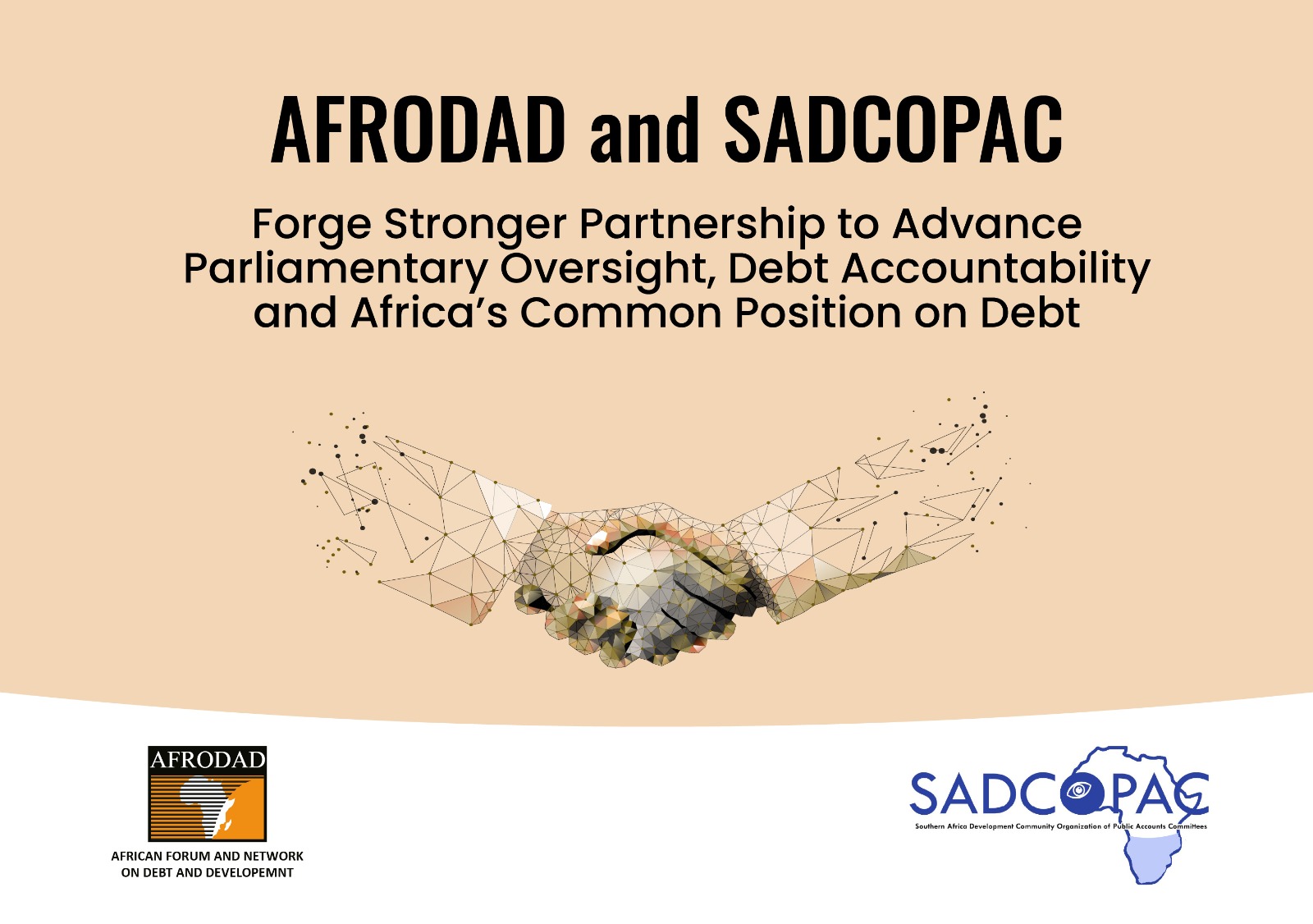
The sixth edition of the AFRODAD Media Initiative (AFROMEDI VI) has commenced in Nairobi, Kenya, convening over 45 journalists and finance experts from 29 African countries.  Running from May 27 to May 29, the three-day forum is themed, “Partnering with Media to Advance Socio-Economic Justice and Africa’s Common Position on Debt.”

AFRODAD Interim Executive Director Dr. Theophilus Yungong speaking during the opening ceremony 

Organized by the African Forum and Network on Debt and Development (AFRODAD) in partnership with Transparency International Kenya and the Stop the Bleeding Campaign, the event emphasizes the critical role of media in driving accountability.

In his opening remarks, AFRODAD Interim Executive Director Dr. Theophilus Yungong described the media as one of the continent’s most powerful tools for accountability, especially as African nations navigate rising debt distress, fiscal pressures, and widening development gaps.

“Only a journalist can make that connection visible to the people who need to understand it most,” Dr. Yungong stated. He emphasized that true accountability is only possible when citizens grasp the implications of the borrowing decisions made in their name.

“When the public watches, things change. When voters ask questions, politicians answer. And when journalists illuminate what would otherwise remain hidden, the powerful can no longer act with impunity.”

He further challenged attendees to help shape a narrative where Africa “tells its own story, sets its own terms, and holds its own leaders—and the world—accountable.”

Gibson Mwaita, Head of Programmes at Transparency International Kenya, reinforced this message by highlighting the link between corruption, weak accountability, and the continent’s economic challenges.

Referring to the 2025 Corruption Perceptions Index, Mwaita noted that Sub-Saharan Africa remains the lowest-performing region globally, with an average score of just 32 out of 100. He affirmed that journalists are essential to strengthening oversight and safeguarding public resources across the continent.

“Media practitioners are not merely observers of economic events; they are active actors in shaping reform conversations,” Mwaita said.

The AFROMEDI initiative enhances media capacity to report on sovereign debt management, fiscal justice, and the global financial architecture. By championing people-centered storytelling, the program bridges the gap between complex macroeconomic policies and everyday realities.

Since its 2021 launch, AFROMEDI has trained over 600 journalists across 37 African countries, fostering a robust network dedicated to accountability and public discourse.

The initiative’s framework is deeply rooted in the African Borrowing Charter, the Lomé Declaration’s Common African Position on Debt, and the long-term goals of the AU’s Agenda 2063.

Minister Atanga Nji Urges Cameroonians To Make Daily Exercise A Vital Routine

By Brian Mboh

The Minister of Territorial Administration (MINAT), Paul Atanga Nji, has issued a clarion call for Cameroonians to integrate regular physical exercise into their daily routines, citing its profound benefits for long-term health and vitality.

Minister Paul Atanga Nji and Eto’o Fils

The Minister made this appeal on Saturday, May 23, at the Golgotha Tennis Club in Yaoundé, where he demonstrated his own commitment to fitness by completing a rigorous tennis match that lasted one hour and thirty minutes without interruption.

The exhibition match was attended by high-profile figures, including Prof. François Bolvine Wakata, Minister Delegate in charge of Relations with the Assembly; Samuel Eto’o Fils, President of the Cameroon Football Federation (FECAFOOT); and numerous local tennis enthusiasts.

Through this display of stamina, Minister Atanga Nji appeared to address recent public commentary regarding his physical well-being. Furthermore, he used the platform to advise football authorities on the qualities necessary for the next generation of athletes.

“It is very important for our players to take sports seriously in order to avoid muscle cramps,” the Minister stated. “It is vital to exercise, for it helps to keep you in good shape.”

Minister Paul Atanga Nji in action at Golgotha Tennis Club

Reflecting on his own regimen, Atanga Nji added, “As you can see, I am above 65 years, yet you can acknowledge my fitness due to my constant involvement on the tennis courts. You should emphasize endurance and resistance when calling up your players. Your presence today among us is to make you part of the dynamic.”

Echoing these sentiments, FECAFOOT President Samuel Eto’o Fils lauded the initiative, noting that sports serve as a catalyst for rejuvenation.

“Seeing Minister Paul Atanga Nji play for one hour and thirty minutes is a clear message of how sports can help overcome health challenges through endurance and resistance,” Eto’o remarked.

Eto’o further emphasized the importance of the event, stating that his presence was intended to support the Minister’s vision and to encourage the broader Cameroonian public to make physical activity a cornerstone of their daily lives.

 Min Paul Atanga Nji (L) Min François Bolvine Wakata (M)  and Samuel Eto’o Fils(R)

Light Rain Marks 54th National Day In Yaounde As President Biya Presides

By Etienne Mainimo Mengnjo

Thousands of Cameroonians gathered under light rains on Wednesday, May 20, in Yaoundé to mark the country’s 54th National Day. The drizzle, far from dampening the spirit of the event, seemed to add a solemn tone to the occasion as President Paul Biya presided over the celebrations.

President Paul Biya (Middle) applauds as the military parade marches past on the 20th May Boulevard (Photo: Presidency)

Paul Biya, alongside the First Lady Chantal Biya, was joined by government officials and foreign dignitaries at the ceremonial pavilion. This year’s theme was “National Unity: Backbone of Our Defense System, Bedrock of Cameroon’s Development.” A key highlight of this year’s edition was the participation of guest of honour, Chadian military contingent.

However, the 20th May Boulevard was transformed into a display of national pride. Military contingents marched in rhythm, students and political groups chanted songs, and many carried placards calling for unity. Many described the ceremony as a powerful reminder of the nation’s resilience and the bonds that hold its people together, even amid ongoing challenges.

For many in attendance, however, the day brought mixed emotions. Some questioned whether the unity on display reflected the country’s true reality.

“I am happy to be part of this day because I just marched past in front of President Paul Biya,” said one participant. “He is the father of the nation and has done a lot to make the country be where it is. I am so happy and will continue to pray that God gives him divine grace to lead this country.”

Another attendee, Frida, stressed the historical importance of the anniversary. “As a Cameroonian, celebrating this day is of utmost importance because it is a day that means so much to us,” she said. “It commemorates the historic 1972 national referendum where citizens voted to transition the country from a federal republic into a unitary state.”

But not everyone shared that enthusiasm. Elvis, who also took part in the march, expressed disappointment. “I am happy I participated in the march past, but deep down in my heart, the reason why we are celebrating this day doesn’t make sense at all,” he said. “Some people have turned it into a day of embezzling money, celebrating what they don’t even know.”

Marie Claire who watched from her house voiced similar concerns about the gap between official messages and daily life. “When I see the messages hanging all over town and those that were projected during the march past, those messages are very far from being a reality,” she said. “Some of those messages to me are just produced to continue singing for unity, but the real unity that we want is not there.”

Beyond Yaounde, Cameroonians in other cities and at diplomatic missions abroad also commemorated the day with ceremonies and flag-raising events. Despite differing views on the state of national unity, the 54th anniversary remained a moment of reflection for a country still grappling with what that unity truly means.


Cameroonian’s Bold Prediction Ignites Lagos Showdown Ahead Of PFL Africa

By Etienne Mainimo Mengnjo

The Professional Fighters League (PFL) Africa is bracing for a hostile reception on June 13 as Cameroonian lightweight Octave Ayinda has officially declared war on his Nigerian opponent, Patrick Ocheme.

Octave Ayinda from Cameroon

Ahead of their tournament clash at the Eko Convention Centre, Ayinda, nicknamed “The Bantu Warrior,” took to social media to dismiss the chances of Ocheme, known as “Star Boi,” casting the upcoming lightweight tournament bout as a one-sided affair.

“I’ve spent hours breaking down his previous fights,” Ayinda said in a video statement released this week. “It’s going to be crazy when we meet because I don’t see this guy being able to survive my strength. Yeah, he’s not going to survive.”

The matchup serves as a pivotal opening-round contest for the tournament, where both fighters are vying for a championship belt and a $100,000 grand prize.

The Lagos event, marks a significant expansion for the promotion, bringing top-tier talent from across the continent to the heart of Nigeria’s commercial capital.

For the Nigerian contingent, the bout is more than just a tournament opener; it is a chance for Ocheme to defend home turf against a surging Cameroonian threat. While Ocheme looks to capitalize on the local crowd’s energy, Ayinda is determined to silence the Lagos audience.

Ayinda leads a four-man Cameroonian delegation scheduled to compete on the Lagos card. He is joined by several high-profile compatriots, including 2025 PFL Africa finalist Alain “The African Assassin” Majorique, and rising prospects Styve “The Revolution” Ngono and Jordan Fongno.

Analysts view the Ayinda-Ocheme fight as a marquee matchup, with both competitors eager to define their legacy on Africa’s rapidly expanding mixed martial arts circuit. As the tournament bracket takes shape, the pressure remains on the Cameroonian to back up his aggressive pre-fight rhetoric when the cage door closes on June 13.


VitalizeDx Validates Saliva-Based Performance Tech In Real-World Football Trial

By Etienne Mainimo Mengnjo

VitalizeDx, an Italian-Swiss startup and member of the GSIC community, has successfully validated its saliva-based performance monitoring technology through a real-world football evaluation carried out in the province of Valencia. The testing was conducted recently in collaboration with Torrent CF, a semi-professional football club from the Valencian Region, under live operational conditions.

VitalizeDx has developed a rapid saliva-testing solution capable of delivering results in less than five minutes by analyzing biological biomarkers linked to athlete health, physical readiness, recovery, performance optimization, and injury risk prevention. The technology provides sports organizations with a fast, non-invasive tool to support daily performance and medical decision-making.

More than 20 Torrent CF semi-professional players took part in the evaluation during the final phase of the season, allowing the solution to be tested in real training and competitive conditions. The session was coordinated by Pablo Gomez, Men’s Football Coordinator at Torrent CF, together with Carlos Valero, Head of the Physical Preparation Area, and Juan Fuentes, Director of the GSIC Testing Lab in Valencia.

VitalizeDx founder Lavinia Alberi Auber was present on site throughout the evaluation, working closely with the club’s technical and performance staff. During the session, she explained the testing methodology, the biomarkers analyzed, and the operational procedures required to ensure reliable saliva collection and interpretation. This hands-on approach enabled practitioners to explore how the solution can be realistically integrated into football performance workflows.

The evaluation followed the GSIC Testing Lab’s proprietary methodology, combining technical and functional analysis with validation in real operational environments. This process allowed VitalizeDx to demonstrate not only the scientific foundation of its solution, but also its usability and practical impact under real sporting conditions.

The project also highlights how Valencia is attracting sportstech companies from across Europe and beyond, providing them with access to real testing environments and performance contexts. Through initiatives like the GSIC Testing Lab, international startups can validate their solutions in collaboration with sports organizations operating in real-world conditions.

Following the successful evaluation, VitalizeDx has been awarded the GSIC Certificate 201503 “Wearable & Performance,” reinforcing its position as an innovative performance technology within the global GSIC ecosystem.

The Global Sports Innovation Center (GSIC), powered by Microsoft, is a global non-profit association that connects the sports industry with innovative technology solutions through its international ecosystem, testing capabilities and strategic partnerships, driving real collaboration and impact worldwide.

GSIC Testing Lab is a center of excellence in innovation in Sports, Entertainment, Media and Health managed by GSIC and promoted by the Valencia Region and the Valencia City Hall through their innovation strategy València Innovation Capital.

We Are Bringing AI To Every Phone, Offline And In 100 African Languages—Starting With ‘Choronko’ – Zuo Bruno, Cybersecurity Engineer

Cameroonian-born cybersecurity engineer and founder of Zuoix, Zuo Bruno, is redefining the global tech landscape with a breakthrough offline AI platform designed to operate entirely without internet connectivity. In an exclusive interview with The Post, Zuo Bruno said the offline AI platform aims to bring AI to every phone, offline and in 100 languages, starting with the “Choronko” phone. Speaking further, he stated that his inspiration stemmed from 2017, when the internet was off in the Anglophone Regions for 93 days, changing the course of livelihood as students faced difficulties, health care was disrupted, and farmers saw their activities come to a stop. He stated that the platform, SkyDew, is already live for MTN Cameroon, handling a meaningful spread of Cameroonian languages—including Pidgin English among others. He added that technology should no longer be a privilege of the urban elite, but a practical tool accessible to anyone with a mobile device, regardless of their data plan or dialect. Read the excerpt.

Zuo Bruno, Cybersecurity Engineer

Excerpt:

News-lens: Mr. Bruno, let’s go back to 2017. For 93 days, the internet was off in the Northwest and Southwest Regions of Cameroon. What was the first thought that came to your mind when you realised even simple things like sending money or homework had stopped working?

Zuo Bruno: Honestly, my first thought was disbelief — and then a kind of quiet anger. I have family there, and the shutdown hit me personally in ways people who have never lived it cannot easily imagine. I depended entirely on a cyber café for my work and my livelihood, and when that café was forced to close for three months, I could not eat properly, I could not pay my rent. My income simply stopped. I kept thinking about my cousins who could not submit assignments, the traders in Bamenda who lost contracts overnight, the parents who could not send school fees, the doctors who could not receive lab results. We talk about the internet as if it is a luxury, but in those 93 days it became painfully clear: in 2017, cutting the internet was no different from cutting the water supply. People could not work, learn, heal, or even mourn properly.

But the thought that stayed with me longest was this — if a government can flip a switch and silence an entire region, then the technology we are building on top of that switch is fragile. We were building castles on someone else’s foundation. That is the moment, as an engineer, that something shifted in me permanently.

You created SkyDew so that anyone with any phone — even a very old one — can use AI. What did you see with your own eyes that made you say: “I must build this for people without internet?”

Two scenes, really. The first was during a trip to Bamenda. I watched a woman in a small village try to ask a health question. She had a basic Nokia, no data plan, no smartphone. Her grandson, who had a smartphone, had travelled. So she sat there with a question that ChatGPT could have answered in three seconds — and she had no way in. The whole AI revolution was happening above her head, in a cloud she could not reach.

The second was simply noticing the global AI boom. Billions of dollars were flowing into models that could write Shakespeare and pass medical exams — but none of them worked on a feature phone in Ikiliwindi or Kwakwa. Garoua and Buea already have internet coverage; the real gap is in the rural villages where life actually happens. I realised the AI industry had quietly decided that over 700 million Africans without reliable internet were simply not the customer. That was the moment I said: someone has to build the bridge. And if no one else is going to, I will.

Can you explain to a farmer or a student how they would actually use SkyDew? If I have a simple phone with no data, what numbers do I press, and what happens next?

It is deliberately as simple as sending an SMS — because it is an SMS. There are two doors into SkyDew. The first door is SMS, and it is already live for MTN Cameroon. If you are on MTN today, you simply take any phone — even a Choronko, the basic feature phone many of us grew up with — and send a normal text message to (+237) 651-293-668. For example, you might type “What is causing yellow leaves on my maize?” and send it. A few seconds later, an SMS comes back with the answer, in the language you wrote in. No app to install. No data bundle. Nothing to learn. If you can send “Good morning” to your sister, you can use SkyDew. We are actively expanding to the other Cameroonian telcos — Orange, and CAMTEL — so that within a short time, no matter which network you are on, SkyDew will reach you.

The second door is USSD — those menus you already use to check your Mobile Money balance, like *126# or *150#. We are still working with the telcos to secure a dedicated SkyDew USSD number, and once that is in place, you will dial a short code, a menu will pop up: 1 for farming, 2 for health, 3 for school help, 4 for translation, and so on. You pick a number, type your question, and the answer comes back on the same screen. No internet involved at any point. The intelligence lives on our network; the phone only needs to send and receive SMS. That is all SkyDew needs. That is it.

Your system works in over 100 African languages, including local dialects. How many Cameroonian local dialects are integrated into SkyDew, and why was that so important to you? How did you ensure the AI’s responses remained culturally and linguistically accurate?

At the moment, SkyDew handles a meaningful spread of Cameroonian languages — including Pidgin English, which for many of us is the real lingua franca, alongside Ewondo, Duala, Fulfulde, Bamileke variants, Bassa, and others, and we are continuing to expand. Cameroon alone has over 250 languages, and I refuse to treat that as a problem. It is our wealth.

Why does it matter? Because AI that only speaks English or French is not neutral — it is a filter. It tells a grandmother in Kumbo that her wisdom is not welcome unless she translates herself first. I wanted to flip that. SkyDew should meet you in the language your mother sang to you in.

On accuracy, we did not just rely on translation engines. We worked with native speakers, teachers, and community linguists from each region to validate responses, especially around health, farming, and legal topics where a wrong word can do real damage. We also tuned the system to recognise cultural context — for example, when someone asks about a traditional remedy, SkyDew does not dismiss it the way a Silicon Valley model might; it engages respectfully and then adds modern information alongside. That balance is non-negotiable for me.

You could have built a fancy app for smartphones. Instead, you chose SMS and USSD — very basic tools. Some people might ask, “Why go backwards?” What would you tell them?

I would tell them: I did not go backwards. I went where the people are.

Smartphones in Africa are growing, yes, but the truth on the ground is that hundreds of millions of people still use feature phones, and even those with smartphones often switch them off or use them sparingly because data is expensive. If I build a beautiful React Native app with a clean dark mode, I have built it for the 15% who already had options. SMS and USSD reach the 100%. They work on every phone ever made. They work when the network is weak. They work when there is no Wi-Fi for 200 kilometres. They even work during a shutdown of mobile data, because the SMS channel often stays up.

There is also something philosophical here. The most powerful technology is not the flashiest — it is the one that disappears into people’s lives. SMS already disappeared into African life twenty years ago. I am simply pouring AI into a pipe that anyone with even a feature phone already trusts.

You won the Presidential Prize in 2018, then you seemed to disappear for nearly five years. Now we know you were building SkyDew. During that time in the shadows, what was the one moment or breakthrough that made you say, ‘Okay, this is ready for all of Africa’?

Those five years were not glamorous. There were nights I questioned everything. I was running Zuoix, doing cybersecurity work to fund the dream, writing code at 2 a.m., flying for business across the continent. The Presidential Prize was a beautiful affirmation, but prizes do not write code. Only work writes code.

The breakthrough moment came when we got our Mobile Network Operator detection working across 1,607 prefixes — meaning SkyDew could intelligently route a message from any phone, on any African network, to the right node in our system, and back. That sounds technical, but here is what it meant in human terms: a herder in northern Kenya, a market woman in Lagos, and a student in Yaoundé could all send the exact same kind of question and each receive an answer in their own language, on their own network, in seconds — without any of them knowing or caring how it worked underneath.

When I saw that working end-to-end, on real SIM cards, with real responses coming back, I sat in my office and just breathed. I thought, “Okay. This is no longer a project. This is infrastructure.” That was the day I knew it was ready.

I heard a story of a farmer in Mali who diagnosed a sick tomato crop using SkyDew. What did that farmer say to you afterward? And what did that moment feel like for you as an engineer?

He said something I will carry with me forever. Roughly translated, he said: “My father used to ask the elders. Now the elders are gone, and I asked the small phone. It answered me like my father would have.” Then he laughed and said he saved his crop and was going to use the money to buy his daughter a school uniform.

As an engineer, you spend years staring at logs, fixing bugs at 3 a.m., arguing with yourself about architecture decisions nobody else will ever see. And then one day a man you have never met, in a village you have never visited, tells you that the thing you built in silence kept food on his table. I cannot describe that feeling cleanly. It is not pride. It is closer to gratitude — gratitude that the work was allowed to mean something. Every line of code I have written since then carries that farmer’s voice in it.

The government once shut down the internet for 93 days in the Anglophone Regions in Cameroon. Now you’ve built a tool that doesn’t need the internet to work. Is SkyDew your quiet answer to that shutdown? And how does that feel?

I want to be careful here, because I am not building SkyDew as a protest against any one government. I am building it as a protection for every African — regardless of who is in power, regardless of which region they live in, regardless of what crisis comes next.

But yes — if I am honest, the 93 days are in the DNA of this product. They taught me that connectivity in Africa cannot depend on a single switch that anyone, anywhere, can flip. Shutdowns will happen again. Cables will be cut. Towers will fail. Storms will come. The question is: when that happens, does the continent go dark, or do we have a layer underneath that keeps working?

How does it feel? It feels like closure, in a small way. It feels like the engineer in me finally got to answer the citizen in me. Back in 2017, I had no power — I could only watch. Today, if a similar shutdown happened, a student could still get help with her homework, a mother could still get health information, a trader could still check market prices. Not because we defied anyone, but because we built something resilient enough to stand quietly beside whatever else is happening.

What is your simple, one-sentence message to a grandmother in Bamenda or a student in Enugu who has never used AI before but is curious to try SkyDew today?

My message is this: you do not need to be young, rich, educated, or connected to talk to AI. If you can send a text message, you can talk to the future. That is the whole promise of SkyDew.

To the grandmother in Bamenda: imagine your grandson is sick in the middle of the night and you do not know what to give him. Pick up your phone, type in Pidgin or in your mother tongue, send it to a SkyDew number, and in seconds you will get clear, careful advice — whether it is something you can manage at home or whether you need to rush to the clinic. To the student in Enugu: imagine it is exam season, your data bundle has finished, but you do not understand a chapter on photosynthesis. Send the question by SMS. SkyDew will explain it to you like a patient older brother, in the language you are comfortable in, and it will not cost you a data plan.

SkyDew numbers are being advertised across Africa. Text the one closest to you and get an AI response in seconds. For MTN Cameroon users, you can start today: send your question to (+237) 651-293-668. We are rolling out to Orange, Nexttel, CAMTEL, and more networks across the continent very soon. No app. No data. No barriers. Just send a message — and Africa will answer you back.

Interviewed by Etienne Mainimo Mengnjo (It was first published in The Post on Monday May 18, 2026 Edition No: 02562)