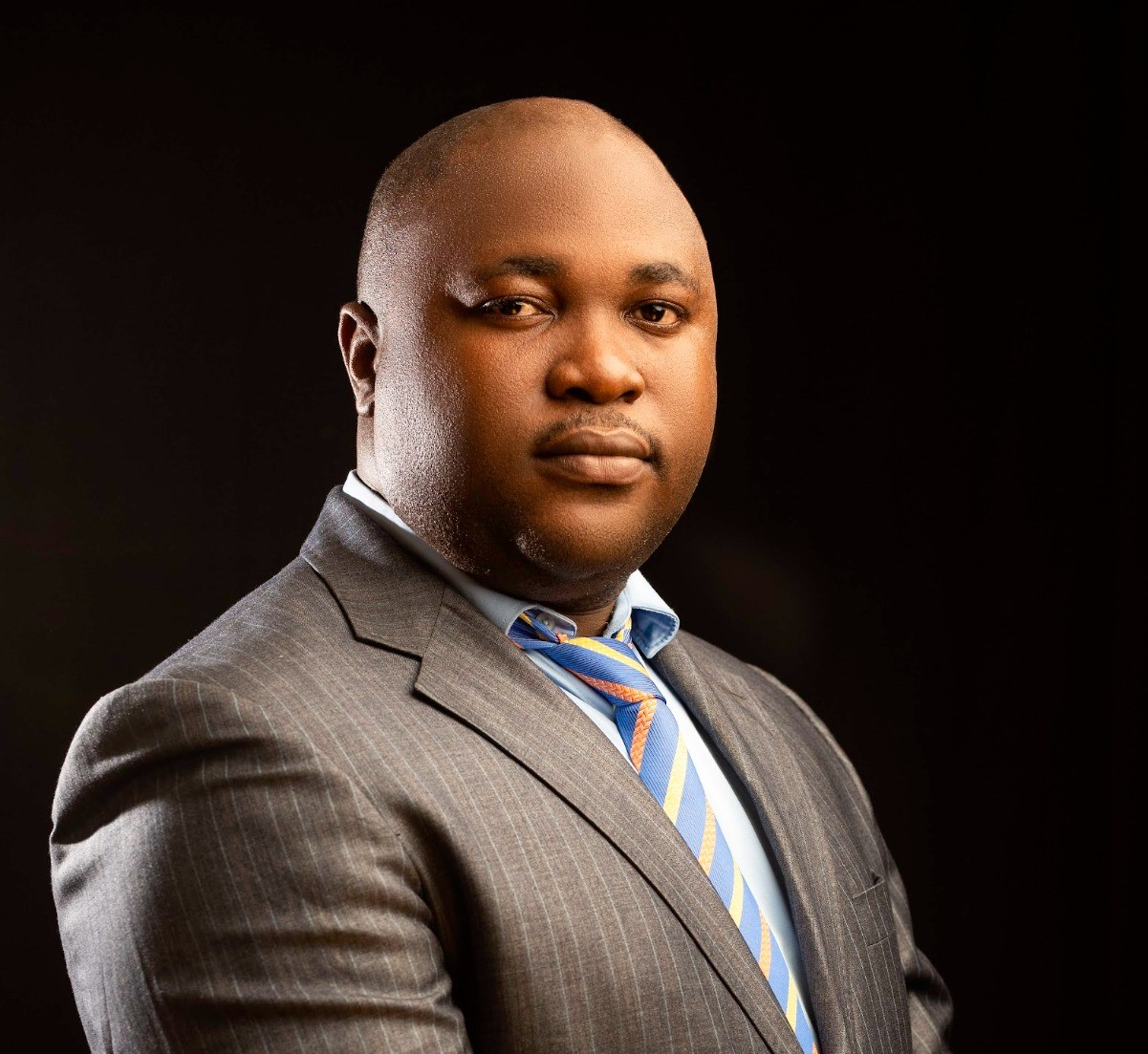
Cameroonian-born cybersecurity engineer and founder of Zuoix, Zuo Bruno, is redefining the global tech landscape with a breakthrough offline AI platform designed to operate entirely without internet connectivity. In an exclusive interview with The Post, Zuo Bruno said the offline AI platform aims to bring AI to every phone, offline and in 100 languages, starting with the “Choronko” phone. Speaking further, he stated that his inspiration stemmed from 2017, when the internet was off in the Anglophone Regions for 93 days, changing the course of livelihood as students faced difficulties, health care was disrupted, and farmers saw their activities come to a stop. He stated that the platform, SkyDew, is already live for MTN Cameroon, handling a meaningful spread of Cameroonian languages—including Pidgin English among others. He added that technology should no longer be a privilege of the urban elite, but a practical tool accessible to anyone with a mobile device, regardless of their data plan or dialect. Read the excerpt.
Excerpt:
News-lens: Mr. Bruno, let’s go back to 2017. For 93 days, the internet was off in the Northwest and Southwest Regions of Cameroon. What was the first thought that came to your mind when you realised even simple things like sending money or homework had stopped working?
Zuo Bruno: Honestly, my first thought was disbelief — and then a kind of quiet anger. I have family there, and the shutdown hit me personally in ways people who have never lived it cannot easily imagine. I depended entirely on a cyber café for my work and my livelihood, and when that café was forced to close for three months, I could not eat properly, I could not pay my rent. My income simply stopped. I kept thinking about my cousins who could not submit assignments, the traders in Bamenda who lost contracts overnight, the parents who could not send school fees, the doctors who could not receive lab results. We talk about the internet as if it is a luxury, but in those 93 days it became painfully clear: in 2017, cutting the internet was no different from cutting the water supply. People could not work, learn, heal, or even mourn properly.
But the thought that stayed with me longest was this — if a government can flip a switch and silence an entire region, then the technology we are building on top of that switch is fragile. We were building castles on someone else’s foundation. That is the moment, as an engineer, that something shifted in me permanently.
You created SkyDew so that anyone with any phone — even a very old one — can use AI. What did you see with your own eyes that made you say: “I must build this for people without internet?”
Two scenes, really. The first was during a trip to Bamenda. I watched a woman in a small village try to ask a health question. She had a basic Nokia, no data plan, no smartphone. Her grandson, who had a smartphone, had travelled. So she sat there with a question that ChatGPT could have answered in three seconds — and she had no way in. The whole AI revolution was happening above her head, in a cloud she could not reach.
The second was simply noticing the global AI boom. Billions of dollars were flowing into models that could write Shakespeare and pass medical exams — but none of them worked on a feature phone in Ikiliwindi or Kwakwa. Garoua and Buea already have internet coverage; the real gap is in the rural villages where life actually happens. I realised the AI industry had quietly decided that over 700 million Africans without reliable internet were simply not the customer. That was the moment I said: someone has to build the bridge. And if no one else is going to, I will.
Can you explain to a farmer or a student how they would actually use SkyDew? If I have a simple phone with no data, what numbers do I press, and what happens next?
It is deliberately as simple as sending an SMS — because it is an SMS. There are two doors into SkyDew. The first door is SMS, and it is already live for MTN Cameroon. If you are on MTN today, you simply take any phone — even a Choronko, the basic feature phone many of us grew up with — and send a normal text message to (+237) 651-293-668. For example, you might type “What is causing yellow leaves on my maize?” and send it. A few seconds later, an SMS comes back with the answer, in the language you wrote in. No app to install. No data bundle. Nothing to learn. If you can send “Good morning” to your sister, you can use SkyDew. We are actively expanding to the other Cameroonian telcos — Orange, and CAMTEL — so that within a short time, no matter which network you are on, SkyDew will reach you.
The second door is USSD — those menus you already use to check your Mobile Money balance, like *126# or *150#. We are still working with the telcos to secure a dedicated SkyDew USSD number, and once that is in place, you will dial a short code, a menu will pop up: 1 for farming, 2 for health, 3 for school help, 4 for translation, and so on. You pick a number, type your question, and the answer comes back on the same screen. No internet involved at any point. The intelligence lives on our network; the phone only needs to send and receive SMS. That is all SkyDew needs. That is it.
Your system works in over 100 African languages, including local dialects. How many Cameroonian local dialects are integrated into SkyDew, and why was that so important to you? How did you ensure the AI’s responses remained culturally and linguistically accurate?
At the moment, SkyDew handles a meaningful spread of Cameroonian languages — including Pidgin English, which for many of us is the real lingua franca, alongside Ewondo, Duala, Fulfulde, Bamileke variants, Bassa, and others, and we are continuing to expand. Cameroon alone has over 250 languages, and I refuse to treat that as a problem. It is our wealth.
Why does it matter? Because AI that only speaks English or French is not neutral — it is a filter. It tells a grandmother in Kumbo that her wisdom is not welcome unless she translates herself first. I wanted to flip that. SkyDew should meet you in the language your mother sang to you in.
On accuracy, we did not just rely on translation engines. We worked with native speakers, teachers, and community linguists from each region to validate responses, especially around health, farming, and legal topics where a wrong word can do real damage. We also tuned the system to recognise cultural context — for example, when someone asks about a traditional remedy, SkyDew does not dismiss it the way a Silicon Valley model might; it engages respectfully and then adds modern information alongside. That balance is non-negotiable for me.
You could have built a fancy app for smartphones. Instead, you chose SMS and USSD — very basic tools. Some people might ask, “Why go backwards?” What would you tell them?
I would tell them: I did not go backwards. I went where the people are.
Smartphones in Africa are growing, yes, but the truth on the ground is that hundreds of millions of people still use feature phones, and even those with smartphones often switch them off or use them sparingly because data is expensive. If I build a beautiful React Native app with a clean dark mode, I have built it for the 15% who already had options. SMS and USSD reach the 100%. They work on every phone ever made. They work when the network is weak. They work when there is no Wi-Fi for 200 kilometres. They even work during a shutdown of mobile data, because the SMS channel often stays up.
There is also something philosophical here. The most powerful technology is not the flashiest — it is the one that disappears into people’s lives. SMS already disappeared into African life twenty years ago. I am simply pouring AI into a pipe that anyone with even a feature phone already trusts.
You won the Presidential Prize in 2018, then you seemed to disappear for nearly five years. Now we know you were building SkyDew. During that time in the shadows, what was the one moment or breakthrough that made you say, ‘Okay, this is ready for all of Africa’?
Those five years were not glamorous. There were nights I questioned everything. I was running Zuoix, doing cybersecurity work to fund the dream, writing code at 2 a.m., flying for business across the continent. The Presidential Prize was a beautiful affirmation, but prizes do not write code. Only work writes code.
The breakthrough moment came when we got our Mobile Network Operator detection working across 1,607 prefixes — meaning SkyDew could intelligently route a message from any phone, on any African network, to the right node in our system, and back. That sounds technical, but here is what it meant in human terms: a herder in northern Kenya, a market woman in Lagos, and a student in Yaoundé could all send the exact same kind of question and each receive an answer in their own language, on their own network, in seconds — without any of them knowing or caring how it worked underneath.
When I saw that working end-to-end, on real SIM cards, with real responses coming back, I sat in my office and just breathed. I thought, “Okay. This is no longer a project. This is infrastructure.” That was the day I knew it was ready.
I heard a story of a farmer in Mali who diagnosed a sick tomato crop using SkyDew. What did that farmer say to you afterward? And what did that moment feel like for you as an engineer?
He said something I will carry with me forever. Roughly translated, he said: “My father used to ask the elders. Now the elders are gone, and I asked the small phone. It answered me like my father would have.” Then he laughed and said he saved his crop and was going to use the money to buy his daughter a school uniform.
As an engineer, you spend years staring at logs, fixing bugs at 3 a.m., arguing with yourself about architecture decisions nobody else will ever see. And then one day a man you have never met, in a village you have never visited, tells you that the thing you built in silence kept food on his table. I cannot describe that feeling cleanly. It is not pride. It is closer to gratitude — gratitude that the work was allowed to mean something. Every line of code I have written since then carries that farmer’s voice in it.
The government once shut down the internet for 93 days in the Anglophone Regions in Cameroon. Now you’ve built a tool that doesn’t need the internet to work. Is SkyDew your quiet answer to that shutdown? And how does that feel?
I want to be careful here, because I am not building SkyDew as a protest against any one government. I am building it as a protection for every African — regardless of who is in power, regardless of which region they live in, regardless of what crisis comes next.
But yes — if I am honest, the 93 days are in the DNA of this product. They taught me that connectivity in Africa cannot depend on a single switch that anyone, anywhere, can flip. Shutdowns will happen again. Cables will be cut. Towers will fail. Storms will come. The question is: when that happens, does the continent go dark, or do we have a layer underneath that keeps working?
How does it feel? It feels like closure, in a small way. It feels like the engineer in me finally got to answer the citizen in me. Back in 2017, I had no power — I could only watch. Today, if a similar shutdown happened, a student could still get help with her homework, a mother could still get health information, a trader could still check market prices. Not because we defied anyone, but because we built something resilient enough to stand quietly beside whatever else is happening.
What is your simple, one-sentence message to a grandmother in Bamenda or a student in Enugu who has never used AI before but is curious to try SkyDew today?
My message is this: you do not need to be young, rich, educated, or connected to talk to AI. If you can send a text message, you can talk to the future. That is the whole promise of SkyDew.
To the grandmother in Bamenda: imagine your grandson is sick in the middle of the night and you do not know what to give him. Pick up your phone, type in Pidgin or in your mother tongue, send it to a SkyDew number, and in seconds you will get clear, careful advice — whether it is something you can manage at home or whether you need to rush to the clinic. To the student in Enugu: imagine it is exam season, your data bundle has finished, but you do not understand a chapter on photosynthesis. Send the question by SMS. SkyDew will explain it to you like a patient older brother, in the language you are comfortable in, and it will not cost you a data plan.
SkyDew numbers are being advertised across Africa. Text the one closest to you and get an AI response in seconds. For MTN Cameroon users, you can start today: send your question to (+237) 651-293-668. We are rolling out to Orange, Nexttel, CAMTEL, and more networks across the continent very soon. No app. No data. No barriers. Just send a message — and Africa will answer you back.
Interviewed by Etienne Mainimo Mengnjo (It was first published in The Post on Monday May 18, 2026 Edition No: 02562)