
List Posts

View All
Society

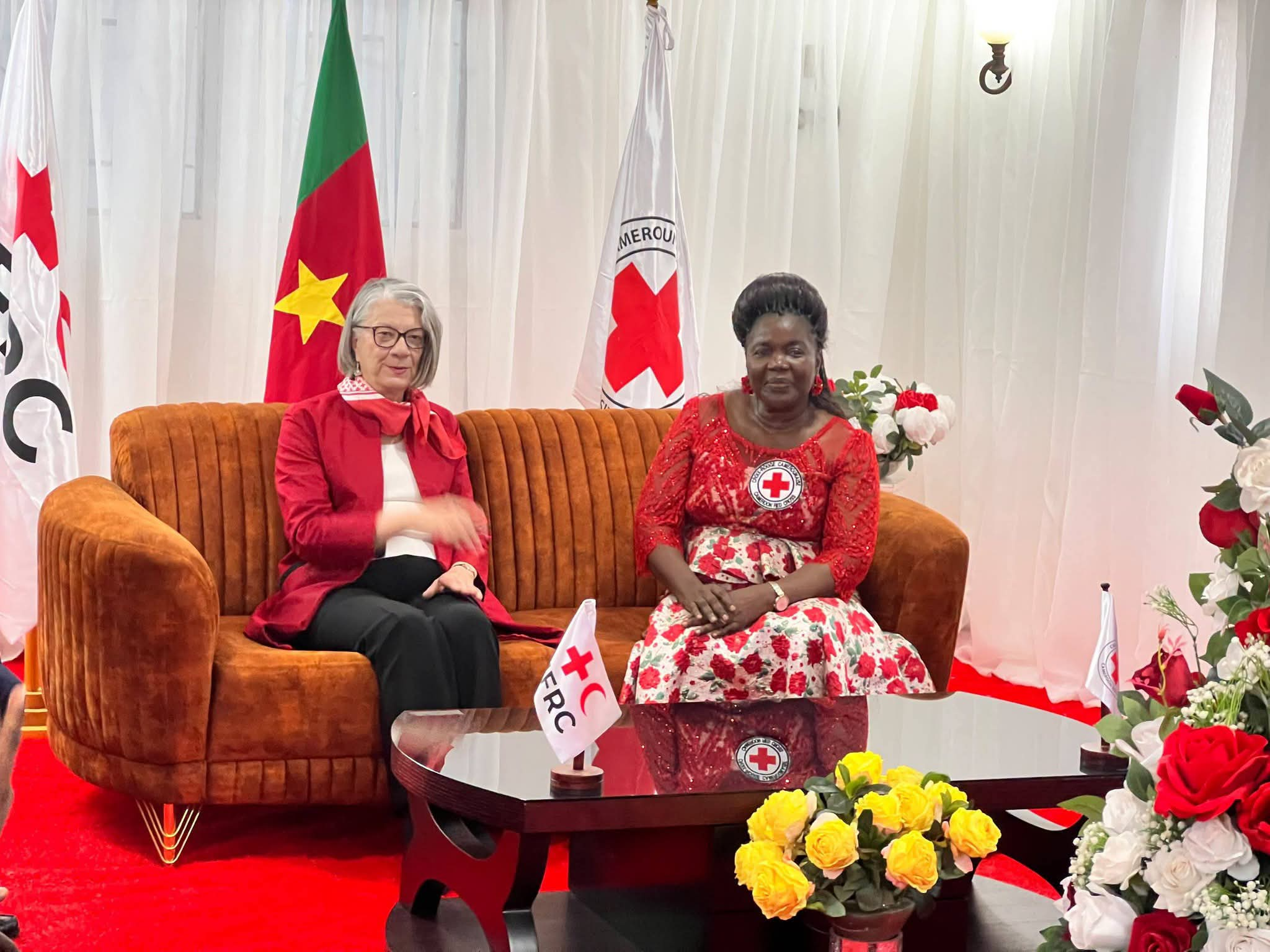
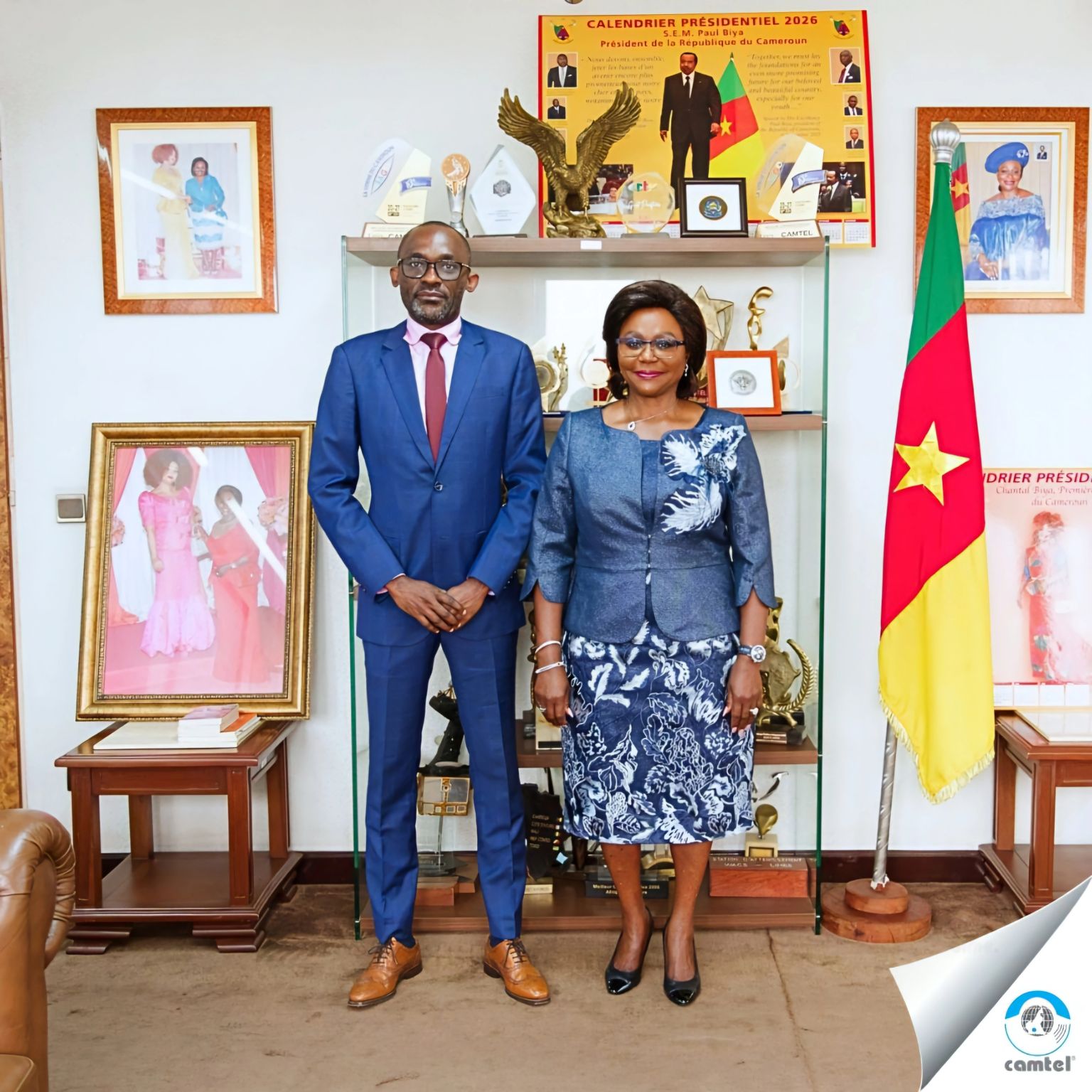
At Working Visit: IFRC, Cameroon Red Cross Strengthen Ties To Boost Crisis Relief

By Etienne Mainimo Mengnjo The International Federation of Red Cross and Red Crescent Societies (IFRC) and the Cameroon Red Cross…
Society

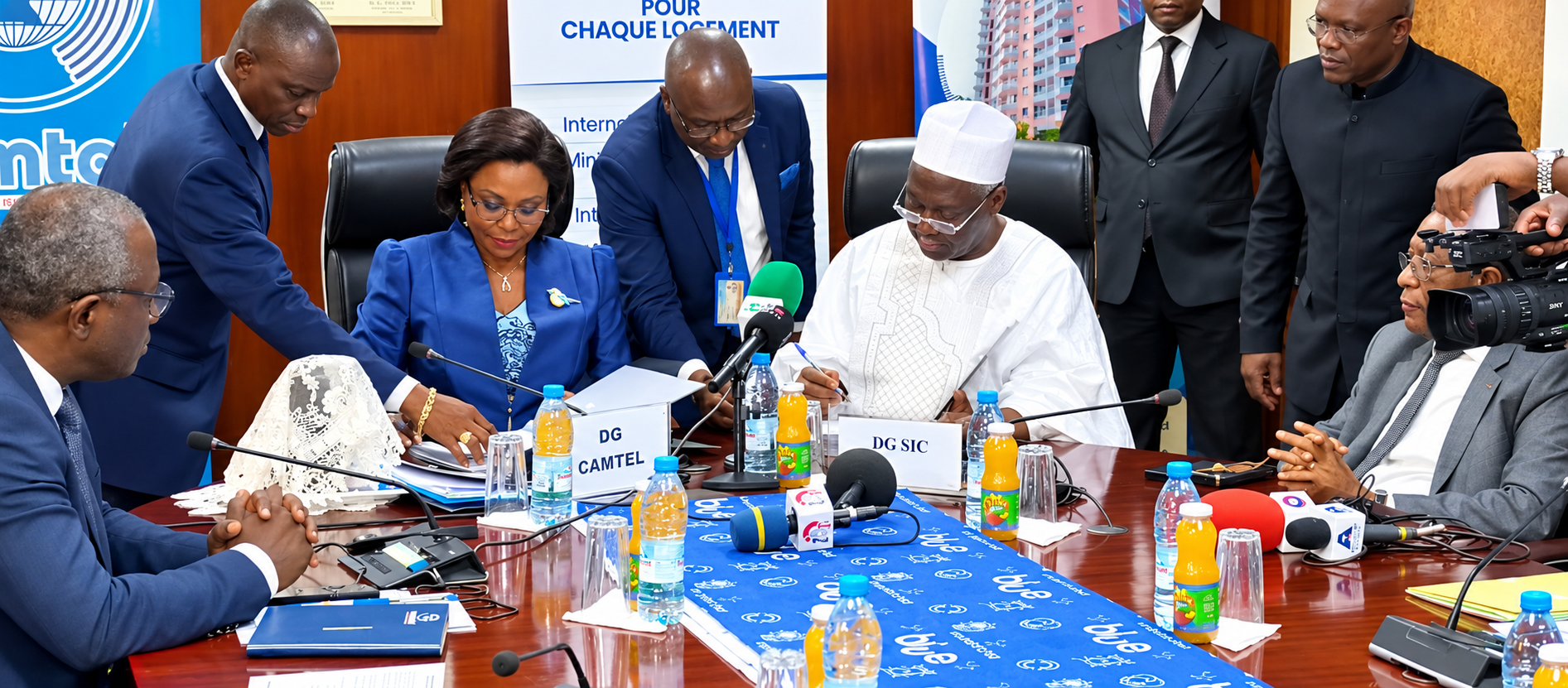
CAMTEL, SIC Partner To Bring Smart Connectivity To Residential Homes In Cameroon

By Etienne Mainimo Mengnjo Cameroon Telecommunications (CAMTEL), and Cameroon Real Estates Cooperation, better known in French as Société Immobilière du…

General

Sahndra Fon Dufe Makes History As First Cameroonian At Authentica Series Lab

 By Doc Moore Cameroonian filmmaker, writer, actress and cultural entrepreneur Sahndra Fon Dufe has made history as the first Cameroonian…
EducationTech

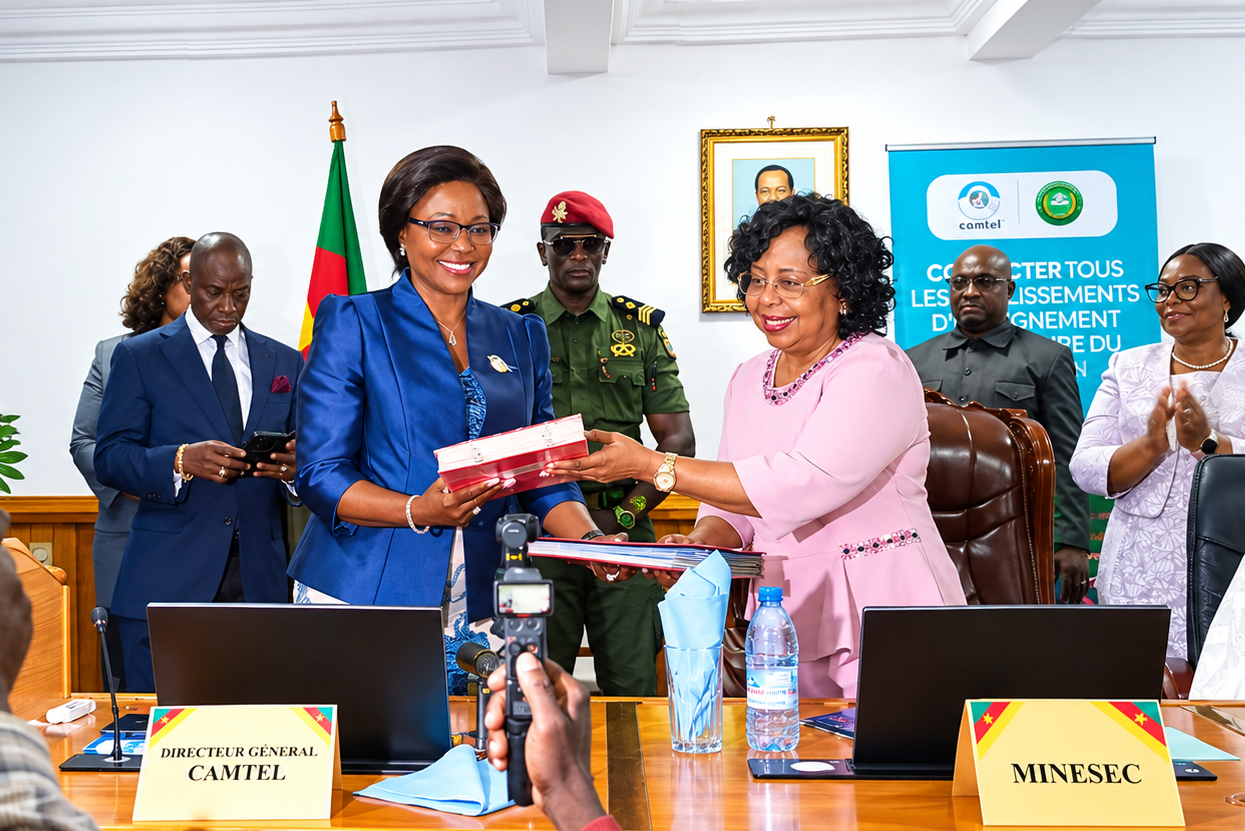
CAMTEL, MINESEC Seal Landmark Agreement To Mordernise & Digitally Transform Secondary Schools

By Etienne Mainimo Mengnjo Cameroon Telecommunications (CAMTEL) and the Ministry of Secondary Education (MINESEC) have signed a framework agreement aimed…
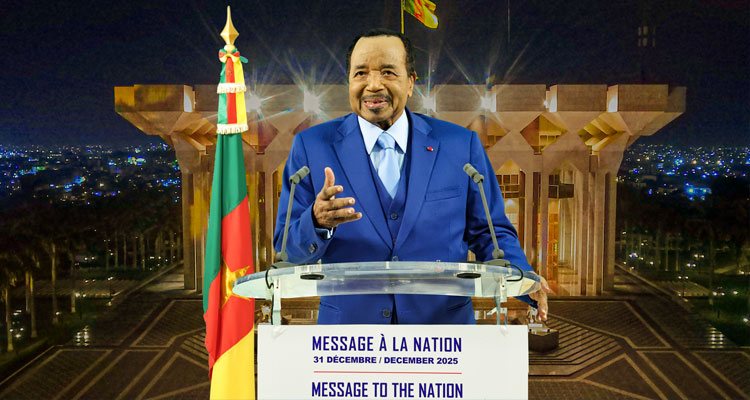
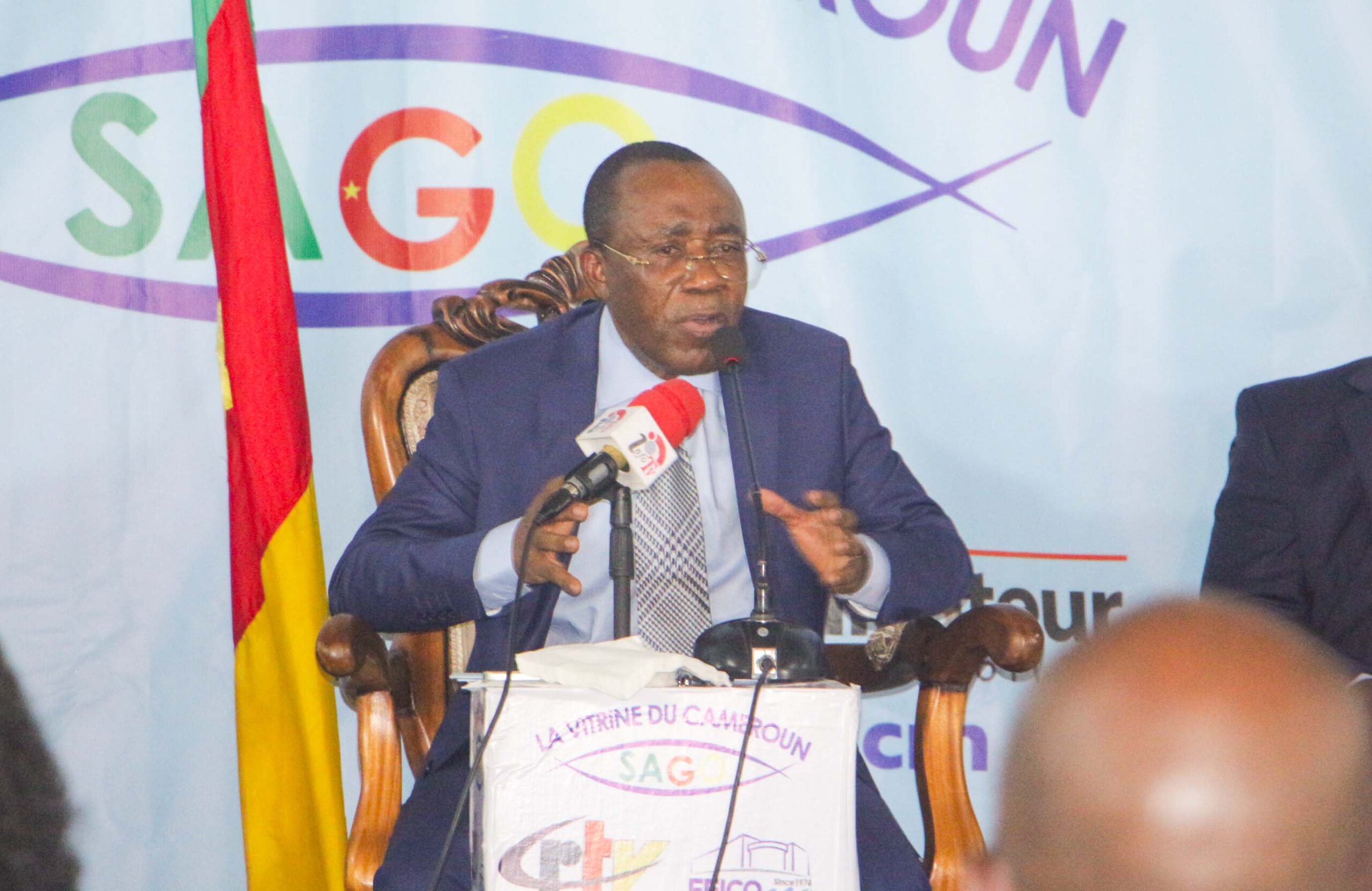
SAGO 2026: Cameroon Stands To Gain Enormously From Mining Restructuring – Minister Fuh Calistus

By Etienne Mainimo Mengnjo

Cameroon stands to gain significantly from a sweeping restructuring of its mining sector, the interim Minister of Mines, Industry and Technological Development (MINMIDT), Prof. Fuh Calistus Gentry said, as the government moves to boost national reserves, crack down on illegal operations, and formalize artisanal production.

Minister Fuh Calistus speaking during the conference  (Photo: MINMIDT)

Prof. Fuh Calistus made the remarks June 9 in Yaoundé during a conference presentation tied to the implementation of his ministry’s actions under the theme of Government Action Fair (SAGO) 2026: “Public–Private Sector Partnership: A driving force for an Emerging Cameroon.”

During the conference, Prof. Fuh Calistus outlined achievements in the mining sector along with initiatives in industry and technology. He said the fallout from restructuring would be enormous, particularly in revenue collection. Since the government began formal gold collection, about 1.5 tonnes have been gathered, but with restructuring fully implemented, the Minister stated that the target is nearly 2 tonnes annually for national reserves.

“Our target is that Cameroon should be able to collect close to 2 tonnes in national reserves every year, if restructuring is given a free hand without any influences to operate,”  Prof. Fuh Calistus said. He added that export taxes are collected at the source, and with proper declarations, the state would capture all export duties, with gold transporters carrying proof of tax payment regardless of their exit point.

Minister Fuh Calistus leading the panel discussion during the conference  (Photo: MINMIDT)

Minister Fuh Calistus said restructuring would transform mining into a greenfield activity conducted in closed systems, ending the practice of children bathing in mud. He said Cameroon cannot remain stuck with centuries-old traditions that have failed to develop the country.

As part of the restructuring, Minister Fuh Calistus stated that more than 100 companies face prosecution in the East and Adamawa regions. He said what is seen in Dubai compared with Cameroon reflects a simple fact: declared amounts do not match actual production. To him, restructuring addresses technical, environmental and technological issues to correct the imbalance between what is declared and what is produced.

“We believe that other administrations, like the customs services, all other administrations have to join,” Prof. Fuh Calistus said. “It’s no more a problem for the Ministry of Mines, it’s a problem for the nation.”

Minister Fuh Calistus speaking to the press after the conference (Photo: MINMIDT)  

On illegal mining, the Minister said after discovering more than 200 illegal semi-mechanized artisanal sites in the East and Adamawa regions, authorities withdrew 39 companies for failing to meet legal, fiscal, technical and technological obligations. Another 57 companies have received authorizations for semi-mechanized artisanal exploitation. He called for collaboration across all sectors to combat mining that is destroying the country.

Looking back at 2025, Prof. Fuh Calistus said under President Paul Biya’s leadership, Cameroon has become a mining nation with production starting in five major projects: the Bipindi–Grand Zambi and Kribi-Lobé iron ore projects, the Minim-Martap industrial bauxite project, the Bidzar industrial marble project, and the Colomine gold project.

For 2026, the Ministry is prioritizing monitoring of projects entering production, including the Mbalam, Nkout and Ngovayang iron ore projects and the Mborguéné and Bibemi gold projects. Together, these developments structure Cameroon’s mining industry around four value chains: iron, bauxite, limestone and gold.

Recent initiatives to sanitize the semi-mechanized artisanal gold sector include payment of a refundable environmental restoration bond of FCFA 63 million, a 25% simplified mining tax and a 5% export duty. Legal measures require Cameroonian nationals to hold a majority stake in companies holding semi-mechanized artisanal mining authorizations.

Officials during the conference (Photo: MINMIDT)

Technical measures include a minimum production threshold of five kilograms of gold per month per site equipped with 10 processing units, and a move after six months to a closed-circuit mineralized gravel processing system. With that threshold, projected annual output stands at 1,320 kilograms of gold, with an expected minimum collection of 380 kilograms by the National Mining Company.

The benefits are considerable. If 100 illegal mining sites are regularized, projected revenues would reach FCFA 8.64 billion. If 200 sites comply, revenues could hit FCFA 17.28 billion.

On the industrial front, Prof. Fuh Calistus said the Ministry has established integrated value chains to strengthen the import-substitution policy. Achievements include value chains for turning clay and feldspar into ceramic tiles, bauxite into alumina and aluminum, limestone into clinker and cement, iron ore into iron billets, timber processing supported by special industrial zones in Edéa and Bertoua, and the textile industry through the ongoing restructuring of CICAM.

Preparations for a cotton-processing industrial park in Garoua are advanced and expected to generate more than 10,000 jobs by 2028. The agro-industrial sector is expanding through local processing of cocoa, sugar, flour and pasta, alongside progress on the Ouassa-Babouté Agro-Industrial Technopole project. Domestic energy subsector development includes local manufacturing of gas cylinders to strengthen household energy security.

Minister and officials posed for a family picture (Photo: MINMIDT)

In technological development, he stated that the Ministry has launched initiatives to strengthen the national innovation ecosystem, including support to universities and specialized institutions with laboratory equipment and the establishment of Technology and Innovation Support Centers.

The Ministry also revived the National Technology Days, offering Cameroonian youth access to an innovation financing facility established by the African Intellectual Property Organization and its partner, the African Guarantee Fund.

At SAGO 2026: CAMTEL GM, Judith Yah Sunday Says Zamengoé Data Center Redefines State Control Over Public Data

By Etienne Mainimo Mengnjo

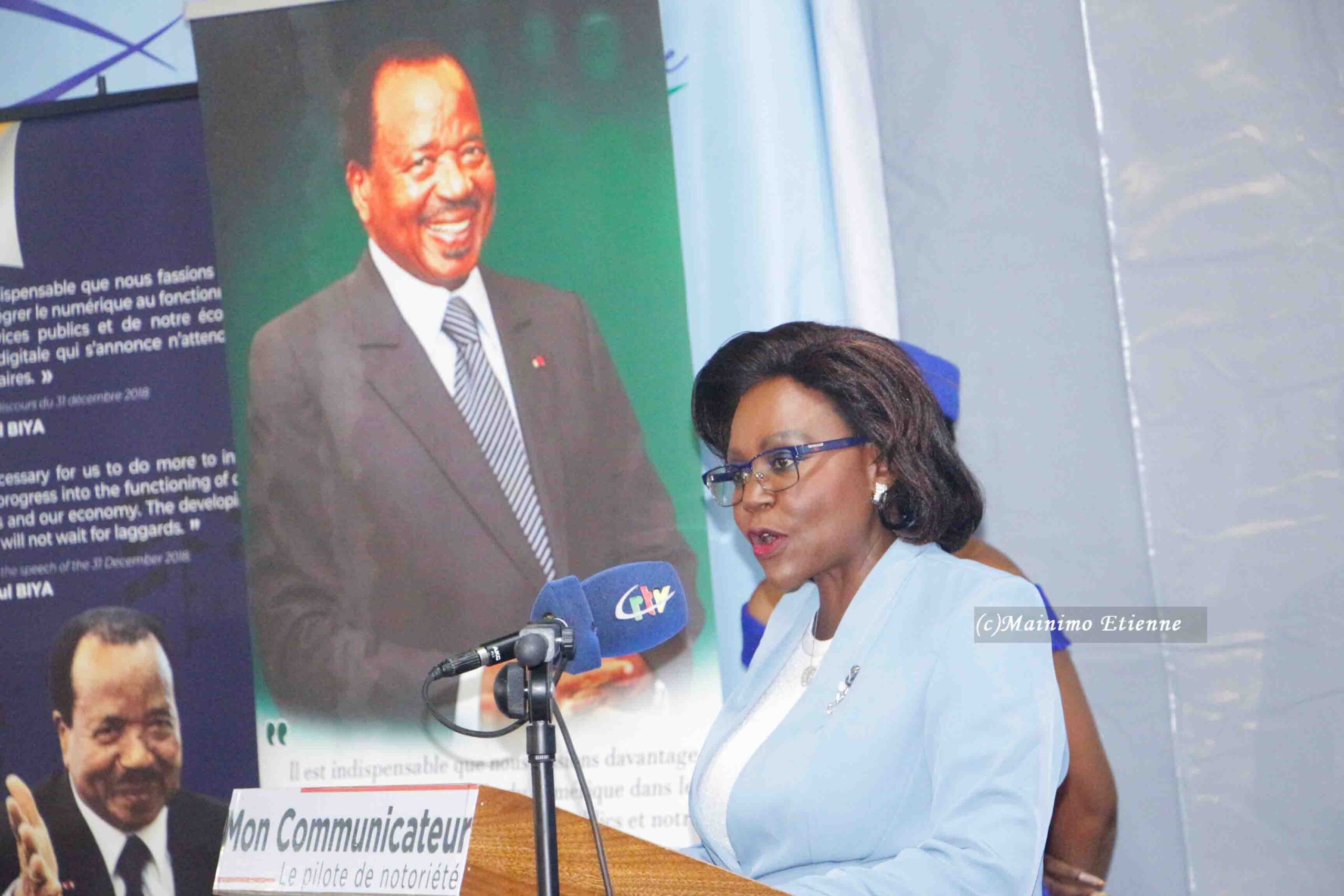
The Zamengoé data center is more than a repository of servers and cooling systems. To Judith Yah Sunday épse Achidi, General Manager of state-owned Cameroon Telecommunications (CAMTEL), it is a declaration of digital independence.

Judith Yah Sunday épse Achidi, General Manager of CAMTEL, speaking during the conference (Photo: Mainimo Etienne)

Cameroon’s top telecommunications executive described the facility June 9 as a purpose-built government asset designed to anchor the nation’s sovereign digital environment. Speaking at the Government Action Fair (SAGO) 2026, the General Manager framed data protection as inseparable from national security.

“Today, data is no longer just a simple computer file. They have become a heritage,” Yah Sunday told attendees in Yaoundé. “Data is an identity, an administrative memory, a tool for decision-making and a national security issue.”

The fair’s theme — “Public–Private Sector Partnership: A driving force for an Emerging Cameroon” — drew policymakers and industry figures. CAMTEL stood as the major sponsor, but Yah Sunday used her platform to deliver a pointed message about technological self-reliance.

Her presentation, themed “Protection of public data and digital sovereignty. Zamengoé data centre at the service of government action and the emergence of Cameroon,” laid out a history of vulnerability.

Panelists, led by Judith Yah Sunday épse Achidi, General Manager of CAMTEL, during the conference (Photo: Mainimo Etienne)

For years, she said, significant portions of sensitive data involving citizens, businesses and the government were stored on foreign-hosted servers. That exposure invited risks: data breaches, unauthorized access by foreign governments and heightened susceptibility to cyberattacks.

The Zamengoé center, certified Tier 3, offers an alternative. Designed with redundant power sources, advanced cooling, physical security perimeters and sophisticated cybersecurity defenses, the infrastructure stores Cameroonian data locally, manages it under Cameroonian jurisdiction and shields it from outside interference.

“Digital sovereignty is not a slogan,” Yah Sunday said. “It is being built progressively through infrastructure, skills, networks, technological choices and national political will.”

She called the center one of the most robust digital infrastructures in the subregion, noting its connections to major domestic and international networks. More than a technical upgrade, she argued, it aligns with President Paul Biya’s development vision: giving Cameroon reliable capacity to house, secure and control sensitive and critical data.

Cross section of officials during the conference (Photo: Mainimo Etienne)

Answering audience questions, Yah Sunday alongside other CAMTEL Officials emphasized that sovereignty also means controlling the underlying technology. Physical and logical security standards at Zamengoé, she said, ensure continuity of critical digital services — government, financial or telecommunications — even during external crises or failures affecting foreign infrastructure.

“The Zamengoé data center embodies Cameroon’s concrete response to its historical dependence on foreign-hosted servers,” she said. “Data control, physical and logical security, and service continuity: this infrastructure is redefining the landscape for the Cameroonian state by strengthening digital sovereignty and ensuring the protection of critical national data.”

For Yah Sunday, the facility is not an endpoint but a foundation. Modernization of the state, she said, must rest on solid ground — and that ground is now in Yaoundé.


Blue Podium, Blue Pride: CAMTEL Puts Its Stamp On Cameroon’s Cycling Tour

By Etienne Mainimo Mengnjo

The road unspools like a blue ribbon across the nation’s spine, from the sahel scrub of the north to the humid sprawl of Yaoundé. For 10 days, the whir of carbon-fiber wheels and the crackle of race radios will echo through cities and villages alike. But at every stage, another color stakes its claim: blue.

CAMTEL, Cameroon’s incumbent telecommunications provider, has cemented its role as the official sponsor of the 2026 International Cycling Tour of Cameroon, the country’s most prestigious cycling competition.

The race, which kicked off June 3, is more than a test of athletic endurance. It is also a rolling symbol of how corporate sponsorship can connect communities, reward local talent and broadcast a national story of resilience.

The company’s blue brand is everywhere. It drapes the victory podium. It adorns the coveted Blue Jersey, awarded to top performers. And at the opening ceremony June 2 in Maroua, it framed a message that went beyond marketing.

“This partnership reflects CAMTEL’s mission to support Cameroonian excellence across all sectors,” a company representative said. “Through the Blue brand, we’re not just sponsoring a race — we’re celebrating the speed, determination and resilience that define both cycling and Cameroon’s development.”

The 2026 Tour du Cameroun, a Class 2.2 event on the UCI Africa Tour, spans 1,049.3 kilometers over 10 stages, concluding June 14. Riders will carve through Maroua, Garoua, Bangangté, Bafoussam, Douala and the capital, Yaoundé.

For CAMTEL, which has held a decades-long partnership with the Cameroon Cycling Federation, the race is a natural extension of a broader sports strategy. The company previously sponsored the 25th edition of the Chantal Biya International Cycling Grand Prix and the 2024 Tour Cycliste International du Cameroun.

But this year, the telecommunications operator has placed special emphasis on the Blue Jersey. In recent editions, cyclists such as Kamzong Abossolo have won the prize, with CAMTEL formally recognizing their achievements. The company also awards 100,000 FCFA (about $165) to stage winners — a meaningful financial incentive in a sport where sponsorship can be scarce.

CAMTEL’s commitment goes beyond cycling. The operator has worked with FECAFOOT, Cameroon’s football federation, and has sought to bolster the country’s business sector through digital technology. Yet the Cameroon Cycling Tour holds unique power, officials say, because it unites a geographically diverse nation and showcases its landscapes.

As the race continues through June 14, the blue brand remains visible at every stage: victory ceremonies, media coverage, roadside banners. For young Cameroonians watching from the roadside, the sight of local riders like Abossolo standing atop a blue podium sends a quiet but persistent message.

The road is long. The hills are steep. But with CAMTEL’s backing, the 2026 tour is not just a race. It is a declaration that national unity and athletic ambition can ride together — one kilometer at a time.


Mining, Land Reforms Take Centre Stage As Parliament Opens June 2026 Session

By Etienne Mainimo Mengnjo

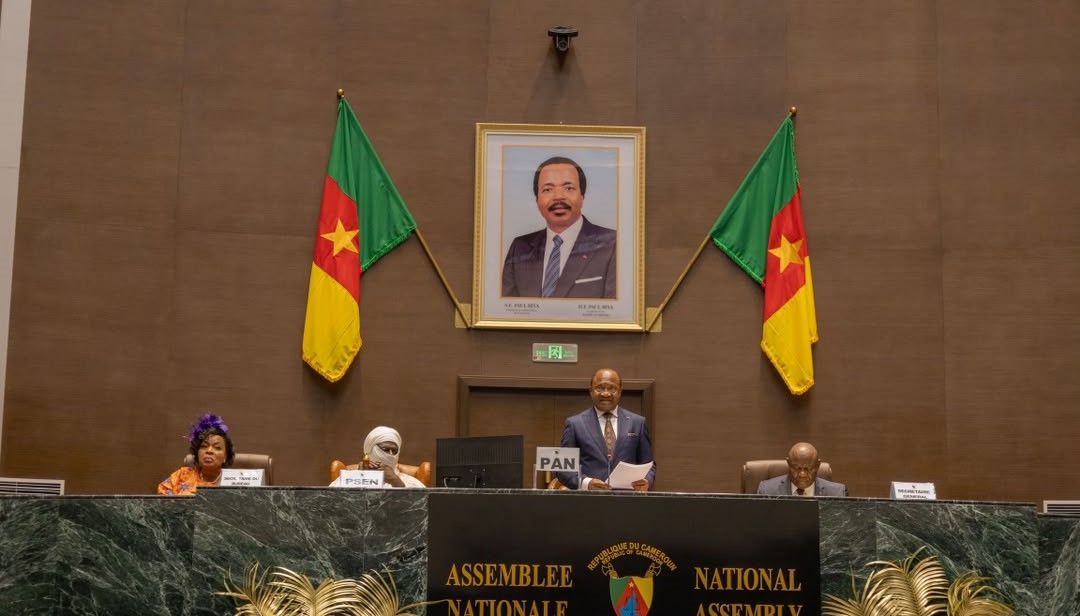
Calls for sweeping reforms in Cameroon’s mining and land tenure sectors dominated the opening of the June 2026 parliamentary session, as House Speaker of the National Assembly, Right Hon. Theodore Datouo, urged lawmakers and government officials to address issues that continue to fuel public concern.

Theodore Datouo speaking during the opening session of Parliament (Photo: National Assembly)

Opening the month-long session in Yaounde on June 9, House Speaker painted a broad picture of the challenges confronting Cameroonians, ranging from the rising cost of living and youth unemployment to access to quality education, healthcare, potable water, electricity, and modern infrastructure.

He noted that while Parliament must remain attentive to all these concerns, the mining and land sectors have emerged as particularly pressing issues in recent public discourse.


Unlocking the Promise of Mineral Wealth

Hon. Datouo described Cameroon’s mineral-rich subsoil as a strategic asset capable of accelerating economic growth, creating jobs, expanding infrastructure, and driving the structural transformation of the national economy.

Yet, despite the sector’s vast potential, questions persist over how mining revenues are collected, managed, and redistributed. In many mining communities, residents continue to feel disconnected from the wealth extracted from their lands, a situation that has generated frustration and heightened calls for greater accountability.

A cross section of Parliamenterians react during the opening ceremony (Photo: National Assembly)

“The issue of mining has become increasingly sensitive and cannot be ignored,” the Speaker stressed.

He called on government ministries and public institutions responsible for the sector to strengthen transparency mechanisms, improve oversight, ensure traceability of revenues, and guarantee that communities hosting mining activities benefit more directly from the economic gains generated.

According to Hon. Datouo, Parliament also has a key role to play through legislation and oversight. He urged stakeholders to reflect on reforms that would allow the country to maximise returns from its mineral resources while safeguarding the interests of local populations.


Land Ownership and Legal Security Under Scrutiny

The Speaker also turned attention to land governance, describing land certificates as the foundation of legal security in property ownership. However, he acknowledged that recurring disputes, lengthy administrative procedures, competing ownership claims, and questionable practices have weakened public confidence in the system.

Although government initiatives aimed at modernising land administration are already underway, Hon. Datouo emphasised that reform efforts must continue if citizens are to regain trust in land management institutions.

Government officials during the opening ceremony (Photo: National Assembly)

“Cameroonians do not expect sterile debates from us. They expect solutions and meaningful reforms,” he told lawmakers. “They expect our institutions to work together in the service of the common good.”

He added that Parliament would continue to carry out its responsibilities in a spirit of dialogue, responsibility, and commitment to national development.


Budget Debate to Shape 2027 Priorities

Beyond sectoral reforms, the June session is expected to focus heavily on the Budget Orientation Debate, a key exercise that will lay the foundation for the preparation of the 2027 State budget.

Hon. Datouo reminded parliamentarians that budget planning goes beyond approving expenditures. Instead, it requires a collective reflection on the country’s priorities and the direction of public policy.

Among the questions lawmakers must address, he said, are which sectors deserve special attention, how national priorities should be ranked, and how government can respond to citizens’ needs while operating within financial constraints.


Honouring Statesmen and National Milestones

The opening ceremony also provided an opportunity for the Speaker to pay tribute to two prominent figures of Cameroon’s legislative history: former Speaker of the National Assembly, Honourable Cavaye Yeguie Djibril, and President of the Senate, Senator Marcel Niat Njifenji, both of whom recently passed away after decades of public service.

Cameroonians Mourn Former House Speaker Hon. Cavayé Yéguié Djibril, Dead At 86

Hon. Datouo praised their contributions to the nation, describing their careers as marked by integrity, dedication, and dignity.

Former Senate President Marcel Niat Njifenji Dies At 91

He further welcomed several significant events that have recently enhanced Cameroon’s national and international profile, including the successful hosting of the 14th Ministerial Conference of the World Trade Organization, the visit of Pope Leo XIV, and celebrations marking the country’s 54th National Unity Day.


Preparing for a Global Parliamentary Gathering

Looking ahead, the Speaker called on all stakeholders to support preparations for the 51st General Assembly of the Parliamentary Assembly of the Francophonie (APF), which Cameroon will host.

He expressed confidence that the event would position Yaounde as a major hub for parliamentary dialogue, peace, and international

SESDP Launches Work-Study Apprenticeship Program For 500 Youth To Bridge Skills Gap

By Etienne Mainimo Mengnjo

In a bid to tackle a persistent mismatch between classroom learning and workplace demands,  the government of Cameroon through the Secondary Education and Skills Development Project (SESDP), have launched a quality apprenticeship program targeting 500 young people, with the goal of aligning training more closely with labor market needs.

The initiative, announced June 6 during a stakeholder engagement mission in Douala, is led by SESDP, operating through its Competitive Skills Development Mechanism (MCDC) brought together project leaders, businesses and professional organizations at the Douala Center of Excellence for Vocational Training.

According to program officials, the program combines theoretical instruction with hands-on experience. Youths will be train directly inside partner companies while also receiving classroom education at accredited vocational centers or company-integrated training sites. Each apprentice will be mentored by a qualified supervisor and will earn a professional certification upon completion, a credential designed to boost employability.

“The goal is to equip young people with immediately usable skills in sectors where demand for trained labor is high,” SESDP Program Manager said during the launch.

Central to the initiative’s success, the project leaders said, is strong business participation. The Douala mission aims to identify high-demand occupations, compile apprenticeship openings and tailor training content to local economic realities. Formal partnerships with companies will be established to guarantee placement for selected youth.

Several employers’ organizations and firms from strategic sectors have already signed on, including agribusiness, digital technology, energy, logistics, transportation, construction, metallurgy, automotive, hospitality, forestry and fashion.

Through the new initiative, SESDP aims to create a new generation of professionals better prepared for the job market, with the 500 apprentices expected to gain practical experience that eases their entry into companies or supports their own business ventures.

The broader objective, project leaders said, is to build a training system more closely connected to Cameroon’s economic realities — including new certification frameworks, digital tools for vocational education and graduate employment surveys.

Beyond the apprenticeship launch, SESDP has recorded other milestones nationwide: more than 350 secondary schools have received financial support to improve education quality; thousands of girls from low-enrollment areas have received targeted assistance to stay in school; and schools have been equipped with digital tools.

Thousands of teachers and educational leaders have been trained, and new training frameworks have been developed for construction, agribusiness, digital technology and energy. In vocational training specifically, 26 technical and vocational schools have been selected for significant funding to modernize equipment. Thousands of workers, entrepreneurs and social economy actors have also benefited from skills development programs.

The program is supported by the Cameroonian government and the World Bank.

GCE Exam Dates Rescheduled to June 22 – July 2 Following Leakage

By Etienne Mainimo Mengnjo

The Ministry of Secondary Education (MINESEC), in partnership with the Head of the Transition Management Team of the GCE Board, has rescheduled the remaining papers of the ongoing GCE examination session.

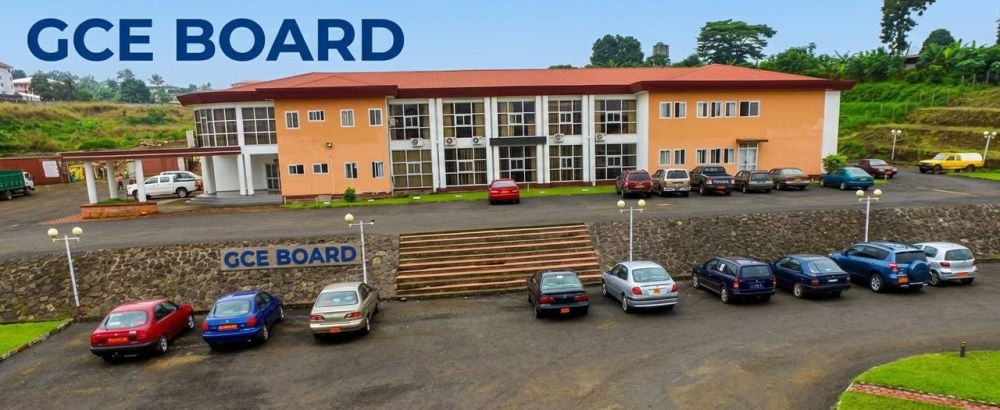
GCE Board Head office in Buea, SW Region

The decision follows a meeting between the two parties after they acknowledged the circulation of confidential examination questions through electronic means and social media platforms.

In a communiqué made public and signed by the Minister of Secondary Education, Prof. Nalova Lyonga, the Minister has reportedly collected evidence of the leakage, which she has handed over to the competent authorities for investigation.

Furthermore, after a thorough assessment of the situation and in consultation with the relevant authorities, the communiqué states that the Government has concluded that exceptional measures are necessary to preserve the credibility, fairness, and integrity of the GCE examination.

As a result, the remaining papers, originally scheduled to take place from Monday, June 8th to Thursday, June 18th, 2026, have been rescheduled to Monday, June 22nd to Thursday, July 2nd, 2026. The time slots remain unchanged, and the TVEE exams are NOT affected.

The GCE Board has called on candidates to remain calm and continue with their preparations. However, heads of examination centres, school administrators, superintendents, and other examination officials are instructed to cooperate fully with the measures the Government is putting in place, in collaboration with the GCE Board, to ensure the successful outcome of the examinations.

In the meantime, investigations are ongoing to identify the source and extent of the security breach and to ensure that all persons found responsible are brought to account in accordance with the law and applicable regulations.

The communiqué further states that the Government is fully aware of the inconvenience caused. However, preserving public confidence in the examination system and ensuring equal opportunity for all candidates remain paramount considerations.

Cameroon Women’s League Players To Receive FCFA 25000 Bonus Per Win Under New betPawa Deal

By Etienne Mainimo Mengnjo

Team players who register victories in eligible matches in the Cameroon Professional Women’s League, dubbed the Guinness Super League, will in the days ahead each receive direct financial rewards of 25,000 FCFA in their mobile money accounts.

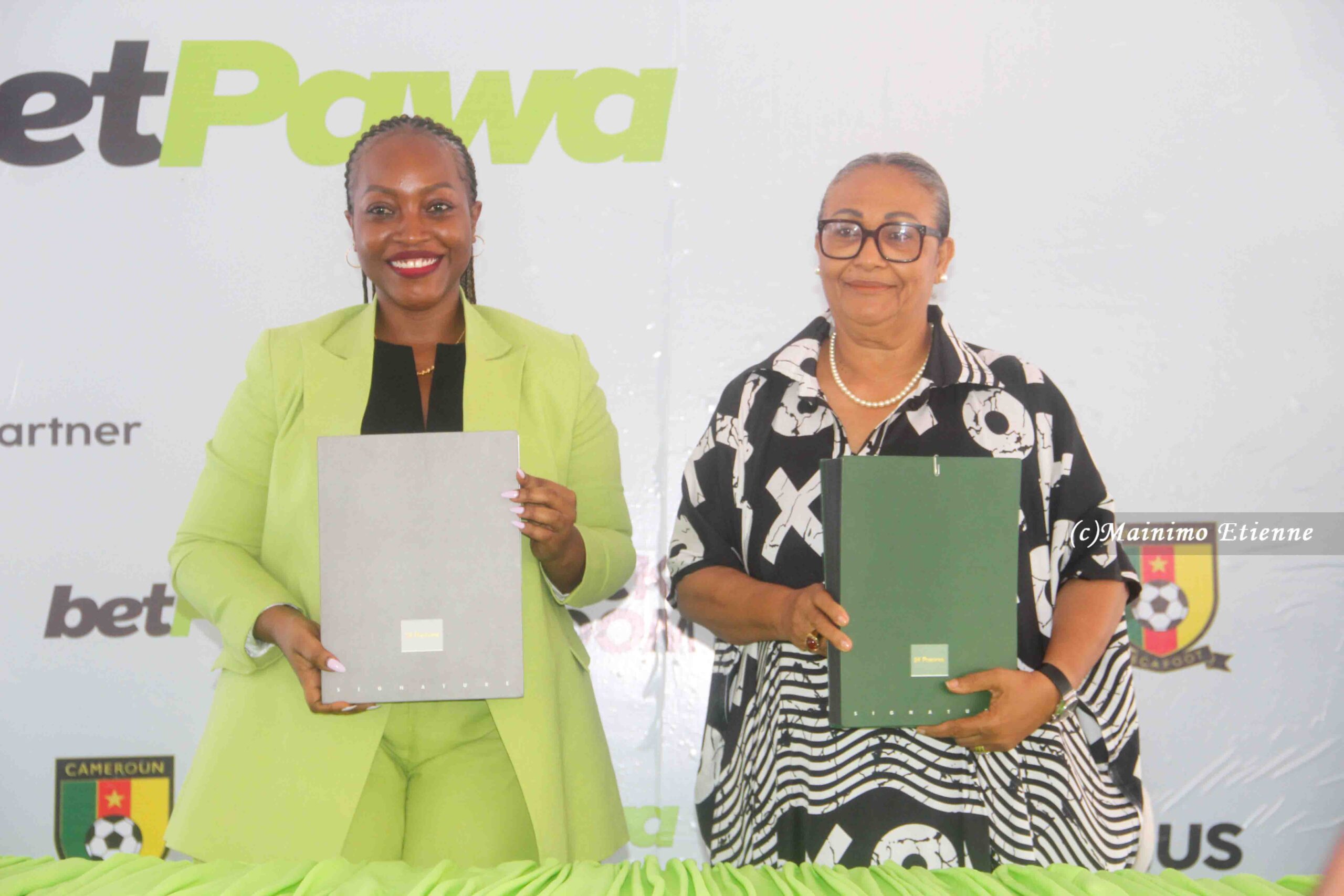
Borah Omary Ndanyungu (L) and Celine Eko (R) signing MoUs as betPawa launches “Locker Room Bonus” initiative (Photo: Mainimo Etienne)

The move follows a convention called “Locker Room Bonus” signed between the Cameroon Football Federation (FECAFOOT) and betting company betPawa on Friday in Yaounde.

In the presence of Samuel Eto’o, President of FECAFOOT, and Thomas Nsongka, Director General of betPawa Cameroon, Borah Omary Ndanyungu signed on behalf of her company. Celine Eko, President of the Women’s Football League, signed for the federation. Omary Ndanyungu is the head of local marketing and corporate social responsibility for Africa at betPawa.

According to the convention, betPawa is launching a 75.9 million FCFA “Locker Room Bonus” as players on winning teams in eligible matches will receive direct financial rewards of 25,000 FCFA per player. The initiative is part of the company’s broader commitment to player welfare and sports development across Africa.

Borah Omary Ndanyungu, Head of Local Marketing and Corporate Social Responsibility for Africa at betPawa speaking during the occasion (Photo: Mainimo Etienne)

Speaking during the signing ceremony, Omary Ndanyungu stressed that at betPawa, “we believe that real sports development starts with players. That is why we created Locker Room Bonus initiative, a programme that puts money directly to players into their pockets, that is mobile money accounts to all the athletes whenever they win a game at the pitch.”

She also said, “I know we are launching today, but this is going to involve all the games that have been played before and the ones that are coming. This is not just a bonus, it is recognition, motivation, tangible support for the league.”

Thomas Nsongka, Director General of betPawa Cameroon (L) and Samuel Eto’o, President of the Cameroon Football Federation (FECAFOOT) (R) during the occasion (Photo: Mainimo Etienne)

Omary Ndanyungu added, “This is not just something that we are doing for the league only, but for the players making sure that they are motivated to always wake up, go to train and go to play knowing that whenever they play and win a game, there will always be money in their account.”

“This is not a short-term initiative, it’s a long-term initiative whereby we are starting now and we are hoping to continue supporting the women’s leagues for even the years that are coming ahead,” she said.

Céline Eko Mendomo, Vice-president of FECAFOOT and President of the Cameroon Women’s Football speaking during the event (Photo: Mainimo Etienne)

To her, this sponsorship goes beyond financial rewards, speaking to betPawa’s deeper commitment to the professionalism of the women’s football league in Cameroon, the welfare and financial empowerment of female athletes, and the long-term growth and sustainability of the FECAFOOT women’s league.

“We are not just sponsors, we are partners in building a stronger, more rewarding environment for Cameroon’s women footballers. The same way we are proud to support the men’s and women’s league in the basketball league through our partnership with FECABASKET,” she added.

Samuel Eto’o, President of the Cameroon Football Federation (FECAFOOT) speaking during the event  (Photo: Mainimo Etienne)

Eto’o, the former Cameroon and Barcelona star, hailed betPawa, stating that what they have agreed to do goes beyond football given that there is a need to protect young players.

“Thank you very much. We have the duty to protect our young people, our players, the possibility to play football. We have the duty to protect them in our society that sometimes makes them vulnerable. And what you have agreed to do through your company goes beyond football,” Eto’o said.

Thomas Nsongka, Director General of betPawa Cameroon speaking during the signing ceremony (Photo: Mainimo Etienne)

Nsongka thanked FECAFOOT for accepting the initiative, noting that many federations do not accept that players should be paid directly into their accounts. He said this is a “very small token we are starting with and we are hoping that with the growth we are hoping to have by next year we will do even bigger things with the federation.”

Through Eko, the women’s league expressed profound gratitude to betPawa, indicating that the initiative is coming to add more performance to the women’s league.

Officials in a family picture  (Photo: Mainimo Etienne)

In addition to the women’s professional football league, betPawa is supporting the Cameroon men’s and women’s basketball leagues through its partnership with FECABASKET. betPawa has supported the men’s and women’s basketball leagues for two seasons. The Locker Room Bonus initiative is already active in 10 African countries, including Cameroon, Ghana, Nigeria, Tanzania and Kenya.

Officials pause for a group photograph  (Photo: Mainimo Etienne)

FECAFOOT Partners With Memorial Hospital Group To Enhance Player Care

By Etienne Mainimo Mengnjo

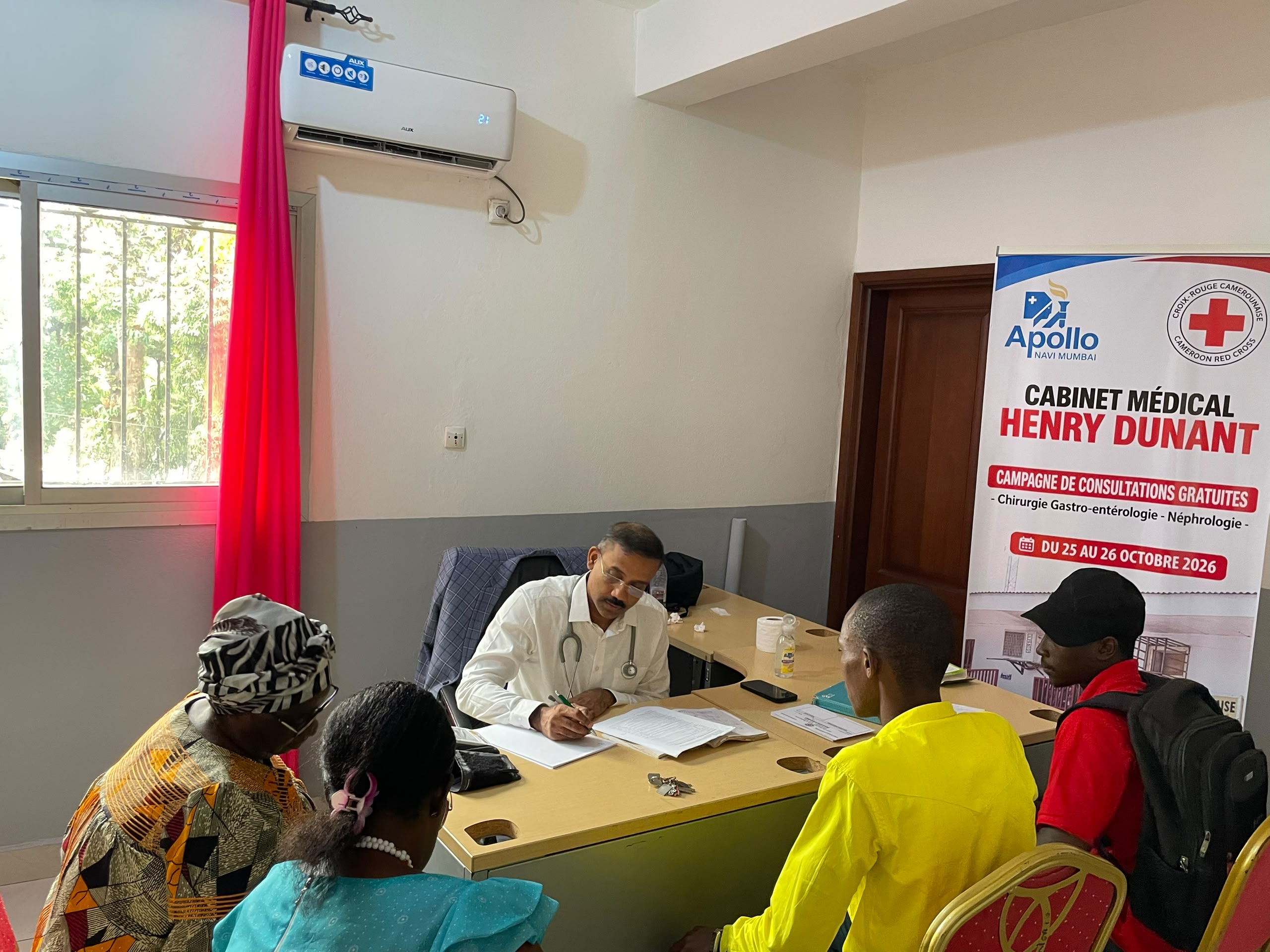
The Cameroon Football Federation (FECAFOOT) has signed a framework agreement with the Turkish Memorial Hospital Group and MEMORIAL Cameroon, granting current and former Cameroonian footballers access to high-quality health care, including medical evacuations to Turkey if necessary.

Cross Section of officials during the signing ceremony  (Photo Credit: Mainimo Etienne)

The deal was signed on Friday, June 5, in Yaounde. The ceremony was attended by Samuel Eto’o Fils, who signed on behalf of FECAFOOT, and Hacim Carikli, director of International Region Memorial. H.E. Volkan Öskiper, Turkish ambassador to Cameroon, also attended the event.

Speaking during the ceremony, Öskiper praised the two parties for reaching a landmark deal. He described the agreement as aiming to promote the well-being of athletes who have contributed to Cameroon’s national and international standing.

For Carikli, the agreement is geared toward accompanying Cameroonian footballers when they have injuries and ensuring they are fully recovered when they are down.

Eto’o stated his happiness that a serious deal had been sealed, a deal that is geared toward the benefit of the players. He added that playing football is not just about playing like what is being seen.

Both parties signed their MoUs  (Photo Credit: Mainimo Etienne)

“Playing football is a whole bunch of things. First of all, health, which allows us to go and get the victories that we are looking for is important and once again, our executive committee wanted to go a little further,” he said.

Eto’o noted that high-level football exposes athletes to significant physical demands that may require specialized care, sometimes unavailable locally. He said that aware of this reality, FECAFOOT entered into discussions with the Memorial Hospital Group, an institution recognized for its multidisciplinary medical expertise and state-of-the-art equipment.

According to FECAFOOT, the agreement reflects the parties’ shared commitment to establishing a sustainable cooperation mechanism that will allow beneficiaries to access specialized consultations, advanced examinations, complex surgical procedures, as well as rehabilitation and medical follow-up programs at the Memorial Hospital Group’s facilities.

Both parties pose for a family picture with their MoUs  (Photo Credit: Mainimo Etienne)

The federation added that the agreement is part of an effort to protect the human capital of Cameroonian football and promote the well-being of athletes who have contributed to Cameroon’s national and international standing.

Through this partnership, FECAFOOT confirms its commitment to the health and social protection of Cameroonian football stakeholders, while the Memorial Hospital Group reaffirms its commitment to supporting the development of African sport through medical excellence.

The framework agreement will enable the management of complex pathologies in footballers and former footballers, access to state-of-the-art technical facilities, the organization of specialized consultations, the transfer of skills and sharing of medical expertise, and the implementation of prevention and health monitoring programs, among other measures.

Officials posed for a family picture (Photo Credit: Mainimo Etienne)

Following the strategic partnership, observers praised the agreement but indicated that the league needs to step up financially, as significant expenses are expected to handle health care services in Turkey.


AFROMEDI VI Journalists Pledge Citizen-Centred Reporting To Advance Debt Justice Across Africa

By Etienne Mainimo Mengnjo

The sixth edition of the African Media Initiative (AFROMEDI VI) has concluded in Nairobi, Kenya, leaving behind a reinforced network of 39 journalists who have pledged to reshape the continent’s economic discourse through rigorous, citizen-centered reporting on debt and development.

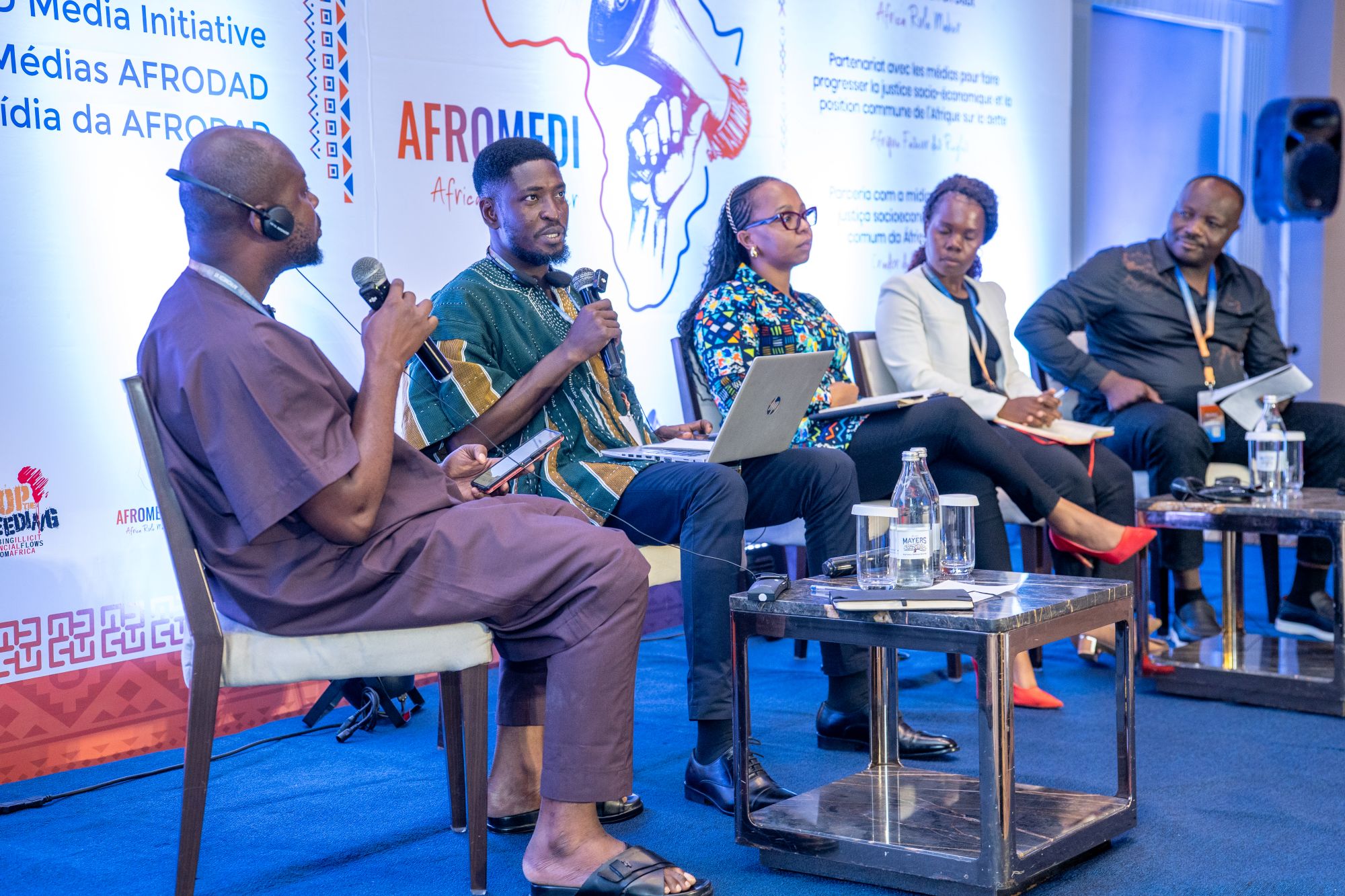
African journalists and AFRODAD officials posed for a family picture

Jointly organized by the African Forum and Network on Debt and Development (AFRODAD) and Transparency International Kenya, the three-day summit brought together media professionals from across East, West, Central, North and Southern Africa.

Running from May 27 to May 29, the three-day forum is themed, “Partnering with Media to Advance Socio-Economic Justice and Africa’s Common Position on Debt.” The event aimed to equip attendees with the investigative tools and policy insights necessary to navigate complex financial landscapes and hold powerful stakeholders accountable.

Beyond the classroom training, the summit culminated in a collective commitment by the participants to transform how African media covers sovereign debt. Journalists vowed to elevate the African Common Position on Debt, ensuring that the continent’s collective priorities for reforming the international debt architecture are central to both regional and global policy dialogues.

Central to their mandate is a commitment to champion the principles of the Lomé Declaration. By advocating for a more transparent and development-oriented global debt system, the journalists aim to scrutinize restructuring mechanisms and demand greater accountability from lenders and borrowers alike.

Panel discussions during the AFROMEDI VI summit

Participants pledged to bridge the gap between technical economic jargon and the reality of citizens’ lives. Their mission involves producing evidence-based reporting that connects debt sustainability to the quality of public services and economic opportunities. By humanizing these issues, they intend to highlight the direct social and economic consequences of policy decisions made in loan negotiations and international financial institution meetings.

Journalists also committed to a more aggressive oversight of debt governance. This includes investigating borrowing practices and the impact of policy prescriptions from global institutions like the International Monetary Fund (IMF) and the World Bank. Participants stated they would leverage diverse voices—ranging from experts and policymakers to the communities most impacted by debt crises—to foster a more inclusive public discourse.

As debt servicing continues to consume an increasing share of public resources across Africa, participants’ commitments point to a wider role for journalism in strengthening democratic accountability. They reinforced a key reality that debt is not only an economic challenge but also a governance and development issue, with direct consequences for the quality of public services and the economic choices available to governments.

A major outcome of AFROMEDI VI was the introduction of A-LeDD (AFRODAD Learning on Debt and Development), a free, competency-based digital learning platform designed to democratise knowledge on debt, development finance and related themes.

Panel discussions during the AFROMEDI VI summit

The platform will offer self-paced learning, short courses, and practical resources aimed at strengthening understanding and engagement on debt and development finance issues. The platform targets journalists, civil society actors, policymakers, researchers, students, and engaged citizens seeking to deepen their understanding of debt and development finance issues.

By removing cost barriers and enabling flexible learning, A-LeDD creates opportunities for continuous knowledge building and informed engagement on issues that shape Africa’s development trajectory.

Returning to their countries, journalists say they do so as more than individual reporters. They describe themselves as members of a growing Pan-African movement intent on advancing transparency, accountability and debt justice. Their work, they said, will help shape a more informed public discourse and contribute to a future in which debt supports development rather than constraining it.

AFROMEDI VI is therefore ending not as a finish line but as a beginning, with journalists equipped to challenge opaque practices, tell Africa’s debt story with greater clarity and insist that African people remain at the centre of decisions about debt and development.

CAMTEL Retains Blue Podium As Race Begins

By Brian Mboh

The 22nd International Cycling Tour of Cameroon is officially underway, with state-owned telecommunications firm CAMTEL and its flagship brand, Blue, serving as the official sponsor of the competition’s prestigious Blue Podium and Blue Jersey.

The first stage of the event kicked off Wednesday, June 3, on the Maroua-Mora-Maroua circuit. CAMTEL established itself as a driving force behind the inaugural stage, using its Blue brand to highlight the victory of Cameroonian cyclist Rodrigue Éric Kuéré Nounawé while showcasing its institutional commitment to national sports.

Following a formal opening ceremony overseen by the Ministry of Sports and Physical Education, the race began as a display of athletic strength, resistance and technique. On the roads of the Far North region, CAMTEL demonstrated its presence, turning the event into a showcase of performance and network connectivity.

Rodrigue Eric Kuere Nounawe champions Maroua lap

CAMTEL’s sponsorship gave the inaugural stage a dimension beyond the competition itself. Along the 124.6-kilometer Maroua-Mora-Maroua route, the company provided high-standard logistical support, embodying the speed and fluidity required by the riders. Amid harsh weather conditions, the 46 competing riders relied on the precision of the organization, with Camtel serving as an essential partner in the event’s execution.

After an intense race lasting 2 hours, 59 minutes and 40 seconds, Cameroonian cyclist Rodrigue Éric Kuéré Nounawé, a member of the SNH Vélo Club, narrowly edged out Rwandan rider Vainqueur Masengesho and German rider Léo Charrois.

Prof Narcisse Mouelle Kombi during the Kick-off ceremony of International Cycling Tour in Maroua (Photo: CAMTEL)

Crossing the finish line first in Maroua, the national champion donned the yellow jersey and received accolades on a podium decorated in Camtel’s colors. With this award, CAMTEL reaffirmed its role as a major partner in recognizing high-speed performance and endurance.

Athletes are now preparing for the second stage between Figuil and Garoua, which will conclude with a highly anticipated criterium. As the quest for the yellow jersey continues, CAMTEL is positioning itself as a central pillar in supporting Cameroonian sports, ensuring the competition’s progress is felt throughout the country.

Team Cameroon at Cycling Tour (Photo: CAMTEL)