By Etienne Mainimo Mengnjo
The Secondary Education and Skills Development Project, better known in French as PADESCE, has rolled out the second phase of its apprenticeship program in Douala.
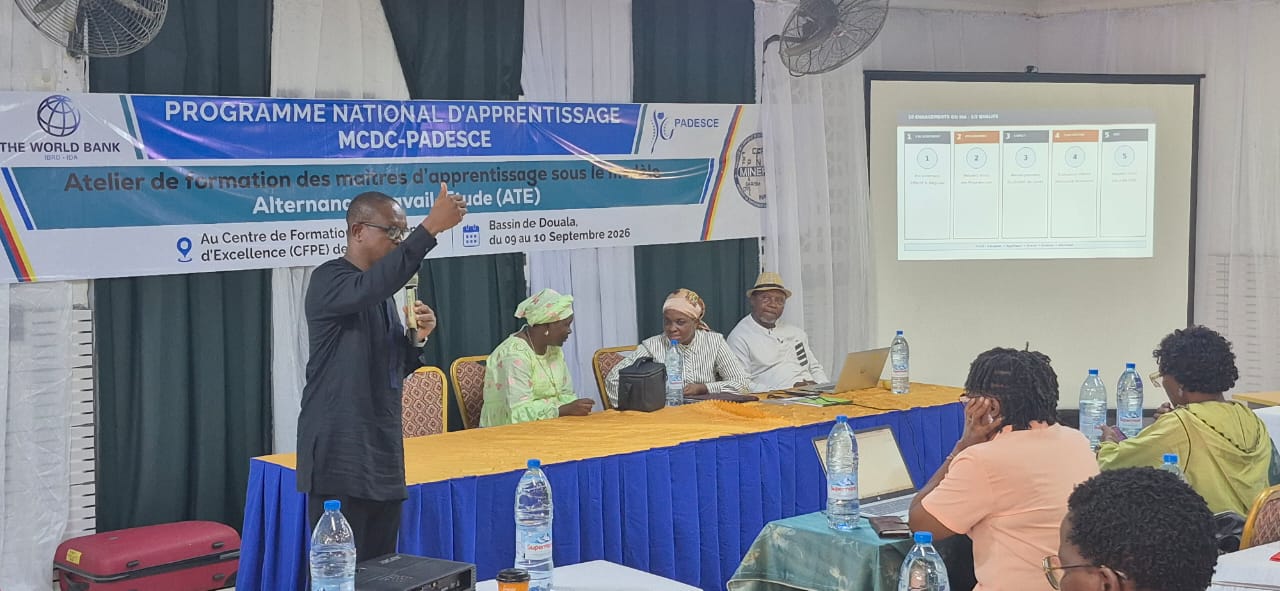
The training sessions, that took place from September 9 and 10, aimed to prepare professionals designated by partner companies to supervise, guide, and support young apprentices during their practical training in the workplace.
This initiative follows the first wave of apprenticeship master training, which took place in Yaoundé from September 3 to 4. The programme forms part of Phase 2 of the implementation of a quality apprenticeship initiative benefiting 646 young people under Window 2 of the Skills Development Facility (SDF) of PADESCE.
Overall, the programme targets 646 young people aged 15 to 30, including 342 in the Douala basin and 304 in the Yaoundé basin. It also supports the capacity building of approximately 244 apprenticeship masters, with 139 in Douala and 105 in Yaoundé.
Phase 2 is the operational stage of the programme. It includes youth recruitment and matching, apprenticeship master training, apprentice orientation and immersion, contractualisation, placement, and the launch of work-based learning. The apprenticeship model combines theoretical training with practical learning in the workplace, under the supervision of MINEFOP. It is based on a tripartite apprenticeship agreement involving the State/PADESCE, the company, and the apprentice.
PADESCE stressed that apprenticeship master training is essential in a dual or work-based learning system, where companies are key environments for acquiring practical skills. For this reason, the apprenticeship master plays a strategic role. As PADESCE stated, “Beyond technical knowledge transfer, he or she guides the apprentice in adapting to the professional environment, monitors progress and contributes to the development of professional attitudes and skills.”

According to programme officials, the training is designed to strengthen apprenticeship masters’ capacities in apprenticeship pedagogy, supervision and mentoring techniques, practical skills transfer, monitoring and evaluation tools, the use of the apprenticeship logbook, the apprenticeship master’s code of conduct, regulatory requirements related to apprenticeship contracts, and PADESCE quality requirements.
The training also covers key areas such as understanding the apprenticeship framework, including the institutional and regulatory environment, participants’ responsibilities, and the objectives of the MCDC Window 2 apprenticeship pilot. It addresses adult and youth learning principles, the specificities of work-based learning, and how theoretical and practical training are articulated. Participants are trained in active skills-transfer methods, including demonstration, observation, and guided practice.
In addition, while apprenticeship masters learn how to use the apprenticeship logbook, formative assessment tools, and monitoring mechanisms, the training also promotes a safe working environment. Health, Safety and Environment (HSE), professional conduct, and workplace responsibilities are therefore explicitly addressed.
The programme brings together PADESCE, the Ministry of Employment and Vocational Training (MINEFOP), partner companies, professional experts, pedagogues, methodologists, and career guidance counsellors. After the apprenticeship master training sessions in Yaoundé and Douala, the programme will proceed to apprentice immersion and orientation, the finalisation and signing of apprenticeship contracts, the official launch and workplace placement, the commencement of work-based learning, and ongoing monitoring and evaluation. This will involve supervision visits, regular use of apprenticeship logbooks, and information reporting.
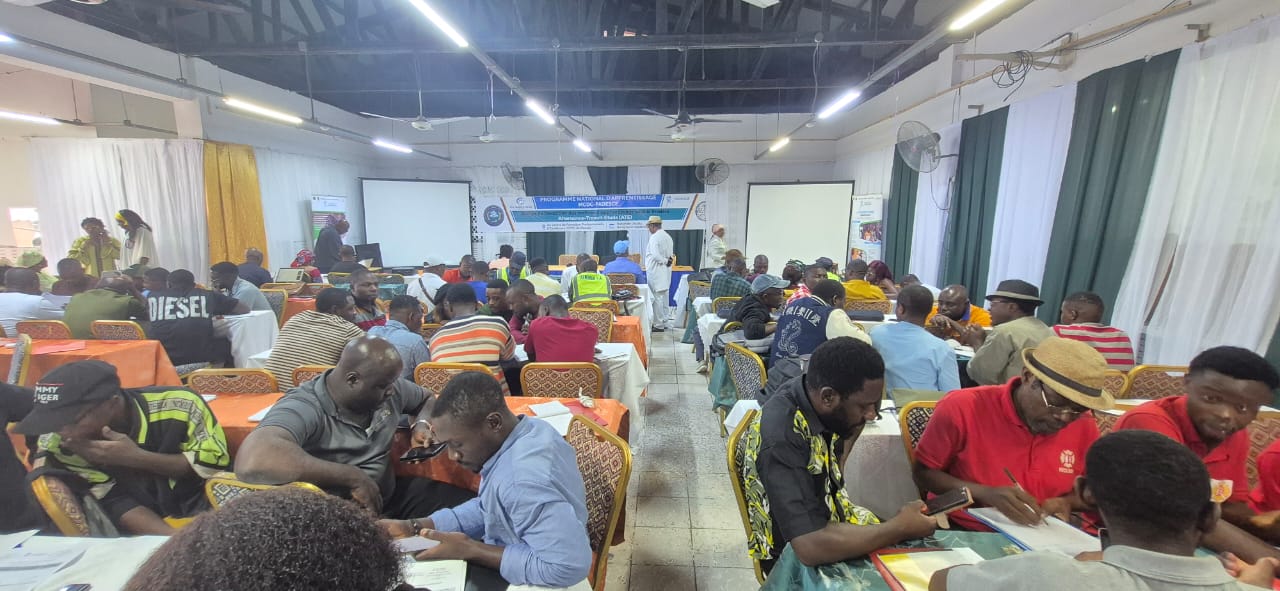
The implementation of this apprenticeship programme reflects the cooperation between the Government of Cameroon and the World Bank in support of human capital development. With World Bank support, PADESCE was established to improve equitable access to quality secondary education and to promote skills development and vocational training aligned with labour-market needs. Through MCDC, this partnership translates into practical interventions to strengthen skills, improve the link between training and employment, and support the socio-economic integration of beneficiaries.
Through apprenticeship master training, PADESCE is reinforcing quality workplace supervision as a key driver of successful apprenticeships and youth employability, in line with the belief that, “Train those who mentor, to better prepare those who learn.”