By Etienne Mainimo Mengnjo
It started quietly in 2016. Teachers and lawyers in the English-speaking regions of Cameroon stopped working. They were angry. They felt their culture and their way of life were being pushed aside. No one expected that this peaceful protest would grow into a conflict that has now lasted ten long years.
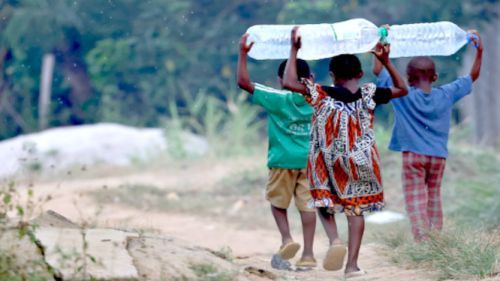
For Demine Tila, the war is all he has ever known. His parents say their child was just one year old when the crisis began. At that age, he could not understand what was happening. But as he grew, the sounds of gunfire and the sight of people running for safety became normal parts of his daily life. By the time he was five, he had already started to feel the harsh edges of this conflict.
Yet, even then, he held onto a simple dream. He wanted to go to school. He wanted to become a teacher. But going to school in a war zone is not easy. Some private schools and community schools tried to stay open, but there were many days when no one could leave their homes. Heavy shooting would fill the air. Some days, the streets were empty because of “ghost towns” – days when everything was shut down in fear. Demine managed to attend classes whenever he could, but his education was broken, piece by piece.
Now, at ten years old, the fighting continues. His village, once a peaceful place, has become a nightmare. People are shot without warning. Dead bodies are seen so often that many have grown numb to the sight.
“If you come across a body, you just keep walking,” one neighbour said quietly.
Demine has learned to survive in this harsh world. He can now tell the difference between the sounds of different guns. This is not a skill any child should ever have to learn. It is a sad reality of his everyday life.
Demine is not alone. There are hundreds of thousands of children like him in the Northwest and Southwest regions. They were born around the same time he was. In any other part of Cameroon, these children would now be in secondary school, learning maths, reading books, and making friends. Instead, they are trapped in a place where violence has stolen their childhood.
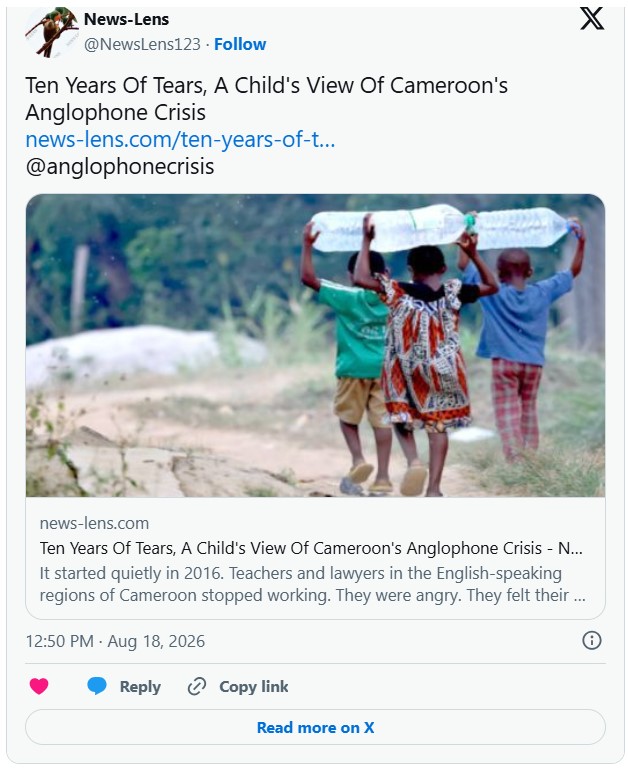
The crisis has become a terrible machine that grinds up ordinary people. Many have been killed. Many more are being killed. Homes have been burned to the ground. Families have been scattered. Children have been left without schools. The peaceful strike of 2016 has become a distant memory, replaced by grief and loss.
Today, there is a lot of finger-pointing. Both sides in the conflict blame each other. While the leaders fight and argue, it is the civilians who suffer the most. The very people who claim to be protecting the ordinary citizens are often the ones causing them harm. Kidnapping has become common. Ransom demands are now part of daily life. Families who have never had much money are being forced to sell their land, their livestock, and even their homes if they stiil has to pay huge sums for the release of their loved ones.
“I had to sell everything just to get my brother back who even came back dead,” a woman said while crying. She did not want to give her name, for fear of reprisals. “We paid FCFA three million. We did not have that money. We borrowed from everyone we knew. Now we have nothing.”
Farming, which used to be the backbone of life in these regions, has also been destroyed. Farmers cannot take their goods to the market to sell. Some are left with empty hands and empty stomachs. Many wonder where all the weapons are coming from. How do guns and bullets keep arriving in the conflict zone? These questions are asked over and over again, but no one seems to have the answers.
Meanwhile, the cries for peace grow louder. Ordinary people are begging for an end to what they call the “stupid war.” They want everybody to be freed. They want a real and honest dialogue. They want a chance to sit down and find a way forward. But every day, more innocent lives are lost. Every day, the fighting continues.
To many, some people have grown rich from this war. It is a painful truth that many cannot ignore. While families mourn their dead, others are counting their profits. This makes the suffering even harder to bear.
After ten years, those leaving in the rural communities say “we must ask ourselves the hard question. Is it not time to stop? Is it not time to admit that mistakes have been made on all sides? Is it not time to come back to the table and talk?”
A national dialogue was held a few years ago. There have been other efforts to bring peace. But still, the guns keep firing.
“We have seen terrible things,” said a local chief. “We have seen barbaric acts. We have heard terrible stories. All we want now is peace. We are tired of the suffering. We are tired of burying our children.”
To experts, there is no magic button to press. There is no quick fix. But there is a path. It begins with admitting the truth. It begins with listening to the voices of those who have suffered the most. It begins with the courage to put down weapons and pick up the work of building a nation again.
Many say, the people of the Northwest and Southwest regions are not asking for much. They are asking for a chance to live in peace. They are asking for their children to go to school. They are asking for a future where a boy like Demine can grow up to become a teacher, not a soldier.
To elvis, “Cameroon is a beautiful country. It has the potential to be strong and united. But first, it must heal the wounds of this crisis.” He added, “That healing can only begin when both sides decide that enough is enough. It can only begin when the innocent are no longer the ones paying the price.”
He continued, “Let us put our hands together. Let us find a way to bring back peace. Not just for the leaders, but for the mothers, fathers, children, and all the ordinary people who have suffered too much for too long. That is the only way forward. That is the only way to honour those who have been lost and to give hope to those who are still here.”