By Etienne Mainimo Mengnjo
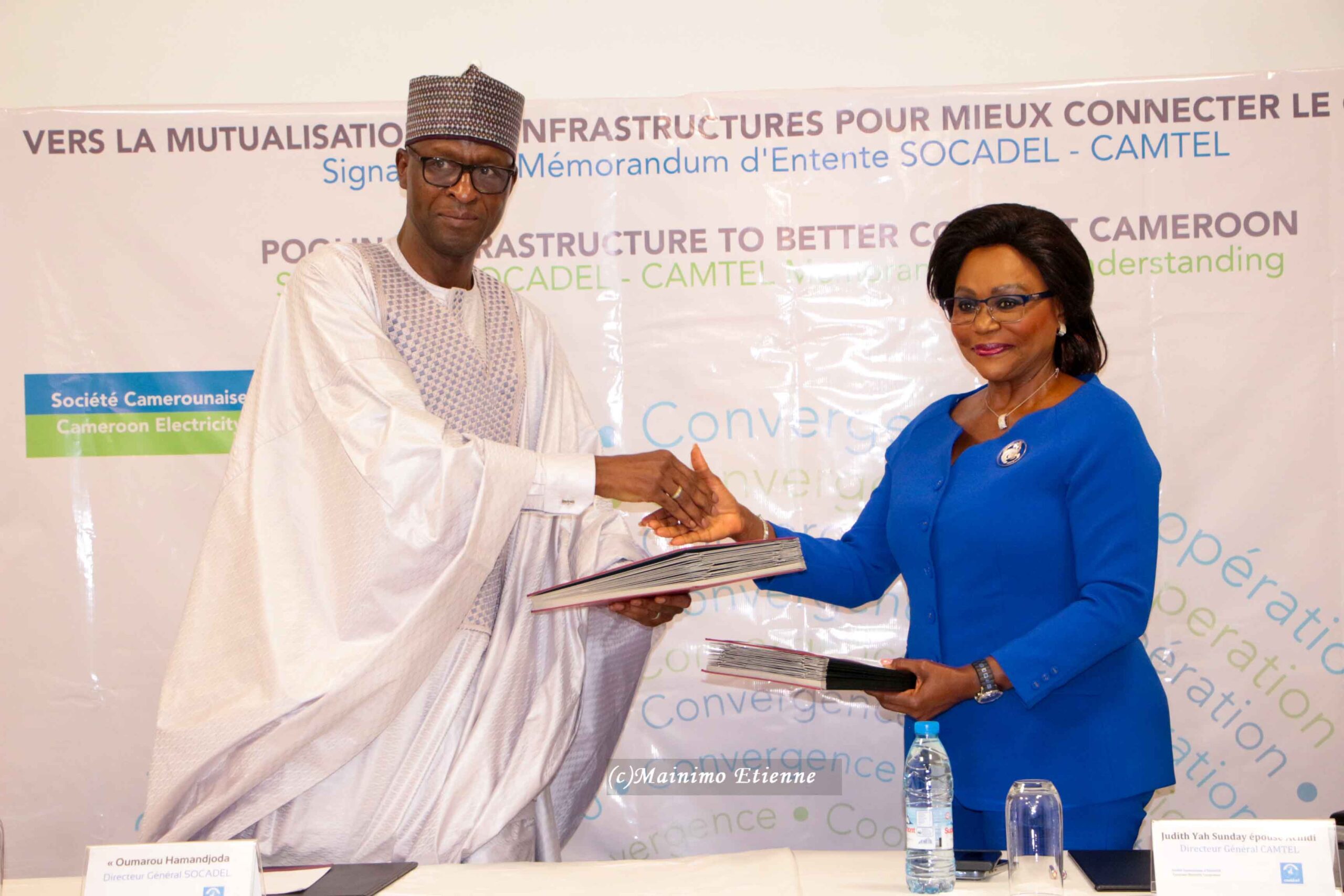
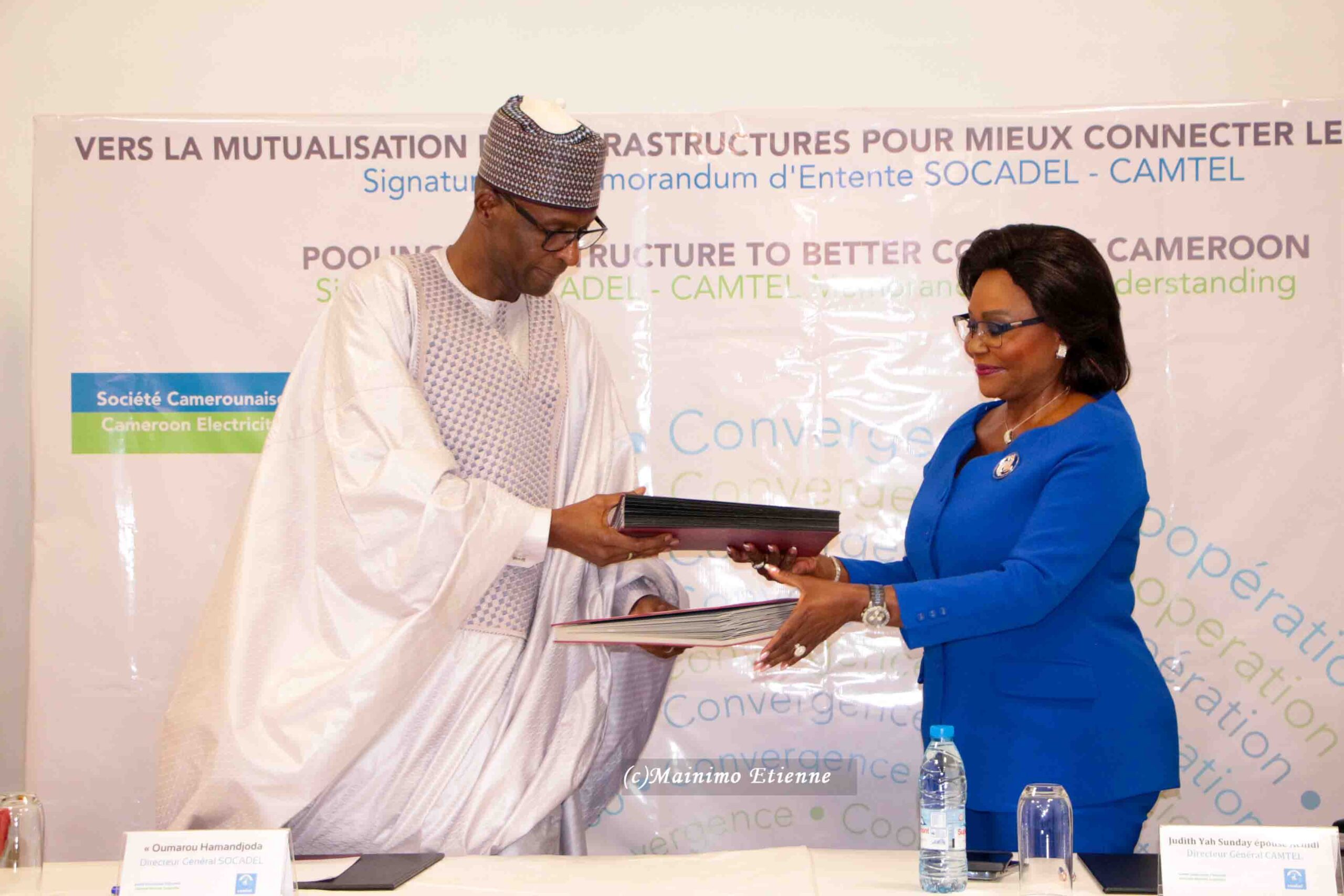
Cameroon’s state-owned telecommunications provider, Cameroon Telecommunications (CAMTEL), and state electricity company, Cameroon Electricity Corporation (SOCADEL), have signed a strategic Memorandum of Understanding (MoU) to explore infrastructure and network sharing across the country.
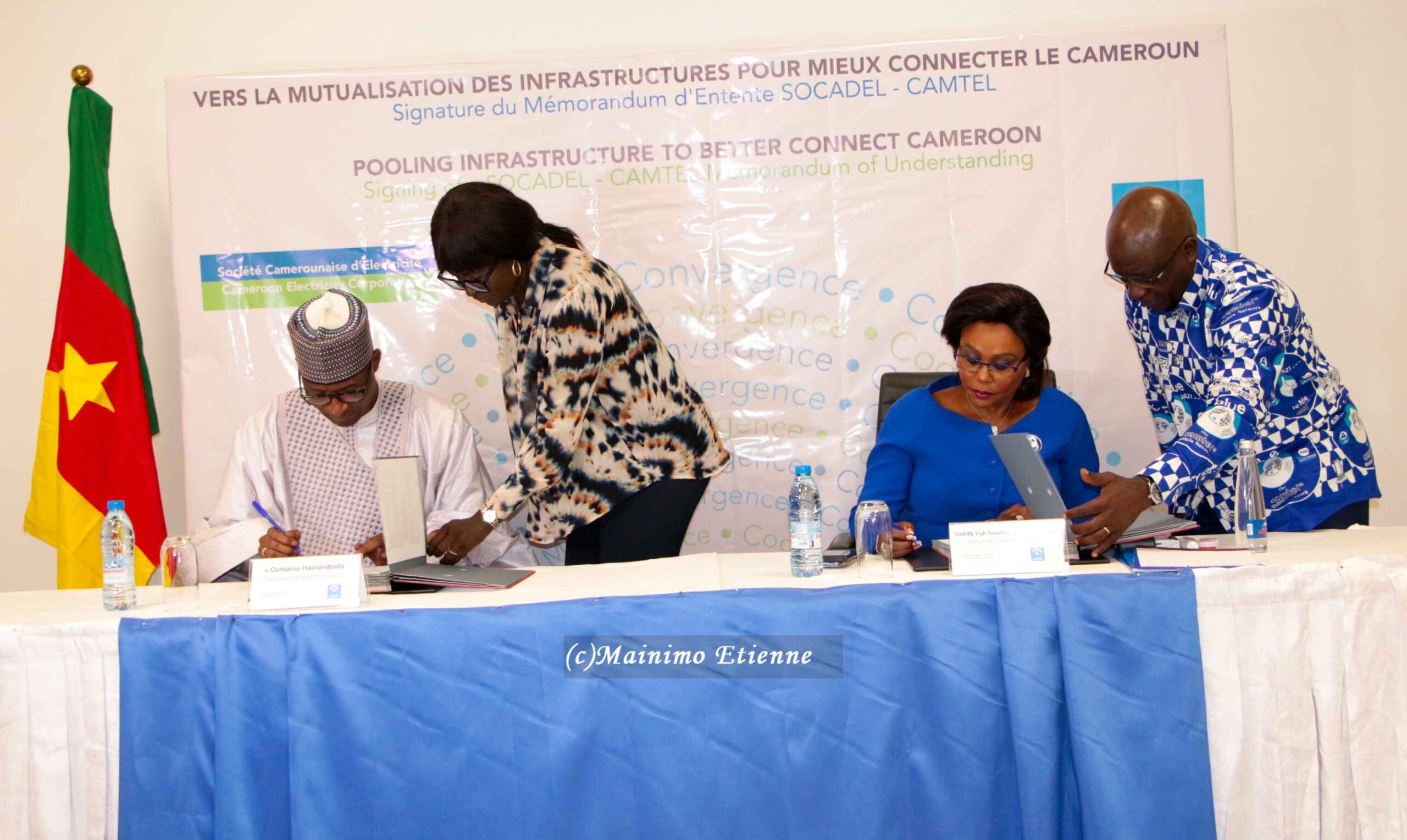
The agreement was officially signed on Friday, October 16, in Yaoundé by Judith Yah Sunday épouse Achidi, Director General of CAMTEL, and Oumarou Hamandjoda representing SOCADEL.
The MoU outlines a shared vision to evaluate the joint use of both companies’ respective assets. By pooling resources, CAMTEL and SOCADEL aim to optimize operational efficiency, curb deployment costs, and ultimately deliver higher-quality services to users nationwide.
For CAMTEL, the partnership offers a vital pathway to extend its national fiber-optic network and diversify transmission routes, reinforcing network resilience and connection uptime. For SOCADEL, the initiative promises to seamlessly interconnect its branch offices, operations centers, and key strategic sites while supporting the broader modernization of its power grid management.
“This initiative aligns with a tangible goal: making better use of available infrastructure to extend connectivity and improve the quality of services,” said Judith Yah Sunday, Director General of CAMTEL. “The complementary nature of our respective networks can enable us to curb deployment costs and open up new possibilities for service delivery. The technical and economic studies we will carry out will clearly spell out the conditions governing this infrastructure pooling.”
Echoing these sentiments, Oumarou Hamandjoda highlighted the strategic alignment between the two public enterprises:
“SOCADEL and CAMTEL are both state-owned companies showing that they can work together to develop national infrastructure in a coordinated and coherent manner, as envisioned by the Head of State, His Excellency Paul Biya,” Hamandjoda noted. “Signing this Memorandum of Understanding confirms our intentions and compels our experts to speedily fine-tune this initiative. We hope to move very quickly from intention to a formal framework agreement, and from there to an initial implementation phase in pilot sites.”
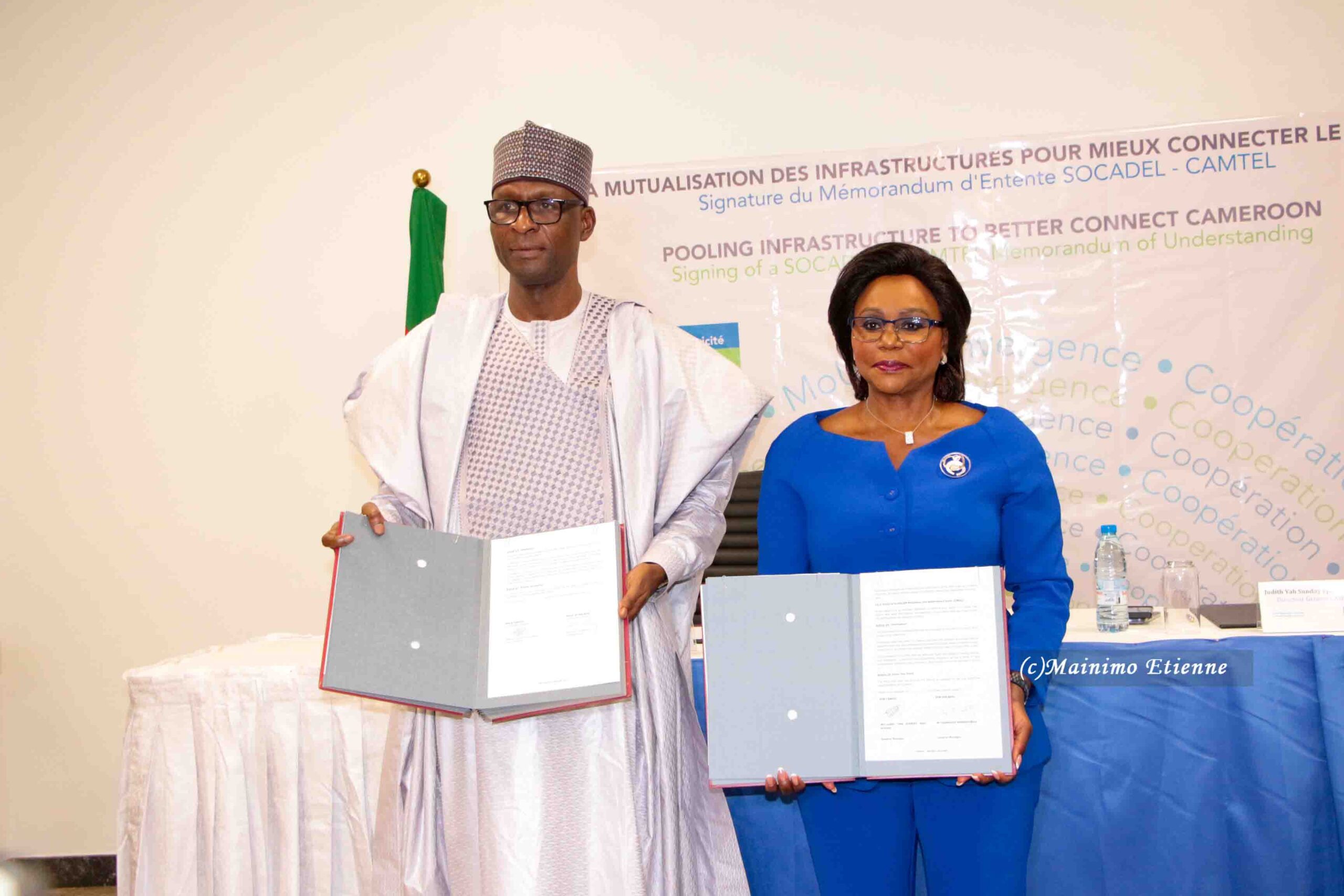
Under the proposed arrangement, CAMTEL will leverage its extensive national fiber-optic backbone, international connectivity capabilities, and deep expertise in operating telecommunications networks. In turn, SOCADEL plans to contribute its widespread electrical grid infrastructure—including power poles, rights-of-way, and upcoming optical fiber-inclusive deployments.
Coordinated deployment between the two entities is expected to yield key environmental and municipal benefits, such as reducing redundant infrastructure and minimizing urban right-of-way clutter. Joint feasibility studies will evaluate technical, legal, and economic parameters, with a strict focus on public safety, regulatory compliance, and protecting each entity’s operational rights.
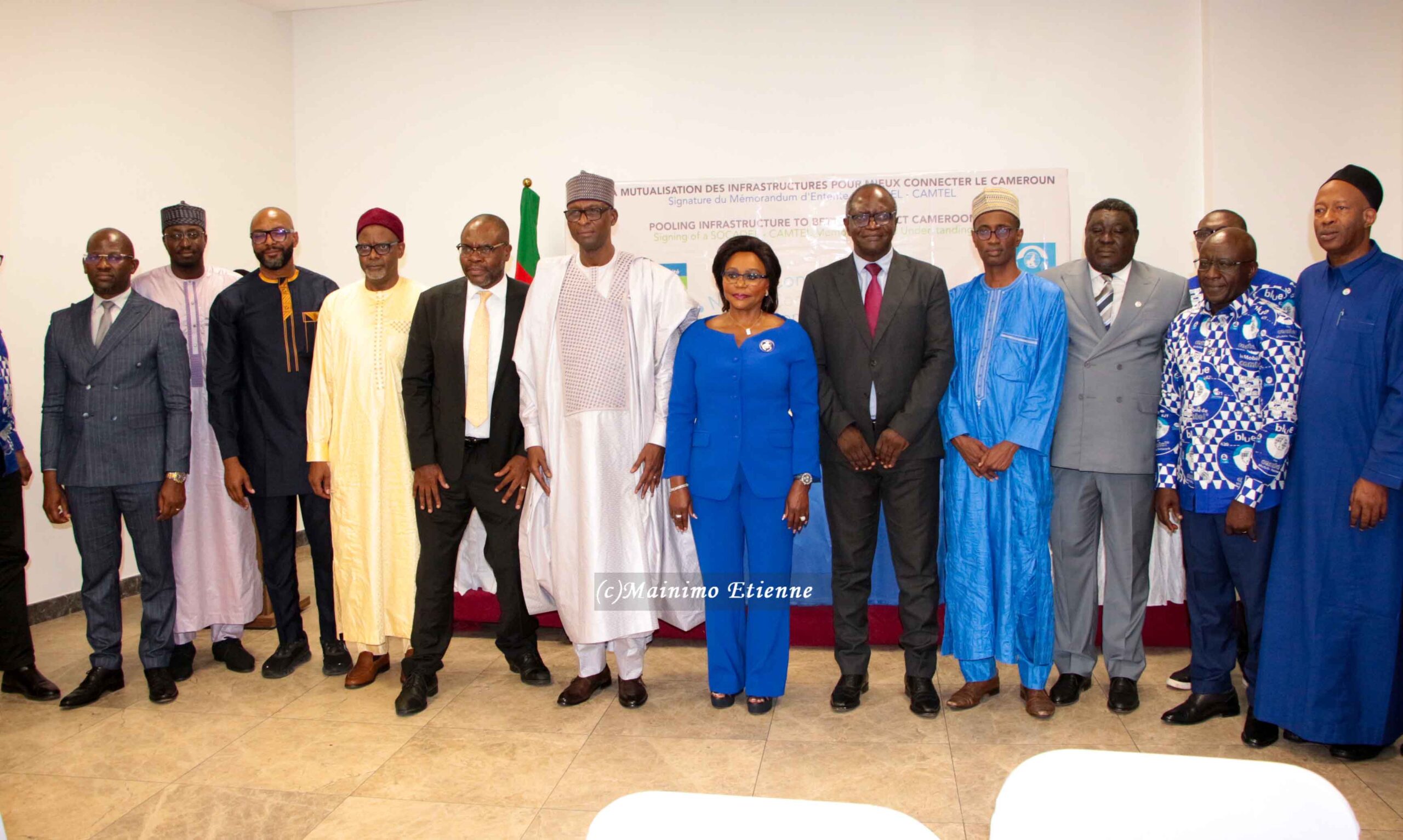
Officials emphasized that while the MoU represents an initial milestone, both parties are committed to moving swiftly toward a definitive framework agreement that will govern full-scale operational implementation.