By Etienne Mainimo Mengnjo
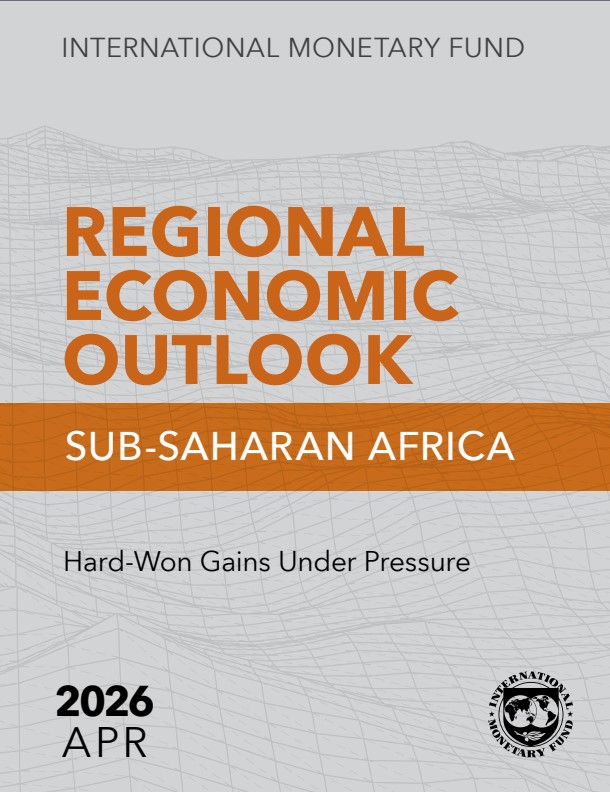
As the global economic landscape continues its turbulent dance, Cameroon, a pivotal economy within the Central African Economic and Monetary Community (CEMAC), finds itself at a critical juncture. The International Monetary Fund (IMF) in its April 2026 Regional Economic Outlook for Sub-Saharan Africa, titled “Hard-Won Gains Under Pressure,” paints a picture of a continent grappling with external shocks, a narrative that resonates deeply within Cameroon’s borders.
While Sub-Saharan Africa celebrated a robust 2025 with a regional growth of 4.5 percent, the ongoing conflict in the Middle East has cast a shadow, recalibrating growth projections and intensifying existing vulnerabilities across the region, including Cameroon.
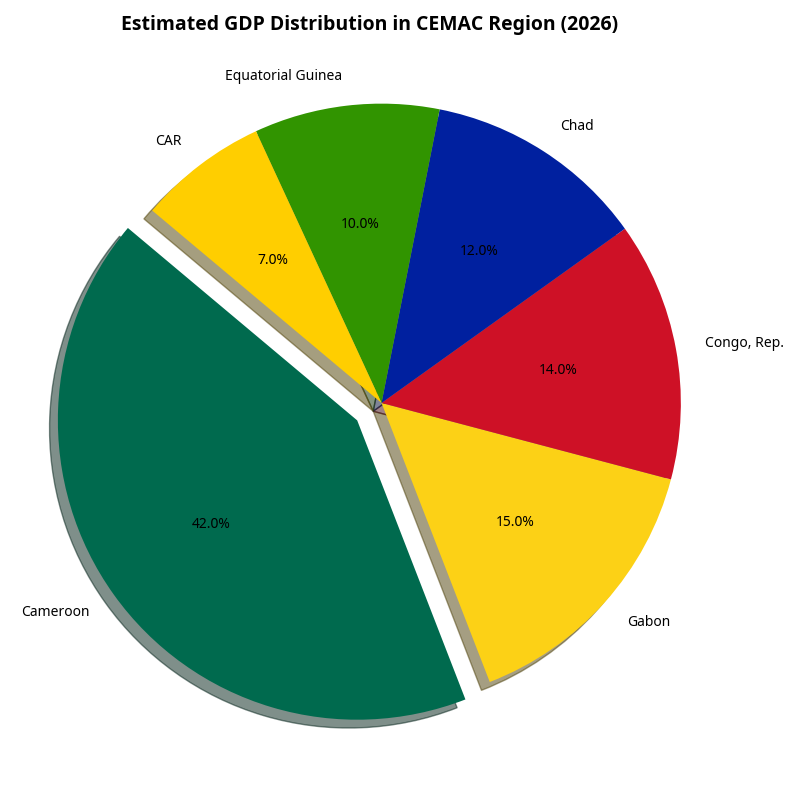
Cameroon, classified as an oil exporter and a significant contributor to CEMAC’s GDP, is experiencing a nuanced impact from these global dynamics. The IMF’s report highlights that oil exporters generally benefit from elevated oil prices, leading to stronger export revenues
However, this advantage is tempered by exposure to volatility and procyclical policy risks. Recent news indicates that the CEMAC bloc, including Cameroon, is expected to see a moderated growth of 2.9 percent in 2026, partly due to the clouding effect of oil prices on the outlook. This suggests that while higher oil prices might offer some fiscal relief, the broader economic environment presents significant challenges.
The nation’s fiscal health remains a key area of focus. Preliminary estimates suggest a weakening of Cameroon’s fiscal position in 2025, with a non-oil primary deficit exceeding budget target. The IMF’s 2026 Article IV Consultation with Cameroon emphasized the delicate balance required between preserving sustainable fiscal policy and unlocking growth.
Government debt, while showing a slight decrease in 2025, is projected to remain a concern, necessitating prudent fiscal management. The IMF has consistently prescribed fiscal discipline for Cameroon, acknowledging its economic resilience while highlighting the need for continued reforms.
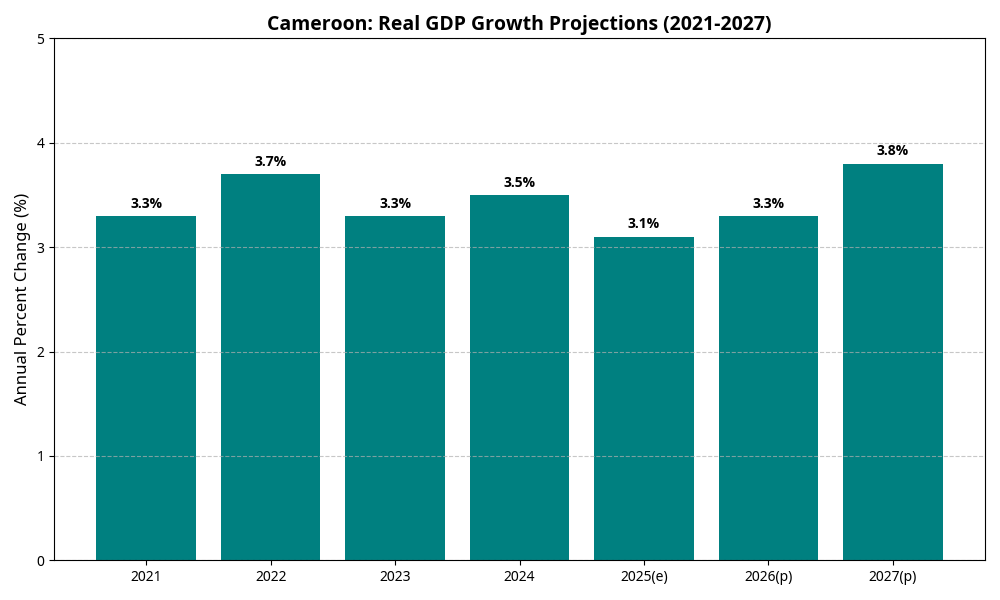
Inflation, a persistent challenge across Sub-Saharan Africa, is also a factor for Cameroon. While the regional median inflation is projected to pick up to 5.0 percent by the end of 2026, Cameroon’s consumer prices are estimated to be around 3.4 percent in 2025, with a slight increase to 3.5 percent in 2026.
This relatively contained inflation, compared to some regional counterparts, underscores the effectiveness of certain monetary policies but also points to the ongoing need for vigilance against external price shocks, particularly in food and energy.
The broader regional outlook, as detailed by the IMF, points to significant downside risks, including a prolonged Middle East conflict that could further escalate oil, fertilizer, and food prices, potentially triggering a risk-off episode and sharply raising borrowing costs.
For Cameroon, an oil-exporting nation, this could mean a double-edged sword: while oil revenues might increase, the broader economic instability and increased cost of imports could offset these gains.
Structural reforms are identified by the IMF as crucial for unlocking private sector-led growth across Sub-Saharan Africa, and Cameroon is no exception. The report emphasizes the need for reforms in governance, business regulation, and the external sector to foster a more dynamic and resilient economy.
While the document does not delve into specific Cameroonian reform initiatives, the general recommendations for the region—such as improving the business environment, strengthening institutions, and enhancing transparency—are highly pertinent to Cameroon’s long-term economic development.
The April 2026 IMF Regional Economic Outlook serves as a sobering reminder that economic stability in Sub-Saharan Africa is often at the mercy of factors far beyond its borders.
While the 2025 recovery proved that sound domestic policies can drive significant growth, the subsequent “war-induced shock” illustrates the region’s continued vulnerability to global supply chains and commodity volatility
The report ultimately frames 2026 as a year of defensive maneuvering, where the primary goal is to anchor inflation expectations and protect social spending while waiting for the global storm to pass
For Cameroon, the message is one of disciplined stewardship: using today’s oil windfalls not just to survive the current pressure, but to build the structural foundation for a future less dependent on the whims of the global oil market