By Etienne Mainimo Mengnjo
Cameroon Telecommunications (CAMTEL) and the Ministry of Secondary Education (MINESEC) have signed a framework agreement aimed at strengthening and modernising education through digital technology.
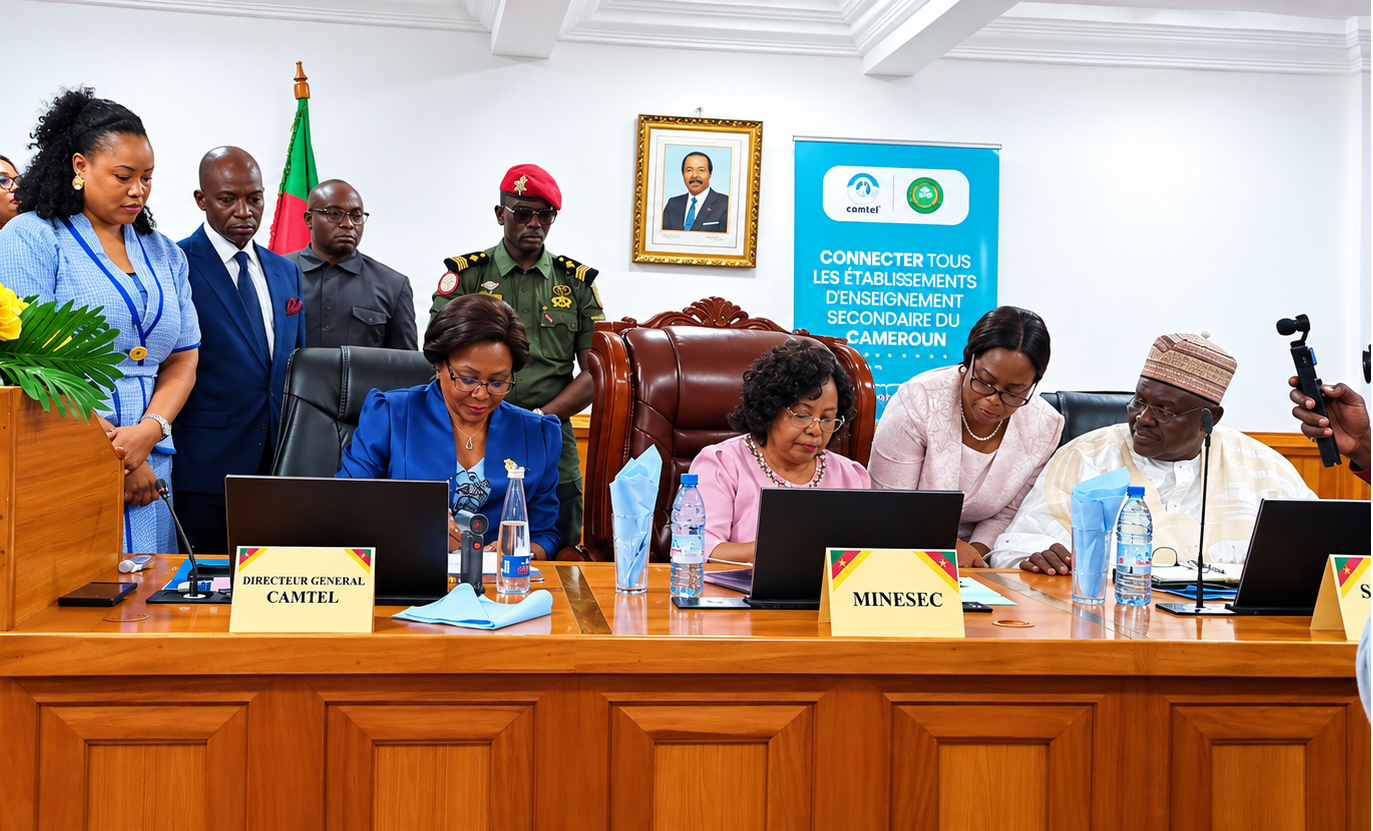
The agreement, signed on October 7 in Yaoundé, marks a significant step toward bridging the digital divide in the nation’s schools. Minister Nalova Lyonga signed on behalf of MINESEC, while Judith Yah Sunday épouse Achidi signed for CAMTEL. According to both officials, the priority of the agreement is to interconnect secondary schools, enabling educators to share information and pedagogical resources among stakeholders.
Speaking at the signing ceremony, Judith Yah Sunday praised the longstanding cooperation between CAMTEL and MINESEC, stating that the agreement seeks to align digital infrastructure with the actual needs of schools. She stated that MINESEC’s initial request focuses on interconnecting 130 schools across the Adamawa, North, and Far North regions.
“This marks the beginning of a partnership we intend to be long-lasting. For teachers, the benefit lies in accessing the resources needed for their lessons,” Judith Yah Sunday said. “For students, it offers the chance to deepen their knowledge and benefit from distance learning. Our responsibility is to put our networking expertise at the service of these applications. As I have stated, when a lesson begins, the network must be ready and reliable.”
She added that CAMTEL plans to cover 50 percent of the connection costs. “This is a significant effort aimed at supporting schools’ access to digital infrastructure. It applies specifically to connection work—this should not be confused with covering all digital-related expenses for the beneficiary schools.”
The three-region scope, she explained, reflects MINESEC’s request and also addresses the issue of regional equity. “A student’s location should not limit their access to knowledge. Depending on technical and commercial feasibility, the deployed infrastructure may also facilitate service provision to surrounding areas.”
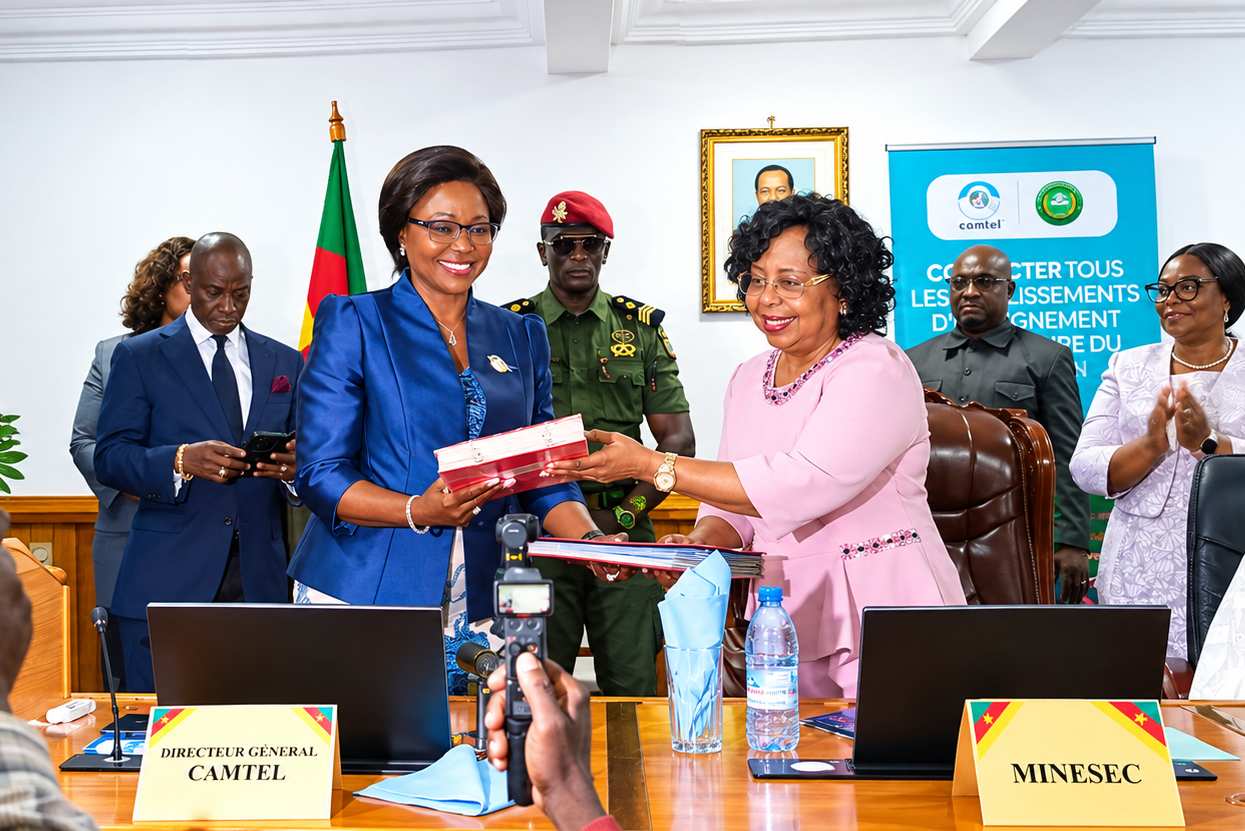
On when schools will begin benefiting, the CAMTEL General Manager noted that “the signing establishes the framework for our cooperation. We must now organize its implementation with MINESEC and finalize a realistic timeline. I would prefer not to announce a deadline that is not backed by the necessary technical groundwork.”
She emphasised that the focus remains on service delivery. “Our focus is on the service actually delivered. We will need to monitor connection availability and usage, as well as the support provided to the selected high schools and middle schools. A connection is only useful when teachers and students can actually use it. This is how CAMTEL intends to contribute to the President of the Republic’s vision for the education of our youth.”
Minister Nalova Lyonga on her path hailed CAMTEL for its commitment to national development, describing the agreement as one of the most significant she has signed since joining MINESEC. “Today, we are recognising the very important role that CAMTEL has played in this country through MINESEC. Every country knows that unless your education is strong, you yourself, you are no country. You don’t mean anything to anybody,” she said.
Reflecting on her tenure since 2018, she noted, “When I came to MINESEC in 2018, I was all about digitalization and today, it is about digitalization plus. This means that it is this digitalisation and artificial intelligence and this cannot be done without CAMTEL. Let us use what is good and let us throw out what is not good. But AI has come in, technology has come in, there’s no way we can throw it out.”
She expressed gratitude to CAMTEL for opening the way further and for following the head of state’s vision, as MINESEC has done. “As we are getting into more and more technology, I am warning Cameroonians and Cameroonian children, you have to be careful,” she cautioned.
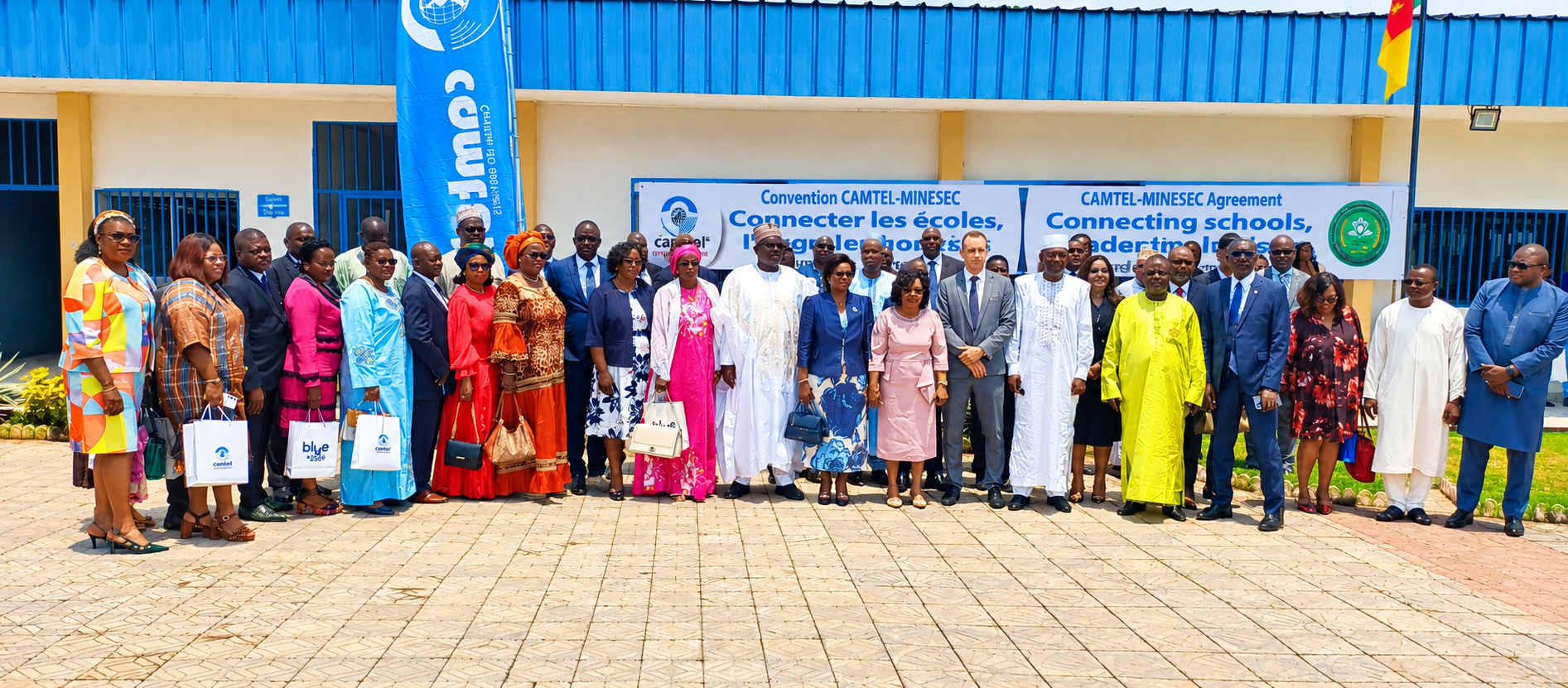
The Minister stressed the broader goal of connectivity. “Take note, we have said connectivity. We want to connect. We want to connect every school, every school. We are talking thousands of schools. We have only started. It’s just a near start, but we must go on. We must follow the head of state. That is what he wants. We must be inclusive and in order to be inclusive, you cannot do without CAMTEL.”
She added, “We have been moving gradually, gradually, trying to make special life in MINESEC using the money that CAMTEL gives us. And so finally, we’ve come to a point where we are connecting all the children… You are going to achieve it whether you like it or not. If I’m there, it has to be achieved. It cannot be otherwise. It has to be.”
According to available information, CAMTEL and MINESEC have already been working together to connect over 183 multimedia centres to the internet, along with more than 400 computer labs and rooms, as well as MINESEC’s central services.
The AI distance learning centre is also connected, and multiple regional and divisional delegations benefit from CAMTEL’s connectivity. Currently, over 551 government schools are connected to the internet through CAMTEL—a notable figure, though it represents only a fraction of the 2,950 government schools nationwide.