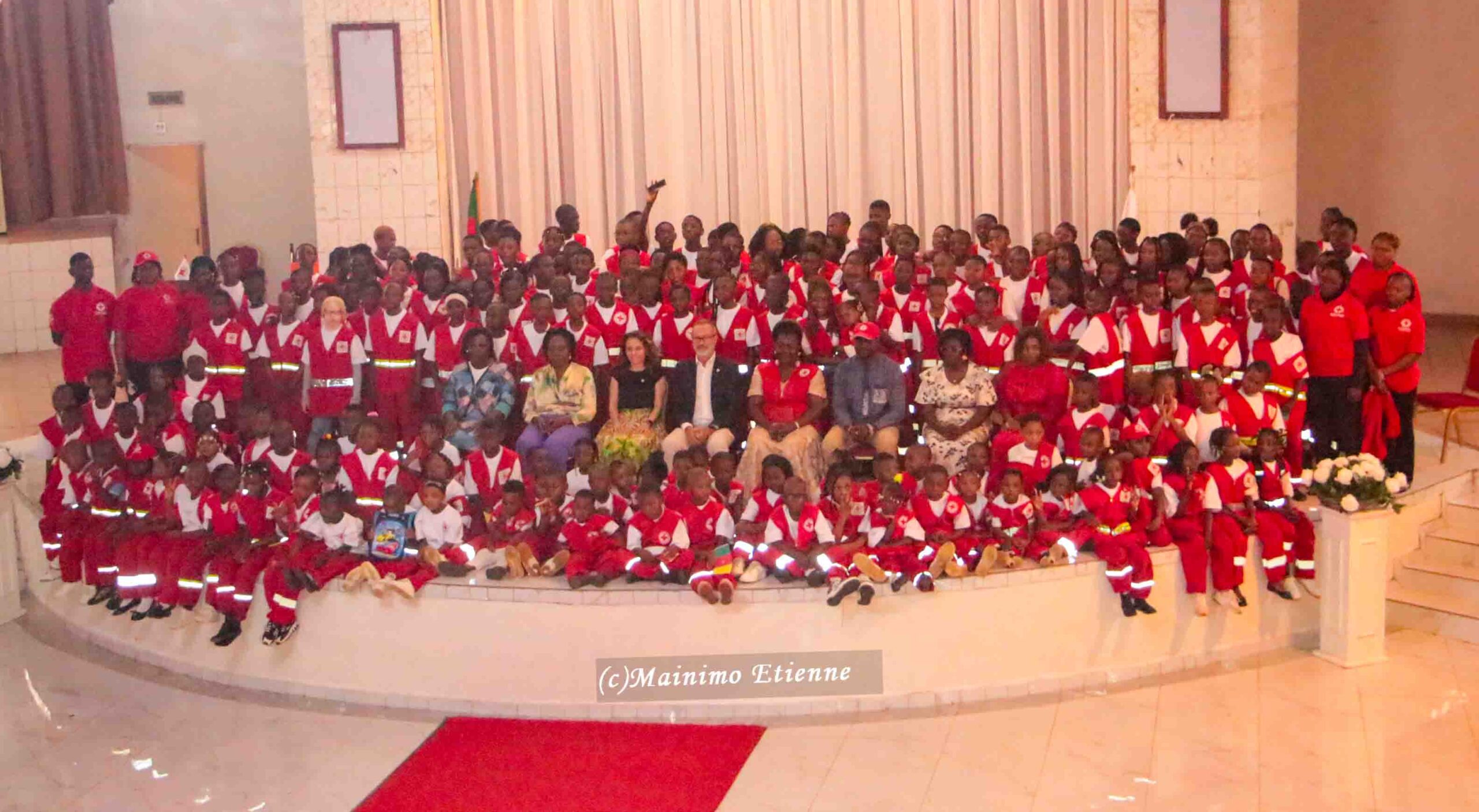
By Etienne Mainimo Mengnjo
The International Federation of Red Cross and Red Crescent Societies (IFRC) and the Cameroon Red Cross have engaged in high-level discussions aimed at deepening bilateral cooperation and bolstering the National Society’s humanitarian response across the country.
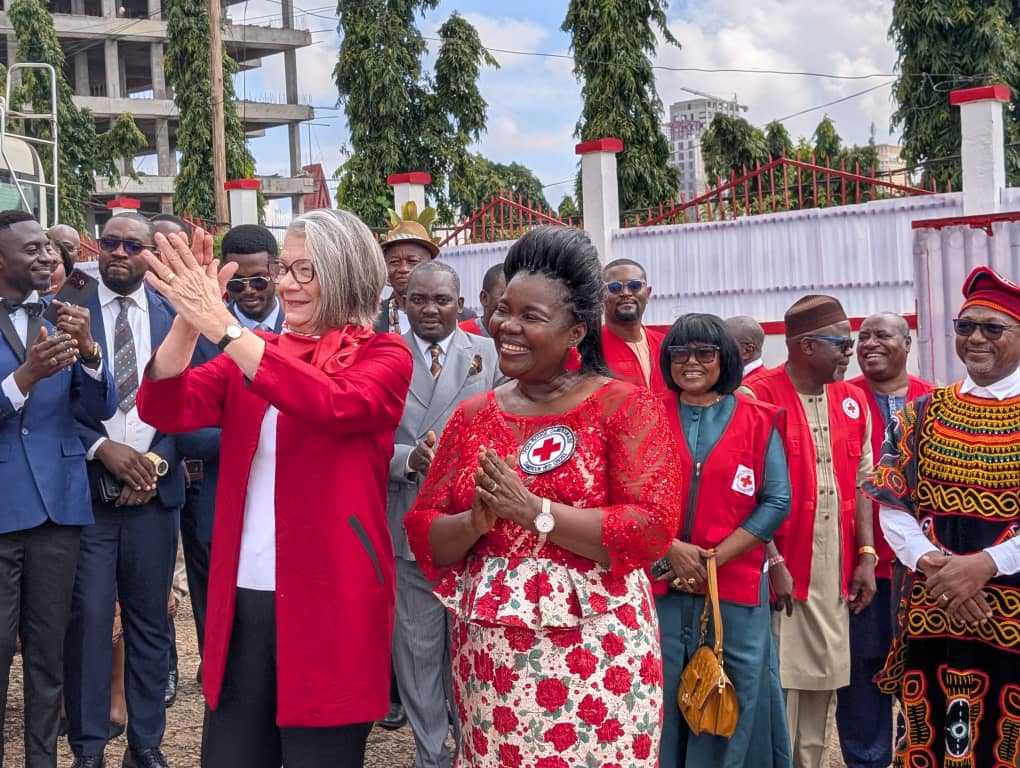
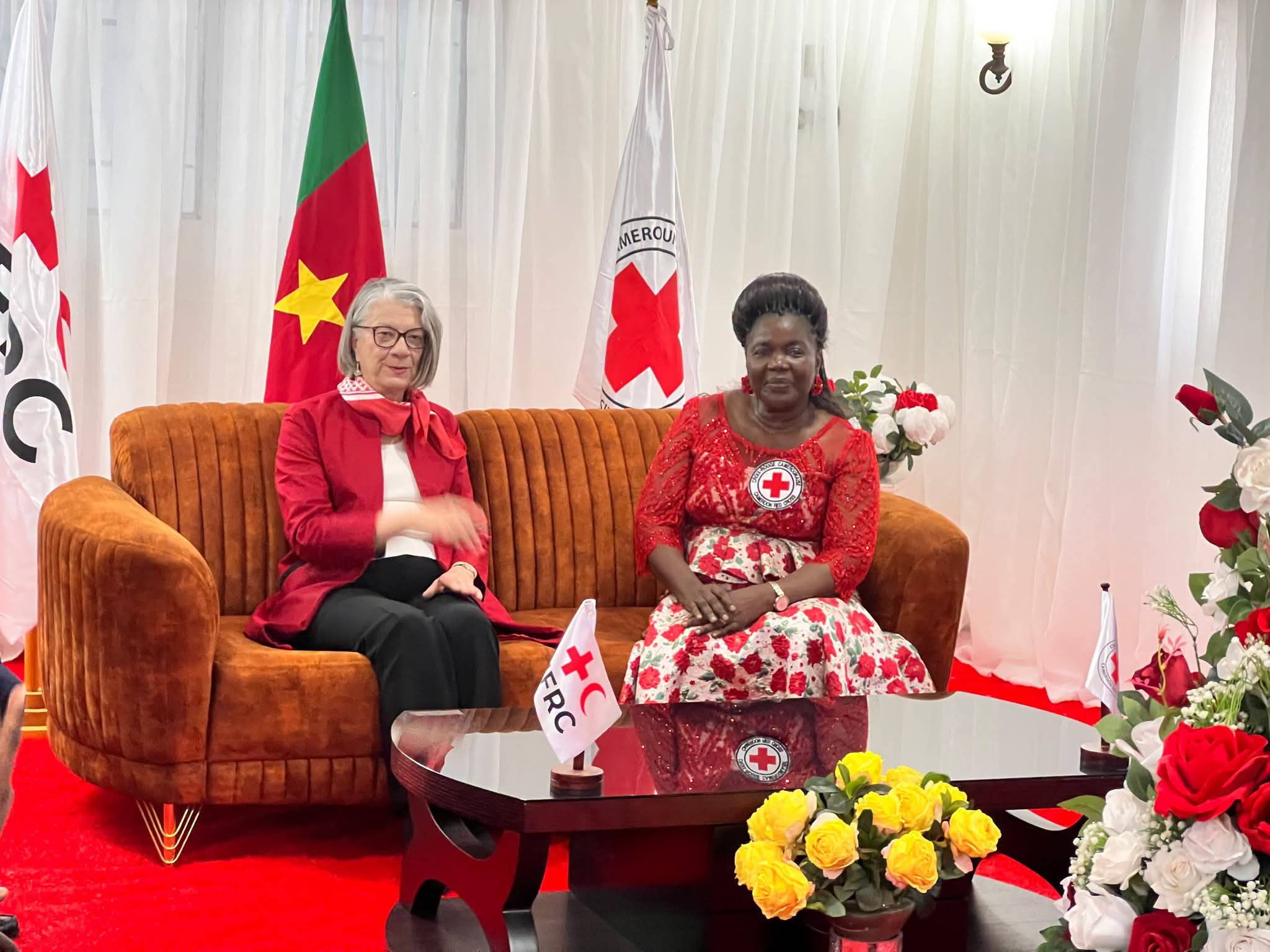
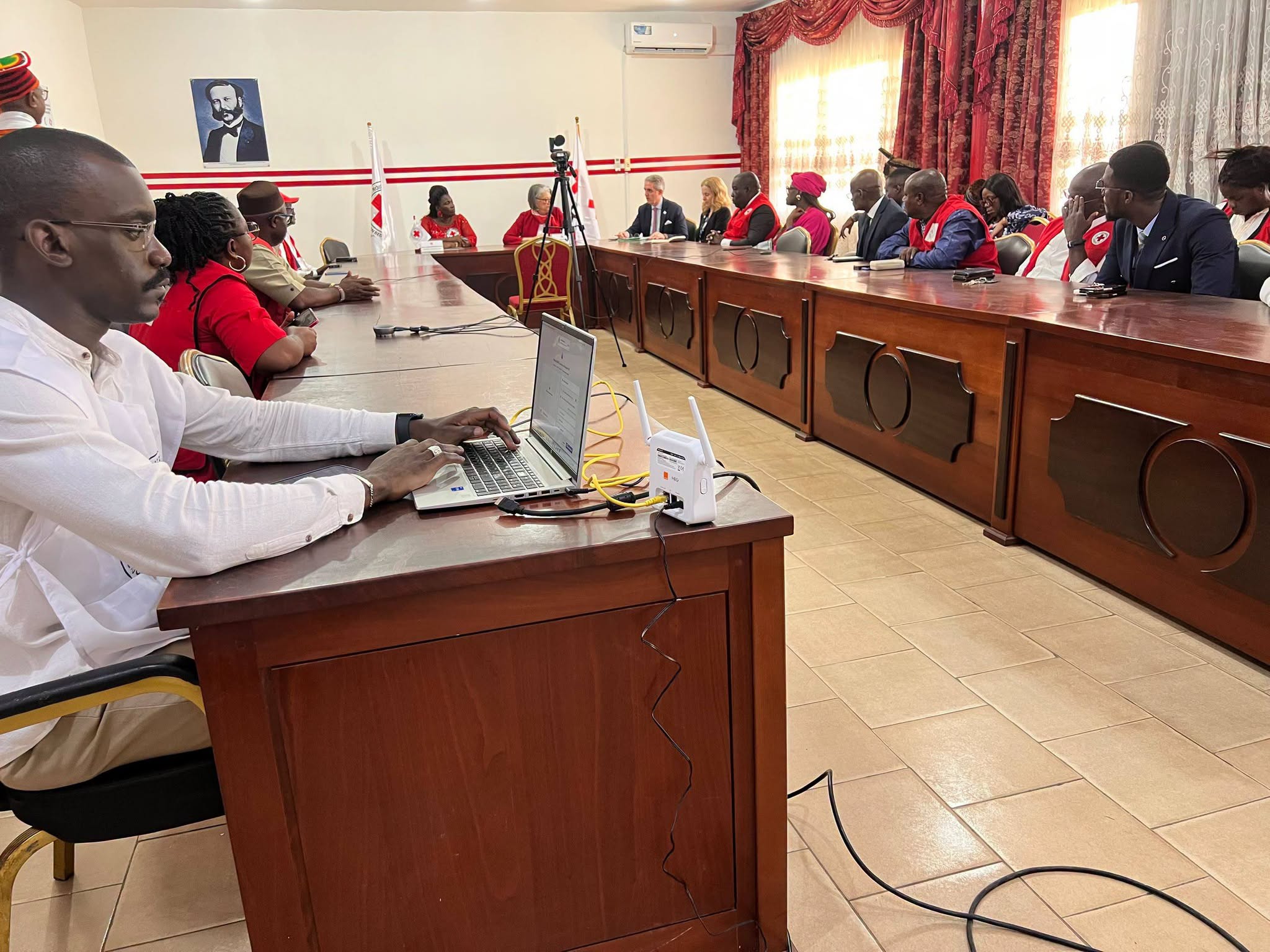
The strategic talks took place in Yaoundé following a meeting between IFRC President Kate Forbes and the President of the Cameroon Red Cross, Cécile Akame Mfoumou. Forbes is currently on an official seven-day working visit to Cameroon spanning October 11 to 17. The mission marks her first official visit to Africa since assuming office in December 2023, representing a significant milestone for the Cameroonian National Society.
Speaking shortly after a three-hour session with staff members at the national headquarters, Cécile Akame Mfoumou hailed the historic visit and reaffirmed their shared commitment to advancing humanitarian action and supporting vulnerable communities.
“We are truly honoured by this visit, given that out of 191 Red Cross National Societies in the world, she chose to visit Cameroon,” Akame Mfoumou stated. “We expect that there will be a strengthening of collaboration between the Cameroonian Red Cross and the International Federation of Red Cross and Red Crescent Societies.”
She further expressed optimism regarding concrete outcomes from the engagement, noting, “We think that after Kate’s visit to Cameroon, having seen on the ground what we do and how the populations live, she will be able to authorise the strengthening of support for the Cameroonian Red Cross on both a logistical and financial level.”
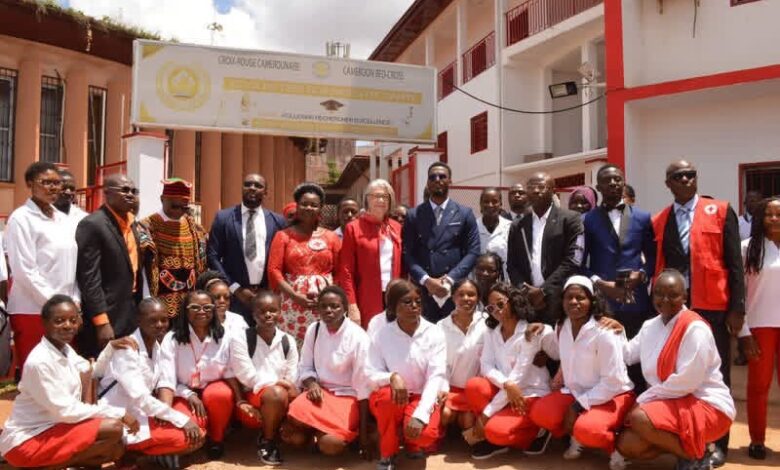
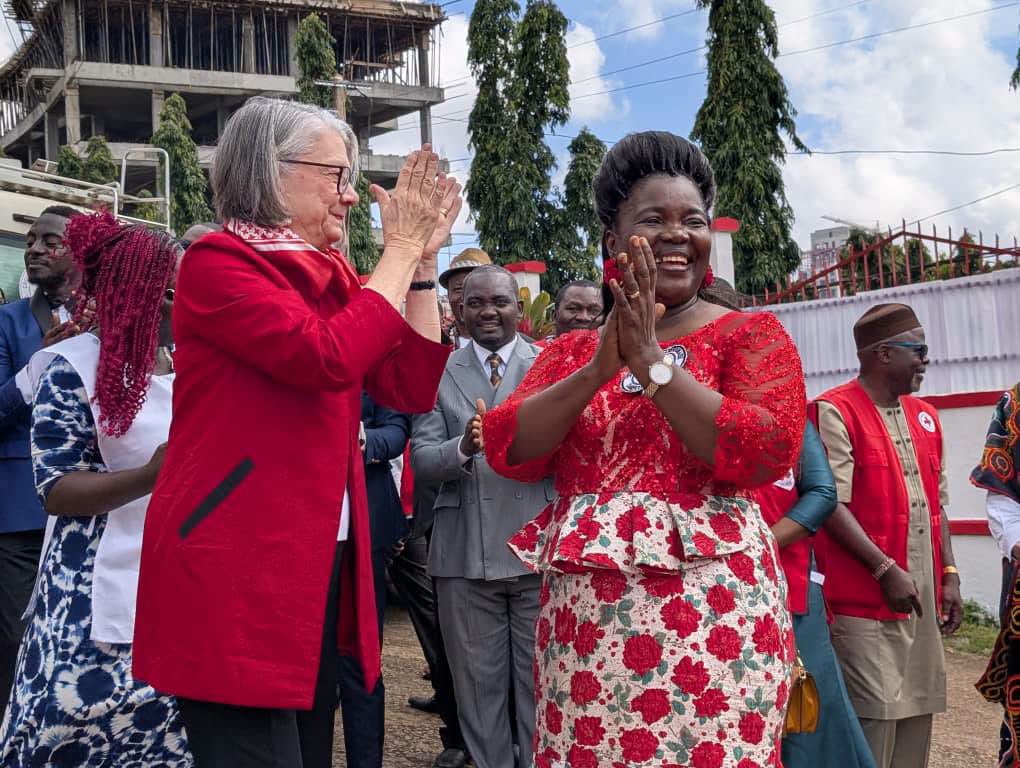
Beyond diplomatic exchanges, the visit provided an opportunity to evaluate operational challenges and align on long-term priorities, including progress on the National Society’s 2030 Strategy, its operational plan, and its broader strategic development goals. During her tour of the facilities in Yaoundé, President Forbes visited key operational departments as well as two of the organization’s flagship institutions—the School of Health Sciences and the Henry Dunant Hospital. She also inaugurated the IFRC garden and planted a symbolic tree on the headquarters grounds.
According to officials, the mission comes at a critical juncture marked by persistent and complex humanitarian demands in Cameroon. Key priorities include disaster and crisis management, community resilience, healthcare access, water, sanitation, and hygiene (WASH), as well as protection and assistance for populations displaced by conflict.
Officials emphasized that the delegation’s presence serves to highlight the essential work of the Cameroon Red Cross in its role as an auxiliary to public authorities, alongside the vital contributions of its volunteers and local partners.
“The working visit will also facilitate discussions on the National Society’s strategic priorities, development prospects, and enhanced IFRC support, with the aim of increasing the impact, sustainability, and local reach of humanitarian actions benefiting communities,” an official noted.
The humanitarian context in Cameroon remains severe across multiple fronts. In the northern regions, recurring floods and violence stemming from terrorist attacks have caused severe displacement and heightened food insecurity. In other crisis-affected areas, ongoing internal displacement continues to demand expanded relief efforts to support affected families. Additionally, the continuous influx of refugees fleeing armed conflicts in neighboring countries continues to put immense strain on local resources and exacerbate the overall humanitarian situation.
As part of her remaining itinerary, President Forbes is scheduled to hold high-level discussions with Cameroon’s Prime Minister and the Minister of External Relations. She will also conduct field visits to Maroua and Yagoua in the Far North region to inspect frontline humanitarian operations firsthand.