By Etienne Mainimo Mengnjo
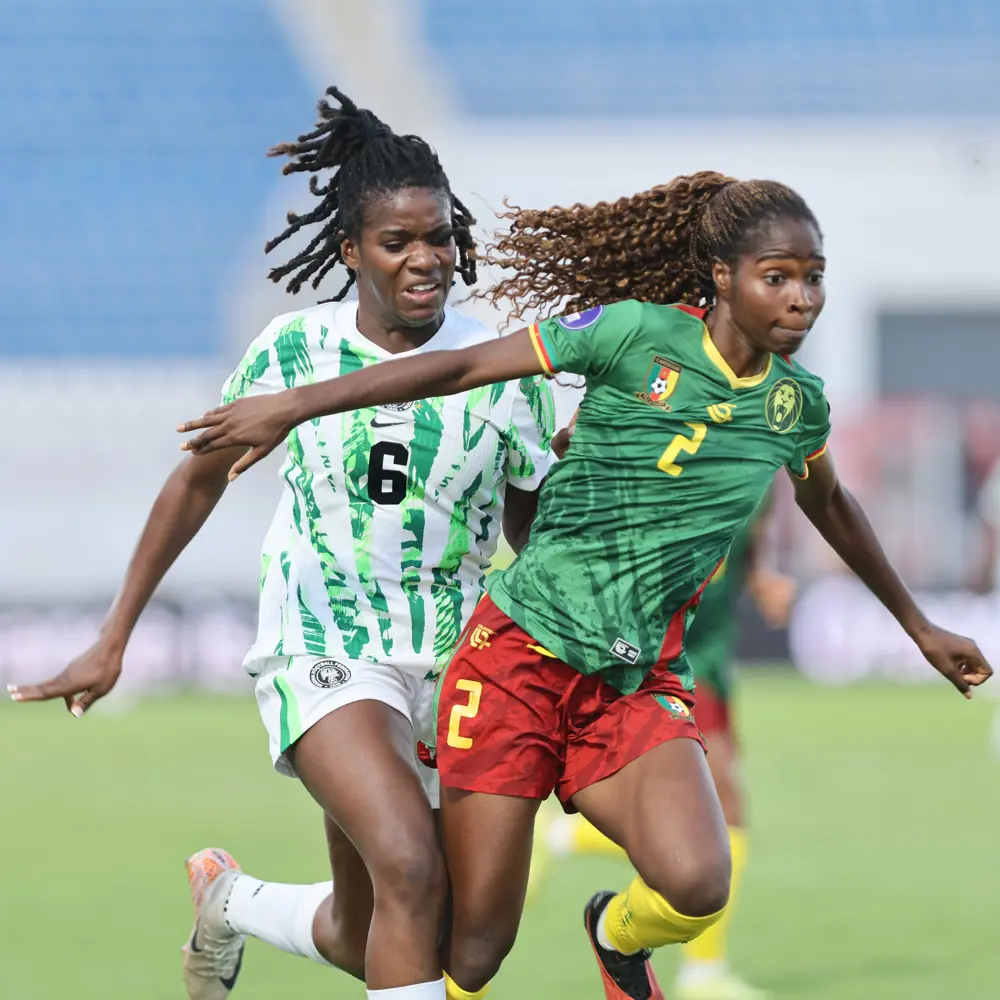
For the first time in this tournament’s recent memory, the reigning queens of African women’s football will not be defending their crown. Nigeria, the perennial power and holder of the TotalEnergies CAF Women’s Africa Cup of Nations, was eliminated on Sunday August 9 by a disciplined and defiant Cameroon side, 1-0, in a quarterfinal that crackled with tension from the opening whistle.
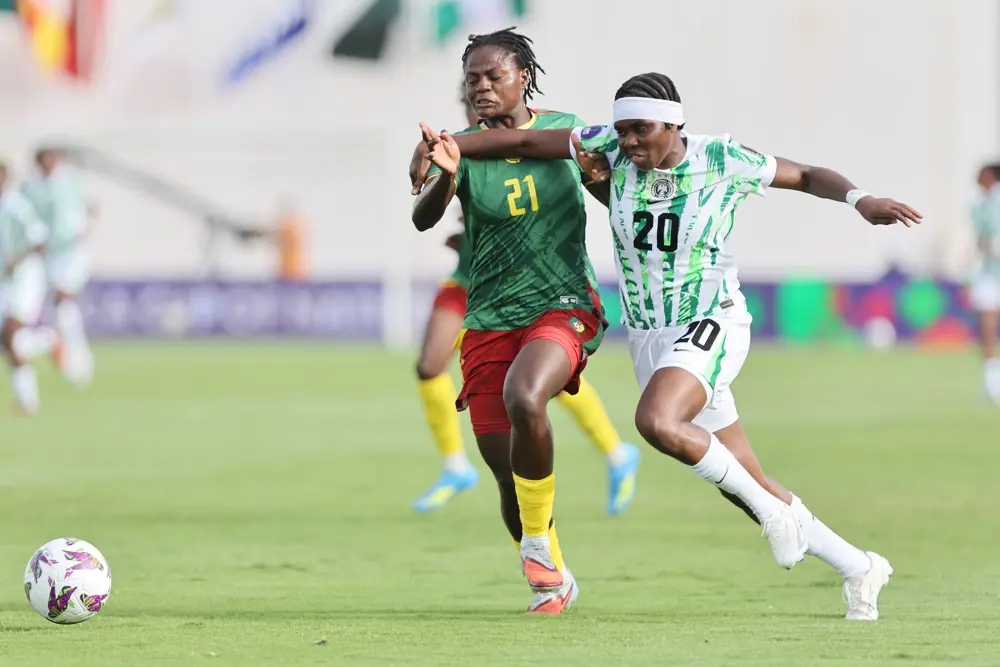
The defeat not only ends the Super Falcons’ bid for a record-extending title but also guarantees that an unfamiliar name will be etched onto the continental trophy when the final is played later this month. For Cameroon, the victory carries the additional prize of automatic qualification for the 2027 FIFA Women’s World Cup in Brazil.
The match was decided in the 19th minute by a moment of startling audacity from a 20-year-old who had yet to make her mark on this stage. Myriam Maéva Nyadjou, with little visible warning, took possession well outside the penalty area and unleashed a rising, dipping drive that screamed into the upper corner of the net. The Nigerian goalkeeper, Chiamaka Nnadozie, one of the most celebrated shot-stoppers in the global game, could only watch as the ball curled beyond her fullest extension.
Nigeria, as is their custom, responded with furious intent. Within a minute, Rasheedat Ajibade swung a searching cross into the Cameroonian box, but Gift Monday could not connect cleanly under pressure. In the 28th minute, another promising move saw Rinsola Babajide find Jennifer Echegini in a dangerous pocket of space, yet her ensuing effort was comfortably smothered by Cameroon’s goalkeeper, Michaely Bihina, who would prove instrumental in the upset.
For all of Nigeria’s territorial dominance and possession, Cameroon retreated into a compact, organized shell that refused to yield. The Indomitable Lionesses carried their slender lead into the interval, having absorbed everything thrown at them.
The second half brought an even more urgent Nigerian assault, but it also brought out the best in Bihina. Her finest intervention arrived in the 70th minute, when she flung herself across the goal line to deflect Uchenna Kanu’s thundering header with a strong, decisive hand—a save that may stand as one of the tournament’s defining images.
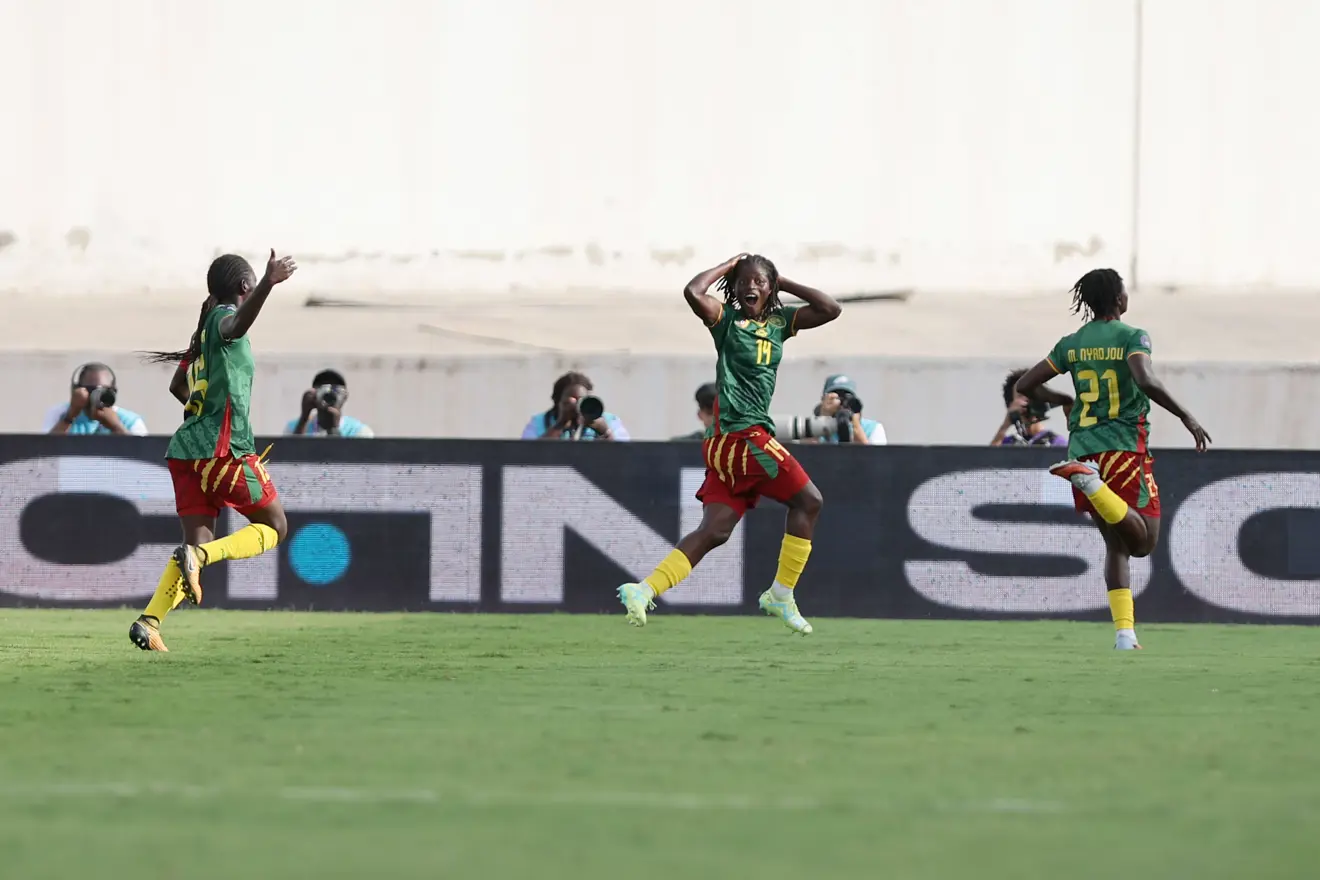
Cameroon, emboldened rather than pinned back, nearly extended their advantage six minutes from full time. Achta Toko Njoya, from a narrow angle, curled a free kick that required Nnadozie to tip the ball over the bar with a reflex save of her own. Nigeria pressed relentlessly in the dying moments, and substitute Esther Okoronkwo appeared poised to force extra time when she beat her marker and unleashed a left-footed shot that sailed agonizingly past the far post.
When the final whistle sounded, Cameroon had not merely won a match; they had rewritten the tournament’s script. With Nigeria’s reign at an end, Morocco 2026 will crown a new African champion—a prospect that, before Sunday, had seemed almost unthinkable.
Cameroon will face host country Morocco in the Semi-finals of the competition on Wednesday August 12.