By Etienne Mainimo Mengnjo
Cameroon stands to gain significantly from a sweeping restructuring of its mining sector, the interim Minister of Mines, Industry and Technological Development (MINMIDT), Prof. Fuh Calistus Gentry said, as the government moves to boost national reserves, crack down on illegal operations, and formalize artisanal production.
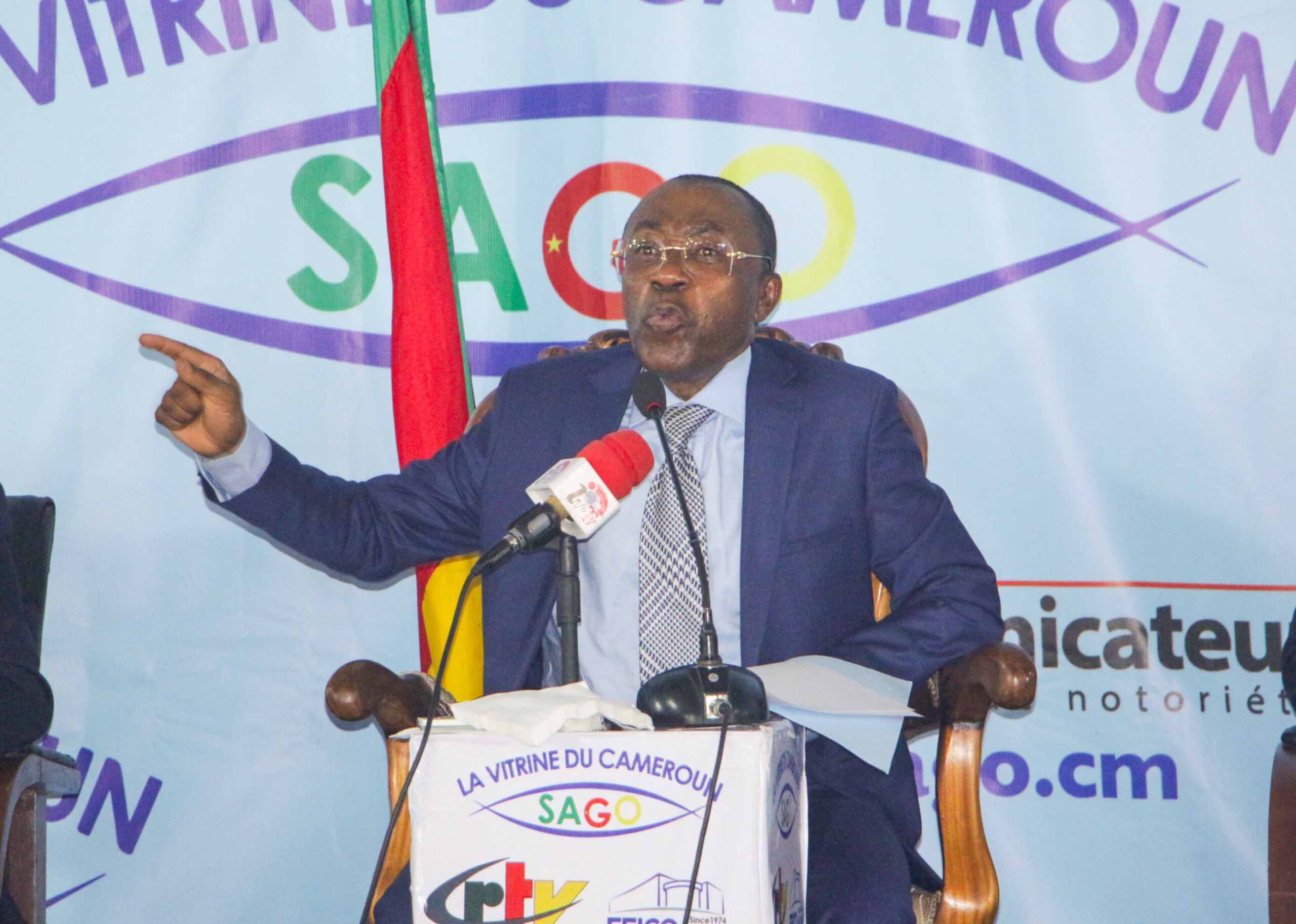
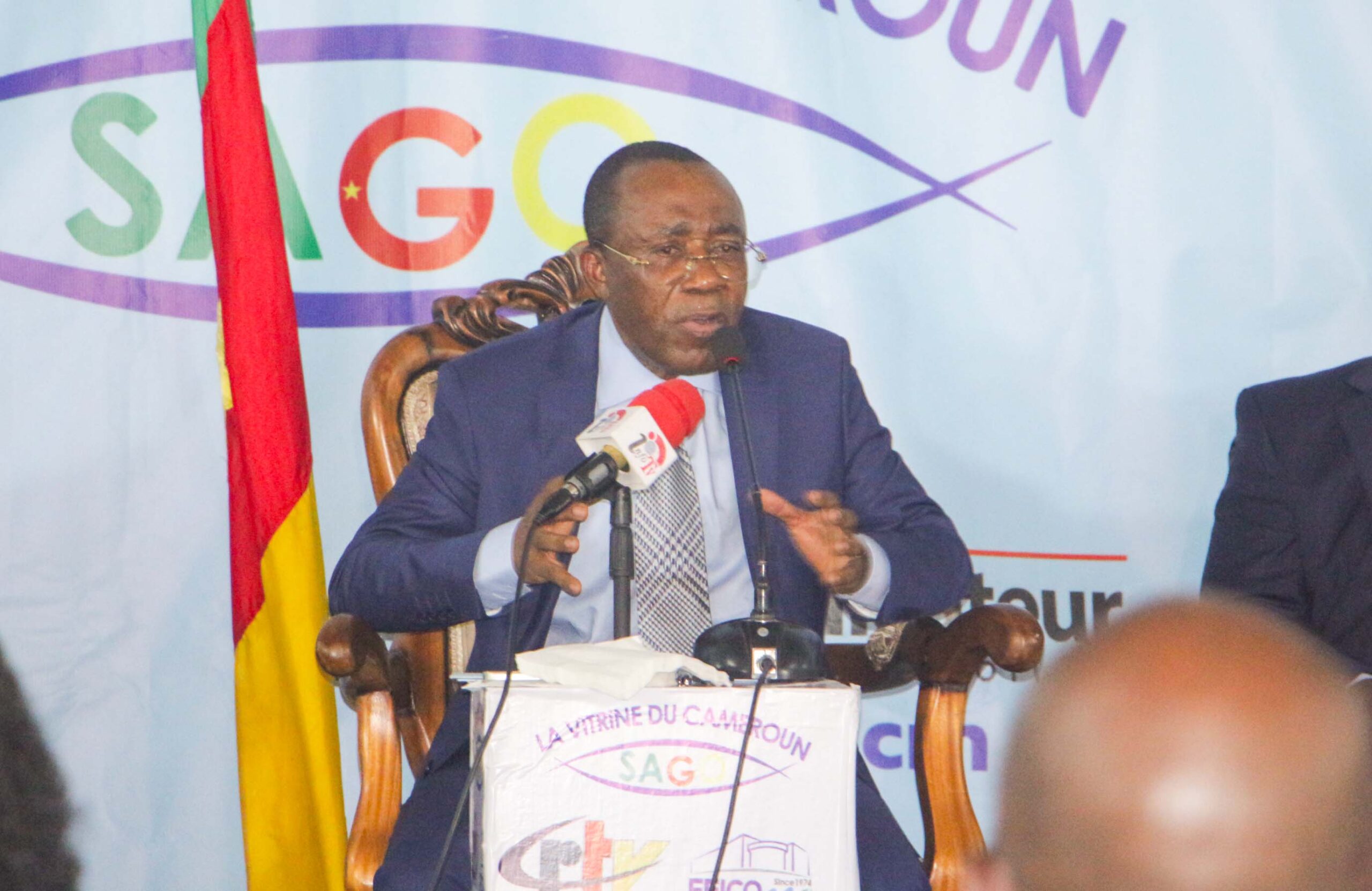
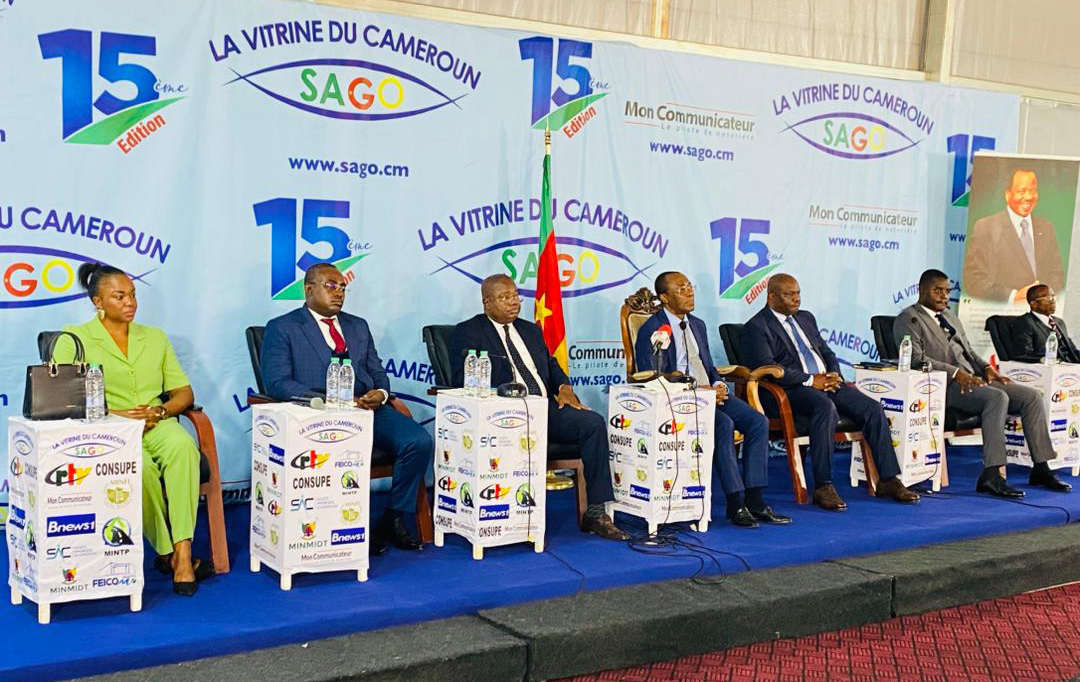
Prof. Fuh Calistus made the remarks June 9 in Yaoundé during a conference presentation tied to the implementation of his ministry’s actions under the theme of Government Action Fair (SAGO) 2026: “Public–Private Sector Partnership: A driving force for an Emerging Cameroon.”
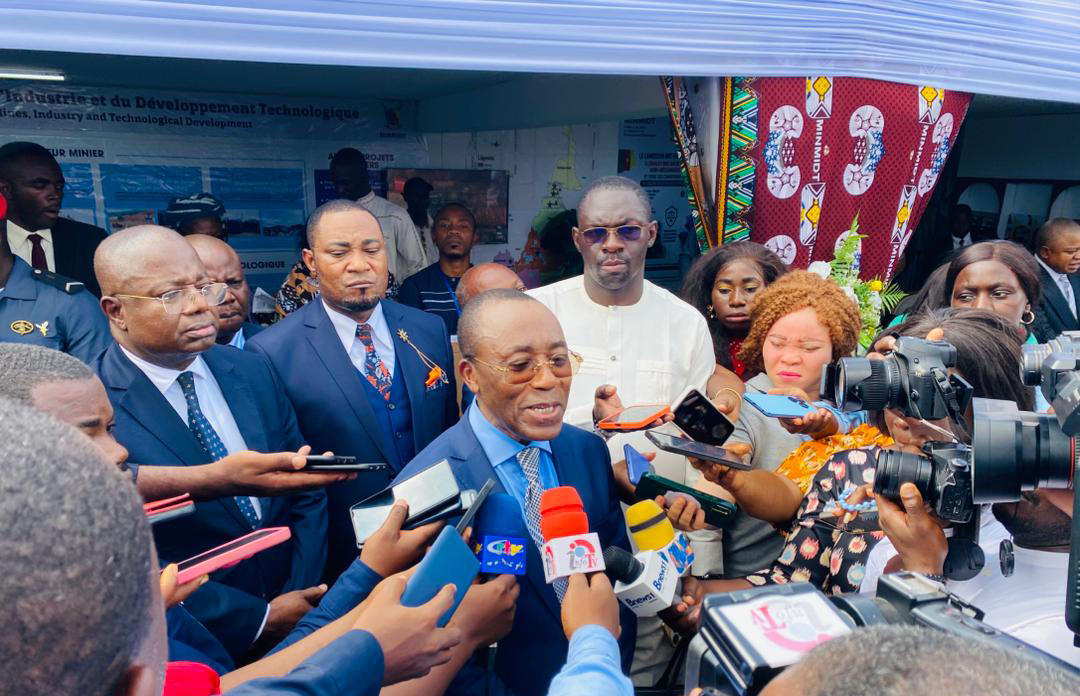
During the conference, Prof. Fuh Calistus outlined achievements in the mining sector along with initiatives in industry and technology. He said the fallout from restructuring would be enormous, particularly in revenue collection. Since the government began formal gold collection, about 1.5 tonnes have been gathered, but with restructuring fully implemented, the Minister stated that the target is nearly 2 tonnes annually for national reserves.
“Our target is that Cameroon should be able to collect close to 2 tonnes in national reserves every year, if restructuring is given a free hand without any influences to operate,” Prof. Fuh Calistus said. He added that export taxes are collected at the source, and with proper declarations, the state would capture all export duties, with gold transporters carrying proof of tax payment regardless of their exit point.
Minister Fuh Calistus said restructuring would transform mining into a greenfield activity conducted in closed systems, ending the practice of children bathing in mud. He said Cameroon cannot remain stuck with centuries-old traditions that have failed to develop the country.
As part of the restructuring, Minister Fuh Calistus stated that more than 100 companies face prosecution in the East and Adamawa regions. He said what is seen in Dubai compared with Cameroon reflects a simple fact: declared amounts do not match actual production. To him, restructuring addresses technical, environmental and technological issues to correct the imbalance between what is declared and what is produced.
“We believe that other administrations, like the customs services, all other administrations have to join,” Prof. Fuh Calistus said. “It’s no more a problem for the Ministry of Mines, it’s a problem for the nation.”
On illegal mining, the Minister said after discovering more than 200 illegal semi-mechanized artisanal sites in the East and Adamawa regions, authorities withdrew 39 companies for failing to meet legal, fiscal, technical and technological obligations. Another 57 companies have received authorizations for semi-mechanized artisanal exploitation. He called for collaboration across all sectors to combat mining that is destroying the country.
Looking back at 2025, Prof. Fuh Calistus said under President Paul Biya’s leadership, Cameroon has become a mining nation with production starting in five major projects: the Bipindi–Grand Zambi and Kribi-Lobé iron ore projects, the Minim-Martap industrial bauxite project, the Bidzar industrial marble project, and the Colomine gold project.
For 2026, the Ministry is prioritizing monitoring of projects entering production, including the Mbalam, Nkout and Ngovayang iron ore projects and the Mborguéné and Bibemi gold projects. Together, these developments structure Cameroon’s mining industry around four value chains: iron, bauxite, limestone and gold.
Recent initiatives to sanitize the semi-mechanized artisanal gold sector include payment of a refundable environmental restoration bond of FCFA 63 million, a 25% simplified mining tax and a 5% export duty. Legal measures require Cameroonian nationals to hold a majority stake in companies holding semi-mechanized artisanal mining authorizations.
Technical measures include a minimum production threshold of five kilograms of gold per month per site equipped with 10 processing units, and a move after six months to a closed-circuit mineralized gravel processing system. With that threshold, projected annual output stands at 1,320 kilograms of gold, with an expected minimum collection of 380 kilograms by the National Mining Company.
The benefits are considerable. If 100 illegal mining sites are regularized, projected revenues would reach FCFA 8.64 billion. If 200 sites comply, revenues could hit FCFA 17.28 billion.
On the industrial front, Prof. Fuh Calistus said the Ministry has established integrated value chains to strengthen the import-substitution policy. Achievements include value chains for turning clay and feldspar into ceramic tiles, bauxite into alumina and aluminum, limestone into clinker and cement, iron ore into iron billets, timber processing supported by special industrial zones in Edéa and Bertoua, and the textile industry through the ongoing restructuring of CICAM.
Preparations for a cotton-processing industrial park in Garoua are advanced and expected to generate more than 10,000 jobs by 2028. The agro-industrial sector is expanding through local processing of cocoa, sugar, flour and pasta, alongside progress on the Ouassa-Babouté Agro-Industrial Technopole project. Domestic energy subsector development includes local manufacturing of gas cylinders to strengthen household energy security.
In technological development, he stated that the Ministry has launched initiatives to strengthen the national innovation ecosystem, including support to universities and specialized institutions with laboratory equipment and the establishment of Technology and Innovation Support Centers.
The Ministry also revived the National Technology Days, offering Cameroonian youth access to an innovation financing facility established by the African Intellectual Property Organization and its partner, the African Guarantee Fund.