By Etienne Mainimo Mengnjo
The Ministry of the Economy, Planning and Regional Development (MINEPAT), has moved to strengthen the vigilance and professional responsibility of his staff regarding the management of public spending. This initiative follows a one-day capacity-building workshop that took place on March 11 in Yaounde, designed to instill a culture of transparency and accountability within the ministry’s ranks.
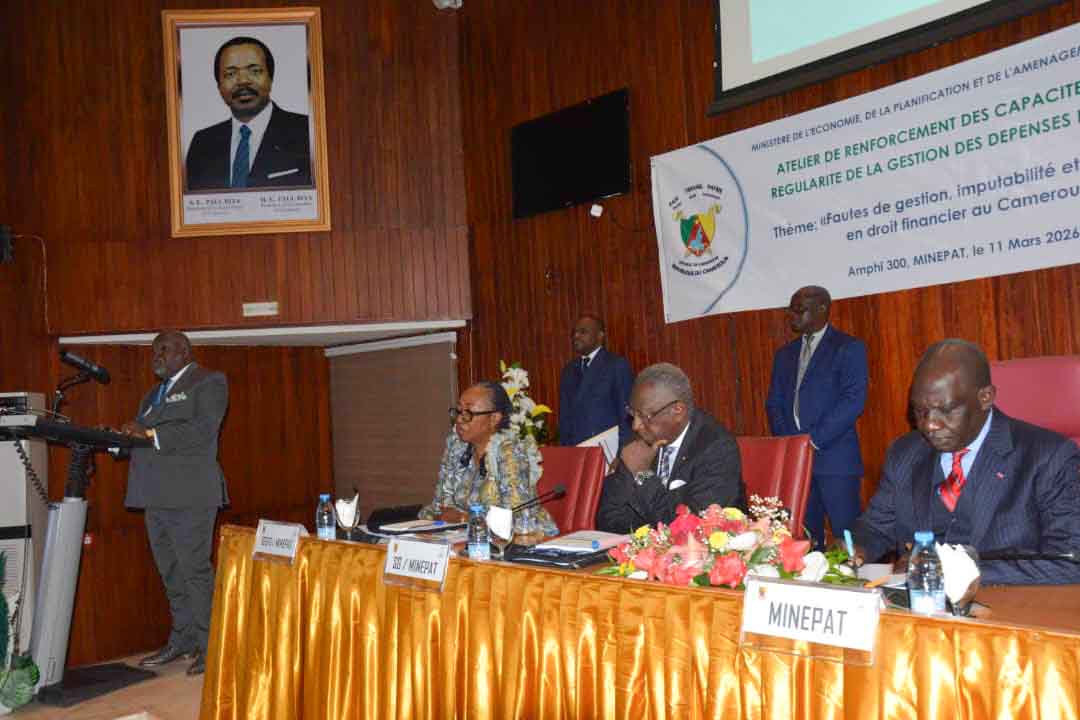
The workshop was chaired by Minister Ousmane Mey and featured the participation of Eric Omengue Messanga, a State Inspector and Secretary-General of the Supreme State Audit Office, (CONSUPE).
Organized by the MINEPAT Anti-Corruption Unit, the session targeted stakeholders throughout the expenditure chain to consolidate the regularity of public fund management. According to government officials, the training reflects a dedicated commitment to promoting rigorous management practices that comply strictly with the legislative rules governing national finances.
Opening the workshop, Minister Ousmane Mey reiterated that the improvement of public financial management remains a top government priority. He noted that such measures represent a crucial pillar of good governance and are essential for the harmonious development of Cameroon.
The minister explained that these requirements are part of broader reforms undertaken by the State, including the introduction of program-based budgeting and a performance-based approach to public action. These reforms he said, also involve strengthening the regulatory framework for public accounting and increasing oversight for those tasked with managing the expenditure chain.
Minister Ousmane Mey further stressed that mastering the rules of public finance is not merely a bureaucratic necessity but is essential to ensuring the effectiveness of public action and preserving the credibility of state institutions.
He encouraged participants to view the training as a strategic opportunity to enhance their professional skills while actively contributing to the quality of public spending. He further urged stakeholders to demonstrate high levels of rigor and ethics in their daily duties.
Omengue Messanga on his part addressed the technical aspects of public management, stating that it is vital for managers to be sensitized to the specific irregularities and faults that can occur. He noted that public management covers a vast field, including revenue collection, public markets, heritage management, and general rules of conduct.
He explained that the workshop aimed to help managers understand what constitutes an irregularity and the specific conditions under which their personal responsibility might be challenged in the event of a management fault.
Joel Christine Mbamband, Inspector General in Charge of Evaluating Service Performance and President ofMINEPAT Anti-Corruption Unite, noted that the workshop was particularly timely given the high number of new appointments within the ministry over the past year.
She explained that with new directors and cash register managers appointed for the 2026 fiscal year, the Ministry took the opportunity to renew its staff’s awareness of mismanagement risks. She characterized the activity as a preventive measure in the fight against corruption, aimed at identifying the root causes of mismanagement and sharing best practices to foster an ethical culture.
Meanwhile, during the session, participants were educated on the legal concepts of irregularity and the resulting liabilities under Cameroonian financial law. Beyond theoretical presentations, the staff engaged in practical case studies to better identify and prevent mechanisms that lead to the mismanagement of public funds.