
List Posts

View All
General

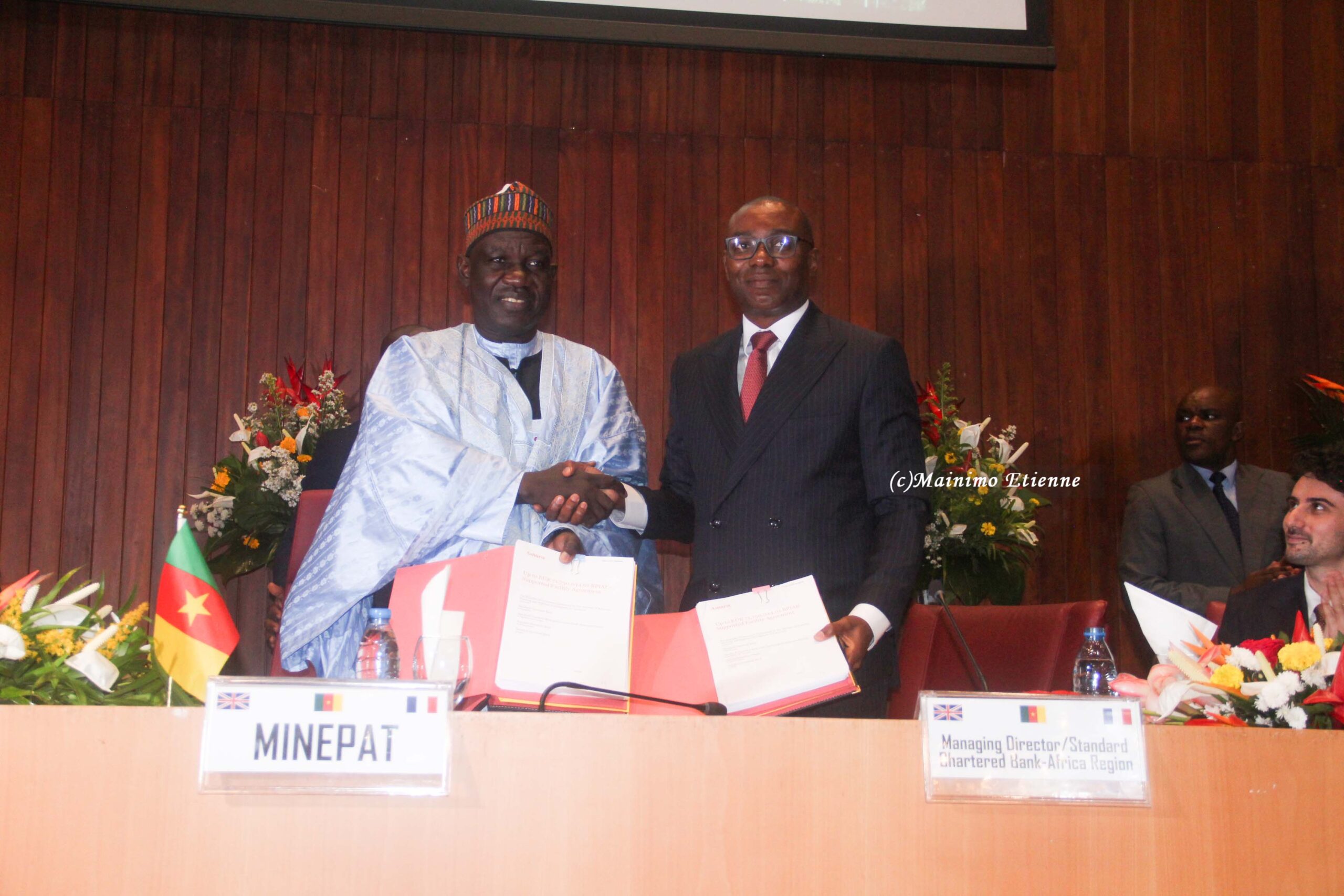
Cameroon, Belgium & Italy Signed Financial Agreement To Reconfigure Yaounde Drinking Water Supply System

By Etienne Mainimo Mengnjo The governments of Cameroon, Belgium, and Italy have entered into a financial agreement and market contracts…

Society

NGO, 1Billion Rising, Stress Prevention, Listening As keys To Recovery From Youth Addiction

By Desmond Mbua The non-governmental organization 1 Billion Rising in Cameroon has launched a strong appeal to confront addiction with…

Sports

The Enduring Charm Of Fireside Storytelling

By Etienne Mainimo Mengnjo Telling stories around the fireside is an age-old tradition that weaves a rich tapestry of memories,…

Society

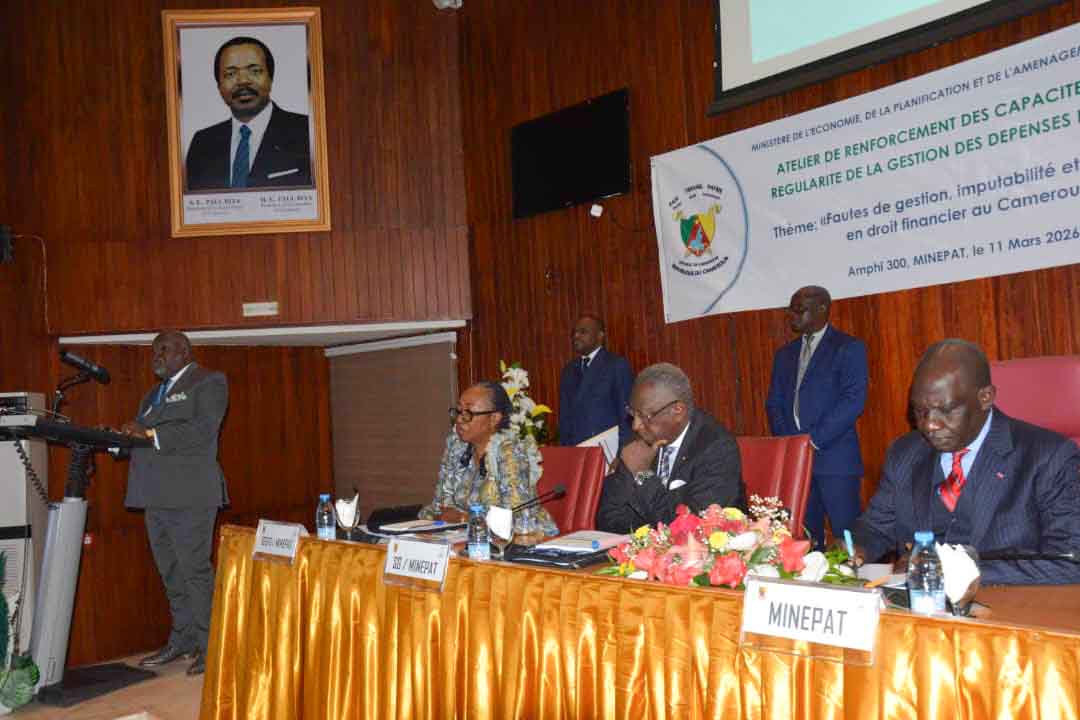
Gov’t Equips CONAC, Audit Chamber With Vehicles To Scale Up Anti-Corruption Fight

By Etienne Mainimo Mengnjo The government of Cameroon through the Ministry of Economy, Planning and Regional Development (MINEPAT) has handed…

Meet Macson Nsoyuka, Alias ‘Dragon’ Blending Afropop & Rap To Realize Dream

By Etienne Mainimo Mengnjo

In the misty hills of Mbiame, a small village in Cameroon’s Northwest Region, Macson Nsoyuka was born with no outward sign of the fire he would later unleash.

Macson Nsoyuka, aka “Dragon”

His roots remained deep in Mbiame’s soil, but it was in the neighbouring village of Nseh—amid dusty streets, flickering kerosene lamps, and late-night cyphers where rhymes were traded like precious coins—that a shy teenager first seized a borrowed microphone, whispered the name “Dragon,” and let something fierce slip from his throat.

The village had no idea it was witnessing the birth of a voice that would soon echo far beyond the hills. For years, music simmered quietly inside him. Then came the visions—vivid, insistent—and the ache of growing up.

Those private storms finally pushed him through the door of a recording studio while he was still young. “My visions, the pain I carried growing up, and even what I’m going through now—all of it created an urgent need to make music,” Dragon says, his voice steady with conviction.

What emerges from the speakers is unmistakable: a molten blend of Afropop’s bright rhythms, Rap’s sharp lyricism, and the home-grown pulse of Mboko. He wields this mix deliberately, turning every beat into a plea for love, peace, and unity in a region that needs those words more than most.

Macson Nsoyuka, aka “Dragon” back from the studio

He name-checks his influences with gratitude—Richard Kings, Tina Vernyuy, Mic Monster, and global heavyweights Future and Lil Durk—artists whose philosophies mirror his own hunger to say something that lasts.

Life, however, has not been gentle. Just as his career was gaining momentum in Kumbo, the ongoing crisis in the Northwest and Southwest Regions forced him to uproot everything and start over in a new place. The reset has been brutal, but Dragon refuses to let it silence him.

After nearly 12 years grinding in the industry—releasing singles, honing his craft—he is now deep into recording his debut album. Step inside the studio with him and you’ll feel the shift: tension melts, eyes light up.

“I see myself living my dream,” he says. “Life is finally becoming real.” He pauses, then adds with quiet certainty: “My soul is happy because God laid a message on me to deliver to His people. Every time I obey that call, I’m at peace.”

The album is coming—soon, he promises—and with it, the full arrival of the artist the villages of Mbiame and Nseh first met as a nervous boy with a borrowed mic.

Macson Nsoyuka, aka “Dragon” going to the studio 

Outside the booth, Macson Nsoyuka is just as resourceful. By day he’s a skilled shoemaker, stitching soles and dreams with equal care, proof that a man from the hills can build more than one kind of future with his own two hands.

From red earth to rhythm, from borrowed microphones to a voice the nation is starting to recognise—Dragon is no longer waiting in the shadows.

He has begun to roar.


G20’s Lost Opportunity On Africa’s Debt Reforms As Crisis Deepens

By Etienne Mainimo Mengnjo

South Africa’s historic turn as the first African host of the G20 Summit culminated on Nov. 23, 2025, with the adoption of the Leaders’ Declaration. Hailed by President H.E. Ramaphosa as a “victory for diplomacy” that placed Africa and the Global South at the G20’s heart, the summit’s legacy is now being scrutinized for what was left out: a robust response to the continent’s deepening debt emergency.

Despite the summit being a diplomatic landmark, critics argue the final declaration prioritized diplomatic consensus over meaningful action on Africa’s debt and development crisis.

While the South African presidency came at a difficult time for multilateralism, there has been little tangible progress throughout the year to alleviate the severe debt burdens facing many African nations.

The crisis, described by observers as having the “scale of an emergency,” was significantly watered down in the final text.

This outcome suggests a failure by the South African presidency to advance critical reforms to the global financial architecture and to effectively champion progressive proposals put forth by African nations.

A key point of disappointment is the omission of texts from the Common African Position (CAP) on debt, outlined in the Lomé Declaration. The CAP called for a unified, rules-based multilateral debt workout mechanism under the United Nations, emphasizing debt transparency and accountability, and measures to stem illicit financial flows out of the continent.

Furthermore, the G20 Declaration failed to commit to the Sevilla Commitment (Compromiso de Sevilla)—specifically Section 50(f) of the FfD4 outcome—which mirrored the CAP’s spirit by calling for intergovernmental negotiations at the UN on a sovereign debt workout mechanism.

These omissions, critics contend, amount to an “unfair disinclination” to address the structural drivers of Africa’s indebtedness. By framing the problem as merely a technical insolvency and liquidity crisis, the declaration promotes a “recipe that pushes countries down the path of recurrent debt cycles that ultimately fuel the interests of the global North.”

The G20 Declaration missed a critical opportunity to offer more ambitious debt restructuring mechanisms, particularly as an estimated 44 percent of Africa’s external debt stock is held by private creditors, according to UNCTAD. This significant private-sector involvement has made timely and orderly debt resolution exceedingly difficult.

The G20’s existing Common Framework for debt restructuring has been widely criticized for failing to deliver swift and effective relief for countries like Zambia and Ethiopia. Instead of fundamentally reforming the mechanism, the declaration only preserved its status quo, calling for its “strengthening” despite its obvious failings and the prioritization of private sector profits over the sustainability of African governments.

Riska Koopman, International Public and Private Finance Officer at AFRODAD, commented: “South Africa’s G20 Presidency and the Leaders’ declaration water down this attempt by African governments to be willful actors in reforming the global financial architecture to their benefit… The debt challenges facing African governments seep into every fibre of everyday life on the continent and can’t be separated from the urgency of global financial architecture reform.”

Adding to the summit’s complex outcome, post-event tensions between the United States and South Africa have intensified. The U.S. did not participate in this year’s G20 and has since reportedly uninvited South Africa from its 2026 Summit in Florida. The U.S. exit from multiple multilateral processes poses an increasing risk to the G20’s stability and threatens progress on global financial reforms.

In light of the G20’s inability to adequately address the needs of the Global South, AFRODAD and other organizations are now reaffirming the need to move decision-making to more democratic spaces like the UN. They continue to advocate for the establishment of a United Nations Framework Convention on Sovereign Debt—a legally binding mechanism rooted in fairness and equity to provide urgent multilateral solutions.

Ministers Go Head-To-Head In Defense Of 2026 Fiscal Year Budget Allocations

By Etienne Mainimo Mengnjo

Several government Ministers are presenting their funding requests for the 2026 fiscal year budget to the Lower House Finance and Budget Committee, as outlined in the framework provided by Prime Minister Chief Dr. Joseph Dion Ngute.

Minister of Public Works, Emmanuel Nganou Djoumessi (Photo Credit: CRTV Web)

Prime Minister Dion Ngute presented government’s Economic, Financial, Social and Cultural Programme to Parliament on Nov. 26. He announced the state budget for 2026 is projected to balance at FCFA 8,816.4 billion in both revenue and expenditure.

Going by the PM, this figure represents a substantial increase from the FCFA7,735.9 billion budget in 2025, reflecting an absolute increase of FCFA 1,080.5 billion or a 14 percent rise. The Prime Minister stated that of the total, FCFA 8,683.9 billion is dedicated to the general budget and FCFA 32.5 billion is allocated to Special Appropriation Accounts.

The official document presented by Ngute forecasts domestic revenue at FCFA 5,887 billion, which is FCFA 452 billion more than in 2025. This revenue is primarily sourced from tax and customs duties, expected to reach FCFA 4,889.5 billion.

Minister of Agriculture and Rural Development, Gabriel Mbairobe (Photo Credit: National Assembly)

Oil and gas revenue is projected at FCFA 523.7 billion, with non-tax revenue estimated at FCFA  400 billion and grants at FCFA 73.8 billion. Public expenditure, excluding debt principal, is set at FCFA 6,210.5 billion, a 10 percent increase.

This spending is broken down into FCFA 1,625.4 billion for personnel expenses, FCFA 1,206 billion for goods and services, FCFA 820.3 billion for transfers and subsidies, FCFA 532.5 billion for debt interest, and FCFA 2,026.3 billion for investment expenditure. Investment expenditure accounts for 22.8 percent of the total budget, slightly lower than the previous year.

Minister of Sports and Physical Education, Prof. Narcisse Mouelle Kombi (Photo Credit: CRTV Web)

The draft budget law anticipates an overall deficit of FCFA 631 billion, significantly higher than the FCFA  309.9 billion recorded in 2025. The total financing requirement for 2026 amounts to FCFA 3,104.2 billion, compared to FCFA 2,326.5 billion in 2025.

This higher requirement results from adding the amortization of domestic and external debt, estimated at FCFA 1,870.6 billion, arrears payments of FCFA 498.8 billion, and VAT credit refunds estimated at FCFA 84 billion.

To cover this need, the government plans to mobilize funds through several sources: disbursements from project loans are expected to reach FCFA 826.7 billion issuances of public securities FCFA 400 billion, and bank financing FCFA 589.7 billion. Budgetary support is expected to reach FCFA 120 billion, exceptional financing FCFA 167.8 billion, while a volume of FCFA 1,000 billion of external borrowing is included in the financing scheme.

Minister of Labour and Social Security in Cameroon, Grégoire Owona (Photo Credit: National Assembly)

The committee heard presentations from several ministers outlining their departmental plans for the coming year. Minister of Livestock, Fisheries and Animal Industries Dr. Taiga defended an allocation of FCFA 56.5 billion, stressing accelerating the Agropastoral and Fisheries Import Substitution Plan (PIISAH), with a focus on the rapidly profitable fish sector.

Of this amount, FCFA 12.5 billion is earmarked for PIISAH activities, including 6.5 billion FCFA to support actors in the fish value chain through the SME Bank. Dr. Taiga also announced that the ministry would complete work on the draft law on livestock farming and finalize the National Development Plan for the Dairy Sector.

Minister of  Secondary Education, Prof. Pauline Nalova Lyonga (Photo Credit: CRTV Web)

Development works on 15,280 hectares of hydroagricultural land in Adamawa will be launched to boost fodder and milk production, accompanied by 1.26 billion FCFA in support to dairy stakeholders and a FCFA 2 billion- transfer to SODEPA.

The Ministry plans to complete the Bamenda industrial slaughterhouse, advance similar projects in Douala and Yaoundé, intensify vaccination campaigns, and expand aquaculture and capture fisheries through new infrastructure, equipment and support to producers.

Minister of Small and Medium-sized Enterprises, Social Economy, and Handicrafts Achille Bassilekin III sought approval for his ministry’s allocations worth over FCFA 15 billion for the fiscal year, stating the budget lay emphasis on promoting youth and women entrepreneurship, as well as strengthening the craft and social economy sectors in Cameroon.

Minister of Women Affairs, Marie-Thérèse Abena Ondoa (Photo Credit: National Assembly)

Minister of Secondary Education Prof. Nalova Lyonga stated her ministry’s budget increase is mainly due to the government’s commitment to paying the debt owed to teachers. She also announced plans to introduce artificial intelligence–powered software to modernize teaching and improve administrative efficiency, while stressing that ensuring safe and secure schools remains a core priority.

Minister of Public Service and Administrative Reform Joseph Le proposed a budget of FCFA 19.875 billion, outlining his ministry’s priorities and key reforms planned for the year ahead.

Minister of Public Service and Administrative Reforms, Joseph Le (Photo Credit: CRTV Web)

The macroeconomic outlook supporting this budget projects national growth of 4.3 percent in 2026, driven by the non-oil sector, while inflation is expected to fall to 3 percent, after reaching 3.2 percent in 2025.

The government states this budget aims to reconcile the consolidation of public finances, adherence to the CEMAC convergence pact, and the implementation of the priorities of the 2030 National Development Strategy. The text also introduces several budgetary innovations, including the elimination of common chapters, the full application of the revised budget nomenclature, and the splitting of the Conflict-Affected Regions Reconstruction Fund.

A key element is the creation of a special fund of FCFA 50 billion dedicated to women’s economic empowerment and the promotion of youth employment, in line with commitments made by Paul Biya.


Cameroonians Condemn Encirclement Of Prof. Kamto’s Home Following Ban On Party Convention

By Etienne Mainimo Mengnjo

Cameroonians have strongly condemned the heavy security presence surrounding the residence of opposition leader Prof. Maurice Kamto following the government’s ban on an extraordinary convention of the Cameroon Renaissance Movement (CRM) party.

Prof. Maurice Kamto (Photo Credit: Mainimo Etienne)

This outcry comes after a statement from Mamadou Mota, the CRM’s Interim President, who declared that Kamto’s home has been under a “de facto siege, without any legal justification” for several days.

“For several days, President Kamto’s residence has been under a de facto siege, without any legal justification being provided by the authorities,” Mota stated. He criticized the “abusive encirclement and the resulting restriction on movement, which constitutes a clear violation of rights.”

Mota argued that these actions reflect the Yaoundé regime’s disdain for the rule of law and respect for opposition leaders. He lamented that Kamto, leader of a legitimate political party, is being “treated like a criminal, in violation of all applicable laws.”

Some believe the authorities hold the CRM accountable for Issa Tchiroma’s issues, while others suggest the ban and security measures relate to the CRM’s extraordinary convention scheduled for November 29. This gathering aimed to elect new party leadership, with Kamto expected to return as president and reorganize the party ahead of the 2025 Legislative and Municipal Elections, according to sources.

The convention was formally banned by the Divisional Officer of Yaoundé IV Municipality in a decree signed on November 27. The administrative authority cited the risk of a “serious threat to public order” as justification for the decision.

Reliable sources have reported that security forces also blockaded the CRM headquarters in Yaoundé on Saturday. This security encirclement has drawn sharp criticism from citizens, who accuse the regime of provoking unrest.

One concerned CRM militant expressed deep sadness over the situation at both Kamto’s home and the party headquarters. “Why couldn’t the government deploy security officers to ensure nothing happens during the convention?” the militant questioned.

A citizen named Emelda remarked, “The government continually provokes citizens, and when they react, they claim Cameroonians are being manipulated, when in fact they are the ones doing the manipulating. After stealing elections, they are still not satisfied. Let them allow Cameroonians to suffer in peace.”

Another citizen, Steven, questioned the government’s motivations: “Why is the government afraid? Do they have skeletons in their cupboard? The questions are numerous, but the government should be cautious—if they keep pushing Cameroonians to the wall, there will come a day when they will react, no matter how they try to bribe them.”

Prof. Kamto, who stepped down from party leadership last July to avoid legal issues related to his candidacy in the October 12 Presidential Election, ran under the MANIDEM banner after his resignation. However, his candidacy was ultimately rejected by the Constitutional Council.

With the authorities’ ban in place, the CRM faces a period of uncertainty just as the party attempts to solidify its leadership and internal organization. This administrative blockade marks a pivotal moment, occurring right before an electoral cycle in which the party aims to reposition itself on the national political stage.

Samuel Eto’o Re-Elected FECAFOOT President In Landslide Victory

By Etienne Mainimo mengnjo

Samuel Eto’o has been re-elected President of the Cameroon Football Federation (FECAFOOT) for a new four-year term on Friday, Nov. 29.

Samuel Eto’o, Newly re-elected FECAFOOT President

The election took place during the General Assembly held at the Confederation of African Football (CAF) Centre of Excellence in Mbankomo, with representatives from both FIFA and CAF in attendance to oversee the process.

Running unopposed, Eto’o achieved a near-unanimous victory, receiving votes from 85 out of 87 delegates, with two votes deemed invalid.

This overwhelming support equates to a remarkable approval rating of 97.7 percent, extending his mandate until 2029. Eto’o, the country’s all-time leading scorer, first took office in 2021.

Looking ahead, Eto’o’s next term will revolve around four primary objectives. He aims not only to restore values within the national team but also to enhance the Lion brand’s appeal, boost the competitiveness of local leagues, and reinforce the autonomy of FECAFOOT.

Observers note that Eto’o’s initial election in 2021 represented a pivotal change in the administration of Cameroonian football, succeeding Seidou Mbombo Njoya after garnering 43 out of 74 votes.

His re-election comes after a first term marked by considerable scrutiny, characterized by both internal challenges and external criticism. Supporters argue that he has revitalized elements of domestic football, while detractors have described his tenure as “catastrophic.”

Notable criticisms include ongoing public disputes between the federation and the Ministry of Sports, as well as the resignations of several close allies within FECAFOOT.

A four-time African Player of the Year, Eto’o stands as the all-time leading scorer for the Cameroon national team and is recognized as one of the most accomplished players in the history of the Africa Cup of Nations.

Meet Melim United: Finalists Of 2025 BSFC Tournament

By Etienne Mainimo Mengnjo

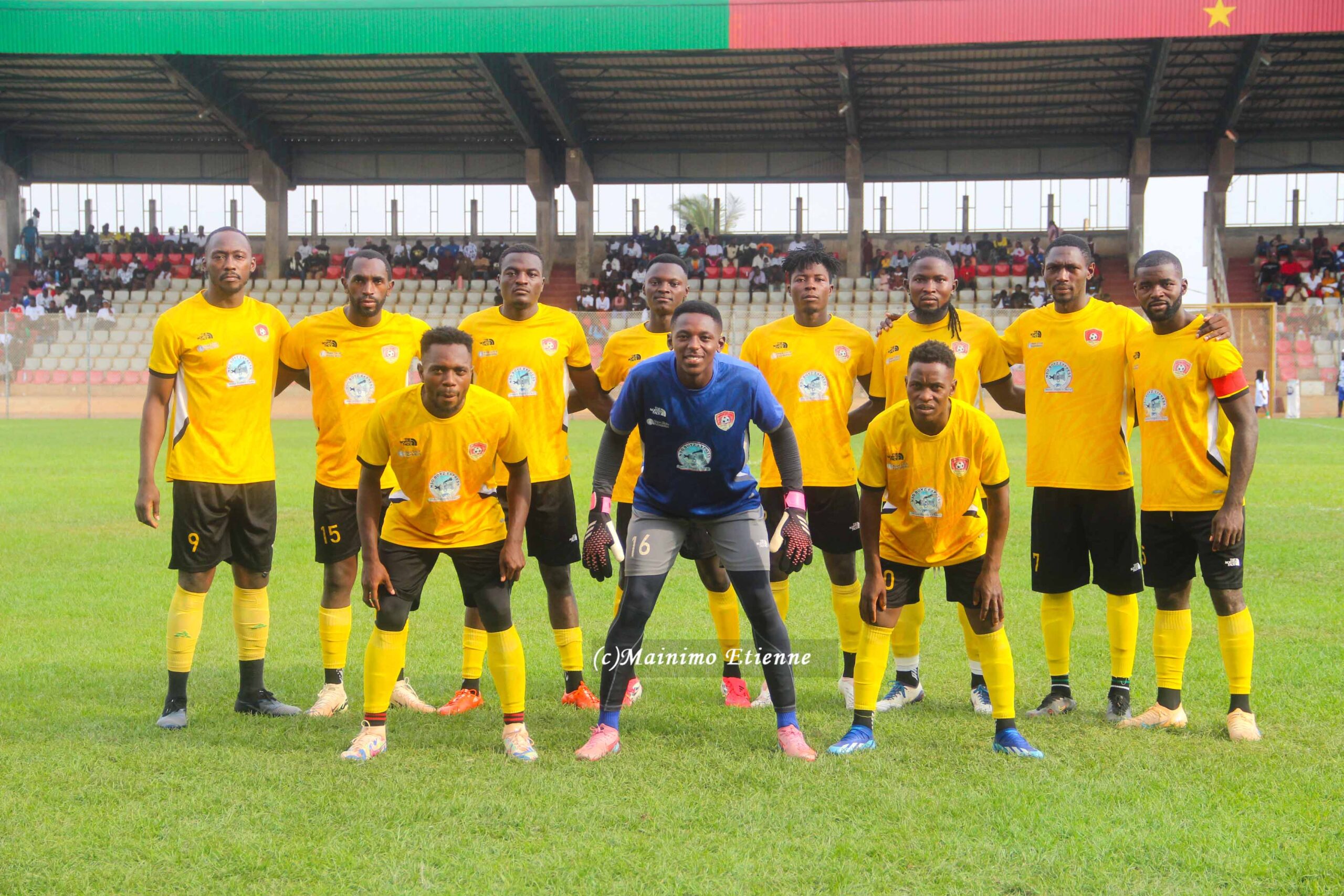
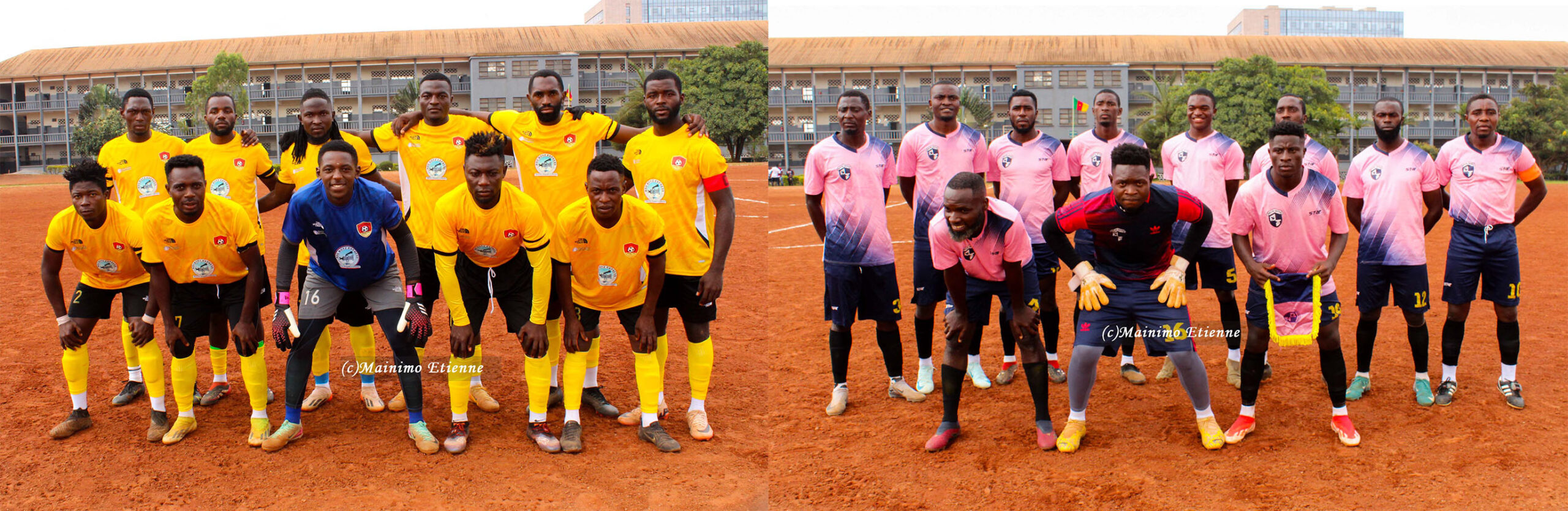
After a hard-fought battle in the semi-finals, Melim United is set to face off against their fierce rivals, Dzekwa Rangers, in the final of the 2025 Bui Sports Fans Competition (BSFC). This matchup marks a historic achievement, as it’s the first time Melim United has secured a spot in the finals.

Melim United during the 2025 BSFC (Photo Credit: Mainimo Etienne)

Despite qualifying for the finals, the team’s journey to the final was fraught with challenges, starting with the singular ambition of lifting the BSFC trophy for the first time.

Entering the 2025 tournament brought an immense sense of pressure, as supporters rallied behind the players, fueled by a collective dream of finally claiming the prestigious trophy.

Melim United’s campaign in the 2025 edition kicked off on September 28 against Dzekwa Rangers, a match laden with tension and anticipation. The highly competitive and physical opening encounter ended in a hard-fought goalless draw, setting the stage for the fierce rivalry to develop.

Melim United confront Chitah FC during the 2025 BSFC (Photo Credit: Mainimo Etienne)

In their next match, Melim United managed to secure a vital 1-0 victory against Nso Youths, marking an essential step in their campaign.

However, as the group stage progressed, momentum began to wane. On day three, they faced a persistent Chitah FC, resulting in a tight but disappointing 1-1 tie that raised questions about their ability to maintain consistency.

As the group stage continued, the second half became a thrilling roller coaster of emotions. The highly anticipated return leg against Chitah FC was described by commentators as a “must-watch” clash, charming the large crowd in attendance.

Melim United during the 2025 BSFC (Photo Credit: Mainimo Etienne)

In a back-and-forth encounter, the match ended in a gripping 2-2 draw, leaving fans on the edge of their seats. However, trouble was brewing. On day five, Melim United suffered an unexpected setback with a costly defeat to Nso Youths FC.

This loss turned the team’s focus from seeking direct qualification to scrambling for a place in the semifinals. With their dreams at stake, Melim entered day six with a sense of urgency as they faced Dzekwa Rangers again.

The rematch was packed with intensity, as both teams fought for supremacy. In a game played at breakneck speed, Melim United pushed hard but ultimately fell 2-1 to Dzekwa Rangers.

Melim United confronting Nso Boys FC during the 2024 BSFC  (Photo Credit: Mainimo Etienne)

This defeat relegated them to the knockout phase, raising the stakes for the upcoming semifinal match. Having lost their chance for automatic qualification, Melim United found themselves in a winner-take-all semifinal showdown against Chitah FC.

The stakes couldn’t have been higher—they needed a victory to keep their historic run alive and aim for the final. The pressure was deep as everyone recognized the significance of the moment.

Demonstrating remarkable resilience and unity, Melim United took control of the tense match. With their backs against the wall, they played with heart and determination, securing a crucial 1-0 victory over Chitah FC.

Melim United during the 2024 BSFC (Photo Credit: Mainimo Etienne)

The decisive goal not only marked a turning point for the team but also booked their unprecedented entry into the 2025 BSFC final.

From all indications, Melim United’s campaign has been defined by grit, determination, and dramatic victories. Each match brought its own set of challenges, but through it all, the players remained focused on their goal.

As they prepare to face Dzekwa Rangers in the final, the anticipation is intense. This match promises to be one of the most highly anticipated clash, and it will determine if the club’s long-held dream of claiming a trophy will finally be realized.

The atmosphere will undoubtedly be electric, with fans eagerly supporting their team on this momentous occasion.


Meet Dzekwa Rangers FC: Proud Finalists Of 2025 BSFC

By Etienne Mainimo Mengnjo

After a remarkable journey highlighting incredible talent and determination, Dzekwa Rangers FC will compete in the final of the 2025 Bui Sports Fans Competition (BSFC), marking a historic first for the club.

Dzekwa Rangers participating in the 2025 Edition of the BSFC (Photo Credit: Mainimo Etienne)

Through a series of impressive and hard-fought performances, the team rightfully earned its place as a finalist, captivating fans across the city of Yaounde.

Their success according to many represents the pinnacle of a long-term project and has generated significant excitement within the Jakiri community and the broader BSFC fanbase.

The BSFC, now in its 13th edition, is the premier fan-driven tournament organized by the Bui Strikers Veteran Football Club of Yaoundé.

The 2025 edition featured four highly competitive teams, necessitating a grueling round-robin stage to determine the two finalists. Dzekwa Rangers demonstrated tactical resilience and tenacity to emerge from this challenging field.


The Defining Group Stage

The Rangers’ campaign began on a tight note on Sept. 28, opening the tournament against the formidable Melim United. The match, a tense, tactical affair, concluded in a scoreless draw, underscoring the parity among the competitors.

The team, representing the pride of Jakiri, followed this with another hard-fought result on the second day of play, securing a 2-2 draw with Chitah FC in a fixture characterized by its chilling intensity and end-to-end action.

Dzekwa Rangers facing Melim United in the first round of the 2025 edition of the BSFC (Photo Credit: Mainimo Etienne)

However, the team found its offensive rhythm on the third day of play, delivering a powerful performance that served as their breakthrough moment. Dzekwa Rangers dominated Nso Youths, clinching a commanding 4-1 victory.

This decisive win, featuring excellent coordination and clinical finishing, immediately propelled the Rangers to the top of the classification table, signaling their serious intent to contend for the trophy.

Maintaining this momentum proved challenging in the subsequent fixtures. In the return leg against Nso Youths, the Rangers saw their hard-earned lead slip, ultimately being held to a 2-2 draw.

Dzekwa Rangers participating in the 2025 Edition of the BSFC (Photo Credit: Mainimo Etienne)

This unexpected result brought their winning streak to an abrupt halt and tightened the standings considerably. Day five brought another close encounter, resulting in a 1-1 draw against Chitah FC, keeping their qualification hopes in the balance until the very end.

The final fixture of the first round was a high-stakes rematch against Melim United. Displaying veteran-like composure under pressure, Dzekwa Rangers clinched a crucial 2-1 victory, a result that not only reversed their opening day stalemate but also guaranteed their direct, historic qualification into the BSFC championship final.


The Long Road to the Top

This remarkable achievement is the culmination of years of dedicated involvement in the BSFC. The club’s current identity is the result of a significant evolution that began when the team was known as the Jakiri All Student Union (JASA).

Over time, the organization underwent a natural transformation, first competing as Dzekwa United before establishing its current and most successful iteration, Dzekwa Rangers.

Dzekwa Rangers participating in the 2024 Edition of the BSFC (Photo Credit: Mainimo Etienne)

Their constant participation, despite numerous setbacks in previous editions, underscores a commitment to the competition and community sports development.

Dzekwa Rangers now stand one match away from realizing their ultimate dream. They will face Melim United once more in the highly anticipated final scheduled for the coming weeks.

Dzekwa Rangers facing Promise Enterprise FC during the 2024 Edition of the BSFC (Photo Credit: Mainimo Etienne)

For the Rangers, this final is not just a game, but an opportunity to crown their persistence and mark their historical debut with the ultimate prize. The community is buzzing, and the central question remains: will Dzekwa Rangers complete their inspirational journey by lifting the BSFC 2025 trophy?

The Hidden Suffering Of Yaoundé’s Domestic Workers

By Etienne Mainimo Mengnjo

Behind the untouched walls and manicured gardens of Yaoundé’s wealthiest homes, a silent, pervasive sorrow weighs on the hearts of house helps whose daily work keeps these households immaculate.

A dedicated young woman focused on keeping the home spotless and organized (Picture Credit: AI)

For years, the suffering of these workers, often isolated and vulnerable, has been shielded by the very doors that appear to offer them opportunity and refuge.

According to these house helps, the common perception of life in an elite residence is often far from the reality experienced by domestic staff. Their silent cry for help is often muffled by the imposing walls of their employers’ compounds.

“Marie Claire” (a penname to protect her identity) worked as a domestic worker for a prominent, high-profile figure in Yaoundé. After years of service, she feels she has seen the darker side of life.

“Life behind these walls is not what people think,” she stated. “It’s been a living hell. I was only paid FCFA 25,000 a month as my salary. I know many will not believe me.”

Marie Claire adds a sobering warning to those who admire the opulence: “Do not let these walls deceive you. These prominent people are not the benevolent figures we imagine. They mistreat their house helps, but because they are highly placed, no one listens to us. Given the power imbalance, it is often better to remain silent and simply accept the minimal wage to survive.”

Another former domestic worker, who also requested anonymity, recounted her departure from her employer’s home, stating she could no longer endure the injustice and the “unbearable” salary. She highlighted the emotional toll of the job.

“The silent cry that domestic worker endure at the hands of these elites—who often present a smiling face to the outside world—is simply unbearable,” she narrated.

A gatekeeper working in the same circle confirmed the widespread exploitation. “What more can I say? The truth is that many of these domestic workers, from the gate man to the drivers and house helps, are genuinely suffering. The salaries provided are truly minimal,” he admitted.

For many workers, speaking out is not an option. They prefer to stay in “silence because the injustice is always very unbearable, yet no one can talk because the ‘big people’ are protected.”

However, the experience is not universally negative. Another woman shared a contrasting perspective, stressing that some elites maintain their humanity.

“I worked as a domestic worker in an elite home for over 15 years, and I was treated very well,” she said. “Even though the salary was not the best, the respect and care they gave me made me feel so special.”

She acknowledges the widespread complaints but urges a more balanced view. “When I listen to other house helps, I feel disappointed because their testimonies are not good. I have seen and heard their stories. But I must also say we need to look at it from another point: some of these house helps are also not being honest about their own conduct.”

To city dwellers there is need for these house helps to speak out. The disparity in experiences highlights a complex social issue where exploitation thrives in isolation, yet the entire class of employers cannot be painted with the same brush. The stories from behind the pristine walls compel society to look deeper into the silent contracts that govern the lives of Yaoundé’s essential, yet invisible, workforce.

Legally, domestic workers are classified as employees under the Labour Code and are entitled to the national minimum wage. Though the wage was recently revised to approximately FCFA 41,875 to FCFA 43,969 per month (2023/2024 figures), the wage provides little comfort.

Across Yaoundé, many citizens argue that this minimum is a “survival wage,” not a “living wage,” stressing that it is fundamentally inadequate to cope with the skyrocketing cost of housing, food, and transport in the capital and other major urban centers.

Cameroonians Lose FCFA Millions to MDB Online Marketing Platform

By Etienne Mainimo Mengnjo

Hope turned to horror for countless Cameroonians recently after an online marketing platform, Multi-Digital Brandishing (MDB), which promised easy earnings for watching video ads, abruptly imploded, wiping out earnings of its thousands of subscribers.

What was heralded as a lifeline out of economic hardship has now become a national scandal, leaving a trail of devastation and despair among its subscribers. The online marketing platform already had branches all over the country.

The MDB platform recruited users—referred to as “employees”—to invest at various tiers, with the guarantee of receiving daily profits ranging from FCFA 475 to FCFA 900,000 for every 15-second video ad watched daily.

“It felt like a genuine opportunity,” recounted one investor, who requested anonymity after losing hundreds of thousands of CFA francs. “The platform was running well, and we were making money. Everyone was calling it a savior from hardship.”

However, the anonymous investor stated that the first signs of trouble surfaced when MDB began declaring unscheduled holidays that halted all withdrawals. To the investor, the company initially blamed these stoppages on a claimed effort to integrate with financial institutions to “speed up payments.”

The excuses quickly escalated. After a three-day withdrawal freeze, the company announced a bombshell: The Cameroonian Ministry of Finance had allegedly rejected MDB’s documentation, declaring it not a legal entity.

The final, fatal move according to the subscribers was a desperate cash-grab disguised as re-identification. The company mandated an immediate re-verification of all accounts using national ID cards, a requirement many users could not meet. The platform then demanded a non-negotiable, tiered fee from every user to “activate” their account within a strict 24-hour window.

“They charged us a fee per level to activate the account and confirm identity,” a subscriber narrated. “If we didn’t pay, they threatened to block or freeze the account. This brought so much tension; many people simply didn’t have the money.”

When the deadline passed, the company briefly offered a six-hour extension before permanently locking the accounts.

“It was a final, cold-blooded maneuver,” another user told The Post. “Many people who rushed to pay the reactivation fee immediately found themselves blocked from the system.”

According to subscribers, the consequences of the collapse are staggering, moving beyond simple financial loss into a genuine humanitarian crisis. Subscribers who encouraged friends and family to join, or who took out loans from Njangi to invest, are now facing ruin and threats.

“I am speechless. This is the end of the year, and I had things planned,” said Mary, a devastated subscriber. “I had money to withdraw, and now I can’t touch a franc. The platform is not even loading showing that these were all scammers.”

Reports from the user community paint a grim picture of panic and desperation across the country. “It’s a terrible tragedy,” said a platform member. “One woman is reported to have died from a heart attack because she couldn’t repay the FCFA 1 million she borrowed. People are fleeing their homes to escape those demanding refunds.”

The debacle serves as a stark warning, according to one observer. “My view is simple: Avoid all these quick money schemes,” they stated. “If you must invest, ensure that you don’t attach your heart there, because high blood pressure will be your portion.”

Attempts by The Post to contact officials of the MDB Marketing platform for comment were unsuccessful. Reports indicate that the website has been blocked, and none of their official contact methods are operational.

CAF Launches TotalEnergies AFCON Morocco 2025 Diaspora Trophy Tour In Europe

By Etienne Mainimo Mengnjo

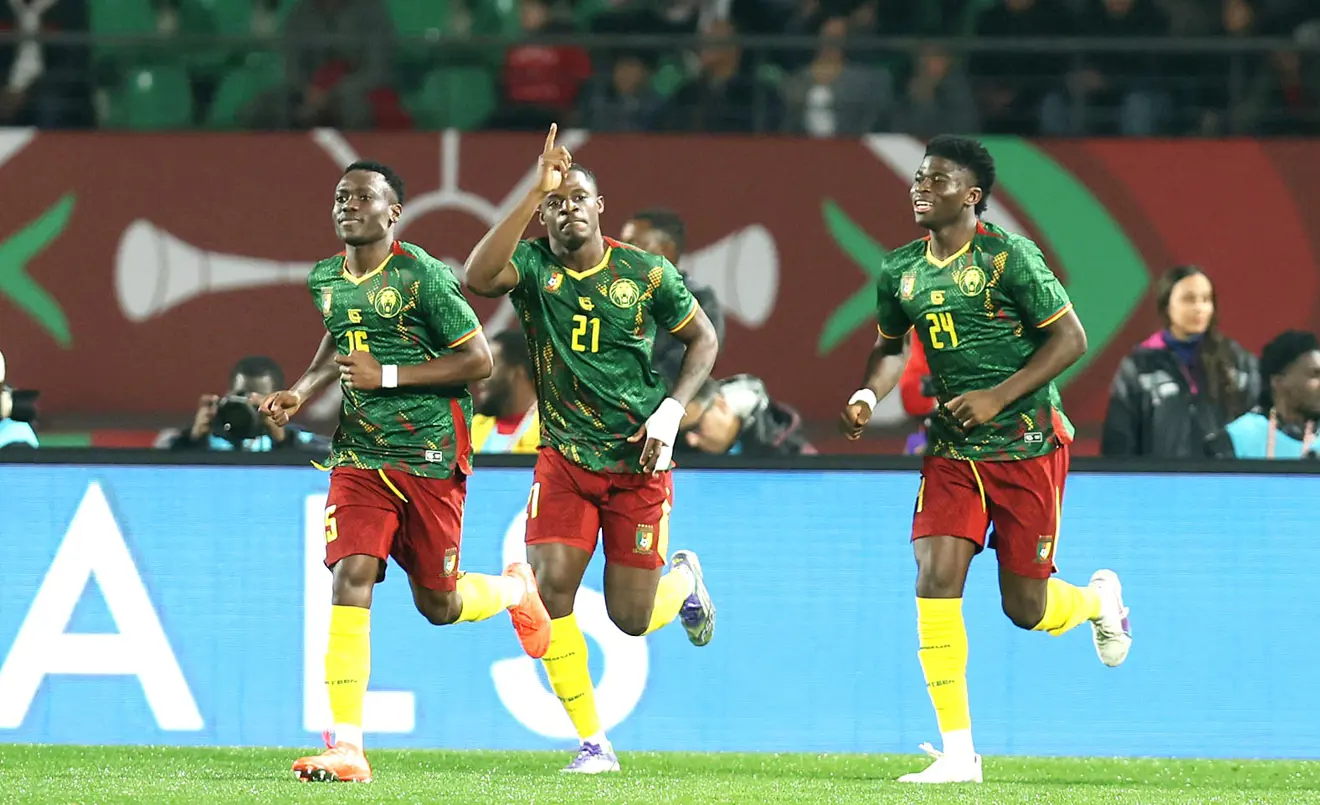
The Confederation of African Football (CAF) has officially launched the TotalEnergies CAF Africa Cup of Nations (AFCON) Morocco 2025 Diaspora Tour this week, aiming to connect African football’s spirit with its global community.

The tour, which will feature the coveted TotalEnergies CAF Africa Cup of Nations trophy, is making two important stops in Europe. The first stop is in London at Below the Lights, Piccadilly Circus, on November 28. The second stop will be in Paris at YOYO in the Palais de Tokyo, on December 4.

CAF describes the initiative as “more than a tour,” but rather a powerful showcase of the continent’s footballing spirit and a celebration of shared African identity. These events are designed to forge a strong connection between the continent and its diaspora, honoring the iconic African players who have achieved legendary status in European leagues.

According to CAF, by bringing the AFCON trophy—a powerful symbol of continental pride—to the diaspora, the tour seeks to reaffirm that African football’s ultimate prize belongs to all Africans, regardless of where they reside. The trophy’s journey to London and Paris is highly symbolic, bridging locations “from Casablanca to Paris, Lagos to London, and everywhere in between,” according to CAF.

The launch of the tour marks the official beginning of the road to the TotalEnergies CAF Africa Cup of Nations Morocco 2025, successfully uniting heritage and legacy across the globe.