List Posts

View All
Society

Dr. David Akuro Mbah Honored with Inaugural AABNet Iconic Award

By Etienne Mainimo Mengnjo Dr. David Akuro Mbah has been honored by the African Animal Breeding Network (AABNet) as the…

Society

Prof. Dze-Ngwa Empowers Miss WEYAS 2026 With Laptop Donation To Boost Community Training

By Etienne Mainimo Mengnjo Prof. Willibroad Dze-Ngwa, Founding President of the Heritage Higher Institute of Peace and Development Studies (HEHIPEDS),…

Sports

J J. Love Sets Sights On Professional Sporting Career

By Etienne Mainimo Mengnjo The local courts have become JJ. Love’s office. Most teenagers play sports for social life, but…

Society

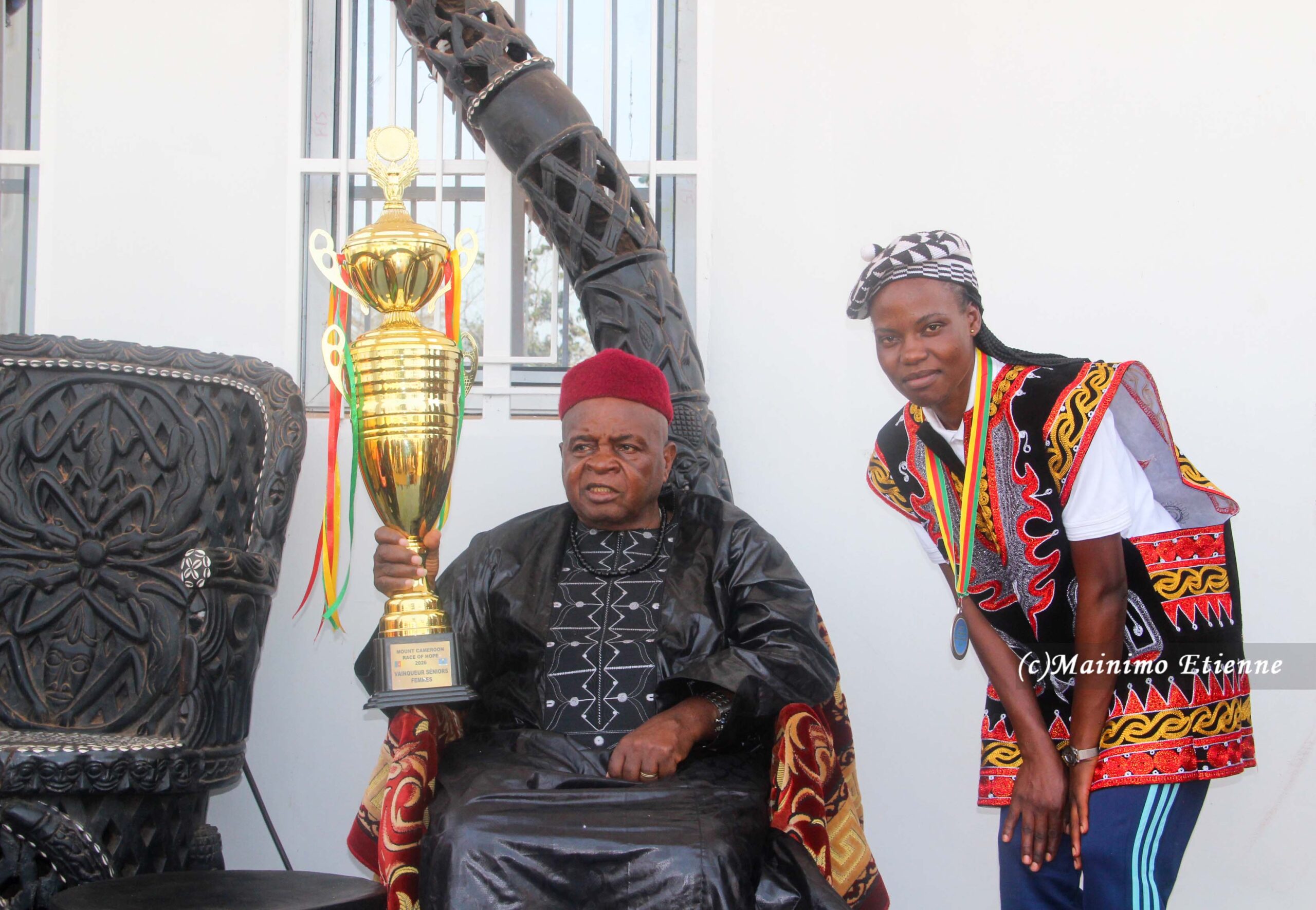
Grace Wirba, 2026 Race Of Hope Champion, Presents Trophy To Fon Of Nso

By Etienne Mainimo Mengnjo Mary Grace Dzekenyuy Wirba, the newly crowned champion of the 2026 Mount Cameroon Race of Hope…

Beneficiaries Praise SESDP For Transformative Skills Training As They Showcase Acquired Skills

By Etienne Mainimo Mengnjo

Beneficiaries of the Project, “Secondary Education and Skills Development Project (SESDP)” have praised the initiative for its transformative skills development training. Their remarks came on January 30, as they showcased the skills they acquired through the program.

Youths in training session during the visit at BMB New Africa training institute (Photo Credit: Mainimo Etienne)

SESDP funds targeted training through the Skills Development Facility (SDF), which includes two activity windows: one for small and medium-sized enterprises and another for social economy organizations, artisans, and community structures.

According to SESDP, these training programs directly address market needs and local value chains, with the skills development needs articulated by the beneficiary organizations selected through SDF’s Financial Support Selection and Action Platform.

Speaking to the media, beneficiaries expressed gratitude for the project’s impact on their lives. Fabiola Kinga Bomki, youth undergoing formation in Staff at BMB New Africa training institution, noted that she has learn numerous designs related to staffing and emphasized the importance of environmental care and health.

“After this training, I am going to face life squarely,” she said. Kinga Bomki added that challenges exist in her field, as it has traditionally been dominated by men, but she is determined to succeed. She expressed hope that more funding should be allocated to train more youths, especially women.

Sophie Mbenoun, General Coordinator of SESDP speaking to the press (Photo Credit: Mainimo Etienne)

Raïsa Mbah, head of Inter-Voluntary Dynamic Women for Sustainable Development NGO, shared her satisfaction with the training, which she said has enabled members to acquire practical skills in clothing, hygiene, and social security among others.

Meanwhile, beneficiaries at IFPCIS-CAM who graduated from training in apiculture, entrepreneurship, and confectionery expressed their appreciation for the skills they gained.

Sidonie Diane Betsa, a beneficiary, described how they learned to manage bees and set up hives effectively. Despite facing challenges, she stated that they gained significant practical and theoretical knowledge during the training. She highlighted the need for support as they transition to practical work, mentioning the necessity of equipment and materials to launch their endeavors.

Sophie Mbenoun, General Coordinator of SESDP, reported that the project had trained 1,126 workers to date, with a target of 7,400 workers overall. “This is just the beginning,” she said, noting that the first phase of the project will conclude in mid-March 2026.

A graduates smiles after benefiting from training offered by SESDP through SDF (Photo Credit: Mainimo Etienne)

She remains optimistic that the goal will be met, particularly with a focus on including women in the initiative. Initially aimed at training 30 percent of women, the project has now reached 40 percent, and Mbenoun anticipates achieving 50 percent by the end of the process.

Mboutchouang Appolinaire, SDF Manager noted the positive feedback overall. He mentioned the importance of ensuring the right participants are involved in trainings and maintaining a quality environment for learning, including appropriate facilities for writing and adequate spacing. Satisfaction surveys are also conducted to monitor training quality.

The media outreach program recently took place at three sites: Nat Technology, BMB New Africa, and IFPCIS-CAM. Its purpose was to highlight the tangible impact of SESDP-funded training, celebrate beneficiaries and their skill development journeys, showcase Cameroon-World Bank cooperation in support of inclusive development, and raise public awareness about the importance of job-oriented vocational training.

Mboutchouang Appolinaire, SDF Manager speaking to the press (Photo Credit: Mainimo Etienne)

SESDP, implemented by the Cameroonian government with World Bank support, aims to strengthen human capital and enhance the employability of young people and adults.


Saint Jean University Students Showcase Creative Solutions On Open Door Day

By Etienne Mainimo Mengnjo

Engineering students at Saint Jean University Institute have displayed exceptional solution-based creativity during the institution’s open-door day on January 31. This event provided students the opportunity to showcase a diverse range of projects, from sustainable initiatives to interactive art, demonstrating their remarkable creativity and problem-solving skills.

Saint Jean University students showcasing their their creative talents as they present their projects to the public (Photo Credit: Mainimo Etienne)

Each presentation highlighted not only technical expertise but also a commitment to addressing real national and global challenges through innovative solutions. One standout project was presented by Marius Bryan Doundze Nankam Kuate, a first-year engineering student, who introduced the “Urbanix System.” Developed in just a few days, Bryan said, this traffic light system adapts in response to traffic density.

Bryan explained that it utilizes sensors at entry and exit points. “The entry sensor allows us to track vehicles entering a lane, while the exit sensor monitors those leaving. The difference between these two sensors indicates the number and type of vehicles present on that road,” he said.

Bryan elaborated on how the system calculates and allocates green light time based on the density of vehicles. “Urbanix System isn’t just about managing traffic flow; it also features three key components. One of these is a priority system,” he noted. This system includes a priority sensor for emergency vehicles, facilitating their movement during critical situations.

Saint Jean University students showcasing their their creative talents as they present their projects to visiting students (Photo Credit: Mainimo Etienne)

Additionally, Bryan’s project incorporates solar energy, giving the traffic light 24-hour energy autonomy, which is crucial in Cameroon, where electricity is often unreliable. “Our solar traffic light can run independently, ensuring it operates efficiently,” he added.

To enhance road safety, the system features a sensor that alerts the nearest police station if a vehicle crosses during a red light. “We introduced a sensor that activates only when the light is red,” Bryan stated.

Another project was the “Smart Water System,” presented by first-year engineering students Ngwenom Mardenny and Yanelle Mbogning Tiofack. This system accurately measures water usage and helps reduce waste.

Mbogning Tiofack explained, “This innovative system benefits various fields, preventing over-watering in agriculture and ensuring precise liquid measurements in the brewery industry.”

Officials pose for a family picture  (Photo Credit: Mainimo Etienne)

Mardenny expanded on the system’s application in agricultural irrigation, noting that users can enter the desired amount of water for their crops. The system then automatically controls the pump, delivering the correct volume.

They also discussed potential applications in the petroleum sector. “For example, users could specify a purchase of petrol—like 1,000 liters—and the system would calculate the cost. It would even notify users via SMS about the transaction,” he said.

Hugo Boyogueno, communication official at PREPA VOGT, highlighted the event’s goal of attracting over 500 students to explore what Saint Jean University Institute offers. Students from more than eight schools in Yaoundé experienced firsthand the creativity exhibited by their peers and participated in workshops, including business intelligence, geoscience, chemistry, and civil engineering.

Partial view of visiting students during the open door day (Photo Credit: Mainimo Etienne)

The Saint Jean University Institute of Cameroon (IUSJC) is a leading private Catholic university and it offers both national and international degree programs. It has five schools within.


2025/2026 Football Season: Ymele Brace Seals Aigle Royal Perfect Start Over Unisport In Elite One Opener

By Etienne Mainimo Mengnjo

The 2025/2026 MTN Elite One season burst into life with a commanding performance from newly promoted Aigle Royal de la Menoua, who claimed a convincing 2-0 win over Unisport du Haut-Nkam in the tournament’s curtain-raiser.

Aigle Royal de la Menoua, winning of the opening match of the 2025/2026 football season in Cameroon  (Photo Credit: FECAFOOT)

This West Regional Derby, that took place at the packed Bafang Municipal Stadium, lived up to its billing as a tense and tactical battle between two sides fresh from their promotion campaigns.

Under the scrutiny of FECAFOOT President Samuel Eto’o and an electric home crowd cheering for the “Flambeau de l’Ouest,” the visitors from Dschang, El Pacha or the Menoua Rapace delivered a clinical display that echoed their successful run to the top flight last June.

Aigle Royal de la Menoua, and Unisport du Haut-Nkam battling for victory (Photo Credit: FECAFOOT)

Coach Koung Anicet’s charges imposed their disciplined style right from kickoff, pressing high and capitalizing on quick transitions to stretch Unisport’s backline. Despite the hosts’ passionate support and a few promising moments including a notable chance late in the first half that went begging, Aigle Royal maintained control and limited clear threats.

The deadlock broke in the second period through super-sub Eden Crel Ymele whose brace sealed the victory. His first goal stemmed from a sharp, coordinated move that caught the Unisport defense off guard, while the second coming deep into stoppage time crushed any lingering hopes of a revival.

FECAFOOT President Samuel Eto’o officially kciking off the c2025/2026 football season in Cameroon    (Photo Credit: FECAFOOT)

This result marks a dream start for Aigle Royal de la Menoua, propelling them straight to the summit of the nascent standings and delivering a major psychological boost ahead of the demanding campaign.

For Unisport du Haut-Nkam, the defeat highlights areas for urgent improvement, particularly in defensive solidity and converting pressure into goals, as they now regroup before their next fixture.

Fans and supports during the opening match (Photo Credit: FECAFOOT)  (Photo Credit: FECAFOOT)

With the league officially underway, attention turns to the rest of Matchday 1 and beyond, where heavyweights such as Coton Sport and Canon Yaoundé will look to assert their authority in what promises to be another fiercely competitive season in Cameroonian football’s premier division.

Unisport du Haut-Nkam aka “Flambeau de l’Ouest,” (Picture Credit: FECAFOOT)


English-Speaking Journalists Set To Convene In Limbe For 2026 Annual General Meeting

By Etienne Mainimo Mengnjo

English Speaking journalists grouped under the umbrella of the Cameroon Association of English-Speaking Journalists (CAMASEJ) are getting set to gather in the seaside city of Limbe, Southwest Region from January 29 to 31 for their Annual General Meeting.

The event is aimed at strengthening the profession and fostering unity among its members. This year’s meeting will take place under the theme, “United in Purpose: Shaping Tomorrow’s Journalism Today.”

The three-day event features a packed agenda, highlighted by the formal review and adoption of the association’s constitution. Beyond administrative business, the gathering will celebrate excellence through the CAMASEJ Awards and promote camaraderie with a gala football match.

National President, Jude Viban and his executive team are overseeing final preparations. According to the national leadership, the executive body is “dotting the i’s and crossing the t’s” to ensure a seamless experience for attendees.

“Let’s come together to exchange ideas and strengthen our community,” the National Executive stated in a message to members. “We’re counting on your valuable support to make this AGM a remarkable event.”

Local chapters across the country are reportedly working around the clock to coordinate logistics and ensure a strong turnout. The meeting serves as a critical touchstone for English-speaking media professionals in Cameroon to address industry challenges and align on a vision for the future of the craft.


OIC-COMSTECH Highlights Importance Of Digital Transformation In Mining Sector

By Brian Mboh

The Organization of Islamic Cooperation, through its Committee on Scientific and Technological Cooperation (COMSTECH), led by Cameroonian-born Samira Ramatou, has outlined strategic technological innovations to enhance the mining sector in Cameroon and Africa.

Samira Ramatou, OIC-COMSTECH head at Future Mineral Forum in Riyadh

Samira Ramatou outlined the strategic technological innovations during the Future Mineral Forum (FMF) that took place in Riyadh, Saudi Arabia, from Jan. 13 to 15, which attracted 18,000 participants from 170 nations.

During a panel discussion, Ramatou emphasized the importance of digital transformation in Cameroon’s mining sector. As COMSTECH’s representative at the FMF, she highlighted key areas relevant to the country.

There is an opportunity to create programs similar to micro-certifications and specialized diplomas for young Africans in mining while collaborating with local universities to teach exploration techniques, data mining, and AI applicable to minerals.

Ramatou spoke about promoting sustainable extraction technologies, digital traceability, and recycling. She stressed the need to raise awareness of international best practices and compliance with environmental standards, as well as the importance of training young African talent in advanced mining technologies such as AI, automation, and digitalization.

The discussion also included the need for local recruitment in mining regions and on-site training in partnership with local businesses and communities. Developing training programs co-financed by international companies and institutions, as well as fostering university collaborations to integrate programs similar to MineralX into African curricula, were deemed crucial.

Ramatou advocated for enhancing opportunities in strategic minerals for the African economy. She emphasized integrating sustainability and social responsibility into curricula and training while promoting sustainability and recycling to meet international standards.

The recommendations made by Ramatou for Cameroon included establishing a national sustainable mining training program inspired by the FMF 2026 model, creating a talent pipeline from universities and technical colleges to specialized mining and recycling trades, and developing partnerships with international institutions for advanced training and applied research.

Cross Section of participants during the forum

She also called for implementing transparency and traceability standards for the critical minerals market in Cameroon and raising awareness among local communities and young talent about the opportunities in the sustainable mining sector, along with offering micro-certifications and specialized diplomas in exploration, AI, automation, and recycling.

This edition of the Future Minerals Forum brought together voices shaping the global minerals agenda, addressing policy, industry leadership, technology, and investment.

Key highlights included perspectives from Saudi Arabia’s leadership, such as the Minister of Industry and Mineral Resources and the Vice Minister for Mining Affairs, who discussed global mineral demand and the sector’s future direction.

Updates were also provided from strategic national partners emphasizing their roles in enabling mining, industrial growth, and sustainable development.

The forum covered the Ministerial Roundtable, offering a forward-looking view on the world’s only government-led minerals platform, and featured executive insights from global mining and energy leaders on innovation, AI, electrification, and operational excellence.

Industry spotlights on exploration, processing, infrastructure, logistics, and technology reflected the full minerals value chain.

Additionally, a preview of the FMF Barometer showcased its role as a landmark reference for the global minerals industry. Reflections on FMF 2026’s theme, “Dawn of a Global Cause,” highlighted how collaboration, capital, and technology are redefining progress. The event featured 250 speakers, including 70 ministers, with discussions conducted in panel formats.

Football Leaders Urged To Accelerate Polio, Malaria Elimination

By Etienne Mainimo Mengnjo

Football leaders and stakeholders are being urged to step up efforts to eliminate polio and malaria. The call to action was made on the eve of the finals of the TotalEnergies Africa Cup of Nations (AFCON) 2025 in Rabat, Morocco during the launch of “Speak Up Africa in Action,” a new flagship sports-for-health platform aimed at accelerating polio eradication and malaria elimination across the continent.

From left to right: Dr. Michael Charles (RBM Partnership to End Malaria CEO), Fatma Samoura (Former FIFA Executive Secretary), Luis Figo (Football Legend) and Yacine Djibo, Executive Director of Speak Up Africa (Source: Speak Up Africa)

The launch brought together football leaders, policymakers, global health partners, athletes, youth, media representatives, and civil society participants. Hosted in conjunction with the AFCON tournament, the event occurs at a critical juncture for public health.

With funding volatility, competing global crises, and declining public trust threatening hard-won gains, Speak Up Africa in Action aims to leverage the influence of sports to generate sustained political commitment, public engagement, and concrete action.

A central focus of the AFCON initiative is the Kick Out Polio campaign, implemented in partnership with the Global Polio Eradication Initiative. Although Africa was certified wild-polio-free in 2020, outbreaks of variant poliovirus persist in several countries, complicating and intensifying the final phase of eradication.

Drawing on the values of football—teamwork, discipline, and shared responsibility—the campaign calls on governments, families, and communities to ensure every child is vaccinated. Football champions and cultural figures are stepping forward to reinforce political commitment, establish predictable financing, and rebuild public confidence in immunization efforts.

“Africa has the leadership, credibility, and community trust needed to end polio and malaria,” said Yacine Djibo, founder and executive director of Speak Up Africa. “Speak Up Africa in Action brings those strengths together, using the power of sport to strengthen trust, mobilize partners, and maintain momentum where it matters most.”

Fatma Samoura, former Secretary General of FIFA, noted, “Sport speaks a language everyone understands. It unites people across borders, generations, and communities,” she added. “Harnessing that power for public health, especially in the final push to eradicate polio, unlocks momentum that institutions alone cannot generate. Speak Up Africa in Action illustrates how football can move hearts, build trust, and help protect the lives and futures of Africa’s children.”

“Football has always been about teamwork, discipline, and finishing what we start,” said Luís Figo, former international footballer and co-captain of the Zero Malaria Football Club. “This is a match we can, and must, win.”

“Football is not only a sport; it is a social responsibility with strong obligations,” said Hicham El Amrani, a football expert and former Secretary General of CAF. “Using its uniting force, federations and football institutions have a duty to protect children and communities and invest in their well-being. By engaging in the fight against polio and malaria, football can use its credibility, reach, and values to support public health and deliver victories that matter far beyond the pitch.”

As part of the AFCON initiative, Speak Up Africa signed a Memorandum of Understanding with Tibu Africa, a leading pan-African organization using sports to promote education, social inclusion, and community development. This partnership underscores Speak Up Africa in Action’s commitment to anchoring advocacy in long-term, community-based efforts.

Together, Speak Up Africa and Tibu Africa will enhance community engagement, leverage sports to build trust, and implement joint initiatives to accelerate polio eradication and malaria elimination in close collaboration with local stakeholders.

Throughout the event, speakers emphasized the responsibility and opportunity for football institutions to contribute to public health at a time when unity and trust are more critical than ever.

Speak Up Africa in Action is conceived as a recurring, mobile platform embedded in major sporting and cultural events. It combines high-level dialogue, immersive storytelling, athlete engagement, and youth participation. Its goal is to elevate African-led health leadership, strengthen trust, and ensure that the momentum generated on the pitch translates into tangible results in communities.

The AFCON edition marks the official launch of Speak Up Africa in Action, which will continue to evolve throughout the sports calendar, deepening partnerships and amplifying African-led health narratives while accelerating progress on the continent’s most pressing public health challenges.

The activation spotlighted the Zero Malaria Football Club, an alliance of globally recognized football figures mobilizing leadership and visibility to support malaria elimination across Africa. Launched in April 2023 by football legends Luís Figo and Khalilou Fadiga, the initiative backs the Zero Malaria Starts with Me movement led by the African Union Commission and the RBM Partnership to End Malaria.

Malaria remains one of Africa’s deadliest yet most preventable diseases, disproportionately affecting children under five. Amid declining international financing, the Zero Malaria Football Club serves as a critical advocacy and mobilization tool, connecting champions, policymakers, and partners to sustain political will and secure necessary resources.


New Report Highlights AFCON 2025’s Transformation Into A Global Sports & Commercial Powerhouse

By Etienne Mainimo Mengnjo

Africa Sports Unified (ASU), a boutique strategic consultancy and intelligence platform dedicated to the Pan-African sports economy, has announced the release of its “Africa Cup of Nations 2025 Overview Report.”

Cover Page of the report (Source: Africa Sports Unified)

According to the report, the Africa Cup of Nations (AFCON) is experiencing a fundamental transformation from a continental soccer competition into a high-stakes global media asset and a vital commercial platform.

The London-based consultancy highlights a structural shift in the Pan-African sports economy, with Morocco hosting the 2025 edition—the first time the tournament is taking place during the December-January global football window, aimed at maximizing viewership and commercial integration.

The report details a substantial increase in the tournament’s financial scale. The winner of AFCON 2025 is set to receive a record $10 million in prize money, part of a total prize pool of $32 million. This amount represents a doubling of the stakes compared to recent editions, showcasing the Confederation of African Football’s (CAF) intent to compete with other major international championships.

“AFCON 2025 represents a structural shift in how African football is positioned on the global stage,” said Gabriel Ajala, founder of Africa Sports Unified. “This is no longer just a continental tournament; it is a global media, commercial, and nation-branding platform.”

Morocco is leveraging the tournament as a dress rehearsal for its role as co-host of the 2030 FIFA World Cup. Featuring 24 national teams competing across nine modernized stadiums in six cities, the ASU report underscores Morocco’s comprehensive approach to infrastructure, which integrates advanced transportation networks, fan-facing technology, and enhanced security protocols.

Broadcast standards are also undergoing a significant technical upgrade. For the first time, the tournament will be produced entirely in High Dynamic Range (HDR), establishing a new benchmark for sports broadcasting on the continent. This technical advancement has facilitated media distribution deals in over 85 global markets.

Notable broadcast partnerships include free-to-air coverage in the United Kingdom via Channel 4, distribution in Spain through Movistar, and coverage in Portugal via Sport TV.

The ASU report also looks ahead, noting that AFCON will transition to a four-year cycle beginning in 2028. Analysts suggest this shift will enhance the tournament’s “scarcity value,” making it a more desirable and exclusive opportunity for long-term sponsors and investors.

According to Ajala, the report serves as a “single source of truth” for governments, federations, and investors navigating the evolving landscape. By positioning the tournament as a premium global asset, CAF and its partners aim to bridge the gap between African talent and the commercial revenue that talent generates worldwide.

As the tournament progresses through its new winter window, the sporting world’s attention remains focused on Morocco to see if this modernized model can establish a blueprint for the future of African sports.

CAMTEL, OBC Sign Digital Agreement to Enhance Diploma Credibility

By Etienne Mainimo Mengnjo

Cameroon’s state-owned telecommunications provider and the Baccalaureate national examinations body have signed a landmark agreement to overhaul the security and integrity of the country’s secondary education credentials through advanced digital infrastructure.

CAMTEL GM Judith Yaah Sunday (Left) and OBC Director, Étienne Roger Minkoulou (Right) exchanging MoU after penning down the agreement (Photo Credit: CAMTEL)

The framework agreement between Cameroon Telecommunications (CAMTEL) and the Cameroon Baccalaureate Office (OBC) on January 15 establishes a “digital fortress” designed to protect official examinations from cyber threats and logistical vulnerabilities.

The partnership focuses on three primary technological pillars: secure data hosting via the National Cloud, redundant high-speed connectivity nationwide, and the deployment of transparent digital management platforms.

“This alliance with the state’s technological arm offers an unprecedented guarantee of sovereignty and integrity,” said Étienne Roger Minkoulou, Director of the OBC, during the signing ceremony in Yaoundé.

The transition to the National Cloud marks a significant shift in how the country handles sensitive academic data. By migrating examination records and candidate information to state-controlled servers, officials say they are ensuring “digital sovereignty”—keeping Cameroonian data within national borders and under local protection.

The move is a direct response to the global rise in cyberattacks against educational institutions. CAMTEL officials described the new system as a “vault” that will digitally seal the academic journey of every student, making records tamper-proof.

A critical component of the deal is the rollout of redundant connectivity. In the past, intermittent internet access in remote regions posed a challenge for the centralized management of exams.

CAMTEL’s new infrastructure aims to eliminate these “blind spots” by providing backup connection routes. This ensures that digital platforms used by teachers and administrators remain online during high-stakes testing periods, regardless of local outages.

Beyond the technical specifications, the agreement is being framed as a major investment in the nation’s youth. By securing the Baccalaureate—the credential required for university entrance—the government aims to bolster the international credibility of Cameroonian diplomas.

“The prestige of a nation is measured by the value of its diplomas,” Minkoulou said, adding that the partnership is a crucial step in modernizing the education system to meet global standards.

For CAMTEL, the deal reinforces its role as the “technological arm” of the state. Company leadership emphasized that the project is less about selling technology and more about driving a responsible digital transformation that serves the public interest.

The implementation of these systems is expected to begin immediately, providing a new layer of technological armor for the upcoming examination cycle.

Beyond The Silence of Rabat: Can A Unified Roadmap Restore Indomitable Lions For 2027 AFCON?

By Etienne Mainimo Mengnjo

The silence that followed the final whistle in Rabat was deafening for millions of Cameroonians. The Indomitable Lions, a team synonymous with continental glory, were decisively eliminated from the 2025 Africa Cup of Nations.

A 2-0 quarterfinal loss to host nation Morocco on January 9 marked a painful end to a campaign laden with the weight of national expectations, particularly after failing to qualify for the 2026 FIFA World Cup. The defeat was not merely a setback; it was a reckoning.

As the dust settles on the Moroccan adventure, the question on every fan’s lips is what happens next. With the 2027 Africa Cup of Nations, co-hosted by Kenya, Uganda, and Tanzania, on the horizon, a period of introspection and decisive action is imperative.

According to sports pundits, this is not a time for blame but for collective responsibility. To them, the road to redemption for the five-time African champions requires unified efforts from all levels of the footballing ecosystem.

From the administrative offices of the Cameroonian Football Federation (FECAFOOT) to the technical staff on the training pitch and players donning the iconic green, red, and yellow, each stakeholder plays a critical role in rebuilding for a successful 2027 campaign.

The journey to East Africa in 2027 begins now, demanding a clear and accountable roadmap. The disappointing exit from AFCON 2025 must serve as a catalyst for a structured overhaul. Each major stakeholder in Cameroonian football bears distinct responsibilities in this crucial reconstruction phase.


For the technical bench, led by Coach David Pagou, the immediate task involves a tactical evolution and systematic youth integration. Pagou, who took over the team in late 2025, has spoken of a “bright future,” and his philosophy of “defending by attacking” showed promise but was ultimately outmaneuvered by a more clinical Moroccan side.

Fans, supporters are keen stating that the next 18 months must be dedicated to refining this tactical identity, which includes developing a Plan B, improving in-game management, and ensuring the team is not only energetic but also strategically versatile.

Pagou’s commitment to youth must be systematic. Integrating promising talents like Eyong Eta alongside established veterans requires a long-term vision, not just sporadic call-ups as it has always been. Nevertheless, the upcoming 2027 qualifiers, starting in March 2026, will be the first true test of this new-look squad’s cohesion and Pagou’s strategic development.

The administration, under FECAFOOT President Samuel Eto’o, faces the urgent task of ensuring stability, transparency, and a clear long-term vision. Re-elected in November 2025 for a term extending to 2029, Eto’o’s second mandate must focus on steadfast stability.

His primary role should be to create an optimal environment for the team to succeed, which includes providing the coach with the resources and autonomy to execute his vision, investing in grassroots and youth development programs, and improving domestic league infrastructure. Eto’o’s legendary status grants him significant influence; he must focus on building durable institutions rather than short-term results.

The players, the Indomitable Lions themselves, on their part must engage in deep introspection, stressing leadership, discipline, and unwavering commitment. The squad needs to look inward. Veterans must mentor the next generation and uphold the rigorous standards associated with being an Indomitable Lion. A sense of entitlement must yield to renewed hunger.

For younger players, the quarterfinal exit should serve as a stark lesson in the fine margins of international football. Commitment to the national cause, tactical discipline, and a relentless desire for self-improvement are non-negotiable. Forward Bryan Mbeumo noted with regret after the Morocco loss that the performance was not up to par, highlighting the need for the squad to transform disappointment into fuel for future success.

The government, particularly the Ministry of Sports and Physical Education, remains a vital partner in the national team’s success. Consistent, timely support is essential; the road to AFCON 2027 will involve extensive travel and preparation that cannot afford bureaucratic delays.

The 2027 AFCON represents both a challenge and an opportunity. For the first time, the tournament will be held in East Africa, introducing new logistical and environmental conditions. The qualification process begins in a matter of months, leaving no room for a prolonged hangover from the 2025 exit. Cameroon must hit the ground running with renewed purpose and a clear strategy.

The path forward is clear: embrace the new coaching direction, empower the administration to build for the long term, demand more from the players, and ensure robust institutional support. The Indomitable Lions have always been defined by their resilience. Now, more than ever, that spirit must be rekindled in every facet of Cameroonian football to ensure that the disappointment in Rabat paves the way for triumph in East Africa.


Cameroon, United States Reaffirm Ties As Ambassador Lamora Concludes Mission

By Etienne Mainimo Mengnjo

The Minister of Economy, Planning, and Regional Development, Alamine Ousmane Mey, and the outgoing U.S. Ambassador to Cameroon, H.E. Christopher John Lamora have evaluated the current state of bilateral relations between the two nations.

Minister Alamine Ousmane Mey, and the outgoing U.S. Ambassador to Cameroon, H.E. Christopher John Lamora in a familiy picture after the audience (photo Credit: Mainimo Etienne)

The meeting that took place on January 9 allowed both officials to reflect on the accomplishments achieved during the Ambassador’s tenure and to reinforce the strategic partnership that has linked the two nations for nearly sixty years.

During their hour-long discussion, Ambassador Lamora expressed his sincere gratitude to the Cameroonian government and the people for the high quality of cooperation maintained since his arrival.

He recalled that upon assuming his role in March 2022, Minister Ousmane Mey was among the first officials he consulted, a choice driven by the high priority the United States places on Cameroon’s economic development, trade, and investment climate.

“The reason I chose to see him early on was due to the importance the United States places on economic development in Cameroon, as well as our trade and investment relationship,” the Ambassador said.

As he prepares to depart next week, the Ambassador emphasized the importance of reviewing the progress made on various development projects and formal agreements intended to create new opportunities for both American and Cameroonian enterprises.

He noted that significant strides have been made to benefit both populations, particularly through technical collaboration and job creation initiatives that bridge the gap between Yaoundé and Washington.

Minister Alamine Ousmane Mey, outgoing U.S. Ambassador to Cameroon, H.E. Christopher John Lamora and other officials in a family picture after the audience (photo Credit: Mainimo Etienne)

“I believe we have achieved significant progress that benefits both our peoples and countries,” he stated. Both officials concluded their audience with both personalities reaffirming their shared commitment to strengthening and diversifying this dynamic relationship.

By focusing on mutual interests and long-term stability, both nations aim to ensure that the friendly ties established over the last six decades continue to flourish well into the future.

The Cameroon-US cooperation remains robust and multifaceted, addressing critical global and regional challenges. Beyond economic growth, the cooperation encompasses vital sectors such as humanitarian aid, governance, public health, security, and climate change.

Official records highlight the depth of this support, with over $650 million in bilateral humanitarian aid mobilized since 2014, reaching approximately 1.4 million people in 2021 alone. Furthermore, trade relations continue to serve as a cornerstone of the alliance, with exchange volumes reaching $366 million in 2018.

The audience concluded with both personalities reaffirming their shared commitment to strengthening and diversifying this dynamic relationship. By focusing on mutual interests and long-term stability, both nations aim to ensure that the friendly ties established over the last six decades continue to flourish well into the future.