
List Posts

View All
Society

Archbishop Of Canterbury Urges Cameroon Anglicans To ‘Stand Firm’ Amid Life’s Struggles

By Etienne Mainimo Mengnjo The Archbishop of Canterbury, the Most Rev. Sarah Mullally, spiritual leader of the worldwide Anglican Communion,…

Sports

Cameroon Secures 5 Medals, Finishes 16th At 2026 Commonwealth Games

By Brian Mboh Cameroon wrapped up its participation at the 2026 Commonwealth Games in Glasgow, Scotland, on Sunday, Aug. 2,…

Society

Minister Ousmane Mey Urges ISSEA Graduates to Leverage Cutting-Edge Skills for Development

By Etienne Mainimo Mengnjo The Minister of the Economy, Planning and Regional Development (MINEPAT), Alamine Ousmane Mey, has urged 108…

Sports

2026 WAFCON: Cameroon, Ghana Renew Storied Rivalry In High-Stakes Group D Clash

By Etienne Mainimo Mengnjo Ghana and Cameroon will renew one of West African women’s soccer’s most contested rivalries Sunday August…

AfDB, Japan Sign EPSA6 Agreement, Pledging $5.5 Billion To Strengthen African Economies

By Etienne Mainimo Mengnjo

The governments of Japan and the African Development Bank, AfDB have signed a Memorandum of Understanding to launch the sixth phase of the Enhanced Private Sector Assistance (EPSA6) agreement. The new phase provides a framework for critical resource mobilization and development partnership for African countries.

Officials pose for a family picture after signing the MoU (Photo Credit: AfDB)

The MoU was signed on Thursday, August 21, during the ongoing Ninth Tokyo International Conference on African Development (TICAD9) in Yokohama, Japan. Dr. Akihiko Tanaka, President of the Japan International Cooperation Agency (JICA), signed on behalf of the government of Japan, while Kevin Kariuki, the African Development Bank’s Vice President for Power, Energy, Climate, and Green Growth, signed on behalf of the bank. Japan’s Finance Minister, Katsunobu Kato, witnessed the ceremony.

Under the EPSA6 agreement, the bank and JICA will work together to support regional member countries from 2026 to 2028, with a financial package of up to $5.5 billion—half a billion more than EPSA5—while ensuring the debt sustainability of African nations.

Speaking at the signing ceremony, Dr. Tanaka noted that co-financing under previous EPSA agreements since 2005 had resulted in $12 billion in support to Africa from the African Development Bank and JICA. He added that the ambitious new $5.5 billion target for EPSA6 is more than five times the original target of EPSA1, which was set 20 years ago.

“This reflects the growing strength of our partnership and the increasing importance of our joint effort,” he said. Dr. Tanaka also announced that resilience would be a new priority under EPSA6. “With this focus, we are committed to addressing not only climate change but also a broad range of shocks,” he explained.

Tanaka also commended the role played by the outgoing African Development Bank President, Dr. Akinwumi Adesina, during his tenure. “Thanks to his strong ownership and support, we are pleased that EPSA5 is now almost reaching its target of $5 billion by the end of this year,” he said.

“The Government of Japan is one of the strongest shareholders of the African Development Bank and a key contributor to the African Development Fund. In addition, EPSA is the largest and longest-standing bilateral partnership the bank has with any of its member countries. We recognize that Japan has been an early mover in supporting the private sector in Africa since 2005,” Kariuki said.

He added, “I wish to applaud the continued commitment of the Government of Japan toward Africa’s development, and I am confident that we will consolidate the successes of development collaborations between Japan and Africa in a mutually agreeable manner.”

EPSA 5, which ran from 2023 to 2025, involved a $5 billion financial cooperation package announced at the Eighth Tokyo International Conference on African Development (TICAD8) in 2022.

Kariuki stated that EPSA5 had already achieved a $4 billion joint co-financing target as of today, with an additional $1.6 billion worth of projects at an advanced stage of co-financing by the end of 2025. This will lead to a total of $5.6 billion in co-financing by the end of December 2025, which is 112% of the $5 billion target.

In his opening comments, Minister Kato said EPSA6’s focus on resilience would help African countries with heavy debt burdens and expand private sector investment. “Africa has tremendous opportunities for significant market expansion,” Kato noted.

The EPSA Initiative, created in partnership with the Government of Japan in 2005, supports the implementation of the bank’s Strategy for Private Sector Development. Its key priorities are power, connectivity, health, agriculture, and nutrition.

UCAP Calls For Ethical AI Guidelines In African Journalism

By Etienne Mainimo Mengnjo

The African Catholic Union of the Press (UCAP) has called on African media institutions to establish ethical guidelines for the use of AI in journalism, ensuring that technology serves the human person and the common good. This is one among the recommendations taken at the end of the UCAP Triennial Continental Congress, which took place in Accra, Ghana, from August 10 to 17.

Group photo with Officials after the Opening Ceremony of the UCAP Congress 2025 in Accra, Ghana (Source: African Catholic Union of the Press (UCAP)

The congress brought together more than 100 Catholic journalists, lecturers, content creators, and other media practitioners from over 20 countries, including 19 African nations. The congress focused on the theme, “Balancing Technological Progress and the Preservation of Human Values in the Age of Artificial Intelligence (AI).”

The gathering provided a platform for participants to deliberate on the ethical challenges and opportunities presented by AI, as well as to explore ways in which Catholic journalists can safeguard human dignity and values while embracing technological innovation.

Regarding the ethical use of AI in media, UCAP urged African media institutions to establish guidelines ensuring that technology serves the human person and the common good, and to reject any form of manipulation, misinformation, or disinformation.

On safeguarding human dignity in the age of AI, UCAP affirmed the primacy of human dignity over technological advancement and committed Catholic journalists in Africa to promote media practices that uphold truth, integrity, and authentic human relationships.

UCAP also committed to enhancing the professional formation of media practitioners in Africa by integrating modules on AI, digital literacy, and Catholic social teaching into training programs, as well as media education.

Additionally, UCAP recommended collaborating with Episcopal Conferences, universities, policymakers, and civil society to develop frameworks that balance technological innovation with moral responsibility.

Among other resolutions, UCAP members pledged to actively foster a culture of peace, reconciliation, and fraternity by giving voice to the voiceless and promoting communication that safeguards truth, freedom, justice, and solidarity.

To governments, the Union called for regulations on the use of AI to prevent the erosion of truth, manipulation of consciences, and invasion of privacy. They also urged investments in digital infrastructure and ethical frameworks that protect human dignity while supporting innovation.

To media organizations, they recommended adopting editorial policies that ensure AI tools do not replace human judgment, conscience, or responsibility. They should also establish fact-checking mechanisms and promote transparency in the use of AI-generated content.

To the Church in Africa, the Union recommended that the Church continue to guide and support Catholic communicators in discerning the ethical challenges posed by AI. They should encourage dioceses and Catholic institutions to invest in media education that forms journalists in truth, responsibility, and service to the common good.


AfDB Urges Cameroon To Boost Capital Mobilization For Sustainable Growth

By Etienne Mainimo Mengnjo

The African Development Bank (AfDB) has called on Cameroon to strengthen its capital mobilization efforts to achieve sustainable economic growth. The recommendation was made in Yaoundé during the official launch of the bank’s 2025 Country Report in July 2025, an event that featured extensive discussions on the nation’s economic challenges.

The launch ceremony was attended by key representatives from the Cameroonian government, including officials from the Ministry of the Economy, Planning and Regional Development; the Ministry of Finance; and the Ministry of Trade, as well as members of the business sector.

Ameth Saloum Ndiaye and Godwill Kan Tange, AfDB senior and country economists for Cameroon, respectively, presented the report’s key findings. They highlighted the report’s actionable proposals for optimizing the use of budgetary resources and the country’s natural, human, and financial capital to stimulate more inclusive and sustainable growth. The presentation also touched on critical issues such as public corporation reform, governance, debt management, industrial development, vocational training, and innovative financing.

“The African Development Bank Group commends the Cameroonian authorities for their commitment to implementing a National Integrated Financing Strategy,” said Mamadou Tangara, Head of Operations, speaking on behalf of the Bank’s Director General for Central Africa. “The report is fully aligned with the government’s priorities.”

Jean Tchoffo, Secretary General of Cameroon’s Ministry of the Economy, Planning and Regional Development, welcomed the report’s recommendations, noting their alignment with the National Development Strategy 2030 (SND30). “This report comes at a key moment, as we are conducting a mid-term review of our National Development Strategy,” Tchoffo stated. “We are convinced that its recommendations will enrich our thinking and strengthen our efforts to accelerate the structural transformation of our economy.”

Titled “Making Cameroon’s Capital Work Better for its Development,” the report identifies key strategies to strengthen domestic resource mobilization and foster inclusive, resilient growth. It urges the government, private sector, civil society, and development partners to collaborate on the country’s structural transformation.

The report paints a picture of a recovering economy, with estimated growth of 3.6% in 2024, driven mainly by continued infrastructure investment and strong momentum in manufacturing.

Relying on a detailed analysis, the report identifies several areas for progress, including: Strengthening domestic resource mobilization and governance, improving the business climate and digitalization, optimizing the potential of natural capital, reducing tax exemptions,  as well as restructuring strategic public corporations, particularly in the energy and refining sectors.

The report also stresses the importance of strengthening transparency and the rule of law through greater accountability and the publication of public corporation financial statements. It further recommends adopting the National Integrated Financing Strategy (SNFI) to diversify funding sources and leverage opportunities in the carbon market.

Other priorities include: consolidating the financial sector, processing commodities locally, developing regional infrastructure, gradually reducing fuel subsidies while prioritizing investment spending and concessional financing, and accelerating development in insecure areas and strengthening budgetary capacity.

The country reports are part of the AfDB’s African Economic Outlook 2025, which provides an annual assessment of the economic performance and outlook for the continent’s 54 countries. The 2025 AEO report was released last May during the Bank Group’s Annual Meetings in Abidjan, Côte d’Ivoire, under the theme “Maximizing Africa’s Capital for Sustainable Development.”

Let Our Gratitude For President Paul Biya Be Seen Through Our Unity And Loyalty – Judith Yah Sunday

By Etienne Mainimo Mengnjo

Judith Yah Sunday Épse Achidi, a newly appointed Central Committee Member of the Cameroon People’s Democratic Movement (CPDM), has called on the communities of Mbu, Akum, and Santa to express gratitude to President Paul Biya and First Lady Chantal Biya through unity, loyalty, and dedication to building a prosperous Cameroon.

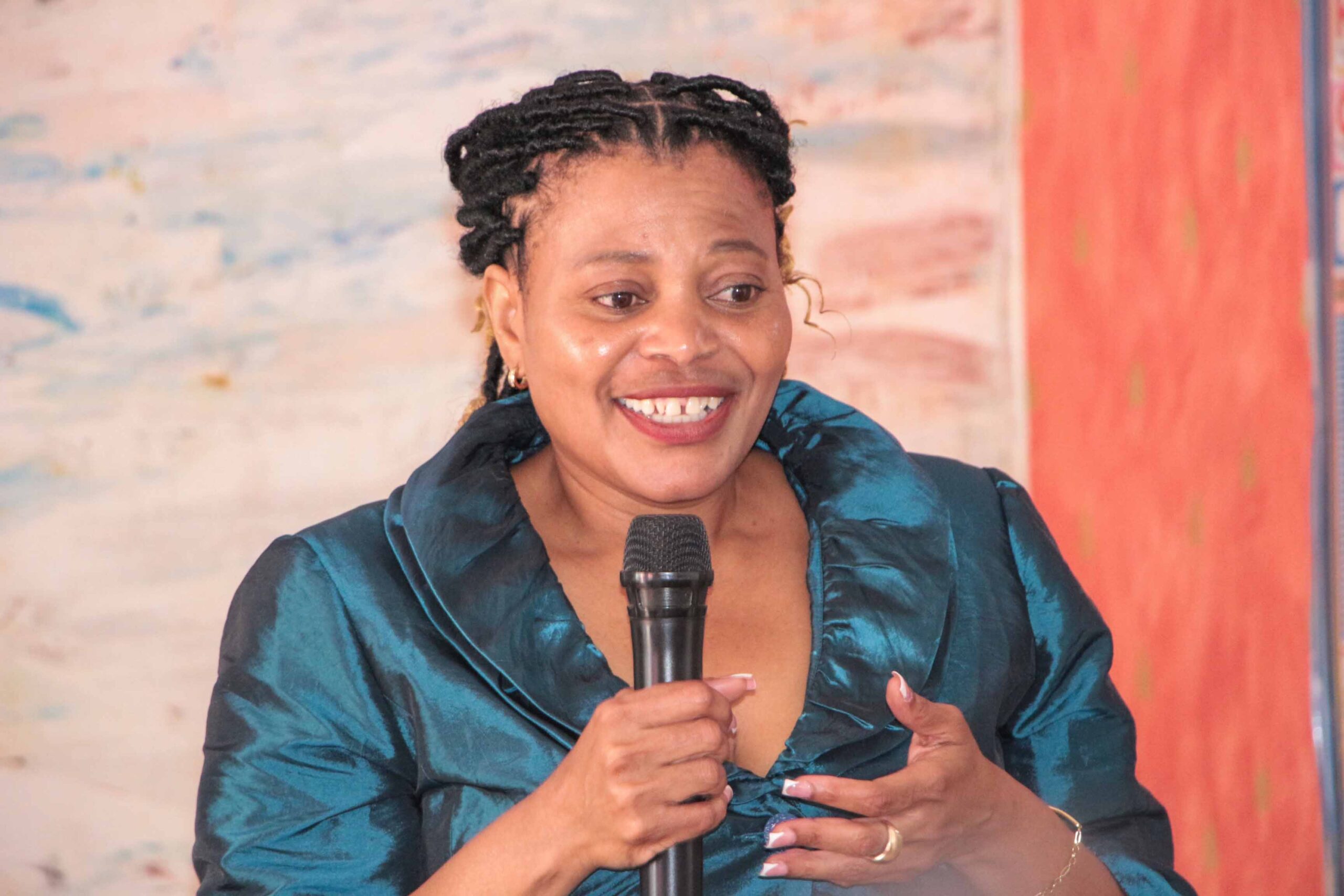
Judith Yah Sunday Épse Achidi

The event celebrated her recent appointment to the CPDM Central Committee by the party’s National President, Paul Biya, took place in Yaounde on August 16 and drew prominent figures, including Fai Yengo, Minister Felix Mbayu, and traditional rulers among others.

Addressing the gathering, Judith Yah Sunday stressed collective action, stating, “Let us demonstrate our gratitude to the Presidential Couple not just with words, but through our unity, loyalty, and commitment to building the Cameroon of our dreams under President Biya’s enlightened leadership.”

She highlighted the significance of the upcoming presidential election on October 12, 2025, urging the communities to support Biya’s candidacy for a brighter, stable, and peaceful future.

Expressing gratitude to President Biya for his leadership and trust in Cameroon’s citizens, Judith Yah Sunday also acknowledged First Lady Chantal Biya, whom she called the “Mother of the Nation,” for her steadfast guidance.

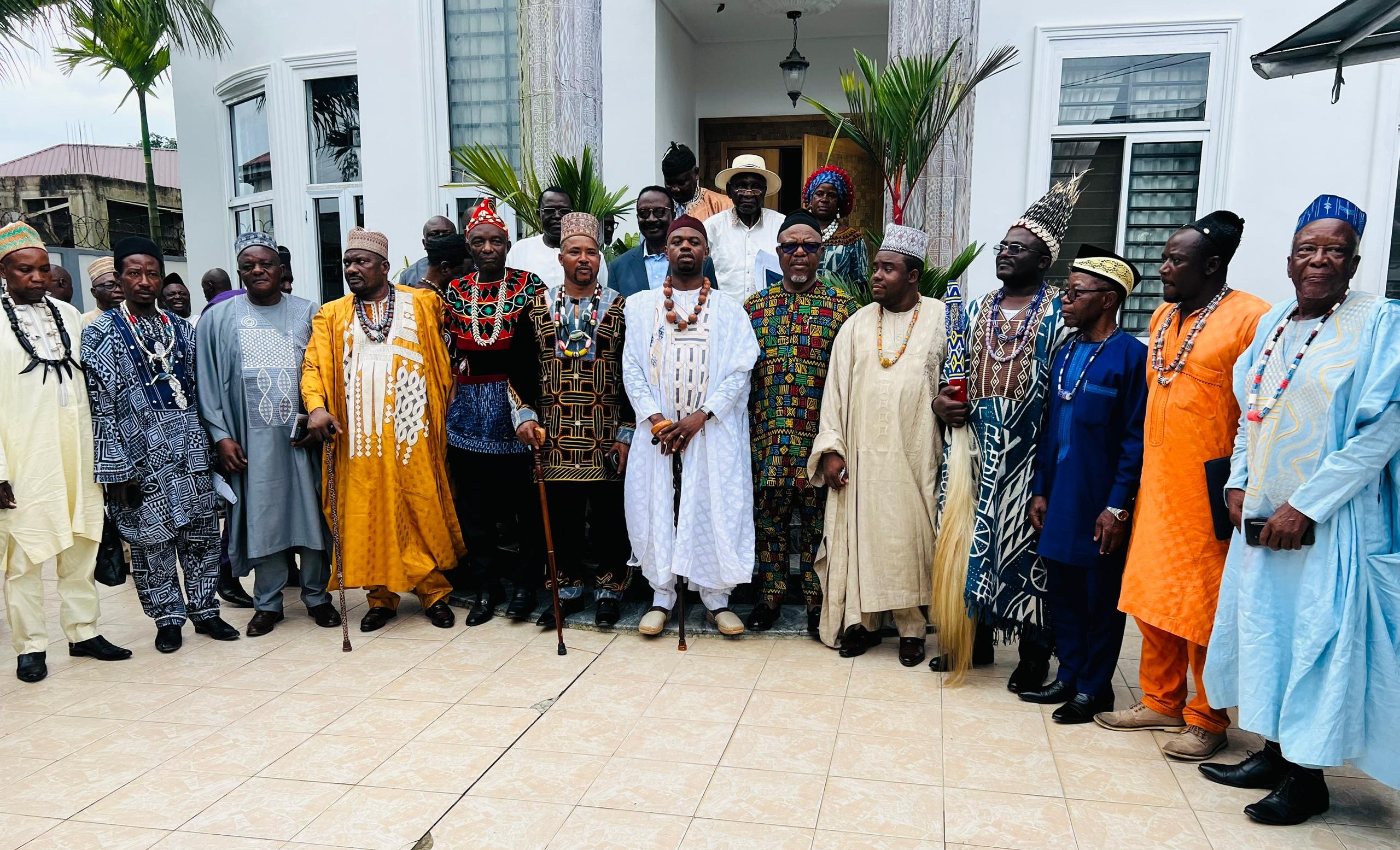
Judith Yah Sunday Épse Achidi posed in the midst of traditional authorities

She thanked the Mbu, Akum, and Santa communities for their support, noting, “Your presence is a celebration of our shared values of solidarity, unity, and progress. Your support and prayers are a mandate, reminding me that individual achievements gain meaning when shared with the community.”

Judith Yah Sunday announced a follow-up event in Santa on August 28 to continue fostering community initiatives. “This is why, in the spirit of service, I seize this opportunity to announce that on the 28th of this month of August, we shall gather again in Santa for a Free Heart campaign, an initiative to address the basic health needs of our people,” she said.

Dr. Gue, an elite from Mbu, expressed pride in her appointment, stating it reflects the Head of State’s recognition of their community. He affirmed their commitment to supporting Biya in the upcoming election, emphasizing the community’s dedication to the CPDM’s vision.

Judith Yah Sunday Épse Achidi posed in the midst of traditional authorities

The Mbu Development and Cultural Association (MBUCDA) thanked President Biya for appointing Judith Yah Sunday, citing her exemplary leadership as General Manager of Cameroon Telecommunications (CAMTEL) as a key factor in her selection.

During the ceremony, the community honored her with the title “Tumtumambo,” meaning “Mbu Palace Ambassador,” symbolizing her role as a community representative. They pledged unwavering support for Biya in the presidential election.

Judith Yah Sunday’s appointment to the CPDM Central Committee on March 27, 2025, underscores her growing influence within the party and her commitment to advancing Cameroon’s development. The event highlighted the strong bond between the CPDM leadership and the communities, reinforcing their collective resolve to support the nation’s progress under Biya’s leadership.

Diri45 Aka Derant Suh: A New Voice For Cameroonian Music

By Etienne Mainimo Mengnjo

Derant Suh, widely known as Diri45, is a native of Bafut in the Northwest Region of Cameroon who was born in Muyuka in the Southwest Region. As the founder of 45 Records, this passionate music entrepreneur is on a mission to bring Cameroonian talent to the global stage.

A lifelong music lover, Diri45 first recorded music at age 12 but was forced to abandon his dream due to life’s challenges. Years later, with renewed resources and determination, he returned to the music scene with a clear purpose: to help others realize their dreams so that no hidden talents are lost, as his once was.

His mission is straightforward. “We don’t go for ready-made talent,” he explains. “We find those who can’t even afford studio sessions, build them, mold them, and teach them until they are ready to be seen by the world.”

Despite the significant challenges within Cameroon’s music industry—such as the high costs of promotions, video shoots, and features without immediate financial returns—Diri45 perseveres. His passion for the culture drives him forward with one goal in mind: “to take Cameroonian music across borders. We’ve been enclosed for too long. Now, we will be heard worldwide.”

Under the 45 Records label, Diri45 has already worked on several impactful projects, including the first-ever 45 Records project, “Coup D’état” (featuring Yung Time & Tahbax). This was followed by “Rise” (featuring Yung Time & Tahbax), and “Juju” (featuring Chefor & Tahbax). His first artist, Sneh Dem, who was featured on “Rise,” is now preparing for a solo project.

Diri45’s own journey has been one of resilience. After briefly attending the University of Buea, financial difficulties forced him to drop out. He hustled, traveled, and eventually pursued a degree in Finance and Credit in Belarus before returning home to Cameroon.

Now based in Buea, Derant Suh and his team are working tirelessly to elevate young artists. His story proves that with vision, dedication, and a strong sense of community, Cameroonian music has the potential to break global barriers and achieve worldwide recognition.

Cameroon Secures CFA 142.5 Bn For Construction Of Abong-Mbang-Lomie & Ekong-Bengbis Roads

By Etienne Mainimo Mengnjo & *Chimambom Rosinelarry Nayah

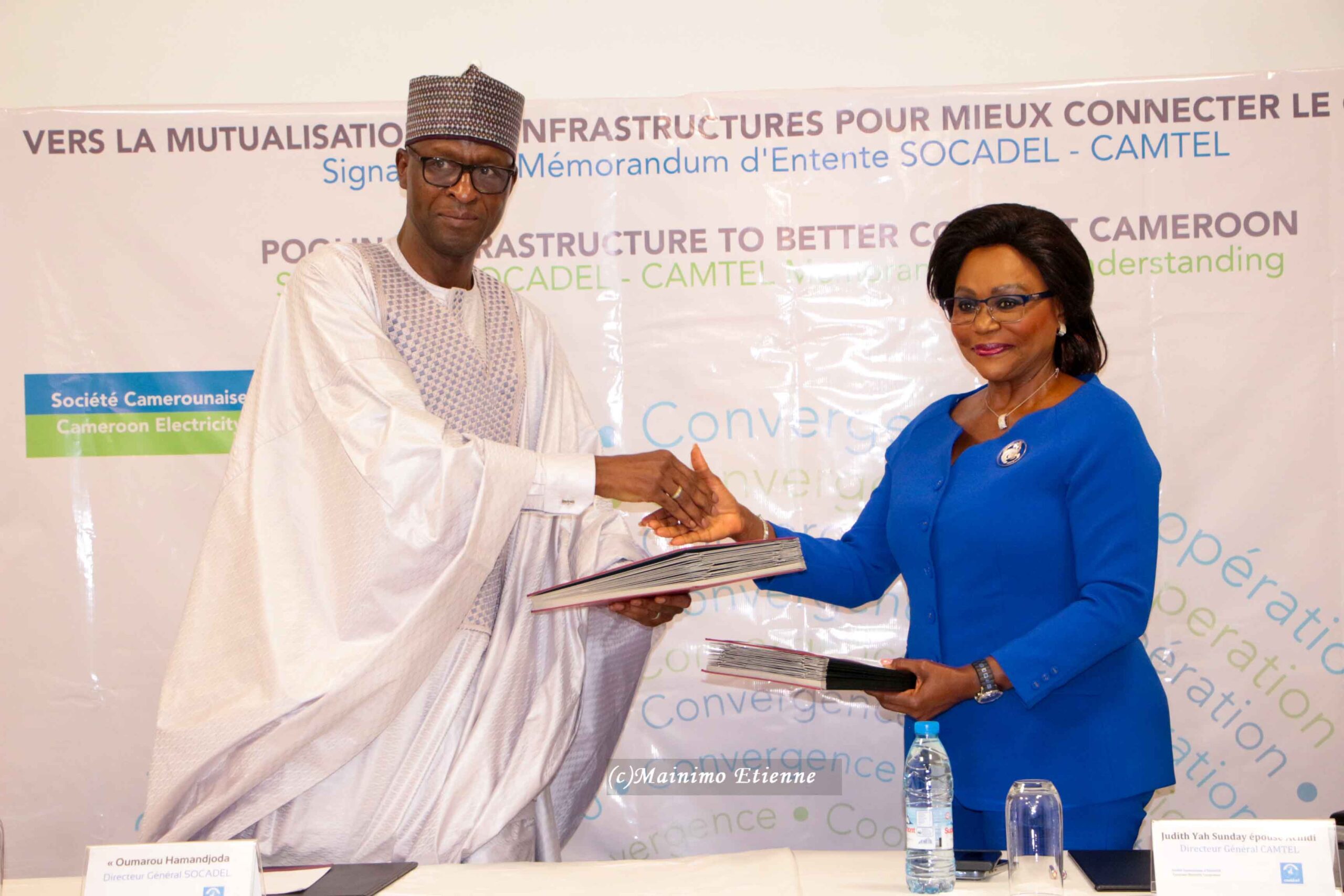
The government of Cameroon and the Development Bank of Central African States (BDEAC) have signed a financial agreement worth FCFA 142.5 billion for the construction of the Abong-Mbang-Lomié and Ekong-Bengbis roads. The agreement for these two major road projects in the East and South Regions of the country was signed on August 12 in Yaoundé.

Both parties exchanging MoUs after the financing agreement was signed (photo Credit: Mainimo Etienne)

According to reports, the financial agreement will facilitate the paving of the Abong-Mbang–Lomié road (122 km) and the Ekong–Bengbis road (42 km). The ceremony was attended by the President of the CEMAC Commission, Balthasar Engonga Edjo’o, as well as the Ministers of Finance and Public Works. Additional funding will also be provided by the Economic Development and Cooperation Fund (FODEC).

Speaking during the signing ceremony, Minister Ousmane Mey stated that the double signng ceremong holds significant importance. “This significant financing agreement is a testament to our government’s commitment to improving the country’s infrastructure and promoting economic development. We are grateful for the support of the BDEAC and look forward to the positive impact this project will have on our citizens’ quality of life.”

He added that these investments are part of the government’s strategy for the structural transformation of the national territory, aimed at improving access to basic social services and stimulating economic opportunities, particularly in remote areas.

“The project we are financing today is important to all of you. This is the least we can say. Obviously, this vast project comes at a time when Cameroon is accelerating its entry into the circle of exporting countries, leveraging its rich mining potential beyond current exploration,” Minister Ousmane said.

According to Minister Ousmane Mey, the construction of these infrastructures will help improve the attractiveness and availability of abundant natural resources, such as mining resources, while strengthening regional integration and transportation exchanges in the CEMAC region. He emphasized that, while improving the living conditions of local populations, the construction will also enhance accessibility and facilitate real transformation, including plans to build schools for children’s education.

Evou Mekou remarked that the project will not only improve the living conditions of the population but will also bring about the transformation needed in the subregion and across the African continent.

Meanwhile, the authorities have expressed their commitment to ensuring the speedy and high-quality execution of the work so that the expected economic benefits—such as job creation, stimulation of local trade, and improved trade fluidity—will reach the population in the shortest possible time.

The total cost of the work is estimated at 142.5 billion CFA francs, including 99.85 billion CFA francs provided by the BDEAC and 42.7 billion CFA francs from the Cameroonian government. In addition to road surfacing, the project includes the construction of social infrastructure such as health centers, schools, and boreholes, as part of the PADI-DJA Project.

The funding will also cover the completion of studies for paving the Lomié–Mintom and Messamena–Somalomo–Bengbis roads. These developments will improve connectivity with the Central African Republic and Congo via the Sangmélima–Ouesso and Abong-Mbang–Garoua-Boulai corridors, thus contributing to strengthened integration in Central Africa.

(*UB journalism Student on Internship at The Post)

Bishops Takes Message Of Agonizing Cameroonians To President Paul Biya

By Etienne Mainimo Mengnjo

A delegation from the Permanent Council of the National Episcopal Conference of Cameroon (NECC) has delivered the message of suffering Cameroonians to President Paul Biya. This follows an audience granted by the Minister of State and Secretary General of the Presidency of the Republic, Ferdinand Ngoh Ngoh, acting on behalf of the Head of State.

Bishops posed for a family picture with State dignitaries after the audience

The audience took place on August 13 and included seven bishops led by Mgr. Andrew Nkea, Archbishop of Bamenda and President of the National Episcopal Conference of Cameroon.

Unlike other consultative visits that have occurred in the past few days and weeks at the Unity Palace, The Post learned that the meeting with the bishops was not political and did not express support for the President in the upcoming presidential elections. Rather, it was a message from agonizing Cameroonians who are praying for peace to prevail.

Speaking shortly after the audience, Mgr. Nkea stated, “We also took the opportunity to deliver a message to President Paul Biya about the suffering our people are going through..”

According to Archbishop Nkea, since independence, the Catholic Church has maintained a good relationship with the state. He stressed that, as a church, they are not political participants, but every citizen who is a Christian has the right to vote. He added, “We came here today to meet and talk with Ferdinand Ngoh Ngoh to explore how we can work together to ensure peace before, during, and after the elections.”

During the audience, the bishops prayed for peace, while Mgr. Nkea stressed the importance of working for the common good, reconciliation, and prosperity in Cameroon, stating that this commitment goes beyond the political framework. With Christ being the Prince of Peace, the church works and prays for peace, he said.

He recalled the messages from the bishops: one regarding the elections and another concerning the socio-political situation in Cameroon. Mgr. Andrew reiterated the bishops’ desire for more regular frameworks for consultation with state authorities.

Meanwhile, during the audience, The Post gathered that Ferdinand Ngoh Ngoh praised the bishops for their presence. Acknowledging the delicacy of the moment given the upcoming elections, he expressed his wish for the bishops to play an important role in ensuring peace before, during, and after the elections. He added that the administration is committed to holding transparent elections.

While presenting a laudable review of the major projects already accomplished by the Head of State and stressing the importance of peace, he further stated that he wanted political parties to present their programs and reject any form of hate speech, prioritizing peace.

The visit of the bishops to the Unity Palace followed that of the Imams and other personalities who have unanimously declared their full support for President Biya in the upcoming elections. Some bishops have individually called on President Paul Biya not to stand for re-election.

Athletes Showcase Skills, Talent at 2025 Cameroon National Athletics Championship

By Etienne Mainimo Mengnjo

Athletes from all ten regions of the country showcased their talents at the 64th National Athletics Championship, held from August 9 to 10 at Olembe Stadium in Yaounde. The event, which served as a platform for athletes to compete in various disciplines from high jump to track events, saw a number of record-breaking performances.

In the women’s long jump, Adèle MafoGang Tenkeu (CAPO) secured the gold medal with a impressive leap of 5.85 meters. On the men’s side, Raymond Nkwemy Tchomfa (DIANG AC) dominated the triple jump, living up to his favorite status with a solid 7.42-meter performance.

Middle-distance runner Liliane Nguetsa (AIA) took home the gold in the women’s 1500 meters, crossing the finish line in 4:39.92 after a fiercely contested race. The men’s 100-meter dash saw Mayoumendam Zounedou (CNPS) and Franck Yohe Yenda (AIA) deliver electrifying performances, clocking in at 10.41 and 10.45 seconds, respectively, to the delight of the crowd.

Endurance was on full display in the women’s 10,000 meters, where Otomo Mendouga Espérance (FAP) dominated the race with a time of 38:19.52. She was joined on the podium by her clubmates, Tatah Carine and Layou Nancy, who completed a clean sweep for their club.

In the 400-meter hurdles, Arthur Tenkeu Kengne (CNPS) led the men’s field with a time of 52.03 seconds. Adèle MafoGang (CAPO) demonstrated her versatility and poise by also winning the women’s 100-meter hurdles in 15.41 seconds. In the women’s javelin throw, Christelle Linda Angounou secured the victory. The championship also highlighted promising young talent in the cadet and junior categories, signaling a bright future for Cameroonian athletics.

Despite the athletic success, Michel Nkolo, the National Technical Director of the Cameroon Athletics Federation, expressed concern over the declining number of participating clubs.

“We went from around twenty participating clubs to only ten,” he stated. “Clubs like Cameroun Sport or AIA did not generate the enthusiasm they once did. Today, it is mainly the Armed Forces and the Police (FAP), which have strong squads, that dominate both the cup and the championship. The commitment of other clubs has significantly decreased, which is worrying.”

With four athletes now selected to represent the country at the upcoming World Athletics Championships, the event’s primary goal of identifying and preparing the best athletes for major international competitions was successfully met.

Kenya Triumphs Over Cameroon to Claim African Women’s U20 Volleyball Championship

By Etienne Mainimo Mengnjo

Kenya on August 11, captured the U20 Women’s Volleyball Africa Cup of Nations title, defeating host Cameroon three sets to one in an action-packed final in Yaounde. The match finished with scores of 26-24, 19-25, 28-26, and 25-16.

The first set was fiercely contested, with Kenya narrowly edging out Cameroon. However, the Cameroonians responded strongly in the second set, leveling the match.

The turning point came in the thrilling third set, where both teams battled closely. Tied at 21, 22, 23, and 26, Kenya ultimately secured the set 28-26, regaining the lead.

Building on their momentum, the defending champions dominated the fourth set, quickly establishing a significant lead at 14-10 and extending it to 23-13. Despite a brief rally from Cameroon, Kenya sealed their victory with a final score of 25-16.

Both Cameroon and Kenya had already secured qualification for the 2026 FIVB U20 World Championship.

Student Journalist Recounts Ordeal After Over 24-Hours In Police Custody

By Nformi Sonde Kinsai & Etienne Mainimo Mengnjo

Gabrielle Tsogo Souga, a student journalist from the Advanced School of Mass Communication (ASMAC), has described her over 24-hour detention in police custody as a terrifying yet “moment of reflection” at the start of her career.

Gabrielle Tsogo Souga (Photo Credit: Mainimo Etienne)

Souga was arrested on August 4 while accompanying his colleagues to cover a session of the Constitutional Council, which was reviewing rejected candidacies for the upcoming October 12 Presidential Election. She was with a senior colleague from The Post‘s Yaounde Bureau.

“Our Bureau Chief sent us there but we were stopped at the gate. We were then asked to contact our senior and the only crime I committed was taking out my phone to call her. She had gone ahead of us,” Souga said after her release. “Immediately, a police officer jumped, shouted, seized my phone, and pushed me into a waiting police van.”

At the police station, she said an officer insisted she was a supporter of opposition leader Prof. Maurice Kamto, who had come to protest. The officer demanded she produce a protest T-shirt that was in her keeping. She added that despite explaining she was a student journalist, no one believed her. “The only thing I did was just crying,” she said.

Gabrielle smile after her released as she posed with The Post, CAMASEJ, Human Right officials and parents


Passing a night at the detention center was scary as she described it as “unbelievable.” The crowded environment, with men and women held in the same room, made her uncomfortable. “I was detained in a poorly ventilated room with rats and insects all over,” she said

Other detainees, sensing she might be heading to prison, offered her advice: “Prison is a world of its own, and if you have a skill, it will be good. Don’t be afraid.”

She also noted that some detainees arrested with Kamto-branded T-shirts claimed they were unaware of the shirts’ political significance, having been told they would receive food and drinks for wearing them at the Conference Centre.

After oher release, Souga thanked her colleagues at The Post, the Cameroon Association of English-Speaking Journalists (CAMASEJ), her classmates, the National Human Rights Commission, and Diplomatic Missions as well as others for their efforts to secure her freedom.


The Post, CAMASEJ Condemn “Unlawful” Arrest

Following Souga’s arrest, her father and staff of The Post, along with leaders from CAMASEJ (both the national and Yaounde Chapter), rushed to the Yaounde First District Police Station. After spending a day there, they were told by Commissioner Dr. Thierry Medou that he could not guarantee Souga’s immediate release.

On the following day, The Post as well as the father presented documents proving Souga was an ASMAC student journalist, but the investigating officer said “it is only his hierarchy that has the final say.”

After waiting until 4 p.m. without any news, The Post and CAMASEJ issued statements condemning the arrest. The Post called it an “unlawful arrest and detention” and a “blatant act of intimidation and harassment against members of the press.” The newspaper added that the incident “constitutes a direct attack on press freedom in Cameroon.”

CAMASEJ detailed its unsuccessful attempts to secure Souga’s release, stating that police authorities “ignored” them. The association quoted the commissioner as saying he could not release her due to “high instructions” and would hold her until “the process is completed without stating when.” CAMASEJ called the incident a “blatant attack on press freedom, student safety, and the right to report.”

Both organisations demanded her immediate release. However, Souga was finally set free at around 6:15 p.m. on Tuesday, August 5, with no reason given for her detention.


A First-hand Look at the Central Police Station in Yaoundé

From a distance, the structure opposite the MTN Centre Regional headquarters appears unremarkable. But a closer look, both outside and in, reveals a facility in disrepair.

The entrance is cluttered with abandoned cars and hundreds of motorcycles that have seemingly been left for years. Inside, what should be a well-maintained building is instead an eyesore environment.

A foul odor from the toilets permeates the air, adding to the unhygienic conditions. One visitor, with a tightened nose, who came to renew her identity card, declined to comment on how people manage to endure the unpleasant environment.

Inside the building, the old, cramped offices make it difficult for officers to perform their daily duties. The conditions where arrested individuals are held are particularly grim. Both male and female detainees are kept in the same space, separated only by a flimsy partition.

Police officers are described as a mix of “very nice” individuals and others who are “extremely rude and arrogant” and will “insult you at any given or slightest opportunity.”

The station, just in front of the charge office counter is a sales point of where individuals come in to sell assorted food items from koki corn, puff-puff, groundnut sweet, garnished bread, and so. This saves visitors who must urgently buy something to provide to the detainee they want to meet.

In contrast to a message posted on the entrance into the cell prohibiting conversations by the detainees, the noise and rowdiness emanating from the detention unit defeats the instructions. On that same message, one could read: “no smoking, no alcohol, no belt…”

From the structure and working conditions, new and modern police stations need to be constructed not only good for the police officers and the detainees, but also to citizens visiting the facility for public services.

First published in The Post, Monday August 11, 2025 Edition No. 024500