
List Posts

View All
Society

AFROMEDI VI Journalists Pledge Citizen-Centred Reporting To Advance Debt Justice Across Africa

By Etienne Mainimo Mengnjo The sixth edition of the African Media Initiative (AFROMEDI VI) has concluded in Nairobi, Kenya, leaving…

Sports

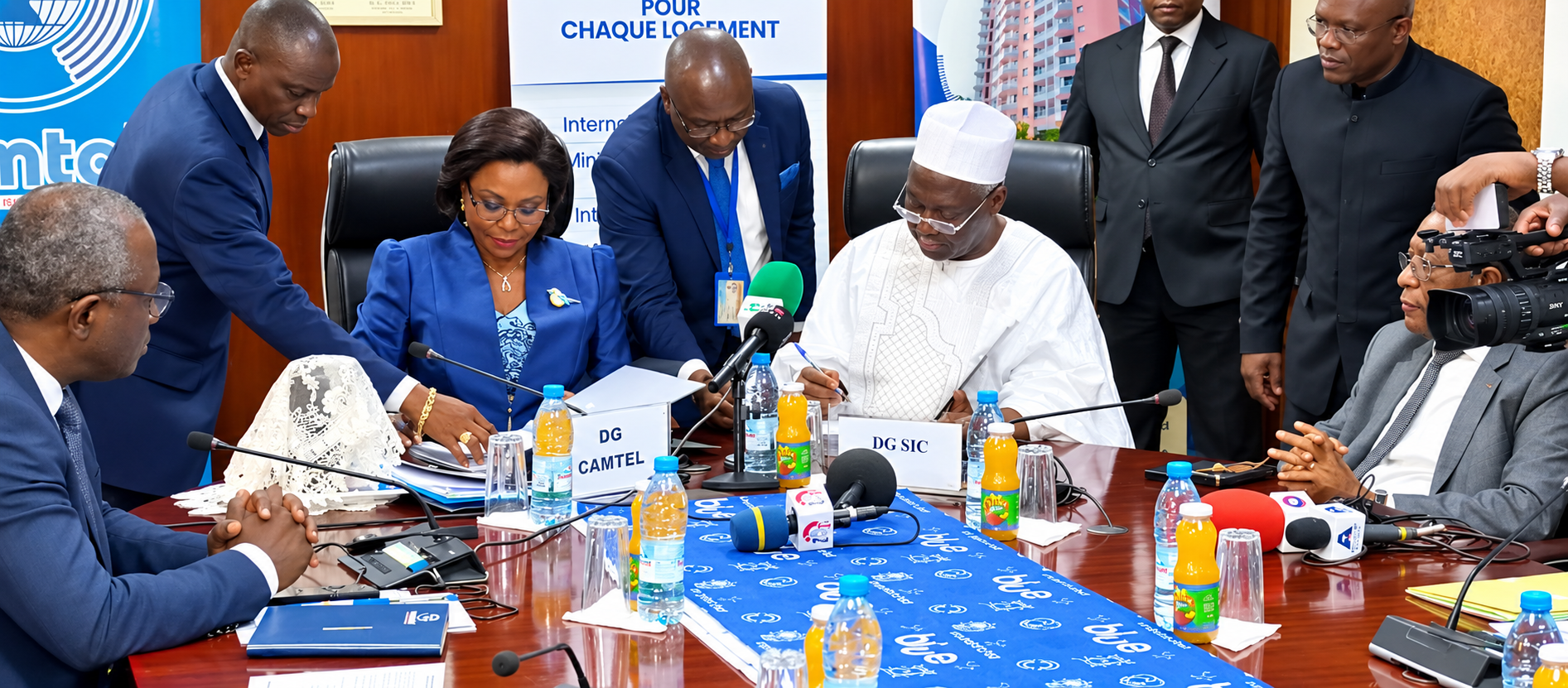
CAMTEL Retains Blue Podium As Race Begins

By Brian Mboh The 22nd International Cycling Tour of Cameroon is officially underway, with state-owned telecommunications firm CAMTEL and its…

Culture

Cameroon Festival of Living Together,Takes Center-Stage in Washington DC

By Brian Mboh It was in an electrifying atmosphere, marked by colour , rhythms and traditions from Cameroon, that a…

Culture

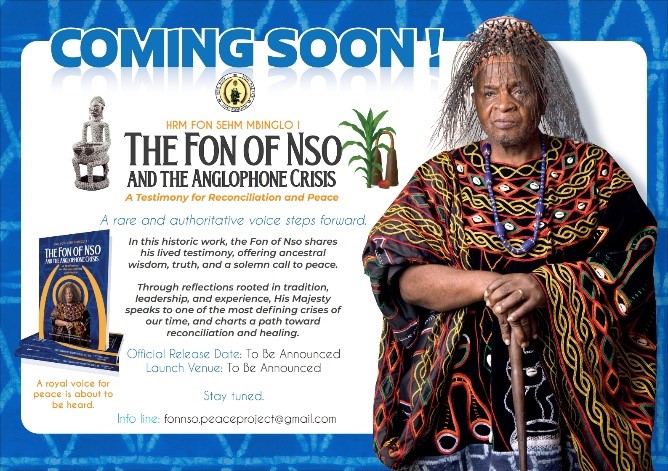
Fon Of Nso To Unveil Maiden Book On Peace, Reconciliation, And Ancestral Wisdom, June 25

By Etienne Mainimo Mengnjo His Royal Highness Fon Sehm Mbinglo I, the traditional ruler of Nso, will officially launch his…

Léandre Bassolé Takes Office As New Director General Of AfDB Regional Office For Central Africa

By Etienne Mainimo Mengnjo

Léandre Bassolé has officially assumed the role of Director General of the African Development Bank Group’s (AfDB) Regional Office for Development, Integration, and Business Delivery for Central Africa.

Léandre Bassolé, Director General of the Regional Office for Development, Integration, and Business Delivery for Central Africa, presents his letters of introduction to Oumarou Chinmoun, Secretary General of the Cameroonian Ministry of Foreign Affairs, representing Minister Lejeune Mbella Mbella, on 27 August 2025 in Yaoundé (Source: AfDB)

On August 27, 2025, Bassolé presented his letters of introduction to Oumarou Chinmoun, Secretary General of the Cameroonian Ministry of Foreign Affairs, who represented Minister Lejeune Mbella Mbella in Yaoundé, Cameroon. Their discussions underscored the Bank’s strategic importance in the development of both Cameroon and the broader sub-region.

“We understand that you are here as a son, a brother, and a friend,” Chinmoun stated. “I must express how pleased our government is that the Bank has chosen our country to host its sub-regional headquarters.”

He further emphasized the importance of the AfDB’s support: “At the sub-regional level, we welcome your assistance in implementing economic and financial programs. Given the challenges posed by the global financial crisis, the African Development Bank’s support adds value in strengthening our countries’ resilience against various shocks.”

The following day, August 28, Bassolé received an official welcome from Alamine Ousmane Mey, Minister of Economy, Planning, and Regional Development, who also serves as the Governor of the Bank for Cameroon. Their discussions focused on the status of cooperation, progress on existing projects, and future commitments in support of the National Development Strategy 2030.

Léandre Bassolé, Director General of the Regional Office for Development, Integration, and Business Delivery for Central Africa, meets Alamine Ousmane Mey, Cameroon’s Minister of Economy, Planning, and Regional Development, MINEPAT, and Governor of the Bank for Cameroon, on 28 August in Yaoundé. (Photo Credit: Mainimo Etienne)

“I greatly appreciate the quality of our cooperative relationship with the Bank Group,” Mey remarked. “We currently have 24 active projects in priority development sectors, focusing on integrated initiatives that will significantly impact the economy and the quality of life for our citizens.”

Bassolé reiterated the Bank’s commitment to enhancing its operational presence, accelerating project implementation, and increasing the impact of initiatives in the seven countries covered by the regional office: Cameroon, Central African Republic, Congo, Gabon, Equatorial Guinea, DRC, and Chad.

“The African Development Bank’s strategy is to launch all our regional operations from Cameroon and establish Yaoundé as a center of excellence,” he stated. “Our commitments in the country now total approximately $2.2 billion, with nearly 50 percent allocated to transport, followed by energy and agriculture.”

He concluded, “We will work closely to develop projects and programs that align with the aspirations of the Cameroonian authorities and sustainably improve the living conditions of the population.”

As of June 30, 2025, the African Development Bank Group’s portfolio in Cameroon comprised 24 projects valued at $2.2 billion. Across the Central Africa region, it encompasses 130 operations, including around 40 regional and multinational projects, totaling over $5 billion.

Cameroonian Fish Farmers See Hope In PD-CVEP Project

By Etienne Mainimo Mengnjo

Fish farmers in Cameroon are finding new hope and enthusiasm through a major initiative designed to boost the nation’s aquaculture sector. The Livestock and Fish Farming Value Chain Development Project (PD-CVEP), a collaboration between the African Development Bank (AfDB) and Cameroon’s Ministry of Livestock, Fisheries and Animal Industries (MINEPIA), is investing €84 million to transform the industry.

Simplice Nouma Mendel, a beneficiary living in Douala, talks to the monitoring team next to her fish tank (Source: AfDB)

For many, this project is already making a difference. “The support provided by the project encourages us to push further,” says Fanta Njifondjou Oumarou, a fish farmer in Limbé. “We are motivated to continue our efforts, and I feel better equipped to profit from fish farming.”

Another beneficiary from Douala, Hermine Kemedeu Tchuileu, highlights a significant change. “We have received certified broodstock with excellent yields. These reliable strains grow faster and mitigate many issues associated with older strains. This will revolutionize our production.”

A key element of this transformation is a new strain of the African catfish (Clarias) developed by the Agricultural Research Institute for Development. This new variety offers rapid growth, low fat content, and high survival rates.

Unlike older strains, which take eight to nine months to reach a harvest weight of 350–500 grams, the new fish are ready in just five to six months. Fry survival rates have jumped from around 60 percent to 80-85 percent, and each female can produce 15,000 to 20,000 fry per cycle, with up to three cycles per year.

Fanta Njifondjou Oumarou, fish farmer in Limbé, happy to have received clarias broodstock (Source: AfDB)

The enhanced quality of the fish is also benefiting vendors and restaurants. Ms. Moukoudi Mbappé Dolie, who sells grilled fish in Douala, reports that her income has increased. “The flesh remains firm after grilling because it contains less fat than older strains. The flavor appeals to customers.” Marthe Epoko, a vendor at the Deïdo market, believes the project is a necessity, not a luxury. “Clean and secure counters will help us preserve fish better and sell with dignity.”

Reports indicate that ongoing improvements to fish farms in Bamenda, Yaoundé, and Foumban will significantly boost the national supply of quality fish. These locations are being developed into strategic supply centers to support hundreds of fish farmers.

Victor Viban Banah, MINEPIA’s regional delegate in Douala, emphasized the importance of this work. “We will provide close support to the beneficiary hatcheries. It is essential to ensure traceability, broodstock performance, and fry quality. This project is crucial for the future of our aquaculture sector.”

To date, 2,600 broodstock fish have been delivered to 50 hatcheries selected for the project’s pre-extension phase. Since October 2024, these pilot hatcheries have already produced and sold over 115,000 fry.

A net of clarias broodstock during distribution in Douala (Source: AfDB)

The project also provides comprehensive training to stakeholders, covering everything from floating cage farming and reproduction to business management. A total of 280 fish farmers have received this training, strengthening their technical capabilities and economic resilience.

The project’s ultimate goal is to increase Cameroon’s annual fish production by 10,000 tons by 2027, reducing the country’s reliance on imports and enhancing food security. To achieve this, an AfDB mission in April 2025 recommended accelerating the supply of improved Clarias and tilapia broodstock.

Under an agreement with the Agricultural Research Institute for Development, 15,000 broodstock—12,000 Clarias and 3,000 tilapia—are set for delivery. This effort is supported by a tripartite system involving the Institute, the Project, and the Ministry, which uses a digital data collection system to monitor production levels and ensure quality control.

Na We We Sports Jamboree 2025: Uniting IDPs As Camping Experience Fosters Hope, Cohesion In Bertoua

By Etienne Mainimo Mengnjo

After a month of competition and community, internally displaced persons (IDPs) are leaving the 2025 Na We We Sports Jamboree with renewed hope and a stronger sense of belonging. The event, which concluded on August 31 in Bertoua, fostered social cohesion and collaboration among participants.

The fourth edition of the jamboree, held under the theme “Uniting Through Sports,” brought together IDPs, refugees, and members of host communities. It wasn’t just about athletic competition; participants also took part in bonfires, discussions on drug abuse and gender-based violence (GBV), and celebrated their togetherness by roasting corn.

Teams with powerful names like “Non à la haine” (No to Hate), “Stop VBG” (Stop GBV), Unity 4 Peace, and “Amour” (Love) competed in sports like football and handball, reflecting the event’s core messages.

The closing ceremony at Stade Mokolo in Bertoua featured several community-focused activities, including a cleanup exercise to promote environmental stewardship, an election workshop to encourage youth engagement in democratic processes, and a tree-planting initiative to foster community involvement and sustainability.

Organizers say these activities align with the jamboree’s broader goals of creating safe spaces for dialogue, raising awareness of critical social issues, and inspiring youth leadership.

Bertoua Mayor, Jean Marie Dimbélé Sodéa praised the initiative, stating that the jamboree reinforced the existing “living together” spirit of his town. “I am very happy to host this year’s edition of the Na We We sports jamboree,” he said. “Bertoua is a town where everyone feels at home, and this jamboree came to reinforce the living together that has been existing.”

The event is an initiative of Local Youth Corner (LOYOC), which has used sports since 2022 as a tool for conflict prevention, social cohesion, and health promotion. This year’s month-long event, which began on August 2, featured guest appearances from former Cameroonian football star Tchoutang Bernard and artists Joly Garcon, Ibrahim Moustapha, Aristide Mpacko, and Petit Malo.

Since its launch, the Na We We Sports Jamboree has reached over 3,800 IDPs and mobilized 1,500 athletes across three previous editions in Douala, Yaoundé, and Bafoussam. The events have engaged more than 300,000 people in person and over 2 million through media coverage, showcasing the program’s significant impact.

Indomitable Lions Face World Cup Test As Brys Lined up Key Players For Crucial Qualifiers

By Etienne Mainimo Mengnjo

Cameroon’s national football team, the Indomitable Lions, are gearing up for two crucial 2026 World Cup qualifying matches, and head coach Marc Brys is prioritizing thorough preparation. Speaking in Yaoundé on August 29 while announcing his 26-player squad, Brys stressed the importance of solidifying the team’s position while also integrating new talent.

List of players called up by Marc Brys

During the press conference, Brys highlighted the dual objective for the upcoming games against Eswatini and Cape Verde. “We are fortunate to have a very competitive squad,” he stated. “Our priority is to prepare as best we can for the upcoming encounters. On the one hand, we must confirm our qualification for the World Cup. On the other, we must strengthen and consolidate the squad. It’s about finding the right balance between continuity, cohesion, and openness to new talents.”

The Indomitable Lions will first host Eswatini in Yaoundé on September 4, before traveling to Praia to face Cape Verde on September 9. These matches are the seventh and eighth fixtures of the qualifying campaign.

The coach addressed the notable absences of several players, including Jean Onana, Fai Collins, and Christian Fofane, providing specific reasons for each decision. Regarding Jean Onana, Brys explained, “His situation at the club is not ideal. So we’re giving him time to get back into the swing of things. But he remains in our minds. He provides a credible and interesting alternative in midfield.”

While acknowledging the talent of Darlin Yongwa, Brys justified his omission by citing the intense competition for places. “He’s an interesting player. But competition requires choices. As I often say, to choose is to renounce. These decisions are always difficult. But they’re part of being a coach…Having this kind of competition is a blessing. It’s a sign that Cameroon is competitive.”

The squad announcement was marked by the return of veteran striker Eric Maxim Choupo-Moting after a one-year absence. The 36-year-old has been in fine form for his club, New York RB, scoring 16 goals and providing two assists in 27 MLS matches. His inclusion adds significant experience to the forward line.

The rest of the squad features a mix of established stars and promising new faces. Goalkeepers include André Onana and Simon Ngapanduentbu. In defense, Enzo Boyomo, who has started the season well with Osasuna, earned a call-up.

The midfield is anchored by familiar names like Zambo Anguissa, Martin Hongla, and Carlos Baleba, with Arthur Avom also making the list. Surprisingly, striker Vincent Aboubakar was also called up despite not currently being affiliated with a club.

“Vacances Secours, Vacances-Loisirs” Cécile Akame Mfoumou Urges Youths To Exhibit Exemplary Commitment

By Etienne Mainimo Mengnjo

The president of the Cameroon Red Cross, Cécile Akame Mfoumou, has called on young people to exhibit the “exemplary commitment” they showed during the “Vacances Secours, Vacances-Loisirs” program. She said they are the future of the Red Cross and the Red Crescent movement.

Officials and children posed for a family picture after the closing ceremony (Photo Credit: Cameroon Red Cross)

Cécile Akame Mfoumou made the statement while closing the 7th edition of the “Vacances Secours, Vacances-Loisirs” program. She was accompanied by a number of dignitaries, including the representative of the Minister of Youth Affairs and Civic Education among others.

“To you, dear children, I would like to congratulate you warmly for your active participation and your exemplary commitment throughout this year’s edition,” Cécile Akame Mfoumou said.

She added, “You are the relief and the future of our movement. You have shown that one can be young and already bear the values of peace, humanity, respect and service. You are this relief that we are proud of and in which we place great hopes.”

Cross Section of youths during the closing ceremony (Photo Credit: Mainimo Etienne)

Cécile Akame Mfoumou stated that for several weeks, the children took part in activities that not only strengthened their knowledge of the Red Cross and Red Crescent but also promoted national culture, education, citizenship, morality, discipline and human solidarity.

“Beyond games and leisure, this program has been a real school of life,” she said. “It has allowed our young participants to initiate the mastery of first aid gestures.”

She added, “Through all these activities, we have transmitted the values and fundamental principles of our movement: humanity, impartiality, neutrality, independence, voluntary service, unity, universality.”

Cécile Akame Mfoumou said these principles are not just words but “profound commitments” that give meaning to the movement’s actions and “that we have in our hearts to transmit to each generation.”

Youths demonstrating practical help to a victim (Photo Credit: Mainimo Etienne)

While thanking partners, the government and others, she called on parents to continue to “accompany, listen and encourage their children” so they can “train young people to the values of humanity, so that we can build a fairer, stronger, more resilient and more solidary society.”

Jean Urbain Zoa, secretary general of the Cameroon Red Cross, stressed the importance of “Vacances Secours, Vacances-Loisirs” program to the national society. He said it is a way to reinforce “the ideals of the movement, the promotion of humanitarian values, living together, the promotion of first aid measures and also the valorization of cultural heritage.”

“These activities have allowed us to familiarize the youth with the ideals of our movement,” Jean Urbain Zoa. “I would also like to say that this is an activity that extends throughout the territory through the various departmental and surrounding committees of our movement.”

Youths performing during the closing ceremony (Photo Credit: Mainimo Etienne)

Valeray Noumi Ngansop of the International Committee of the Red Cross, Regional Delegation for Central Africa, said, “The future is being built today. The future is being built now, and it is today that we train the volunteers of tomorrow.”

He added, “And knowing that the volunteers are the base, the only foundation of the Red Cross and that it is a priority for the national society, it was natural that the International Red Cross Committee accompanies the national society in this project whose importance is no longer to be demonstrated, because it is today that we constitute the future base of the national society.”

The young participants expressed their appreciation for being a part of the event, stating that it helped them learn about “living in society.” They said they had talks on civic values, peace consolidation and the promotion of tolerance and solidarity, among other topics.

Cécile Akame Mfoumou handing school kits and certificates to a participate (Photo Credit: Mainimo Etienne)

During the closing ceremony, the Cameroon Red Cross distributed school kits to the youth, encouraging them to study hard. The children also gave performances that included musical numbers, Chinese-language demonstrations, modern and traditional dances, and first-aid actions.

The Cameroon Red Cross said this year’s edition, like previous ones, helped young people and adolescents learn about the International Red Cross and Red Crescent Movement, contribute to human dignity, and find new volunteers. It also helped to “break certain linguistic cultural barriers between children and to develop in young people the sense of solidarity of sharing and the patriotic spirit.”


Humanone Africa, Cybersecurity Leader At Heart Of African Continent

By Etienne Mainimo Etienne

In an increasingly interconnected world, where digital threats loom large, the importance of robust information systems security cannot be overstated. Standing at the forefront of this critical domain in Africa is Humanone Cybersecurity, a company rapidly establishing itself as a major player in safeguarding businesses across Morocco and the wider African continent.

Humanone Cybersecurity’s commitment to strengthening the digital resilience of businesses is evident in its strategic collaborations and comprehensive service offerings. A recent significant development saw Humanone Cybersecurity join forces with BDO Advisory, a leader in digital transformation consulting.

This powerful alliance aims to bolster cybersecurity frameworks, leveraging Humanone’s deep expertise alongside the innovative technology of Naoris, which provides cutting-edge, secure, and decentralized cybersecurity solutions.

At the core of Humanone’s success are its diverse products and impressive achievements. The company brings to the table a wealth of expertise in crucial areas, including specialized training programs designed to equip organizations with the knowledge and skills needed to combat evolving cyber threats.

Furthermore, their rigorous auditing services help identify vulnerabilities and ensure compliance with the highest security standards. A key differentiator for Humanone is its focus on AI-based solutions, harnessing the power of artificial intelligence to provide advanced protection against sophisticated cyberattacks.

These offerings collectively contribute to Humanone’s overarching goal: to fortify the digital defenses of businesses. The partnership with BDO Digital, which now incorporates advanced technologies such as post-quantum cryptography, further underscores Humanone’s forward-thinking approach and its dedication to staying ahead of the curve in the ever-changing cybersecurity landscape.

The vision for Humanone Africa, under the leadership of its founder Youssef Marchiche, is clearly one of continuous growth and innovation. By actively pursuing strategic partnerships and embracing cutting-edge technologies, Humanone is not just reacting to current threats but is proactively shaping the future of information systems security in Africa.

Their work is vital in ensuring that businesses can operate securely and confidently in the digital age, making Humanone Cybersecurity an indispensable ally in the fight against cybercrime across the continent and the world.

Minister Ousmane Mey, New AfDB’s Central Africa Director Chart New Ways Of Improving Partnership

By Etienne Mainimo Mengnjo

Cameroon’s Minister of the Economy, Planning, and Regional Development, Alamine Ousmane Mey, and the newly appointed Director General of the African Development Bank (AfDB) Group for the Central Africa Region, Léandre Bassolé, have have discussed ways of strengthening partnership between the two parties.

Alamine Ousmane Mey, and Léandre Bassolé discussing during the audience (Photo Credit: Mainimo Etienne)

The is the substance of the audience Minister Ousmane Mey granted Bassolé on August 28 in Yaounde. Speaking after the hour-long, in-camera discussion, Léandre Bassolé expressed his satisfaction for meeting Minister Ousmane Mey who also serves as the Governor of the AfDB Group for Cameroon.

“We had the opportunity to discuss the status of our cooperation, which is in good health, I would say,” he said. “We also discussed the existing portfolio and how the bank can help the government improve and accelerate the implementation of this existing portfolio.”

Bassolé pointed out that they also discussed ways to work together to improve their partnership and approve new operations to support the implementation of the country’s National Development Plan, known as SND-30.

Alamine Ousmane Mey, and Léandre Bassolé posed for a family picture after the audience (Photo Credit: Mainimo Etienne)

“At this point, we received instructions from the Governor, and I also reiterated the full and complete availability of the bank to provide holistic support for the implementation of the various projects and programs here in Cameroon,” he stated.

Léandre Bassolé, a Burkinabé national, assumed his role as Head of the AfDB’s Regional Bureau for Central Africa and the Cameroon Country Office on May 1, 2025, succeeding Solomane Kone. Before this appointment, he managed the AfDB Country Office in Guinea from 2017 to 2024.

Minister Alamine Ousmane Mey (Photo Credit: Mainimo Etienne)

With 16 years of experience at the African Development Bank, he began his career there in 2009 after working as a researcher and development impact specialist at several academic and international institutions, including the National Center for Scientific Research (CNRS) in France and the World Bank Group.

At the AfDB, he has held positions such as Senior Macroeconomist for seven African countries and Country Office Manager for Ethiopia, Eritrea, Djibouti, and Comoros. Most recently, he served as Deputy Director General of the Bank Group’s Office for East Africa, where he co-managed a regional portfolio of $13 billion.

Léandre Bassolé (Photo Credit: Mainimo Etienne)

In Cameroon, Mr. Bassolé will be responsible for managing an active portfolio of 28 projects valued at FCFA 1,600 billion. His duties will include monitoring AfDB operations and strengthening partnerships with regional institutions, civil society organizations, and the private sector.

His jurisdiction in the Central African region also includes Congo, Gabon, Equatorial Guinea, the Central African Republic, the Democratic Republic of Congo, and Chad. Here, he will manage a portfolio worth approximately FCFA 11,000 billion ($18 billion), covering 600 operations.

Alamine Ousmane Mey, Léandre Bassolé and officials pose for a family picture after the audience (Photo Credit: Mainimo Etienne)

Léandre Bassolé holds a PhD in development economics, a Master’s degree in development economics, a professional Master’s degree in project analysis and evaluation, and a Bachelor’s degree in economics. All of his degrees are from the University of Clermont Auvergne (CERDI) in France.

Universities Are Vital Partners In Development Efforts For Africa – Nnenna Nwabufo

By Etienne Mainimo Mengnjo

Nnenna Nwabufo, Vice President for Regional Development, Integration, and Business Delivery at the African Development Bank, AfDB, has stressed the vital role of universities in Africa’s development. She said the bank is committed to supporting these institutions as centers of innovation that can attract both bank financing and private investment.

Officials pose for a family picture (L-R) Prof. Margaret Chigita-Mabugu , Dean, Faculty of Economic and Management Sciences, University of Pretoria, AfDB Vice President Nnenna Nwabufo, University of Tokyo President Dr Teruo Fujii and Prof. Daiji Kawaguchi, Dean of GraSPP, University of Tokyo during the Public Policy seminar at Tokyo University. (Source: AfDB)

Nwabufo made her remarks during a symposium held Saturday, Aug. 23, on the sidelines of the Ninth Tokyo International Conference on African Development (TICAD9). The event was organized by the University of Tokyo and co-hosted by the University of Pretoria in partnership with the African Development Bank.

Titled From Campus to Community: University Collaboration Between Africa and Japan for Real-World Change, the symposium focused on how academic partnerships between Africa and Asia can create new opportunities for collaboration and progress.

“As Africa’s leading development finance institution, the African Development Bank views universities as essential allies—not only as educational centers but also as drivers of innovation, entrepreneurship, and societal transformation,” Nwabufo said in her keynote address.

“The bank believes that Africa’s future depends on strong, empowered universities that evolve from mere knowledge producers to active agents of change,” she added.

Keynote addresses were also delivered by Dr. Teruo Fujii, president of the University of Tokyo, and Dr. Francis Petersen, vice chancellor and principal of the University of Pretoria. Petersen’s remarks were presented by Prof. Margaret Chigita-Mabugu, dean of the Faculty of Economic and Management Sciences at the University of Pretoria. Both speakers highlighted the importance of collaboration through diverse voices, innovative partnerships, and the social impact of Africa-Japan cooperation.

The audience heard from two expert panels that explored the role of universities in fostering entrepreneurship and innovation through collaboration between Africa and Asia.

Panelists, speakers and some JADS recipients, take a photo together following the TICAD9 University of Tokyo Public Policy Seminar (Source: AfDB)

Professor Frans Swanepoel, head of the Wits School of Governance, stressed the need for skills development in a continent with a youthful population. “Education plays a critical role in what you can achieve as an entrepreneur,” he noted.

Hendrina Droba, division manager for education, human capital, and employment at the African Development Bank, cited examples of how university partnerships for youth and innovation are central to the bank’s new 10-year strategy. One standout initiative is the Japan Africa Dream Scholarship.

Mary Yeboah Asantewaa of Ghana, a recipient of the scholarship, shared how it opened career pathways leading to her current role in healthcare, where she uses innovative drone technology to combat malaria.

The African Development Bank is committed to harnessing the potential of universities through five key strategies: integrating universities into investment programs to ensure their involvement in national development and industrialization projects supported by the bank; financing skills and innovation ecosystems; fostering university-industry partnerships to transform universities into co-creators with the private sector; supporting entrepreneurship hubs and technology parks within universities; and establishing knowledge-sharing platforms that allow universities to showcase their innovations and attract investment.

The Japan Africa Dream Scholarship, launched in 2017, is a capacity-building initiative by the African Development Bank and the Government of Japan. It offers high-achieving African students a two-year scholarship to pursue postgraduate studies in energy, agriculture, health, environmental sustainability, and engineering. To date, 41 students have received full scholarships, with 27 attending Japanese partner universities and 14 at African partner universities.

“I am pleased to announce that the University of Tokyo is a partner in this initiative,” Nwabufo said. “Collaborations between African and Japanese universities are vital for strengthening long-term partnerships between Africa and Japan, as today’s African trainees are tomorrow’s leaders.”

CAF Host Inaugural IMPACT Programme Workshop

By Etienne Mainimo Mengnjo

The Confederation of African Football (CAF) is holding its first-ever CAF IMPACT Programme Strategic Roundtable Workshop, running from August 24 to 29. The event is currently taking place on the sidelines of the TotalEnergies CAF African Nations Championship (CHAN) PAMOJA 2024, hosted in Kampala, Uganda, and Nairobi, Kenya.

According to CAFThe CAF IMPACT Programme is a key initiative designed to improve the transparency and accountability of how CAF’s development funds are used. Its goal is to support Member Associations and ensure the sustainable growth of African football, making it more competitive on the global stage.

For the first time, all 54 presidents and general secretaries of CAF’s Member Associations will gather for a practical workshop. The sessions will focus on strengthening financial governance, promoting youth competitions, and driving impactful community outreach initiatives.

CAF says the workshop will be divided into three groups and will offer hands-on guidance on the program’s objectives. It will cover the rights and duties of Member Associations, financial reporting, and safeguards to prevent any misuse of funds.

Sarah Mukuna, CAF Director of Member Associations, stressed the significance of the event, stating, “This CAF IMPACT workshop is the first of its kind, bringing presidents and their administrative teams together to work practically on strengthening governance and impact. It reflects CAF’s commitment to equipping our leaders with the tools to make African football globally competitive and self-sustaining.”

The workshop aims to strengthen collaboration among CAF’s 54 Member Associations, improve financial governance, and highlight a shared commitment to advancing African football worldwide.


2025 October Elections : ‎Constitutional Council Rejects Akere’s Petition To Challenge Biya’s Candidacy

By Etienne Mainimo Mengnjo

‎Cameroon’s Constitutional Council has rejected a petition from Barrister Akere Muna challenging President Paul Biya’s eligibility to run in the upcoming Presidential Election.‎ The Council’s President, Clement Atangana, announced the decision on August 22 in Yaounde after hours of hearings. The case was dismissed as “inadmissible” without further justification.

Akere Muna speaking after the Constitutional Council verdict

‎Akere Muna, the Presidential Candidate of the UNIVERS party, had filed the case citing Article 118 of the Cameroon Election Code. This article disqualifies any candidate who “places themselves in a state of dependency.”

‎Following the verdict, Muna, who was accompanied by a team of lawyers, acknowledged the Council’s decision but expressed strong disagreement on the substance of the ruling.

‎He described the finding of admissibility as a preliminary victory for democracy. “By declaring the petition admissible, the Council affirms the fundamental principle that a candidate’s eligibility is not a matter of opinion, but of law. This opens the door to citizen and legal oversight of power, and we welcome this,” Muna stated.

‎However, he noted that while the Council acknowledged their right to raise the question, its ultimate answer was deeply unsatisfying. Muna pointed to the silent presence of the Director of the Civil Cabinet at the hearing as the most troubling element of the proceedings.

‎“Why was he present, if not to represent presidential authority? Why did the President of the Council offer him the floor? And most importantly, why did he refuse to speak?” Muna asked. “His silent presence speaks louder than all our arguments. It offered the defense a perfect opportunity to demonstrate that the President exercises his functions with full autonomy. They chose silence. This deafening silence validates, in our view, all of our arguments.”

‎Muna stated that while the Council deemed the evidence provided insufficient to prove ineligibility, the substantive questions remain entirely unanswered.

Constitutional Council hearing

‎“The Cameroonian people deserve more than eloquent silence. They deserve transparency,” he said. “They deserve to know who truly governs the country when their President is absent for weeks, when institutions no longer convene, and when governance appears to be exercised by proxy.”

‎He stated, “Our fight was not personal; it was constitutional. It aimed to ensure that the highest office of the state is held by a fully autonomous person, as required by law. This fight for clarity, accountability, and strict respect for our fundamental law does not end today.” Meanwhile, filing the case before the Council, Barrister Akere supported his submission with 11 supporting documents news reports, photos, videos, and a geriatric medical assessment demonstrating that 92-year-old Paul Biya is indeed dependent.

‎Key arguments outlined by Muna include Biya’s prolonged absencesspending 42 days abroad in 2024, his lack of public appearances, and what Muna describes as governance by proxy, all of which indicate an inability to function autonomously.

‎He also raises concerns about shadow governance, noting that institutions like the Higher Judicial Council haven’t convened in six years, with power being wielded by unelected officials issuing illegitimate “high instructions.”

‎Muna points to public evidence, such as Biyas disorientation at the 2022 U.S.-Africa Summit, where he required assistance for basic actions, along with non-transparent medical trips to Switzerland, as indications that he is unprepared to lead the country.

‎Citing legal precedent, Muna invokes the “Mischief Rule” to argue that the spirit of Article 118 aims to prevent a leader from being a puppet under external influence.

‎In his petition, Muna requests that as the Constitutional Council rule on the case within three days, they should declare Paul Biyas ineligibility under Article 118, order for Biyas personal appearance, or a demand for an independent medical expert report.

‎He also seeks the application of Article 128 to allow his party to propose a replacement candidate within three days, stressing the urgent need to protect electoral integrity and national stability.

‎Barrister AKere Muna will run for the upcoming Presidential elections under the Univers party. He is one among the 12 candidates retained by the Constitutional Council.

Cameroonians express Satisfaction Over Akere’s Petition

‎Speaking to Cameroonians, particularly those in Yaoundé, after Barrister Akere submitted his petition, they voiced strong support for Barrister Akere Muna.

‎They told Post the day after the petition was submitted recorded under courier No. 195 on August 19, many stating that the prolong silence and absence of their president has become unbearable, and they believe this legal move could compel him to reconnect with the populace.

‎One resident, who wished to remain anonymous, said, “I just learned that a petition has been filed to annul President Paul Biyas candidacy because he is unfit to rule. I’m glad this case has been brought forward; we can’t keep living like this we need to feel his presence.”

‎A taxi driver also weighed in stated that Barrister Akere is correct, but things are being done in a way that’s hard to understand.

‎”Since the CPDM announced its candidacy, we haven’t seen the outgoing president. He acts as if he’s not there, but I’m hopeful this petition will encourage him to show himself,” the taxi driver said.

‎Another citizen, a mechanic who preferred to remain unnamed, praised Munas initiative, asserting that it aligns with the law and could prompt Biya to engage with his people, who have long felt neglected.

‎”I expected President Biya to have made more public appearances since declaring his candidacy, but that’s not happening. We see how others are connecting with their constituents, and we need to feel his presence. His silence is no longer convincing, and I believe Barrister Akere’s move will help bring him into the spotlight, he said,” the Mechanic stated.

‎A local trader pointed out that: “I support Akere Munas actions. To prove he’s still strong and ready for this position, Biya needs to come out into public life not just once but as many times as possible. We cant only see him during formal events or on special occasions; we need to feel his presence regularly.”