By Etienne Mainimo Mengnjo
Global Recycling Day, observed annually on March 18, has evolved into a call for a fundamental shift in how we perceive and handle our waste. As plastic pollution reaches a critical threshold globally, the emphasis is moving beyond basic sorting toward innovative reclamation. Communities everywhere are now seeking tangible, effective strategies to safeguard public health and the environment from the mounting tide of synthetic debris.

The omnipresence of plastic bottles, bags, and packaging across both urban centers and natural landscapes highlights a persistent ecological threat. Because these materials resist natural decomposition, they remain in the environment for centuries, eventually fracturing into microplastics that infiltrate our soil and water systems.
This contamination not only disrupts wildlife but also enters the human food supply, while larger debris contributes to infrastructure failures like blocked drainage and increased flood risks.
Conventional waste management strategies, including landfilling and incineration, have proven to be insufficient or even counterproductive. While these methods hide trash from the public eye, they often lead to long-term soil contamination and the release of hazardous atmospheric emissions.
In many regions where formal collection systems are underfunded, the accumulation of plastic leaves residents with few safe disposal options, underscoring the urgent need for a transition toward a circular economy.
Amidst these challenges, researchers like Sirri Akongnwi Neba Nforsoh, a Researcher at the University of Rhode Island is pioneering methods to repurpose discarded polymers into high-value building supplies.
This approach treats pollution as a raw resource rather than a burden by blending recycled plastics with processed aggregates to create durable construction pavers. These blocks serve as a sustainable alternative to traditional stone or concrete surfacing for various infrastructure needs.
The environmental benefits of this innovation are twofold, as the production process bypasses the use of cement, which is a significant contributor to global carbon emissions. These versatile pavers are ideal for creating walkways, school pathways, and market stalls, providing a sturdy foundation for community development.
By utilizing waste as the primary ingredient, the resulting materials are often more affordable than their traditional counterparts, making them particularly valuable for low-cost housing and public works.
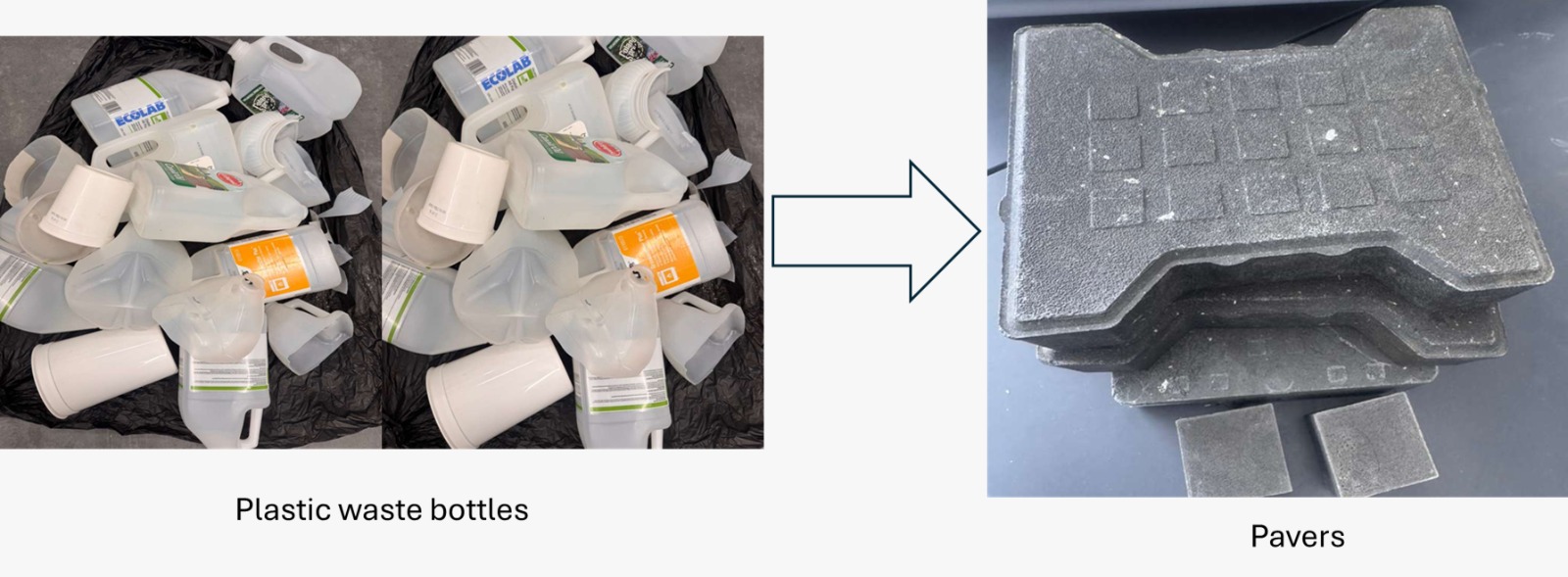
As Nforsoh points out, the conversion of waste into functional products allows communities to mitigate pollution while simultaneously fostering local economic growth and lowering the barriers to construction.
“By converting waste into useful products, communities can reduce environmental pollution, lower construction costs, and create local economic opportunities,” Nforsoh explains.
This methodology proves that the items we once threw away can be reinvented as the very foundations of our neighborhoods. Global Recycling Day serves as a powerful testament to the fact that through engineering and creativity, environmental liabilities can be transformed into essential infrastructure.
Adopting these advanced recycling technologies represents more than just a cleanup effort; it is a commitment to building resilient and cost-effective societies. By reimagining the lifecycle of plastic, we demonstrate that a sustainable and functional future is not just a theoretical goal but a practical reality within our grasp.