
List Posts

View All
General

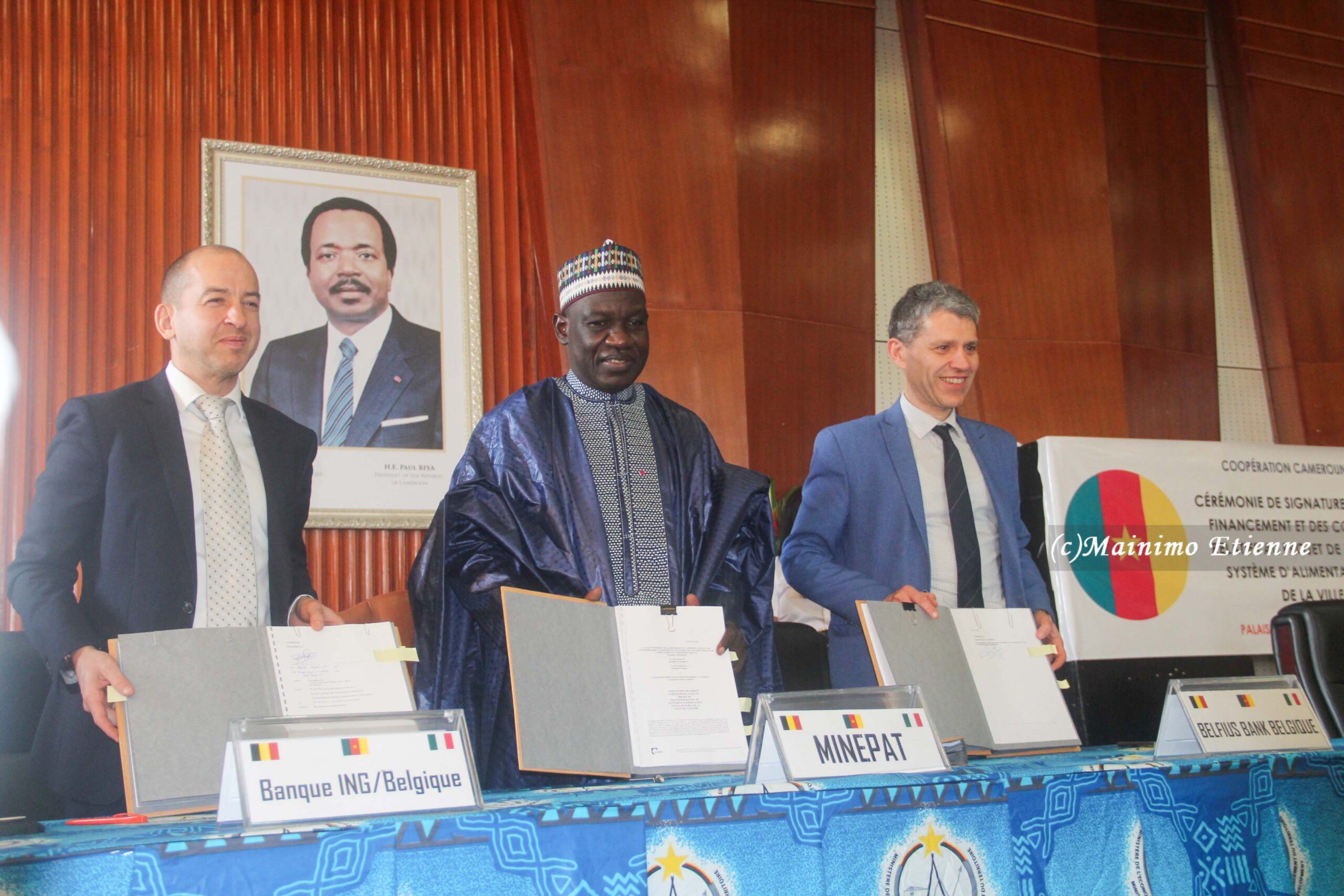
Cameroon, Belgium & Italy Signed Financial Agreement To Reconfigure Yaounde Drinking Water Supply System

By Etienne Mainimo Mengnjo The governments of Cameroon, Belgium, and Italy have entered into a financial agreement and market contracts…
Society

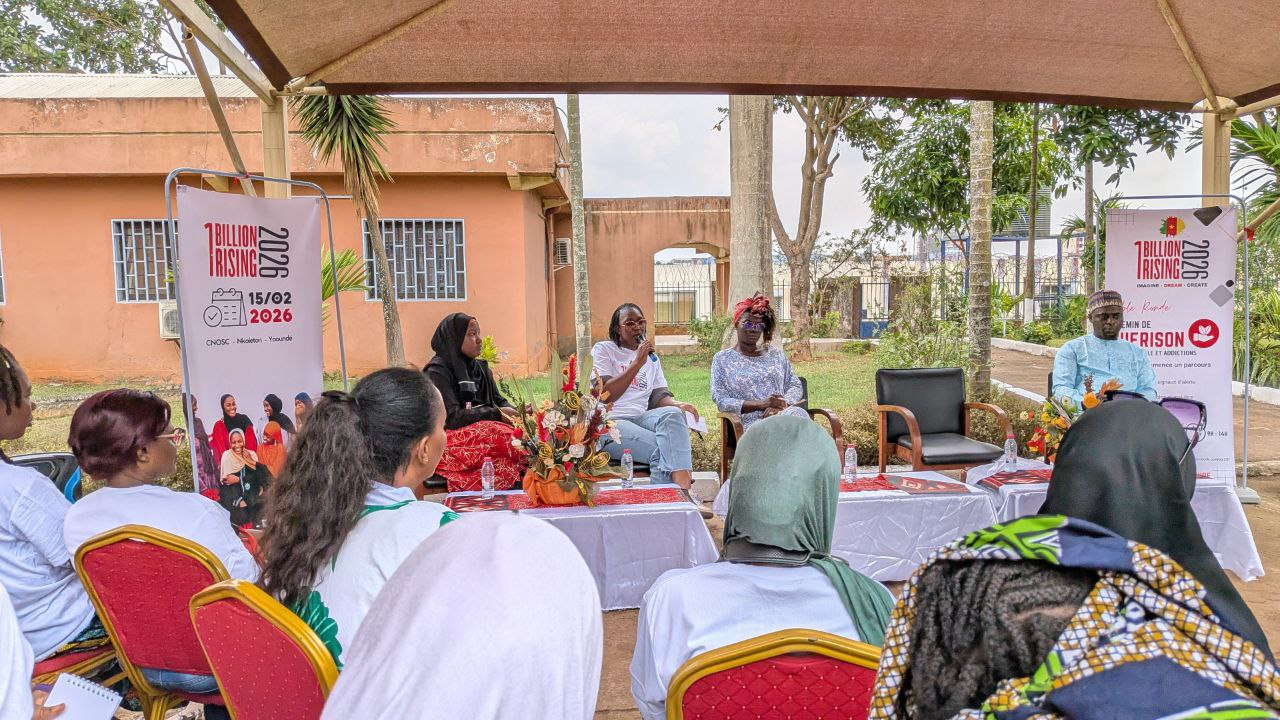
NGO, 1Billion Rising, Stress Prevention, Listening As keys To Recovery From Youth Addiction

By Desmond Mbua The non-governmental organization 1 Billion Rising in Cameroon has launched a strong appeal to confront addiction with…

Sports

The Enduring Charm Of Fireside Storytelling

By Etienne Mainimo Mengnjo Telling stories around the fireside is an age-old tradition that weaves a rich tapestry of memories,…

Society

Gov’t Equips CONAC, Audit Chamber With Vehicles To Scale Up Anti-Corruption Fight

By Etienne Mainimo Mengnjo The government of Cameroon through the Ministry of Economy, Planning and Regional Development (MINEPAT) has handed…

It Is Time To Rescue Cameroon Football And Pave The Path To Success – Fans Cry Out

By Etienne Mainimo Mengnjo

The recent performance of the Indomitable Lions of Cameroon has been a subject of intense debate among supporters and fans since they were brutally eliminated from the 2023 AFCON in Cote D’Ivoire. Discussions revolving around the team have dominated local gatherings, whether on the pitch or in social settings, leaving many with unanswered questions.

Cameroon National Team gearing up for the 2017 AFCON in Gabon (Photo Credit: Mainimo Etienne)

It is disheartening to witness the decline of the Indomitable Lions, who were once the pride of the continent and even the world. The team has now become a mere shadow of its former self, lacking the fighting spirit that was once its emblem.

It is troubling to note that the Lions have been unable to maintain a clean sheet in most of their recent matches. As a result, Cameroon no longer instills fear in other teams when it comes to football, and even if they do, the expectations surrounding the Lions have consistently been below average. Since 2021, the situation surrounding the national selections has been worrisome. The trajectory appears to be on a downward trend, as Cameroon has failed to qualify for various international competitions.

Major tournaments have ended in turmoil for the national football selections across different categories. The U-17, U-20, and U-23 teams, both in the men’s and women’s categories, have either failed to qualify or been eliminated at the group stage. The representatives of Cameroon in continental competitions have suffered a similar fate, prompting many to question the need for a complete overhaul of the football landscape.

Cameroon National Team gearing up for the 2017 AFCON in Gabon (Photo Credit: Mainimo Etienne)

Gerald Siad expresses sadness over the current state of affairs and believes it is time to address the situation and find a way forward to revive Cameroon’s football landscape. He emphasizes the need to go back to the drawing board and reassess what is happening. According to him, while countries like Senegal are experiencing success across all categories, Cameroon seems to be stagnant and it is a call for concern.

“I am deeply saddened to witness a remarkable country like Cameroon facing and enduring these challenges. Meanwhile, Senegal is thriving and achieving victories across various categories, while Cameroon has been experiencing consistent losses. It appears that everything has come to a halt. It is imperative to return to the drawing board and thoroughly reassess the factors contributing to this situation,” he expressed.

Football pundit Mohammed criticizes the present FECAFOOT executive, arguing that they have not helped improve the situation. He believes that those in charge of football management in the country should be driven by the spirit of bringing about change through action, rather than mere lip service. Mohammed questions why Cameroon has been eliminated from all international competitions, with qualifying becoming an insurmountable challenge.

Cameroon National Team gearing up for the 2017 AFCON in Gabon (Photo Credit: Mainimo Etienne)

“Since the current executive assumed leadership of the country’s football governing body, the trajectory of Cameroonian football has been on a downward slope, leading many of us to question their effectiveness. The prevailing question remains: what exactly is transpiring? Our national team has been eliminated from all international competitions, and it seems that the task of qualifying has become increasingly elusive. It feels as though we are constantly pursuing an unattainable goal,” Mohammed said.

Elias Nsa suggests that a complete overhaul is necessary to address the situation. He advocates for a return to the roots and a focus on youth football as the way forward. Nsa points out that while many countries are actively working to improve their football landscapes, Cameroon appears to be complacent. He urges football stakeholders especially those that have been around sitting on the face to wake up and join the diligent pursuit of success.

Agenda 2063: AU Launches Second Decade Of Acceleration

By Etienne Mainimo Mengnjo

The African Union (AU) has launched the Second 10-Year Implementation Plan of Agenda 2063. The launching ceremony took place on February 17 during the summit of African Heads of States in Addis Ababa, Ethiopia that took place from February 17 and 18.

The implementation plan, also known as the decade of acceleration (2024-2033), is a historic milestone for the African Union, its Member States, and all African citizens. It marks the beginning of the second decade of collective efforts to realize the vision of a prosperous, peaceful, and integrated Africa by 2063.

The Second 10-Year Implementation Plan of Agenda 2063 is a bold and ambitious roadmap for Africa’s transformation. It is a manifestation of the collective will and determination of the African people to shape their destiny. It reaffirms the African dream of unity, dignity, and prosperity for all.

The launch of the plan is a call to action for all stakeholders to join hands and work together to make Agenda 2063 a reality. The success of the plan depends on the ownership, commitment, and participation of all Africans, including governments, regional economic communities, civil society organizations, the private sector, academia, media, and the diaspora.

The plan outlines seven moonshots of how the continent aims to achieve key priorities, goals, and targets in the next 10 years. By 2033, Africa aims to be prosperous, integrated, democratic, peaceful, cultured, people-driven, and influential.

The plan also identifies flagship projects that will have a high impact, such as the African Continental Free Trade Area, the African Passport, the Grand Inga Dam, the Single African Air Transport Market, the African Virtual University, the Pan-African E-Network, and the African Outer Space Strategy. These projects will enhance regional integration, economic diversification, innovation, and competitiveness, as well as social inclusion and cohesion.

Effective coordination, monitoring, and evaluation mechanisms are required to ensure accountability and transparency. The African Union Commission, together with AUDA-NEPAD, will play a leading role in facilitating and supporting the implementation of the plan at all levels.

The African Union has designated the theme for 2023 as the “Year of AfCFTA: Acceleration of the African Continental Free Trade Area Implementation”, aiming to generate greater political commitment and accelerate the effective implementation of the agreement.

By eliminating barriers to trade in Africa, the African Continental Free Trade Area (AfCFTA) aims to lift 30 million people from extreme poverty and another 68 million people from moderate poverty.

Currently, forty-four (44) member states are state parties to the AfCFTA Agreement following the ratification of the instruments establishing the AfCFTA, while fifty-four (54) member states have signed the Agreement.

*** 𝟮𝟬𝟮𝟰 𝗣𝗟𝗔𝗬𝗘𝗥 𝗔𝗡𝗡𝗢𝗨𝗡𝗖𝗘𝗠𝗘𝗡𝗧 ***

*** 𝟮𝟬𝟮𝟰 𝗣𝗟𝗔𝗬𝗘𝗥 𝗔𝗡𝗡𝗢𝗨𝗡𝗖𝗘𝗠𝗘𝗡𝗧 ***

Embracing Diversity and Unity Through Football

Julius Khingkile’s arrival in Adelaide in 2024 marked a significant milestone in his football career and the journey of South Coast United. Hailing from Cameroon, Julius brought with him a rich tapestry of experiences and skills honed on the football fields of his native country and Dubai.

A formidable presence on the pitch, Julius is renowned for his strength, skill, and versatility, traits that quickly caught the attention of his new teammates at South Coast United. Despite his recent relocation, Julius seamlessly integrated into the playing group, showcasing his exceptional talent during training sessions with his precise touch and fluid movement.

Having dedicated a substantial amount of time to football in Cameroon and Dubai, Julius’s arrival at South Coast United was met with enthusiasm and optimism. The prospect of Julius calling South Coast United home in 2024 filled the team and fans alike with anticipation for the season ahead.

Julius Khingkile’s transition to Adelaide not only represented a new chapter in his football career but also symbolized the convergence of diverse backgrounds and talents within the realm of sports. His journey from Cameroon to Dubai to Adelaide exemplifies the universal language of football that transcends borders and unites individuals from different cultures and experiences.

As Julius embarked on this new chapter with South Coast United, his presence revitalized the team, injecting fresh energy and perspective into their dynamic. His impact on and off the field resonated with fans and teammates, forging connections and fostering a sense of unity within the club.

In welcoming Julius Khingkile to South Coast United, the football community celebrated the spirit of inclusivity, and diversity, and shared passion for the beautiful game. Julius’s journey serves as a testament to the power of sport in bridging gaps, creating opportunities, and fostering a sense of belonging in a global landscape.

Join us in extending a warm welcome to Julius Khingkile and witness the transformative journey of a player whose talent, dedication, and commitment continue to inspire those around him. Welcome Julius with a comment below and be part of his exciting journey with South Coast United.

PROMOTE 2024 Kicks Off In Yaoundé

By Etienne Mainimo Mengnjo

The 9th International Exhibition for Enterprises, SMEs, and Partnerships of Yaoundé, PROMOTE 2024, has kicked off in Yaounde.

The 2024 edition will run from February 17 to February 25 at the Yaounde Congress Center under the theme, “Private sector, evolution and structural transformation of our economies.”

SMEs positioning themselves as Promote gets underway (Photo Credit: Mainimo Etienne)

One of the great innovations of the 2024 edition is the addition in its program “Promote 2024 Major Economic Forum.”

The exhibition serves as a melting pot for companies of all sizes, government bodies, regulatory agencies, institutions, and a diverse array of organizations.

Each year, PROMOTE attracts over 1,000 exhibitors from 30 countries across various sectors including agriculture and agro-industry, energy, industry, construction and public works, mining, infrastructure, ICT, health, banking and finance, insurance, tourism, crafts, communication, and more.

Beyond being a platform to initiate and cultivate partnerships, the nine-day exhibition offers a rich tapestry of activities including multi-sector exhibitions, promotional opportunities, networking sessions, exchanges of ideas, engaging debates, and fruitful meetings.

Push For Debt Reforms: Finance, Economic Experts Urge Africa Leaders To Match Unity Speak With Actions

By Etienne Mainimo Mengnjo

Finance and economic experts from Africa have urged African leaders to match their unity rhetoric with concrete actions and intensify efforts towards regional integration. They believe that these measures are crucial for the continent’s agency and success in advocating for debt reforms and a complete overhaul of the global financial architecture.

Panelists during the media briefing

This call was made on February 16 during a media briefing held in Addis Ababa, Ethiopia. The briefing brought together notable figures such as Jason Braganza, Executive Director of the African Forum and Network on Debt and Development (AFRODAD); Mavis Owusu-Gyamfi, Vice President of the African Center for Economic Transformation (ACET); Hannah Ryder, CEO of Development Reimagined; and Dr. Patrick Ndzana Olomo, Acting Head of the Economic Policy and Research Division at the Department of Economic Affairs of the African Union Commission.

The media briefing served as a precursor to the upcoming African Union (AU) Summit, where African Heads of States will convene over the weekend.

During the briefing, moderated by Joab Okanda, Senior Advocacy Advisor at Christian Aid, Jason Braganza expressed his regret over the fact that Africa predominantly exports raw commodities and imports finished goods. This structural imbalance perpetuates liquidity shortages and necessitates the need for loans.

“The Continent is largely an exporter of raw commodities and importer of finished goods, and this means we will always be in a liquidity crunch and cash shortfall. This necessitates having to go for loans,” he said.

Braganza emphasized that Africa must adopt a coherent and coordinated approach that highlights the continent’s value in global trade and positions it as a net creditor to the world.

Mavis Owusu-Gyamfi on his part called for a global financial architecture that is responsive to Africa’s current realities and complex challenges. He argued that the current international financial systems were established 80 years ago when most African countries were still under colonial rule, which hindered their industrialization efforts.

“The international financial systems were set up 80 years ago when most African countries were colonised, and the system locked them out of industrialization. Given what Africa has given to the world as a provider of natural resource capital, it is not too much to ask for an increase and a fair share of allocations through public goods such as the International Development Assistance (IDA) and the Special Drawing Rights (SDRs).”

Hannah Ryder emphasized that Africa still heavily relies on support from the rest of the world. “While a lot is being done domestically and new lenders such as China and private sector actors have brought in resources, we have to go back to the 1980s when African governments realised that their aspirations such as infrastructure building would not be met by domestic resources only.”

She cited studies across 13 African countries, conducted by Development Reimagined, which indicated that to achieve the aspirations of Agenda 2063 and the Sustainable Development Goals (SDGs), these countries would require between USD 100-150 billion annually. However, if they were to rely solely on external finance under the current system, they would quickly exceed their debt sustainability thresholds, as many countries already have. Ryder argued that a comprehensive overhaul of the global financial architecture, initially designed to serve major powers, is necessary to address the needs of Africa and other developing countries.

Dr. Patrick Ndzana Olomo reiterated the importance of Africa’s admission to the G20, as it presents an opportunity to establish comprehensive frameworks within the G20 to combat illicit financial flows, which cause the continent to lose USD 90 billion annually. He emphasized the significance of Africa’s participation in G20 discussions to address strategic issues that serve the interests of the continent.

Nevertheless, these experts stressed the need for African leaders to take decisive actions towards regional integration, debt reform, and a restructuring of the global financial architecture to ensure Africa’s economic empowerment and development.

UNHCR, INS Partner To Improve Data On Refugees & Displaced Persons In Cameroon

By Etienne Mainimo Mengnjo

The United Nations High Commissioner for Refugees (UNHCR) and the National Institute of Statistics (INS) have established a collaborative partnership to accurately determine the number of refugees, internally displaced persons (IDPs), asylum seekers, and returnees in Cameroon.

Joseph Tedou and Oliver Beer penning the partnership (Photo Credit: CRTV web)

The partnership was officially signed on February 15 in Yaounde. Under this agreement, the INS, renowned for its global standards and extensive international and national expertise, will conduct a comprehensive survey scheduled for June and July 2024.

Joseph Tedou, Director General of INS signed on behalf of his institution while Oliver Beer, UNHCR Representative in Cameroon represented his institution.

The primary objective of this global survey is to enhance the quality of available data concerning forcibly displaced individuals, thereby improving the effectiveness of meeting their specific needs.

Officials pose for a family picture (Photo Credit: CRTV Web)

The Forced Displacement Survey (FDS) is a program aimed at streamlining and standardizing surveys that gather data on forcibly displaced persons. It encompasses information about their socioeconomic status, living conditions, and details about their host communities.

Cameroon is one of the initial three countries selected for the implementation of the FDS out of the 16 countries chosen.

Based on statistics from November 2023, Cameroon is currently hosting a total of 2,038,539 individuals. This includes 479,012 refugees, 9,495 asylum seekers, 1,075,252 internally displaced persons, and 658,548 returnees. Notably, within the refugee community, 354,837 individuals originate from the Central African Republic, 121,206 from Nigeria, and 2,969 from various other countries.

Cameroonians Pay Last Respects to Prof. Joseph Owona

By Etienne Mainimo Mengnjo

Cameroonians from diverse backgrounds have paid their last respects to Prof. Joseph Owona, who passed away on January 6 in Bordeaux, France, at the age of 78.

Prof. Joseph Owona

On January 15, Cameroonians paid their last respect to fallen State-man in Yaounde as he embarked on his final journey to the world beyond. At the Yaoundé General Hospital, a ceremony took place where Prof. Jacques Fame Ndongo, Minister of State and Minister of Higher Education, represented the President of the Republic.

The ceremony was attended by the Prime Minister, government officials, members of the Constitutional Council, academics, as well as family members and friends. They all came together to honor a man whom they described as a devoted public servant.

In this difficult time, Clément Atangana, President of the Cameroon Constitutional Council, called on the deceased’s family to remain united and strong. He described Prof. Joseph Owona as a man who always stood for what was right, stating, “You have contributed to the writing of some of the most beautiful pages in the history of our country’s constitution.”

According to Prof. Adolphe Minkoa She, Rector of the University of Yaoundé II, “Pr Joseph Owona was an exceptional jurist, an infinite mind, and a dedicated academic.” Pr Alain Francklin Ondoua, Dean of the Faculty of Legal and Political Sciences at the University of Yaounde II, added that Prof. Joseph Owona was a highly respected and unparalleled talent, a master of public law in Cameroon and Africa.

Prof. Charles Étienne Lekene Donfack, a friend and colleague of Prof. Joseph Owona, said, “He was a man of simplicity, yet with a strong character.” Prof. Maurice Aurélien Sosso, President of the Conference of University Institutions, expressed, “The university community has just lost one of its most esteemed scholars. You will live on through all your works. You will shine brightly in celestial bliss.”

He will be laid to rest on February 17th in Akom Bikoe, located in the South Region. The Minister of State, Minister of Higher Education, Prof. Jacques Fame Ndongo, will represent the President of the Republic.

Before his passing, Prof. Joseph Owona served as a member of the Constitutional Council. He was Cameroon’s first Professor of Public Law and Political Science and began his service to the State in his 30s as a deputy minister.

He led the technical committee that drafted the 1996 Cameroon Constitution, which included representatives from both francophone and anglophone backgrounds. Throughout his career, he held positions in at least 10 ministerial departments, served as Secretary General at the Presidency of the Republic, and much more.

AFRODAD, SADC PF Collaborates To Promote Sound Financial & Debt Management Policies Across Africa

By Etienne Mainimo Mengnjo

The African Forum and Network on Debt and Development (AFRODAD) and The Southern African Development Community Parliamentary Forum (SADC PF), have signed a partnership agreement aimed at promoting sound financial and debt management policies across Africa.

The deal was sealed on February 12th in Harare, Zimbabwe. Jason Rosario Braganza, AFRODAD’s Executive Director, represented his institution, while Hon. Boemo Sekgoma, Secretary General of the SADC Parliamentary Forum, signed on behalf of his institution.

Regarding the agreement, Hon. Sekgom emphasized that effective financial governance of countries today is the cornerstone of sustainable development, creating a conducive environment for citizens to enjoy their socio-economic human rights.

“In this regard, the Forum welcomes its collaboration with AFRODAD under this forward-looking MOU to promote sound financial and debt management through parliamentary and other initiatives which will inter alia set the precepts for the development of a Model Law on Climate Action that is grounded in sustainable financial commitments by states to reduce carbon emissions,” he said.

On his part, Rosario Braganza hailed the collaboration, emphasizing that it will help deepen the development of the Model Law on Climate Action by incorporating both technical and political economy perspectives.

“This collaboration marks a significant step forward not only in enhancing our shared commitment to advancing responsible debt management and promoting robust financial systems but to deepen our partnership by bringing a technical and political economy perspective to the development of the Model Law on Climate Action. We look forward to merging our combined expertise which will empower parliaments and other key stakeholders to play a leading role in this critical endeavour,” he said.

The agreement formalises the collaboration of both organisations in influencing policy by providing technical support to African governments and parliaments to regain their political, economic, and social agency at a time when African countries are dealing with a multiplicity of crises. The SADC Model PFM Law lays the foundation towards attaining the ambitions of the Abuja Treaty in establishing an African Financial Architecture.

AFRODAD says the signing of this Memorandum of Understanding (MoU) is a significant milestone in advancing sustainable development and climate justice in Africa. Through joint efforts, the SADC Parliamentary Forum and AFRODAD aim to empower governments, engage citizens, and make sound financial governance a cornerstone for African governments, ultimately working towards making ‘Africa a Rule-Maker.’

AFRODAD is a Pan-African organisation committed to assisting the long-term development of the continent; by promoting prudent debt and resource management, while also supporting the development of solutions to multiple intersecting crises.

SADC Parliamentary Forum is a regional inter-parliamentary body composed of 15 parliaments representing over 3500 parliamentarians in the SADC region provides a platform for parliaments and parliamentarians to promote and improve regional integration in the SADC region, through parliamentary involvement.

MASO Is Creating Entrepreneurs Through Solidarity Economy – Abel Bela Samari

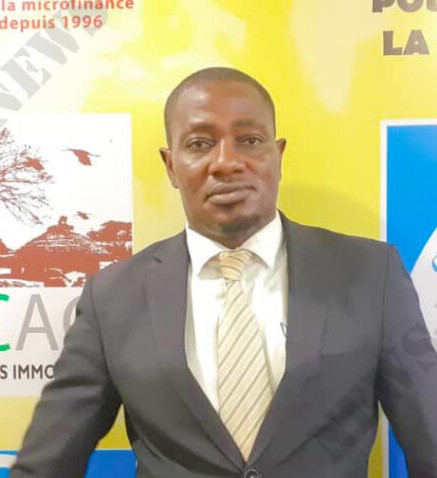
The Deputy Director of Communications at Group Renaprov Finance SA, Abel Bela Samari says, the Mutual Assistance and Solidarity, better known as MASO has been created to produce entrepreneurs through solidarity economy. Abel Bela Samari made the statement recently in an exclusive interview granted The Post. Besides highlighting MASO’s core objective of nurturing entrepreneurs and liberating individuals, especially Cameroonians and Africans, from the grips of poverty he underscored the transformative potential of MASO as a catalyst for economic empowerment. Follow him in the following except.

Abel Bela Samari – Deputy Director of Communications at Group Renaprov Finance SA

Except:

News-Lens: Thank you so much for accepting to talk to The Post. Let us begin right away, briefly, what is MASO all about?

Abel Bela Samari: MASO is the Mutual Assistance and Solidarity. It is a product of the microfinance institution RENAPROV Finance SA which is out to accompany the government of Cameroon remove its citizens from the shackle of poverty. When we talk MASO, we talk about Africa solidarity and Africa solidarity model of economy that is solidarity economy. Where man is put at the center of all priorities. When civilization started in Africa the first model of economy that was adopted is “trade by better” where man was put at the center of interest. It still happened in Africa today. Sometime we accompany new births, marriage and even death with lot of support. In most cases without obliging individuals to do so. That is the spirit of solidarity we are talking about. Sacrificing your FCFA 100 to empower a brother, sister or friend to come out of the shackle of poverty.

What prompted RENAPROV Finance SA to develop this initiative?

Since the creation of RENAPROV Finance SA in 1996 as a major actor in the Microfinance sector in Cameroon, this microfinance has put man at the center of its priority. The idea of MASO has been existing but was reserved to workers of Group RENAPROV Finance SA. It was until 2020, following the death of a taxi driver in the capital city Yaounde after been sick for a while. He was a regular caller over Royal FM, one of the enterprise in the group RENAPROV Finance SA. When his death was answered, contributions were made at the different filling stations in Yaounde. The amount contributed could not even buy him a coffin. It is from this back drop that the chief executive officer of group RENAPROV Finance decided to hold a meeting with transporters syndicate to sell his vision of how to remove man from poverty through solidarity economy. At first it was reversed for transporters but few weeks letter, other sectors of social life were brought in to form the Mutual Assistance and Solidarity, MASO.

Over the past four years, how has MASO been working towards helping Cameroonians become entrepreneurs?

Thank you very much for this question, we are into act 4 of MASO with registration and contribution on going in all the 27 agencies of RENAPROV Finance SA across the country. The past three years that Act 1, 2 and 3 MASO have finance projects to over hundreds of millions. We have a young mutualist who in Act 2 won FCFA 15 million, today he run a well-equipped sport gymnasium with close to 20 workers in it. Another in Act 3 won FCFA 50 million. Today he is into agro industrial farming. We have automobile owners who are not doing badly in the transport sector. In Yaounde, you will find lot of taxis with MASO and RENAPROV Finance branding on them, these are young entrepreneurs MASO is creating. We have young entrepreneurs who have ventured into income generating activities thanks to MASO. In short MASO is creating entrepreneurs through solidarity economy.

Can we settle that the objective has been realized by contributing FCFA 100 a day?

I will say yes and no. Yes, the objective is being realized because today we have Cameroonians who have cross the trust hood of poverty through financing of their education, businesses, projects, providing houses in gated areas, providing income generating materials, providing boreholes to Communities, and many others. You know, we have MASO Classique and Maso Gold. One is refundable without interest; the latter is non-refundable.

I will equally say no, because we still have Cameroon still levering in poverty. MASO can only reach its objective when Cameroonians have adequate health care, good drinking water, be able to finance their projects, be able to generate wealth for prosperity.

What has been the reaction of Cameroonians so far? Has it been an easy journey?

It has been positive for those who understand the meaning of African solidarity. Those who understand that solidarity economy is the way out of poverty. For those who still not understand that Africa is the Garden of Eden and through our God given values of solidarity we can change the position of Cameroon in the economy world map will tell you MASO is a scam, like we always say, the action of MASO, speak for its self. But in a nutshell, it has not been an easy journey so far but trust me, we shall succeed because it is God’s project.

What achievements can Cameroonians boast of as members of MASO?

Thank you very much for this question. MASO, has provided boreholes to some quarters in Yaounde. Inhabitant of these areas (Febe village, Neimeyong, Ahala, Ekaonou and many others) had serious water crises but today they can drink portable water. MASO, operate a second category hospital where mutualist can treat up to ten members of their family with a 35 percent discount to all bill pay.  There is 20 percent discount which is being given to mutualists who are parents or student studying at the Bissai University Institute. FCFA five million is given to mutualists who have contributed for 20 years successful and attain the age of 60 years. There is assistance to mutualist in happy and sad moment.

What are the future plans for MASO in relation to the Cameroonian people?

The future is bright with MASO that is what I will tell you. MASO principal mission is to remove humanity, Africans, and Cameroonians in particular from the shackle of poverty. We have tried all model of economy in Cameroon, it has failed us. Imperialism is still at the center of our mystery. It is time, we tray a new approach solidarity economy thereby using our values to fight against Poverty. If all Cameroonians become member of MASO, we shall have enough capital to help sponsor projects that will create jobs.

What message does MASO have for the Cameroonian people?

MASO is a reality, with MASO we simple live our Africa values. MASO is out to valorize our Africa solidarity so that together we live a fulfilling life full of happiness. Rush to any RENAPROV Finance SA agency, register into MASO and benefits from all the advantages.

Interviewed by Etienne Mainimo Mengnjo

2024 Youth Day: Pupils & Students Renew Commitment, Resolve To Be Exemplary

By Etienne Mainimo Mengnjo

Pupils and students studying in Mfou, in the Méfou-et-Afamba Division of the Center Region, have renewed their commitment to being exemplary members of society.

Government Bilingual Primary School Mfou (Photo Credit: Mainimo Etienne)

This commitment was made on February 11 during celebrations marking the 58th edition of National Youth Day in Cameroon. The theme for the 2024 edition was “Youth, Import Substitution, and Economic Patriotism for Cameroon’s Development.”

Speaking to New-Lens after participating in the march pass, students expressed their appreciation for President Paul Biya’s speech and pledged to work hard to achieve their goals.

Fulness Bilingual Baptist School, Mfou (Photo Credit: Mainimo Etienne)

“I am so happy to have taken part in this march pass!” a  pupil said.

Nadia Nsiri, a student in one of the secondary schools in the area, said, “As you can see, we are happy to participate in the march pass. I believe that we will continue to be diligent students and work hard in our studies. That is the only way to make our parents happy.”

Holy Cross International College Yaounde (Photo Credit: Mainimo Etienne)

While some students were hesitant to speak, many acknowledged that they had listened to President Paul Biya’s speech and recognized the importance of staying away from deviant behaviors.