List Posts

View All
Tech

Paradigm Initiative Condemns, Urges Immediate Restoration Of Social Media Services In Gabon

By Etienne Mainimo Mengnjo Paradigm Initiative (PIN) a prominent digital rights watchdog has condemned and called for the immediate restoration…

Tech

Registration Opens For 2026 Digital Rights & Inclusion Forum In Côte d’Ivoire

By Etienne Mainimo Mengnjo Digital Rights and Inclusion Forum (DRIF26) has been scheduled to take place from April 14 to…

General

Cameroon, Belgium & Italy Signed Financial Agreement To Reconfigure Yaounde Drinking Water Supply System

By Etienne Mainimo Mengnjo The governments of Cameroon, Belgium, and Italy have entered into a financial agreement and market contracts…

Society

NGO, 1Billion Rising, Stress Prevention, Listening As keys To Recovery From Youth Addiction

By Desmond Mbua The non-governmental organization 1 Billion Rising in Cameroon has launched a strong appeal to confront addiction with…

Food Prices Soar in Yaounde Amid Post-Election Tension

By Etienne Mainimo Mengnjo

High food prices are creating significant strain on residents in Yaounde, with many reporting daily price increases at local markets that are making life increasingly difficult.

A partial view of a busy market in Yaounde (Photo Credit: Mainimo Etienne)

Citizens have largely attributed the rising cost of nearly all market goods to the aftermath of recent elections and are calling for a quick resolution before the situation escalates. this has also been recorded in major towns through out the country.

The impact on household budgets is immediate and severe. “This morning, I went to the market and I discovered that prices, especially for food products, have been increased,” said Sandra, a city resident who preferred to only use her first name for fear of reprisal. “When I asked, they told me that nothing is coming in to Yaounde and there is nothing they can do.”

A woman identifying herself only as a housewife expressed deep concern over the escalating situation. “I am pleading to the authorities to solve this post-election crisis as fast as possible because Cameroonians will not support the rising food prices,” she said. “You can’t imagine that everything in the market is witnessing an increase.” This sentiment underscores the mounting public frustration with the economic fallout of the political unrest.

Traders on their part say they are also struggling with the scarcity and subsequent higher costs. They added that the post-election uncertainty has severely disrupted key supply routes, leading to massive shortages of staples.

A woman selling njama njama (huckleberry leaves), a common vegetable in Cameroonian cuisine detailed the impact on her business.

“The situation is bad. I buy a bag of njama njama now for CFAF 25,000, meaning that I have to increase the price when I start selling, and sometimes, I find myself at a loss,” she said. “We used to have njama njama coming in abundance from Bamenda, but it has been days those cars are not traveling. So, it is really not the best.”

Fruit sellers have also stated that the tense atmosphere is deterring drivers from risking travel, leading to low stock particularly for these perishables transported from the country’s agricultural regions. As a results, some vendors have even left the market because they can no longer operate profitably under these conditions.

“The situation of post-elections is really pushing Cameroonians to the wall,” one trader said, noting that since the election-related tensions began, vehicle circulation has been restricted and markets have been sparse. “A little that comes in will always see an increase in price.”

Another trader added that vendors are not to blame for the hikes, as products are scarce. “Election crises have made it very impossible for cars to be circulating. The North is blocked, and cars hardly come from Douala and Bamenda, just to name a few,” he said.

The lack of vehicle movement has created a bottleneck, ensuring that the small amount of produce that reaches the capital is sold at a premium.

“The situation of post-elections is really pushing Cameroonians to the wall,” one trader added, noting that since the election-related tensions began, vehicle circulation has been restricted and markets have become sparse. “A little that comes in will always see an increase in price.”

With memories of the widespread 2008 civil unrest which was partially fueled by significant food price increases, citizens and traders alike are urging authorities to act quickly to resolve the current issues and restore the flow of essential goods.

The fear according to some observers now is that a failure to stabilize prices and ensure food access could quickly escalate the political crisis into a humanitarian concern.

WHO, UN To Launch Updated Cornerstones Of Contraceptive Care at ICFP 2025

By Etienne Mainimo Mengnjo

The World Health Organization (WHO) and the United Nations’ Special Programme of Human Reproduction (HRP) will launch the sixth edition of the Medical Eligibility Criteria for Contraceptive Use (MEC) and the fourth edition of the Selected Practice Recommendations for Contraceptive Use (SPR) during the seventh International Conference on Family Planning (ICFP 2025) from Nov. 1-6 in Bogotá.

A doctor explains contraceptive options using a WHO Medical Eligibility Criteria wheel during a family planning consultation in Bara Kahu, Islamabad. © WHO / HRP / Saiyna Bashir

This is the first time the conference is being held in Latin America. Updated with the latest evidence, WHO aims to make contraceptive care safer, more consistent, and more responsive to people’s real needs.

“The release of the updated WHO MEC and SPR marks a transformative milestone in global reproductive health,” said Prof. Frank Louwen, President of the International Federation of Gynecology and Obstetrics (FIGO). “They reaffirm the central role of science in enabling choice, equity, and quality in family planning.”

WHO notes that family planning is more than just a health service; it saves lives, improves health outcomes, strengthens communities, and empowers individuals to decide if and when to become pregnant. For nearly 30 years, the MEC and SPR guidelines have formed the foundation of this work.

For health service providers, the MEC answers the vital question: Is this contraceptive method safe for this individual, given their medical history? The SPR provides guidance on how to use contraceptive methods safely and effectively. Together, they assist policymakers and program managers in ensuring that contraception is safe, effective, and rights-based.

The new editions reflect significant advances in understanding contraceptive methods. For instance, progestogen-only injectables can now be safely offered immediately after childbirth, emergency contraception can be repeated within the same cycle, and hormonal methods can be safely used by women taking pre-exposure prophylaxis (PrEP).

The impact of these tools is tangible across countries. In Botswana, Bame Bame, a research nurse specializing in sexual and reproductive health, said, “I use the MEC almost every day. The Wheel and the App make it quick and convenient, especially when I am with a client. It reassures them and empowers clinicians like me with confidence that we are providing the best care possible.”

In the Philippines, Sharon Uy, a family planning program manager in Samar, remarked, “As a health service provider, the WHO Selected Practice Recommendations have transformed how I guide clients in choosing and using family planning methods. By complementing the MEC Wheel, they provide not just the ‘who can use’ but also the ‘how to use,’ making counseling clearer, more confident, and client-centered. They have simplified decision-making and allowed me to focus more on empowering clients through informed, evidence-based choices.”

The true power of the MEC and SPR lies in their application. Policymakers can integrate the new guidance into training, supervision, and health system planning. Health workers can utilize derivative products, such as the MEC Wheel, the App, and the Family Planning Handbook, to support informed, client-centered counseling.

Academic and professional associations can ensure that future generations of providers learn to deliver contraceptive care grounded in evidence and respect.

“The updated WHO MEC and SPR reaffirm that every woman, man, and young person has the right to make informed choices about their reproductive health, supported by the highest standards of scientific evidence,” said Julia Bunting, Director of the Programme Division at UNFPA.

“UNFPA welcomes these updated tools as essential instruments for advancing quality, rights-based contraceptive care—ensuring that guidance keeps pace with innovation, equity, and the realities of diverse health care settings.”

2025 BSFC: Late Goals Secure Dramatic Draws on Day Four

By Etienne Mainimo Mengnjo

The Bui Sports Fans Competition, BSFC 2025, now in its 13th edition, reached an exhilarating fourth day of play on Sunday, November 2.

Melim FC and Chitah FC battling for supremacy (Photo Credit: Mainimo Etienne)

In a thrilling display of talent and determination, Nso Youths FC and Melim United both scored late goals to secure draws in their respective matches, captivating fans and spectators alike.

The intensity of the two games was indicating, with each team showcasing spectacular performances that kept everyone on the edge of their seats.

In the first match, Chitah FC faced off against Melim United in a highly anticipated return leg, following their earlier encounter which ended in a 1-1 draw.

Knowing the stakes were high, both teams started the match under immense pressure, delivering unexpected twists and turns as the minutes ticked by.

Dzekwa Rangers and Nso Youths Exhibit Their Skills (Photo Credit: Mainimo Etienne)

Chitah FC opened the scoring early, taking a 1-0 lead that energized their players and fans. This early goal gave them a boost, propelling them to push forward in search of more.

However, Melim United was determined to balance the scoreline and sought every opportunity to retaliate. Despite their efforts, Chitah surprisingly extended their lead before halftime, ending the first half at 2-0.

As the second half commenced, both teams adjusted their strategies, but Melim United’s tactical changes began to pay off.

They managed to reduce the deficit to 2-1, reigniting their hopes of a comeback. With just a few minutes remaining, Melim’s relentless pressure finally bore fruit, allowing them to equalize and finish the match at 2-2.

Chitah Goalkeeper Sends Decisive Shot Over Crossbar in Intense Match (Photo Credit: Mainimo Etienne)

The second match featured a fierce showdown between Dzekwa Rangers and Nso Youths FC. This was a rematch following Dzekwa’s previous decisive 4-1 victory, and Nso Youths were eager to turn the tables.

Knowing they had to overcome a significant challenge, Dzekwa started the game with enthusiasm, aiming to solidify their lead in the classification table.

In a surprising twist, Nso Youths quickly found the back of the net, taking a 1-0 lead that invigorated their squad.

They pressed on, seeking a second goal to extend their advantage. However, Dzekwa was not to be outdone; they fought back and equalized before taking the lead in the second half.

Dzekwa Rangers and Nso Youths Exhibit Their Skills (Photo Credit: Mainimo Etienne)

Both teams maintained a commendable spirit of fair play throughout the match, showcasing their sportsmanship. In a dramatic finish, Nso Youths equalized once again, sealing the game with a final score of 2-2.

After day four, Dzekwa Rangers remain at the top of the classification table with 6 points, closely followed by Melim United, who also have 6 points but trail on goal difference.

Chitah FC, after recording their fourth consecutive draw, sits in third place with 4 points, while Nso Youths FC of Nkolmeseng finds themselves in last place with 2 points.

Looking ahead, day five matches are scheduled for next Sunday, promising even more thrilling encounters as the competition heats up.

Contraceptives Save Lives But Access Is Dwindling – UNFPA Warns

By Etienne Mainimo Mengnjo

The U.N. Population Fund’s top official have said contraceptives save lives and bring significant economic benefits, but warned that global funding shortfalls are putting access to them under threat.

The comments from Diene Keita, the executive director of UNFPA, came on the eve of the International Conference on Family Planning, (ICFP 2025) which runs from Nov. 1-6 in Bogotá. It is the first time the conference is being held in Latin America.

“Contraceptives save lives,” Keita said. “For almost 50 years, global health authorities have recognized contraception as essential medicine. People want them, use them, and rely on them every day.”

She said the evidence is clear that when women and adolescent girls have access to contraceptives, they are more likely to have planned and safe pregnancies, complete their education, find employment and fulfill their potential.

“The truth is that contraceptives reduce abortion rates and lower the incidence of death and disability related to complications of pregnancy and childbirth,” Keita said.

She also highlighted the economic benefits, noting that every $1 spent on ending the unmet need for contraception yields nearly $27 in economic returns.

Despite this, Keita said UNFPA is seeing contraceptive stocks dwindle in communities that rely on international family planning funding. She warned that health systems are preparing for a rise in unintended pregnancies, which are linked to higher rates of maternal death, including from unsafe abortions.

The impacts, she said, are likely to extend far beyond health care. “We can expect to see adolescent pregnancies, school dropouts, and even increased risk of gender-based violence.”

Keita stressed that UNFPA and its partners have worked for decades to strengthen supply chains and ensure the availability of affordable contraceptives, even in hard-to-reach communities.

“That infrastructure and those investments have been life-changing and lifesaving for millions of people around the world, and need to be protected and enhanced,” she said.

She called for a collective effort to “keep our promise to women and adolescent girls, uphold their rights and choices, and ensure they have access to the contraceptives they need.”

The ICFP 2025 conference, hosted by the Gates Institute at Johns Hopkins University, the Government of Colombia, Profamilia, and Fundación Valle del Lili, will feature the largest ministerial delegation in its history, with officials from more than 50 governments.

Under the theme “Equity Through Action,” the ICFP 2025 will feature more than 2,000 scientific presentations on how investment in family planning accelerates progress across health, education and economies.

AfDB Approves $6 Million Grant To Boost Africa’s Disaster Preparedness

By Etienne Mainimo Mengnjo

The African Development Bank, AfDB Group’s Board of Directors has approved a $6 million grant to support the African Risk Capacity in boosting disaster preparedness and risk financing across the continent over the 2025-2026 period.

The African Development Bank Group provides significant support to the African Risk Capacity for technical assistance to African countries in disaster risk quantification and assessment. (Source: AfDB)

The grant, approved Oct. 29, 2025, is provided through the bank’s African Disaster Risk Financing Initiative (ADRiFi). It aims to help African Risk Capacity (ARC) maintain its core capacity-building and disaster risk financing services for the bank’s regional member countries.

The project is designed to help African governments shift from reactive disaster response to proactive preparedness.

It will strengthen national institutions’ technical expertise and operational capacities in disaster risk management, including evidence-based risk assessment, early warning systems and training for policymakers and technical experts.

A key component will enhance countries’ ability to plan and allocate resources for emergencies more efficiently. It will also support the development of stronger institutional frameworks to coordinate rapid and effective responses to natural disasters.

ARC will work to expand country participation in its sovereign insurance risk pool by increasing engagement and offering new climate risk insurance products to its member states.

Planned activities include high-level advocacy for the ratification of the ARC Treaty, finalizing work programs with participating countries, and facilitating insurance premium support.

The grant implementation will cover all ARC member states, focusing on regions most exposed to droughts, floods, tropical cyclones and epidemics.

Beneficiaries will include policymakers, technical working groups and civil servants, who will receive targeted assistance in disaster risk quantification, contingency planning, risk financing, women’s inclusion and monitoring and evaluation.

The African Risk Capacity, established in 2012 as a specialized institution of the African Union, provides member states with risk modeling, contingency planning and sovereign disaster risk financing services.

Since its inception, 39 African Union member states have signed the ARC Agreement, facilitating the disbursement of more than $230 million to 14 countries, which has protected millions of vulnerable people through rapid financing in the aftermath of disasters.

On the other hand, the African Development Bank Group, Africa’s premier development finance institution, comprises three entities: the African Development Bank (AfDB), the African Development Fund (ADF) and the Nigeria Trust Fund (NTF).

Represented in 41 African countries, with an external office in Japan, the bank contributes to the economic development and social progress of its 54 regional member states.

New President Sworn In To Lead Afreximbank

By Etienne Mainimo Mengnjo

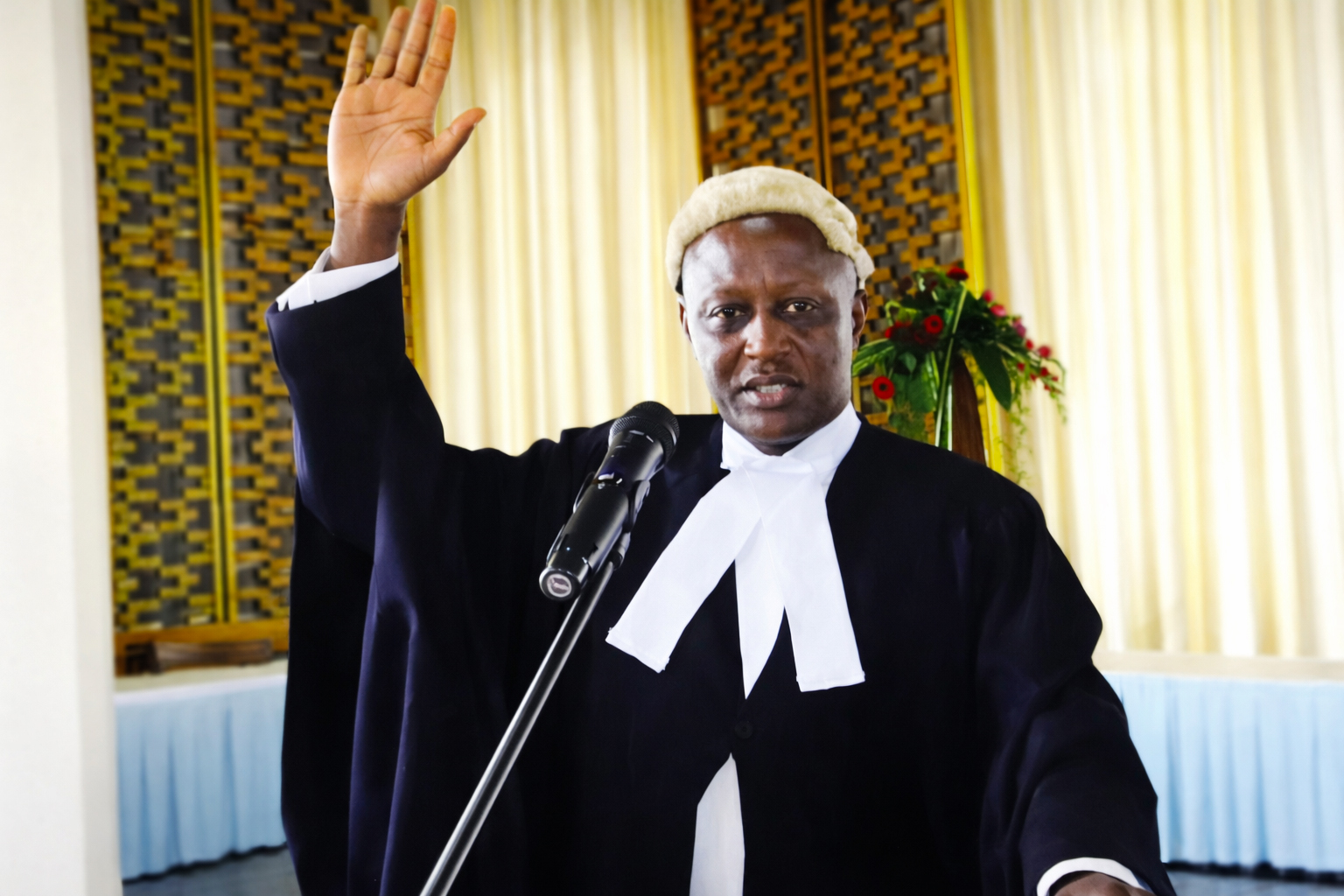
Cameroonian born Dr. George Elombi has been sworn in as the African Export-Import Bank’s (Afreximbank) fourth President and chairman of the board of directors. He recently took over from Prof. Benedict Oramah as head of the African multilateral finance institution.

Dr. George Elombi, New President and Chairman of Board of Directors, Afreximbank (Source: Afreximbank)

The investiture ceremony was formalized with an oath administered by Wale Edun, chairman of the Annual General Meeting of Shareholders of the bank and Nigeria’s minister of finance and coordinating minister of the economy.

It was witnessed by more than 2,000 guests, including heads of state, former heads of state, government leaders and representatives from across Africa and the Caribbean, top African business leaders, all former Afreximbank presidents, members of the bank’s board, shareholders, staff, and a host of other dignitaries.

In his inaugural address, Elombi announced his commitment to carrying forward the legacy of the bank’s past, deepening impact, strengthening partnerships, and continuing the mission of building an Africa that trades with itself and thrives on its own terms.

He pointed out that the structure of global trade was disfavorable to Africa because it was too dependent on the export of commodities. “Our mission is therefore, to transform the structure of that trade,” he said. “To change the structure, we must process. We must produce. Unless we produce, we cannot trade.”

President Elombi announced that, over the next five to 10 years, he would prioritize sectors he believed would have the most significant and sustained impact on Africa’s trade and well-being. This includes promoting and accelerating value addition and strategic minerals processing to curb the export of raw potential.

“Afreximbank will, therefore, create a new, high-impact financing window, specifically for projects that process raw minerals into semi-finished or finished goods,” he said. “We will establish a Strategic Minerals Development Program to finance entire value chains, from extraction and refining to manufacturing finished components, capturing much more value here at home and creating high-skilled jobs for our people.”

Elombi added that Afreximbank would prioritize the deepening of intra-African trade and regional integration, as the success of its value addition agenda would depend on its ability to secure markets for the goods produced.

“We will intensify efforts to break down trade barriers, strengthen cross-border infrastructure, and foster seamless movement of goods, services, people, and capital across our continent,” he said. “Afreximbank will, therefore, continue to play a catalytic role in the implementation of the African Continental Free Trade Agreement (AfCFTA) by driving forward key programs and initiatives developed over the past decade and by introducing new, targeted interventions, where necessary, to accelerate progress.”

Dr George Elombi is a Cameroonian economist and long-serving executive of Afreximbank. A member of the bank since 1996, he has been instrumental in shaping the group, enhancing its capital base, and coordinating crisis responses in Africa and the Caribbean.

Biya Declared Winner Amidst Fear, Silence in Yaounde Under Heavy Security

By Etienne Mainimo Mengnjo

Fear and an almost total silence gripped the capital city of Yaounde after incumbent President Paul Biya of the Cameroon People’s Democratic Movement (CPDM) party was officially declared the winner of the 2025 Presidential Election.

Empty streets along Cameroon’s Capital Yaounde (Photo Credit: Mainimo Etienne)

The Constitutional Council’s announcement on October 27 came amid heightened national tension following the Oct. 12 vote, with opposition leaders having previously claimed victory and called for protests, citing alleged widespread irregularities.

Major streets in Yaounde, were noticeably empty, save for a scattering of taxis and motorcycle riders circulating. The quiet was profound, with no music being played and conversations among those on the move reportedly hushed and guarded.

While the city’s thoroughfares saw minimal or no activity, a different atmosphere prevailed around the CPDM Headquarters. The party’s base was marked by celebrations of the declared victory, though the festivities were contained by a heavy police presence throughout the immediate vicinity.

The broader security posture was even more visible across key city districts. The environment was tense in areas from Mokolo Market through Carriere to Tsinga and Bisquitere, where heavy military equipment and personnel were stationed at nearly every major junction. The deployment appeared aimed at deterring and combating any civil unrest or demonstrations from opposition supporters.

Despite the formidable security cordon, small groups of residents were seen standing together, engaging in earnest discussions strictly among themselves. In residential quarters, a few choice spots had been quickly transformed into makeshift beer parlors, where the results and ramifications of the presidential election served as the exclusive topic of conversation.

Biya, 92, has ruled the Central African nation since 1982, making him one of the world’s longest-serving heads of state. His latest victory grants him an eighth term, extending a tenure that has been repeatedly criticized by opposition politicians and international observers for systemic electoral fraud.


Biya, 92, Re-Elected President With 53.66% Of Vote

By Etienne Mainimo Mengnjo

Veteran President, Paul Biya, at 92, has officially secured another term, extending his four-decade rule after being declared winner of the 2025 presidential election, the nation’s Constitutional Council announced Monday October 27.

Attended by national and international dignitries, Biya, one of the world’s oldest and longest-serving leaders, claimed a decisive victory with 53.66 percent of the vote, according to figures released by the council, headed by Clément Atangana. The election saw over 2.4 million Cameroonians cast their ballots for the incumbent leader, Paul Biya.

Issa Tchiroma Bakary of the Cameroon National Salvation Front, CNSF party, emerged as the main challenger, taking second place with 35.19 percent of the vote, representing more than 1.6 million voters.

The remaining candidates trailed significantly. Cabral Libii of the PCRN party came third with 3.42 percent. Bello Bouba Maigari of the UNDP party followed with 2.45 percent. Patricia Tomaino Hermine of the CDU party was fifth, and Joshua Osih of the opposition Social Democratic Front (SDF) came in sixth with 1.21 percent among others.

Biya won six of the country’s ten regions, while Tchiroma claimed four. Tchiroma did, however, secure a majority of votes cast in diplomatic missions abroad, across Africa and other parts of the world.

The regional breakdown showed Biya winning the Center, East, Far North, Northwest, Southwest and South. Tchiroma’s victories were in the Adamaoua, Littoral, North and West regions.

Biya’s highest vote totals were recorded in the South Region, where he won 90.86 percent, and the Northwest Region, where he secured 86.31 percent. The turnout of the election was 57.7 percent.

It should be noted that the results were already widely disseminated on social media before the Constitutional Council’s official proclamation.

Dzekwa Rangers’ Louis Berka Nets Hat Trick in 4-1 Rout at BSFC Day Three

By Etienne Mainimo Mengnjo

The third day of the annual Bui Sports Fans Competition (BSFC) 2025 saw thrilling action, drama, and a seven-goal haul across two pivotal matches, allowing teams to solidify their positions in the early stages of the tournament.

Louis Berka (in yellow with the ball) in action (Photo Credit: Mainimo Etienne)

The marquee match of the day featured a dominant performance from Dzekwa Rangers, who secured a decisive 4-1 victory over Nso Youths (NYFC).

The game began with both sides exerting considerable pressure, but it was Rangers’ prolific striker Louis Berka who broke the deadlock in the 31st minute, putting his team on the scoreboard.

NYFC’s determined efforts to find an equalizer were stifled, and the first half ended with a narrow 1-0 advantage for Dzekwa Rangers.

Dzekwa Rangers and NYFC in action (Photo Credit: Mainimo Etienne)

The second half belonged entirely to the Rangers. Despite NYFC multiplying their chances to level the score, Berka proved unstoppable. He netted his second goal in the 53rd minute and completed a magnificent hat trick with his third in the 76th minute, effectively putting the game out of reach.

Jumbam Lesly sealed the massive win for Dzekwa Rangers in the 89th minute with a well-placed fourth goal. NYFC managed a late consolation goal in extra time, but it merely reduced the deficit in the 4-1 defeat.


Melim United, Chitah FC Settle For 1-1 Draw

The second fixture was a tighter affair as Melim United and Chitah FC battled to a 1-1 draw, keeping fans on the edge of their seats until the final whistle.

Chitah FC missed a golden opportunity to take an early lead after securing a penalty, but the shot was brilliantly saved by the Melim United goalkeeper, denying them the advantage.

Chitah FC and Melim United battling (Photo Credit: Mainimo Etienne)

Melim United capitalized on the let-off when Divine Shamlon unleashed a powerful, dipping shot from outside the box in the 17th minute, registering the first goal.

Melim carried the 1-0 lead into halftime. Chitah FC emerged with renewed determination in the second half, pressing constantly for the equalizer.

Their persistent efforts finally paid off in the dramatic final moments of the game. After securing a free kick, Chitah converted the opportunity in the 89th minute to balance the score and force the 1-1 parity.

Chitah FC and Melim United battling (Photo Credit: Mainimo Etienne)

Following Monday’s crucial results, the league table has a new leader. Dzekwa Rangers now tops the classification with five points.

They are closely trailed by Melim United, who also holds five points, with the two sides separated only by a goal difference in favor of the Rangers.

Chitah FC currently sits in the third position with three points, while Nso Youths (NYFC) is anchored at the bottom of the table, still seeking their first victory with just one point from their outings.

Intense Battles Expected As 13th Bui Sports Fans Competition Enters Day Three

By Etienne Mainimo Mengnjo

As the 13th edition of the Bui Sports Fans Competition (BSFC) reaches its halfway point, anticipation is building for the crucial third day of play on Sunday, October 26.

Four teams are set to clash in a bid to significantly improve their positions on the leaderboard, with both fixtures scheduled to take place at the Lycee General Leclerc stadium. Kickoff for the double-header is set for 1 p.m.

The day’s main event features a highly competitive Group encounter between current table-toppers Melim United and an eager Chitah FC.

Melim United, having secured a solid four points from their first two matches (a win and a draw), will be looking to press their advantage and maintain their winning momentum.

A victory in this fixture would elevate them to an impressive seven points, further solidifying their position at the summit of the group and taking a major step in their first round of the competition.

However, Melim United will face a determined Chitah FC, a side still hunting for its inaugural win of the tournament after settling for two consecutive draws against Dzekwa Rangers and Nso Youth FC.

Chitah FC knows the urgency of turning draws into wins and will need to be clinical in the attack while shoring up their defense. Melim United is renowned for its swift transitions and is poised to capitalize on any defensive lapses.

“The match between Melim United and Chitah FC promises to be one to watch,” commented a league analyst. “Both teams are acutely aware of the stakes and the potential group implications, and fans can expect an intense, tactical battle on the pitch with a high chance of goals.”

The second match of the day will feature Dzekwa Rangers squaring off against newcomers Nso Youth FC. Both teams are still in search of their first victory in this year’s competition, making this a genuine six-point game.

Dzekwa Rangers have managed two draws so far, demonstrating resilience, while Nso Youth FC has recorded one draw and one loss, placing them under immediate pressure.

Dzekwa Rangers will aim to maintain their unbeaten streak and build on the performance of their formidable squad, which recently secured a point against Chitah FC.

Their experience might give them a slight edge. Meanwhile, the youthful Nso Youth FC understand the urgency of avoiding another defeat that would all but put frustrations in their first-round quest.

They will need to approach the match with determination, resilience, and a focused strategy to secure maximum points and lift themselves off the bottom of the table.

As the standings currently reflect after two games, Melim United leads the group with four points. Dzekwa Rangers and Chitah FC sit in second and third place, respectively, each with two points.

Nso Youth FC currently occupies the bottom position on the table with just one point. The results of Sunday’s fixtures are therefore highly significant, promising a thrilling day of football that will redefine the group’s dynamics.