By Etienne Mainimo Mengnjo
Prominent legal practitioner, Barrister Christopher Ndong has issued a stinging critique of the current legislative maneuvers in Cameroon, calling on President Paul Biya to assume his role as the “father of the nation” by correcting decades of institutional failures and electoral fraud before his tenure ends.
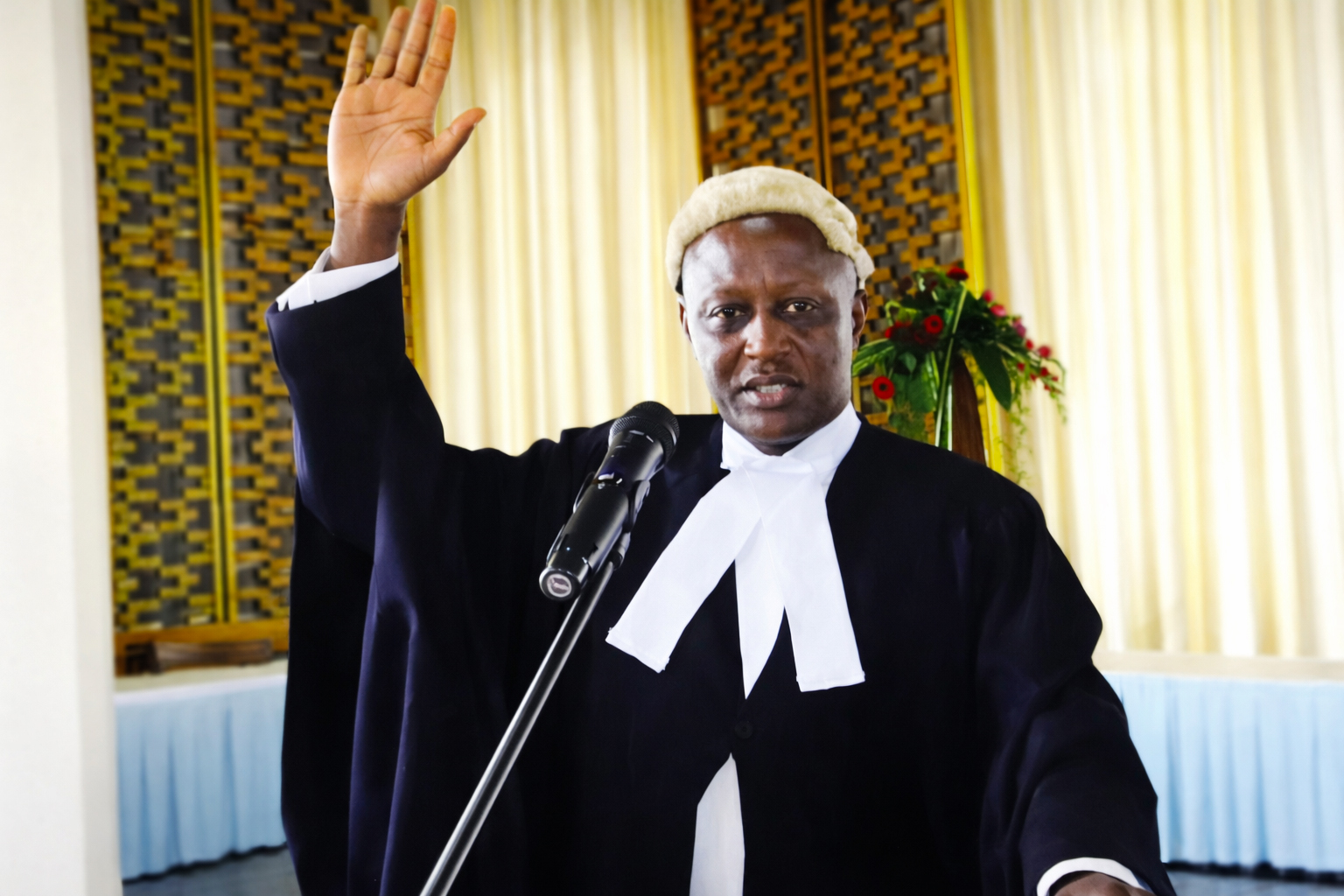
The legal expert’s remarks come in response to the government’s recent tabling of bills in Parliament aimed at extending the mandates of municipal councillors and amending the constitution to introduce a Vice-Presidential post.
While acknowledging that the president is operating within the letter of the law, Barrister Ndong argued that these laws are fundamentally “bad” and designed to serve the “whims and caprices” of the ruling class.
“Paul Biya, in the real sense of the legal stand, is correct; he has applied the law as it is, not as it ought to be,” Barrister Ndong. He noted that while the maneuvers may be legal on paper, they lack the “sovereignty of the people” required for true legitimacy.
He characterized the extension of mandates for Parliamentarians and Councillors as an “illegal and illegitimate” postponement, asserting that one illegality cannot birth a legal right.
Barrister Ndong also dismissed the government’s justification that a lack of resources necessitated the postponement of local elections. He pointed to the high costs associated with state functions and the creation of new political offices as evidence that the issue is a lack of political will rather than a lack of funds.
Barrister Ndong stressed that the ruling party is “afraid” of the political fire ignited by opposition figures and is struggling to maintain control since the last Presidential elections. Concerning the Post of Vice President being introduced, he particularly criticized the adoption describing the move as a distraction that offers no tangible benefits to the Cameroonian people.
“If the main President cannot do anything, it’s not the vice president that will do anything,” he said. “It is just like we have our Parliament. They came and put the Senate. The Senate is doing nothing. They are only helping to distribute wealth to themselves.”
He also criticized the failure to implement Article 66 of the constitution, which requires high-ranking officials to declare their assets. “He has never declared his assets because he is the alpha and the omega. Article 66, since 1996 to today, they have never ventured to talk about it. What Cameroonians want are job opportunities, better schools, better health, development, good roads, and to industrialise Cameroon.”
As a solution to the nation’s deepening political and social crises, Barrister Ndong appealed directly to the President’s legacy. He urged Biya to utilize his standing as the father of the nation to initiate a period of national confession and reconciliation.
This, he argued, must begin with an admission of past electoral irregularities involving candidates such as the late Ni John Fru Ndi and Prof. Maurice Kamto and Isa Chiroma.
“As a father of the nation, nobody denies you that title,” Barrister Ndong said. “Call for the revision of the electoral code. Put things straight as Cameroonians want. Put all of them on the table.”
Beyond electoral reform, Barrister Ndong’s “roadmap for happiness” for the president includes resolving the ongoing Anglophone crisis through the release of political prisoners and seeking clemency from the people.
He also called for a genuine crackdown on the embezzlement of public funds, suggesting that those who have stolen from the state should be made to reimburse the treasury to help stabilize the economy. He stated that that the President still has the opportunity to leave behind a “clean society” if he acts now.
“The message I have for Cameroonians is, let us stand up and say no to these machinations,” Barriter Ndong said. He lamented the silence of the international community, whom he accused of being “accomplices” to the violation of human rights and democratic principles by remaining quiet in the face of legal and moral transgressions.