By Brian Mboh
The Minister of Women’s Empowerment and the Family (MINPROFF), Prof. Marie Thérèse Abena Ondoua, has called on women across Cameroon to take a leading role in combating the growing problem of children without birth certificates, commonly referred to as “ghost children.”
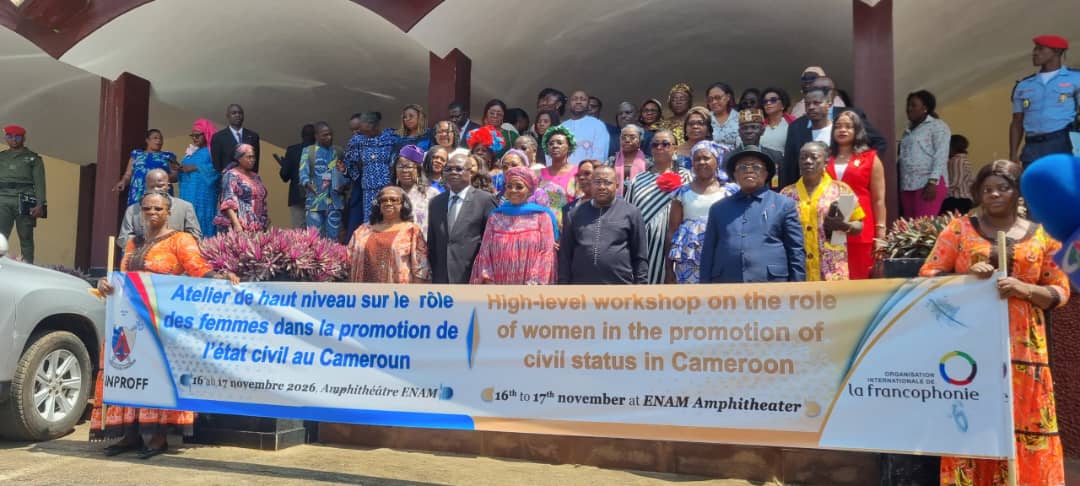
She made the appeal Nov. 16 in Yaoundé during a workshop held under the theme, “The Role of Women in the Promotion of Civil Status in Cameroon.” The event brought together government officials, representatives of international organizations, civil society actors and other stakeholders to discuss ways of strengthening birth registration and protecting children’s rights.
Speaking at the opening ceremony, Minister Abena Ondoua stressed that women have a crucial role to play in addressing challenges associated with civil registration, particularly the persistent problem of children who lack birth certificates.
She described the issue as a matter of child protection and human rights, emphasizing that it requires the collective responsibility of families, communities and public institutions.
“Despite the awareness campaigns and information sessions organized to popularize the Dec. 23, 2024, law on the organization of civil registration in Cameroon, particularly its key innovations, including the extension of deadlines for birth registration, the phenomenon of children without birth certificates remains a real cause for concern,” she said.
The Minister cited the 2018 Demographic and Health Survey as evidence of the persistent registration gap. She also pointed to 168,677 applications submitted by mayors and awaiting approval at the Ministry of Women’s Empowerment and the Family. The applications carry an estimated financial requirement of FCFA 1.686 billion CFA.
According to Minister Abena Ondoua, several factors contribute to the low rate of birth registration, including poverty, limited awareness, parental negligence, security challenges in some regions, marital disputes and the breakdown of relationships between cohabiting couples.
The consequences, she warned, can be devastating for children, particularly when they reach school age and are unable to access essential services and opportunities because they lack legal documentation.
“The immediate consequence for children remains the risk of dropping out of school, followed later by a shattered future, frustrated ambitions and a compromised sense of citizenship,” she said.
To address the situation, she stated that the Ministry has introduced several measures, including interpersonal and mass communication campaigns to raise awareness of legal instruments protecting children. It has also provided financial assistance to divisional delegates to facilitate the issuance of birth certificates to children from disadvantaged families, as well as support to municipalities facing urgent funding needs.
However, the Minister said government efforts alone would not be enough to overcome the challenge, particularly in a context of limited resources. She called for stronger community participation, identifying women as key partners in reaching families and encouraging parents to comply with birth registration requirements.
“Against a backdrop of scarce resources, the pursuit of efficiency in our efforts and the active participation of communities in resolving the problems they face, the role of women in birth registration emerges as a beacon of hope in curbing the phenomenon of children without birth certificates in our towns and rural areas,” she said.
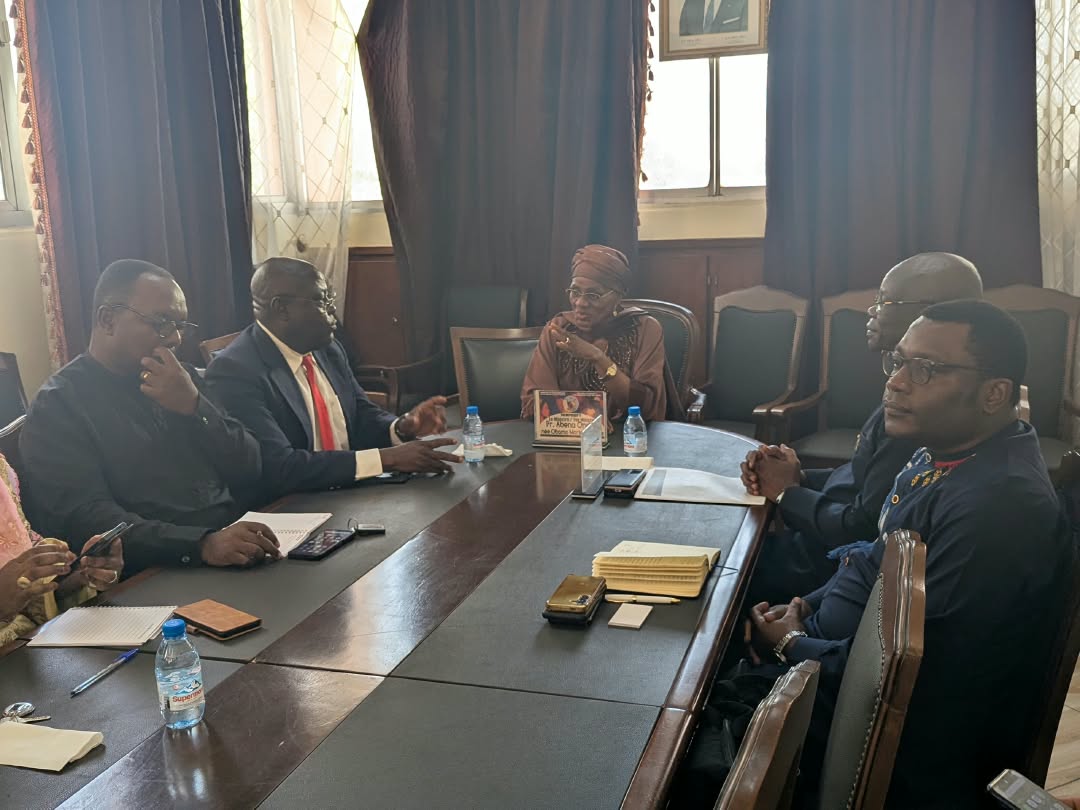
Minister Abena Ondoua noted that women are already organized into solidarity groups, associations, networks, Common Initiative Groups, cooperatives and other community-based structures that could be mobilized to support birth registration campaigns.
She challenged stakeholders to make better use of these networks to address resistance among parents and families, particularly when it comes to respecting legally established registration deadlines.
The workshop, organized just days before the anniversary of the adoption of the United Nations Convention on the Rights of the Child, sought to strengthen women’s capacity to become advocates for civil registration within their communities. Its broader objective was to promote women’s participation in raising awareness and encouraging greater public understanding of civil registration issues.
“You play a key role in birth registration. That is why I am asking you to take the lead in promoting birth registration in our towns and rural areas,” she said, expressing confidence that the discussions would produce recommendations to improve registration procedures and safeguard children’s best interests.
“A child without a birth certificate does not exist,” she stressed, underscoring the importance of legal identity in ensuring that every child enjoys fundamental rights and access to essential services.
The Minister also expressed appreciation to the International Organization of La Francophonie for its continued support to the Cameroonian government in promoting children’s rights and addressing the problem of children without birth certificates.
She expressed confidence that stronger collaboration among government institutions, development partners, civil society organizations and communities would help Cameroon meet its child protection commitments under Agenda 2040.
“There is no human cause more worthy than that of defending children, who, according to the Bible, are a gift from God,” she recalled.
Minister Abena Ondoua reaffirmed government’s commitment to working with stakeholders to build a Cameroon that better protects its children and contributes to the vision of making “Africa worthy of its children.”