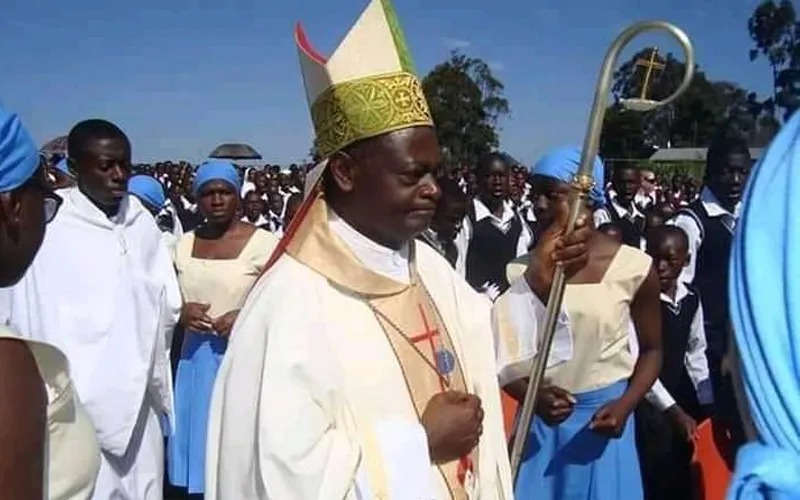
- Justice and Peace Commission Says Influx from Bui & Donga Mantung Divisions Hits Record
By Etienne Mainimo Mengnjo
The Most Rev. Msgr. George Nkuo, Bishop of Kumbo, has issued a dire warning regarding a burgeoning human trafficking crisis that is funneling thousands of young Cameroonians into forced labor and modern-day slavery in neighboring Nigeria.
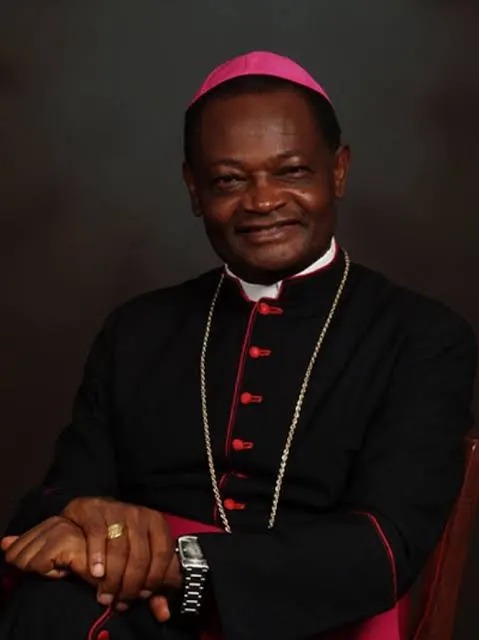
In a pastoral letter for Lent 2026 “Return To Me With All Your Heart, Joel 2:12” released Feb. 18, the prelate detailed how desperate youth, primarily from conflict-ridden regions, are being systematically lured across the border with deceptive promises of lucrative employment.
The Bishop emphasized that he cannot remain silent in the face of this serious issue. Based on thorough investigations and collaboration with trusted partners, the Justice and Peace Commission of the dioceses (Technical Partners) has confirmed that over 3,000 Cameroonians are currently detained in at least nine camps across Nigeria.
“Many have been lured with false job offers,” he said, highlighting that families often find themselves extorted for ransom. Some victims have even been sold into modern-day slavery. He stressed that this crisis is directly linked to the despair caused by ongoing insecurity in various regions of Cameroon. Further investigation according to the Bishop indicated the existence of over forty camps in Nigeria, impacting more than 7,000 Cameroonians.
“We continue to receive reports of young people enduring similar situations in apparently ‘safer’ towns in Cameroon, some under the watch of supposed relatives and friends,” the Bishop noted.
To the Bishop, “Our youth should be in classrooms and not in camps. They should be in farms and industries and not in bondage. They should be in seminaries, workshops, and families, not on exploitation expeditions.”
Due to the gravity of the situation, The Post learn Bishop Nkuo has reached out to government officials as well as Members of Parliament to make them aware of this critical situation affecting the youth of Cameroon especially those in the crisis hit regions. According to him, he believes it is essential for the governments of both Cameroon and Nigeria to work collaboratively to combat human trafficking effectively.
Talking to the Justice and Peace Commission, they indicated that a significant number of victims hail from the Bui and Donga Mantung divisions, with others coming from the Southwest and Western Regions. They started that many young individuals are being forced into various forms of modern slavery, including domestic work, forced labor in sectors like granite mining, and commercial sex work among others.
Meanwhile, conversations with victims reveal the significant deception employed by traffickers, who promise a “heaven on earth” lifestyle, filled with job opportunities. However, upon arrival, many victims find their documents and mobile phones confiscated, leaving them trapped in exploitative conditions.
“These young people suffer because the promises made to them are entirely false. Once they arrive, they can’t return home, as their documents are taken away. They can only call at designated times, and those monitoring them create a false sense of normalcy,” one victim explained,
Another victim recounted being shown falsified photographs of construction companies that were purportedly looking for professional drivers. Upon reaching the destination, the victim found no company, only a life of forced labor and restricted movement.
Survivors have recounted harrowing experiences, with some of their friends disappearing altogether, raising fears of being subjected to ritual exploitation, leaving families in despair as they seek news about their missing loved ones.
Despite a law implemented in 2011 to combat human trafficking in Cameroon, experts assert that significant loopholes remain unaddressed. The current legal framework lacks adequate protective measures, and rehabilitation of victims. Critics argue that retrieving victims is not enough; a comprehensive approach to their long-term recovery is necessary.
Additionally, the law imposes unnecessary burdens on proving that a child was trafficked, which contradicts international norms prioritizing the protection. Experts say, this gap in legislation allows traffickers to operate with relative ease, often using close relatives to facilitate the trafficking of young people.
The Post has also learned that organized networks are operating in major cities, allowing traffickers to facilitate the movement of victims across borders without significant obstruction. Furthermore, observers note that Nigeria often serves as a destination and transit hub. Once victims are processed through Nigerian camps, they are frequently trafficked further into West Africa, specifically to Benin and Ivory Coast among others
While the Justice and Peace Commission of the diocese is actively working, families are urged to remain vigilant and proactive in protecting their children from potential traffickers. Greater community awareness and robust government intervention are crucial to mitigating the risks associated with seeking better opportunities abroad. Months ago, a viral video revealed that youths especially from the restive Northwest and Southwest trafficked to Nigeria were living in distress in a camp.
According to the U.S. State Department’s 2025 Trafficking in Persons Report notes that Cameroonian authorities investigated 146 trafficking cases last year, including 47 for sex trafficking and 92 for labor trafficking.
A joint operation with Nigerian law enforcement led to the arrest of at least 20 suspected traffickers and the identification of about 100 potential victims in Nigeria, highlighting cross-border collaboration but also the challenges in dismantling networks.
On the Nigerian side, officials identified 1,194 trafficking victims in 2024, including 654 exploited in sex trafficking and 540 in forced labor, per the State Department’s report.