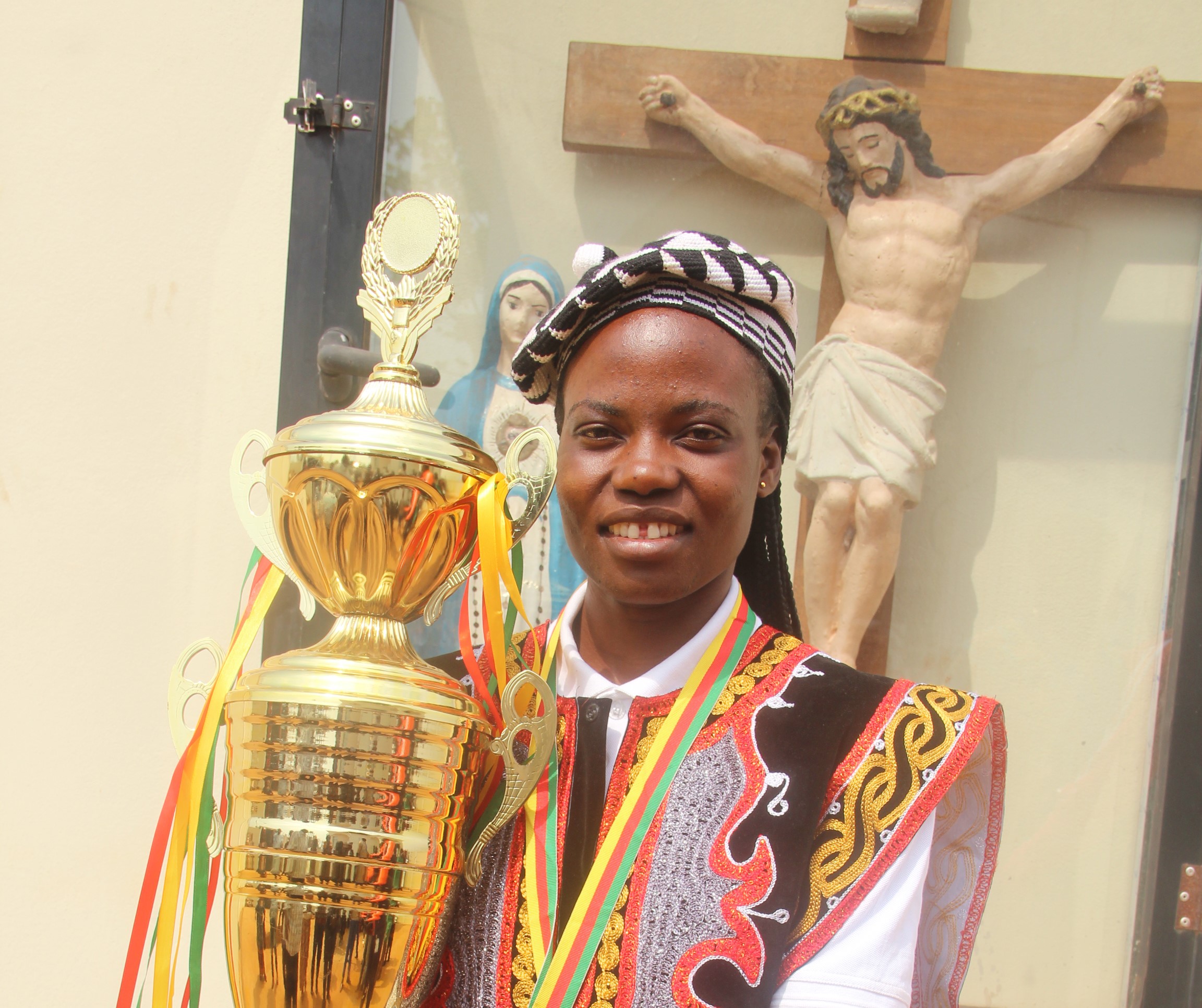
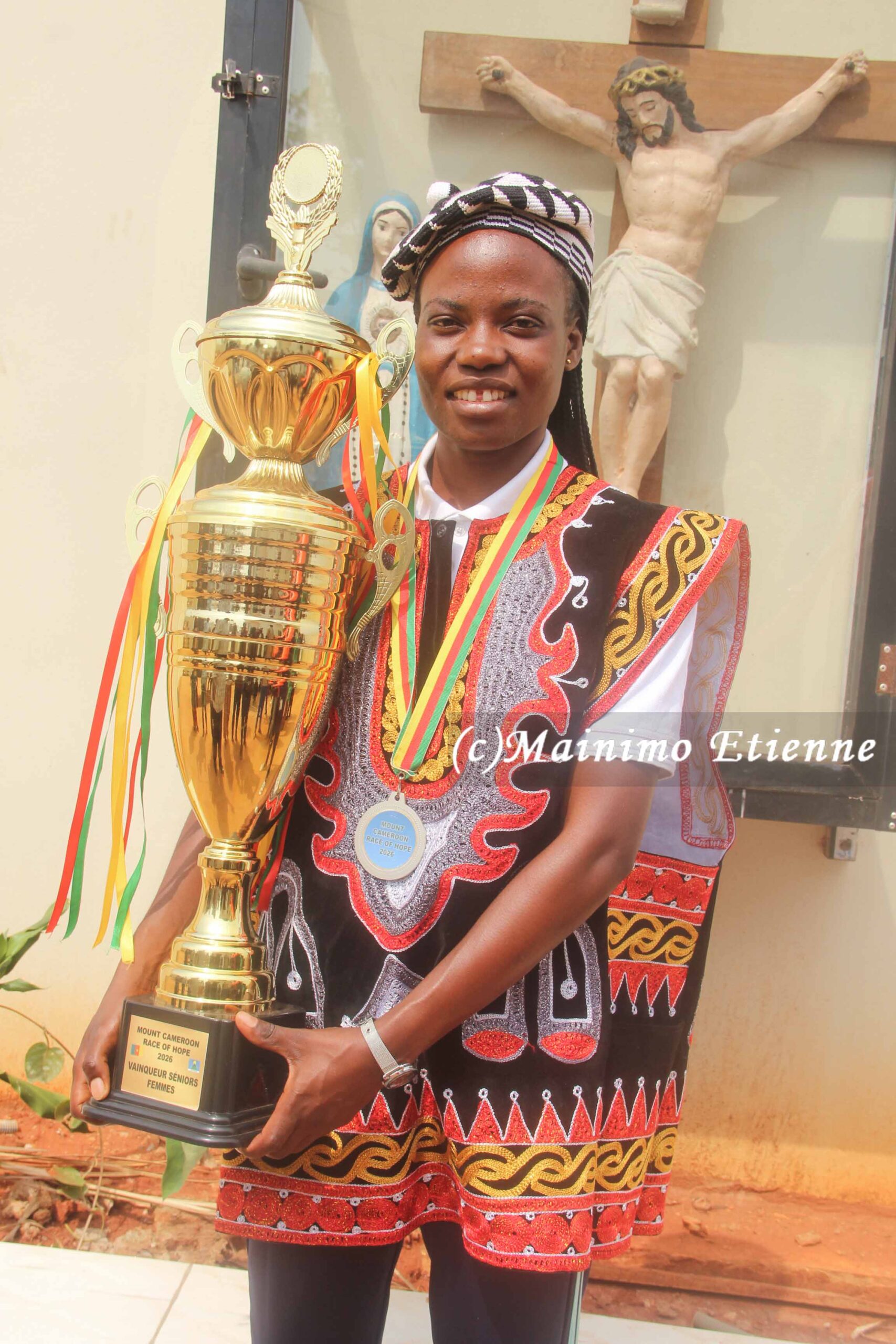
Mary Grace Dzekenyuy Wirba, the winner of the 2026 Mount Cameroon Race of Hope (Senior Female category), says her recent victory symbolizes the triumph of persistence over self-doubt. She describes her medal as the culmination of years of personal struggle. The senior female champion shared these insights in an exclusive interview with The Post in Yaoundé this weekend, shortly after presenting her trophy to His Royal Highness Sehm Mbinglo I, the Paramount Fon of Nso. Reflecting on her challenging journey to the summit, Wirba encouraged young Cameroonians to embrace the virtues of patience and discipline. “Work hard,” she advised, “until you get there.” Read the full excerpts:
Excerpts
The Post: Mary Grace, as you crossed the finish line and were officially pronounced the 2026 Champion, what was going through your mind?
Mary Grace Dzekenyuy Wirba: The feeling was immeasurable, almost transcendent. To be honest, I am still in a bit of a lost world, trying to navigate my way back to reality. It feels like a dream I haven’t woken up from yet—a vivid, beautiful blur of cheering crowds and the physical sensation of the wind finally stopping. When you cross that line, there is a momentary silence in your soul where the pain of the race meets the realization of the achievement. But while I am still in shock, I am incredibly happy. People often look at a champion on a podium and look for some mystical explanation, but there is no “magic” to this victory. If you were to open my heart and look at the logs of my journey, the only secret you would find is hard work, resilience, patience, and a staggering amount of sacrifice. That is what it truly entails to be a champion. It means waking up when your body screams for sleep; it means pushing through the burning in your lungs until the fire becomes your friend. I am happy because this medal represents every tear I shed in private when I thought I wasn’t fast enough or strong enough. It’s the physical manifestation of a “yes” to a thousand questions of doubt.
Behind every victory is a grueling period of preparation. How long did it take for you to reach this level of fitness and focus?
That’s a difficult question because “preparation” is a spectrum. If we talk about the technical peak, I committed to three months of intensive, soul-crushing training specifically for this year’s race. During those ninety days, my life was a cycle of discipline: strict nutrition, calculated rest, and miles upon miles of road and trail. However, the foundation of this win really started back in 2025. I competed that year, and to be blunt, I had technical issues and came fourth. I didn’t reach my goals, and the disappointment was a heavy weight to carry. But failure is a powerful teacher if you are willing to be its student. That failure gave me the intuitive push I needed. I went back to the drawing board and told myself, “Try again; the summit is still there, and it hasn’t moved. Only you need to change.” I encountered so many challenges right at the tail end of my preparation but I felt God’s hand over me. He blessed me. And I cannot emphasize this enough: the crowd was my engine. In those final kilometers, when my legs felt like lead, watching people leave their shops, their homes, and their daily lives just to cheer for me? That was the fuel. You feel a responsibility to the people. Their energy becomes your energy. When I felt like giving up, their shouts of “Mary, go!” acted like a physical hand pushing me forward.
You mentioned starting your journey long ago. Take us back—how long have you been involved in competitive racing?
I began running in 2008 when I was just 11 years old. The topography of my village also helped me a lot. However, after completing my Advanced Level, I prioritized my education. During my secondary education, I could train regularly at my school and local training grounds. The transition to Bamenda for further studies in 2016 was challenging, and as a result, I discontinued running until I earned my degree in Economics. I also began my master’s program, though I have yet to defend my thesis. Once I started teaching, balancing my responsibilities with athletics became increasingly difficult, prompting me to step away from competitive running entirely. This led me to explore refereeing, as I wanted to remain connected to sports and keep myself fit. Refereeing proved to be a more manageable commitment compared to the rigorous demands of running.
After completing my education, I felt inspired to return to athletics. Throughout the eight years I was away, I only participated in junior races due to age restrictions, limiting my participation in senior events. In 2025, I made the decision to restart my training, motivated by the desire to achieve greater heights in my athletic career. But eventually, a spark caught fire. I looked at the horizon and realized that my story wasn’t finished. I didn’t want my legacy to be just “the girl who used to run.” I wanted to reach the summit and “write my name” there in permanent ink. I honestly didn’t expect to reach the peak this quickly, but I truly believe it was a path destined by God. He took my years of “rest” and turned them into a hunger that the other athletes didn’t have.
In those moments when you doubted your return, did the icons of the sport keep you motivated?
Absolutely. You cannot run these mountains without acknowledging the giants who stepped on them before you. Icons like Tata Carine and the other legendary queens of the mountain have been massive sources of inspiration. I remember watching them and feeling a mix of awe and intimidation. For a long time, I genuinely didn’t believe I could make it because they seemed so untouchable, so dominant. I had to shift my mindset from “I can’t beat them” to “I must learn from them.” I told myself that if they could pave the way, the least I could do was follow their footprints and pray for God to show me my own unique path. I studied their discipline, their grace under pressure, and their longevity. Their existence proved that a Cameroonian and a Nso woman could be a powerhouse. They broke the glass ceiling; I just had to be brave enough to climb through it.
Now that you have reached the summit and the reigning champion in the women’s category, what is next for you?
The summit is a beautiful place to stand, but a true athlete is always looking for the next mountain. I want to explore the limits of what my body can do. I know the road ahead won’t be easy—heavy is the head that wears the crown, as they say—but I’m ready for the weight. My immediate goal is to transition into the world of marathons. The endurance required for mountain racing has given me a solid foundation, but the flat, fast pace of an international marathon is a different beast entirely. I want to compete on the global stage. I’m looking for those international opportunities now, seeking the right management and the right platforms to represent Cameroon abroad. I want to show the world that our training in the high altitudes of the Northwest Region produces world-class talent. If I apply the same “secret” of hard work and sacrifice, I know I can make my mark on the world stage.
As a champion and a role model, what is your message to young Cameroonians, particularly girls who look up to you?
My message is a call to action: be ready to take up the challenge. Don’t wait for someone to hand you a path; you must carve it out yourself. You have to be willing to give of yourself entirely. To the girls specifically, I know the pressures you face. I know the whispers. In our society, a girl who runs, sweats, and builds muscle is often scrutinized. You worry about your looks or people saying you look “like a man” or that you are “too tough.” My advice? Ignore it all. Those comments are just noise designed to keep you small. Your body is an instrument, not an ornament. Give it your all, and I promise you, when you are standing at the finish line with a gold medal around your neck, those voices will turn into cheers. You will not regret the hours of sweat, but you will regret the goals you didn’t chase because you were afraid of what people might say. Work hard until you get there, stay humble once you arrive, and never, ever get tired of chasing your own greatness.
I would like to take this opportunity to thank my local club, Shisong Bees Sports Academy, and the late Reverend Father Roberto of Shisong Parish, who supported me when I first began my athletics journey in Kumbo. I also want to extend my deepest appreciation to my family and everyone who stood by me. The road to this dream was challenging, but your encouragement made all the difference. I couldn’t have done this without you.
Interviewed by Etienne Mainimo Mengnjo