By Etienne Mainimo Mengnjo
Paradigm Initiative (PIN) a prominent digital rights watchdog has condemned and called for the immediate restoration of social media services in Gabon, following a state-ordered suspension that has stifled public discourse and cost the national economy millions of dollars.
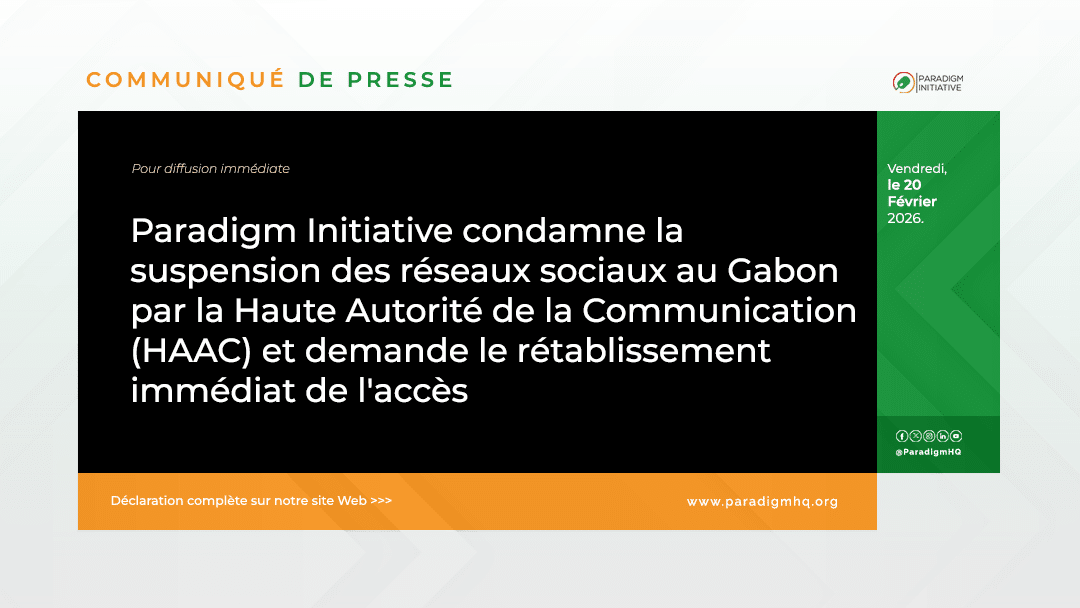
The pan-African social enterprise, issued a formal condemnation Friday, February 20 against the Haute Autorité de la Communication (HAAC) for its Feb. 17 directive to restrict access to major platforms. The ongoing blackout affects Meta-owned services including Facebook, WhatsApp, and Instagram, as well as TikTok and YouTube.
While Gabonese authorities claimed the measures were necessary to curb hateful or defamatory content threatening national stability, PIN noted that the government has failed to provide specific evidence of violations or a legal timeline for restoring access.
Technical data from the internet monitor NetBlocks and independent observers confirmed the disruptions are widespread, forcing many citizens to use virtual private networks to bypass the restrictions.
The timing of the suspension coincides with a period of heightened social tension, including anti-government protests and a national labor strike. Critics argue the move is a deliberate attempt to silence dissent and disrupt the coordination of civic action.
The economic toll of the blackout is also mounting. Using the NetBlocks cost-of-shutdown tool, the PIN estimated the two-day impact at nearly $3 million. This figure represents a significant blow to the country’s informal sector, where entrepreneurs, freelancers, and small business owners rely on social media for digital payments, customer engagement, and daily commerce.
Given that Article 9 of Gabon’s Constitution guarantees freedom of expression and information, Digital rights advocates pointed out that Gabon is a state party to the International Covenant on Civil and Political Rights (Article 19) and the African Charter on Human and Peoples’ Rights (Article 9).
Both instruments require that any restriction on expression must be legal, necessary, and proportionate. The United Nations has previously declared that blanket internet shutdowns are inherently disproportionate and violate international human rights law.
Similarly, PIN states that the African Commission on Human and Peoples’ Rights Principle 38(2) of the Declaration of Principles on Freedom of Expression and Access to Information in Africa, clearly guides that States shall not engage in or condone any disruption of access to the internet and other digital technologies for segments of the public or an entire population.
“As such, Gabon’s actions violate fundamental rights and freedoms as obligations under these instruments require the government to protect, not curtail, digital civic space,” Paradigm Initiative states.
PIN also challenged internet service providers operating within the country to uphold their responsibilities under the United Nations Guiding Principles on Business and Human Rights. The group urged these companies to remain transparent regarding government orders and to avoid complicity in rights violations.
The watchdog demanded that the Haute Autorité de la Communication publish the specific legal basis for the order and called on service providers to issue transparency notices to their users. The group maintains that the recurring pattern of digital disruptions in Gabon undermines the country’s democratic governance and constitutional guarantees of freedom of information.