By Etienne Mainimo Mengnjo
The governments of Cameroon, Belgium, and Italy have entered into a financial agreement and market contracts totaling FCFA 111.6 billion (171.05 million euros) for the Yaoundé Drinking Water Supply System Reconfiguration Project.
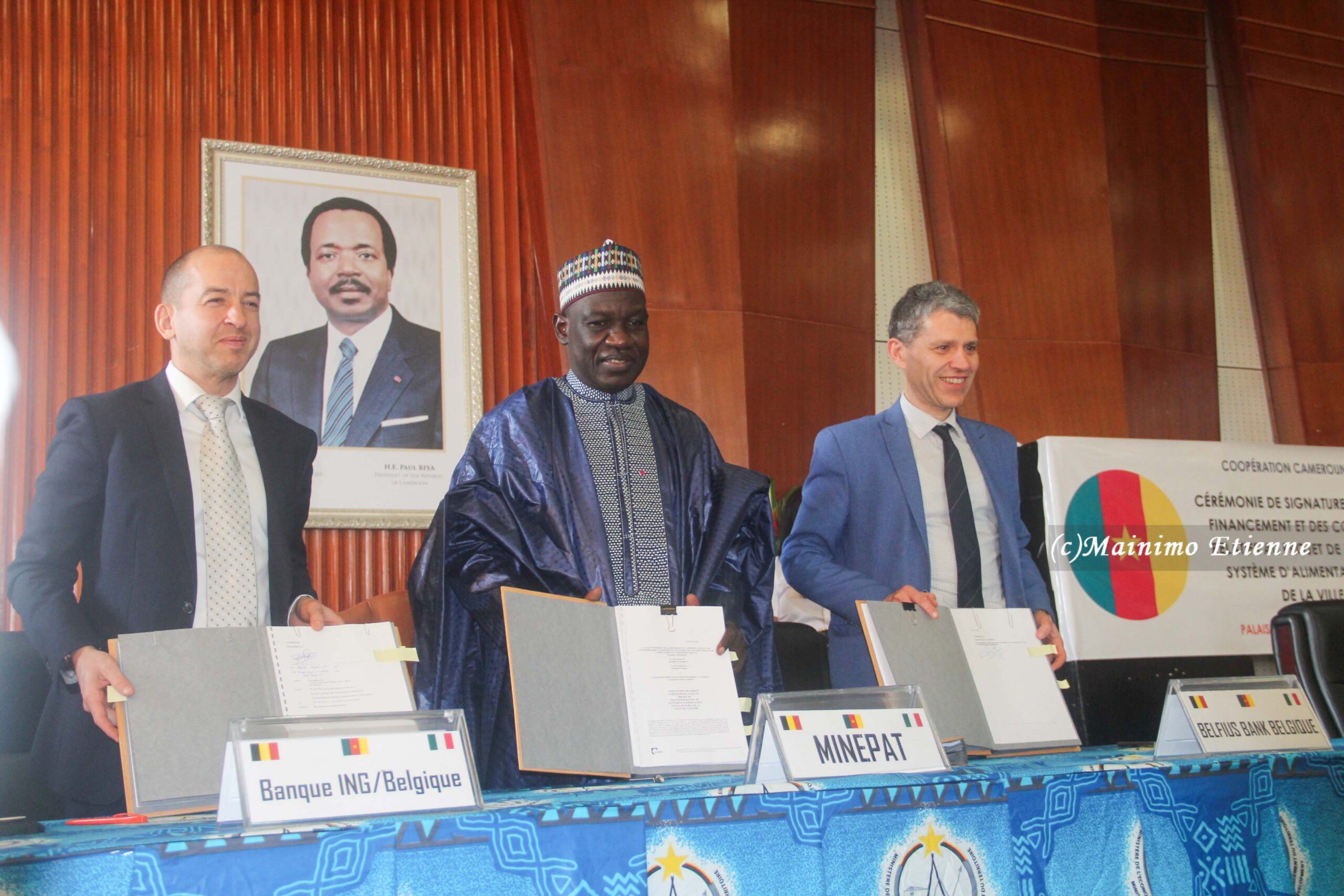
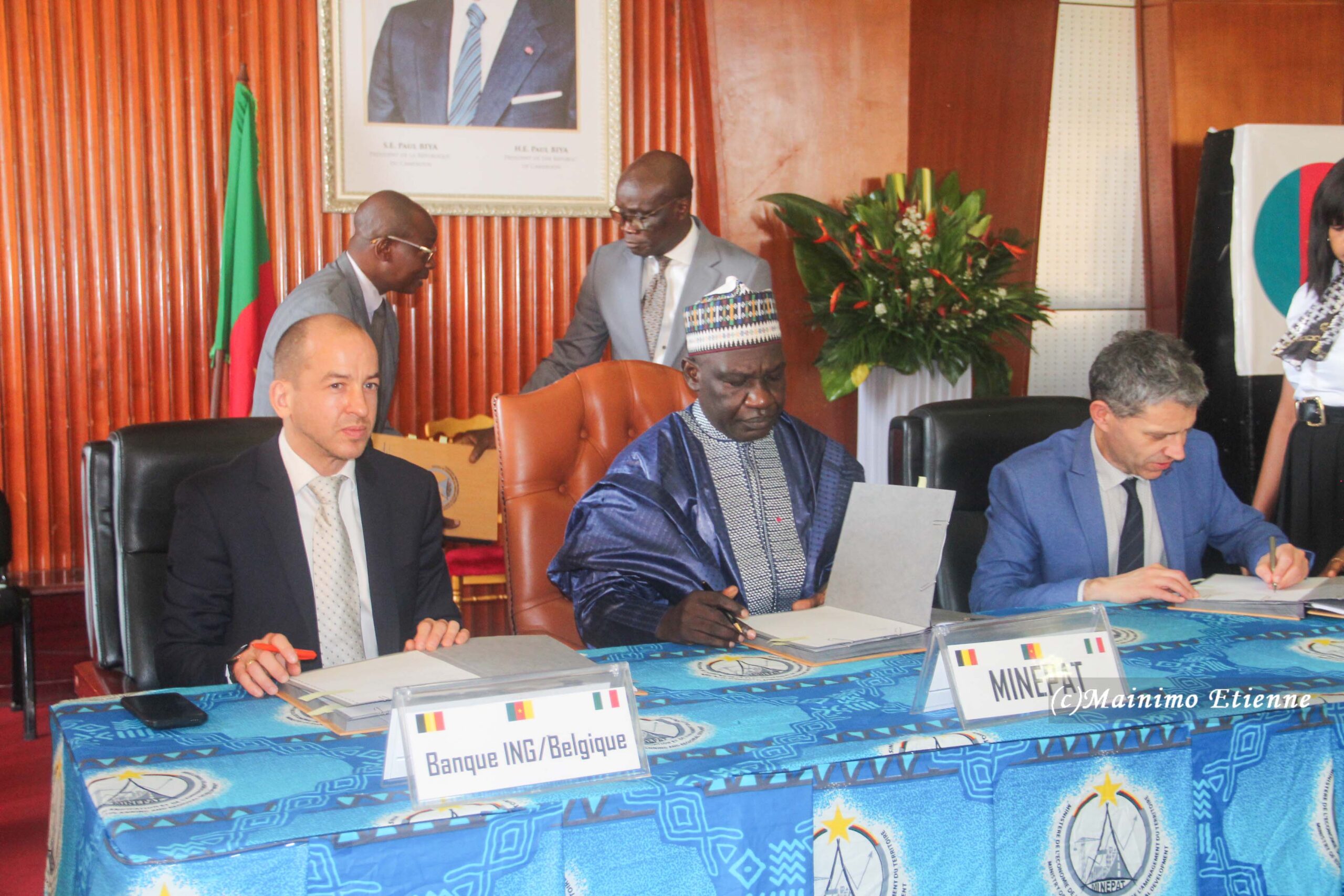
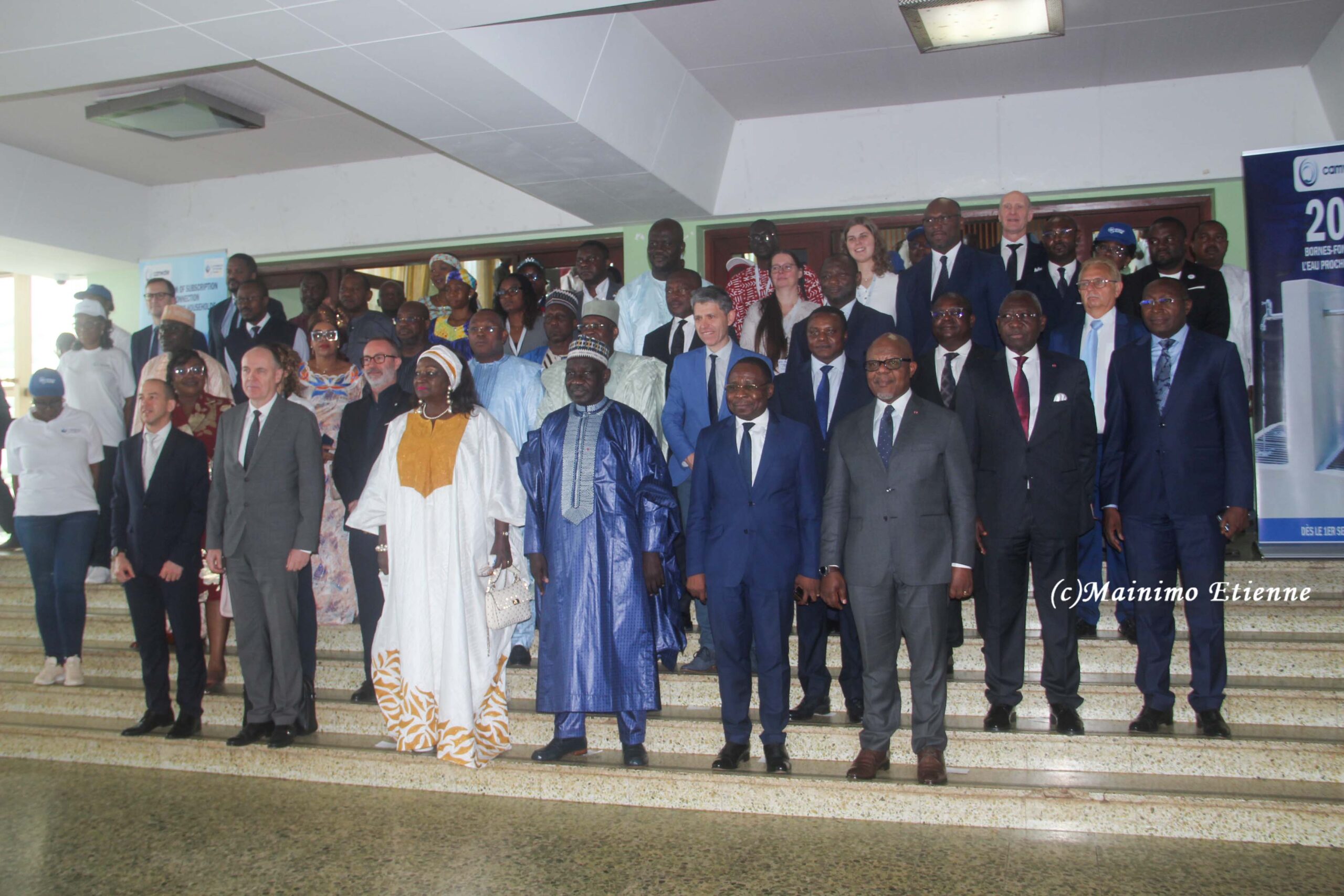
The financing agreement was signed February 13 in Yaoundé by Minister of the Economy, Planning and Regional Development (MINEPAT) Alamine Ousmane Mey, accompanied by various government officials, diplomats, and financial partners.
During the signing ceremony, Minister Ousmane Mey emphasized the project’s importance, stating that the reconfiguration of the Yaoundé Drinking Water Supply System will enhance service pressure and continuity to better serve the population. He noted that by improving access to basic social services, the project will contribute to achieving the sixth sustainable development goal (SDG), which seeks to ensure access to water and sanitation for all while managing water resources sustainably.
“This objective aims for universal, equitable access to drinking water, hygiene, and sanitation by 2030, particularly for vulnerable populations,” Minister Ousmane Mey said. “It also envisions sustainable management of these resources to reduce the number of people suffering from water scarcity.”
The Ambassador of the Kingdom of Belgium to Cameroon remarked on the project’s significance, calling the investments crucial for bilateral cooperation and ultimately benefiting the population.
“Water is a precious gold, sometimes rare; it is a social project, but also a structural project for Cameroon. I am glad that Belgian companies are contributing to this essential social service for the Cameroonian population,” he said.
Cameroon Water Utilities Corporation, CAMWATER’s Director General, Dr. Blaise Moussa, described the project as “the culmination of strong actions aimed at meeting the essential needs of the population.” He reiterated the project’s full support from the President of the Republic and its alignment with the government’s vision for universal, equitable access to drinking water.
“The taps must be turned on and the water must flow,” he declared, reaffirming CAMWATER ‘s commitment to making drinking water a daily reality for all Cameroonians without exception.
Moussa noted that access to drinking water for the population remains a top priority, outlining that the project will involve creating three distribution zones to supply the peripheries of Yaoundé and reducing the size of current distribution zones that are too large.
Given that water converters in Yaoundé are not dense and many networks are weak, old, or sluggish, he emphasized the need for a modern system to reconfigure the network and extend water access to the city’s outskirts through improved transport infrastructures.
The signing occurred after the 23rd International Water and Sanitation Congress, organized by the African Water and Sanitation Association (AWSA) in Yaoundé.
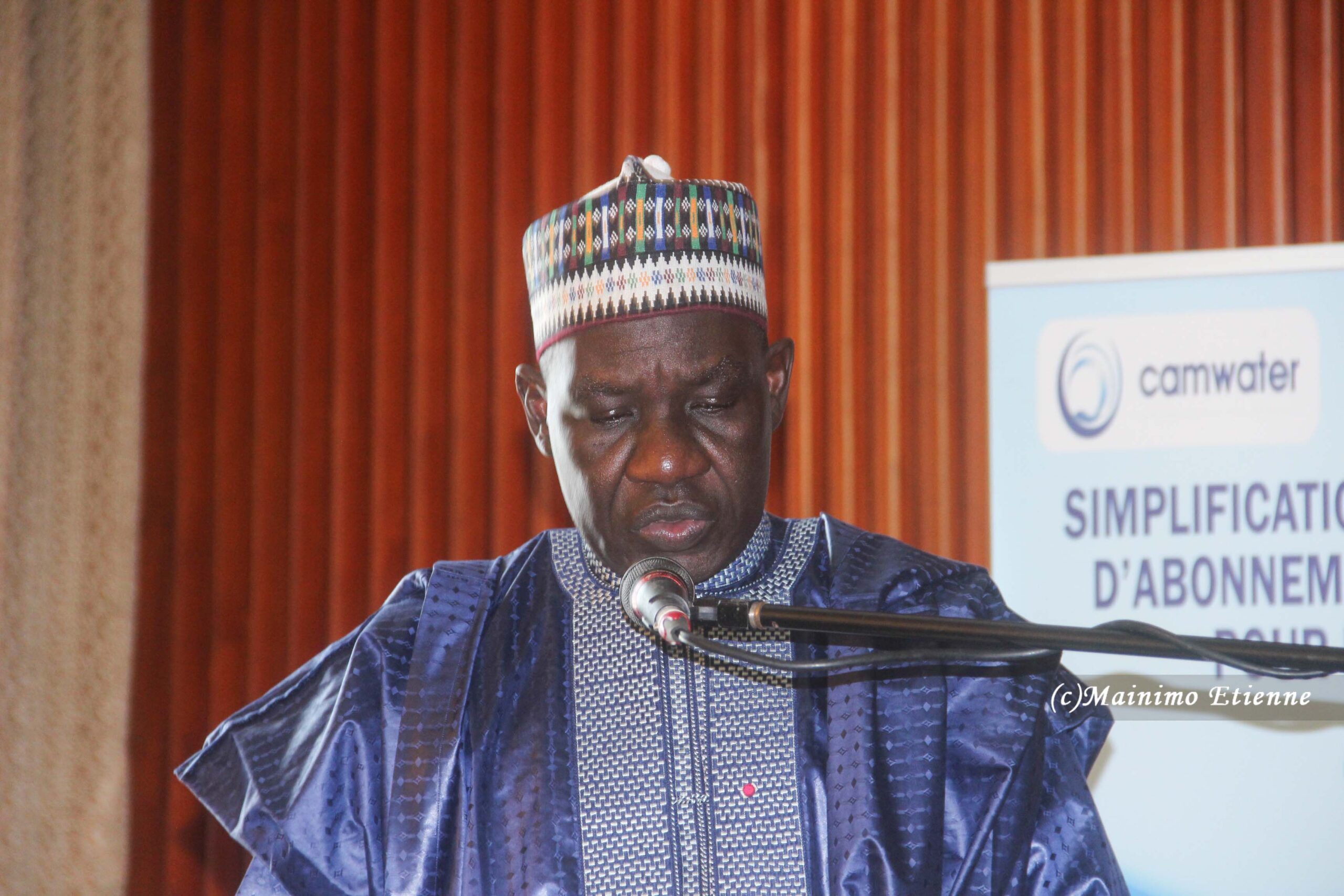
The initiative aims to modernize a drinking water distribution network that has become obsolete after decades of use, characterized by significant losses and inadequate coverage due to the capital’s population growth.
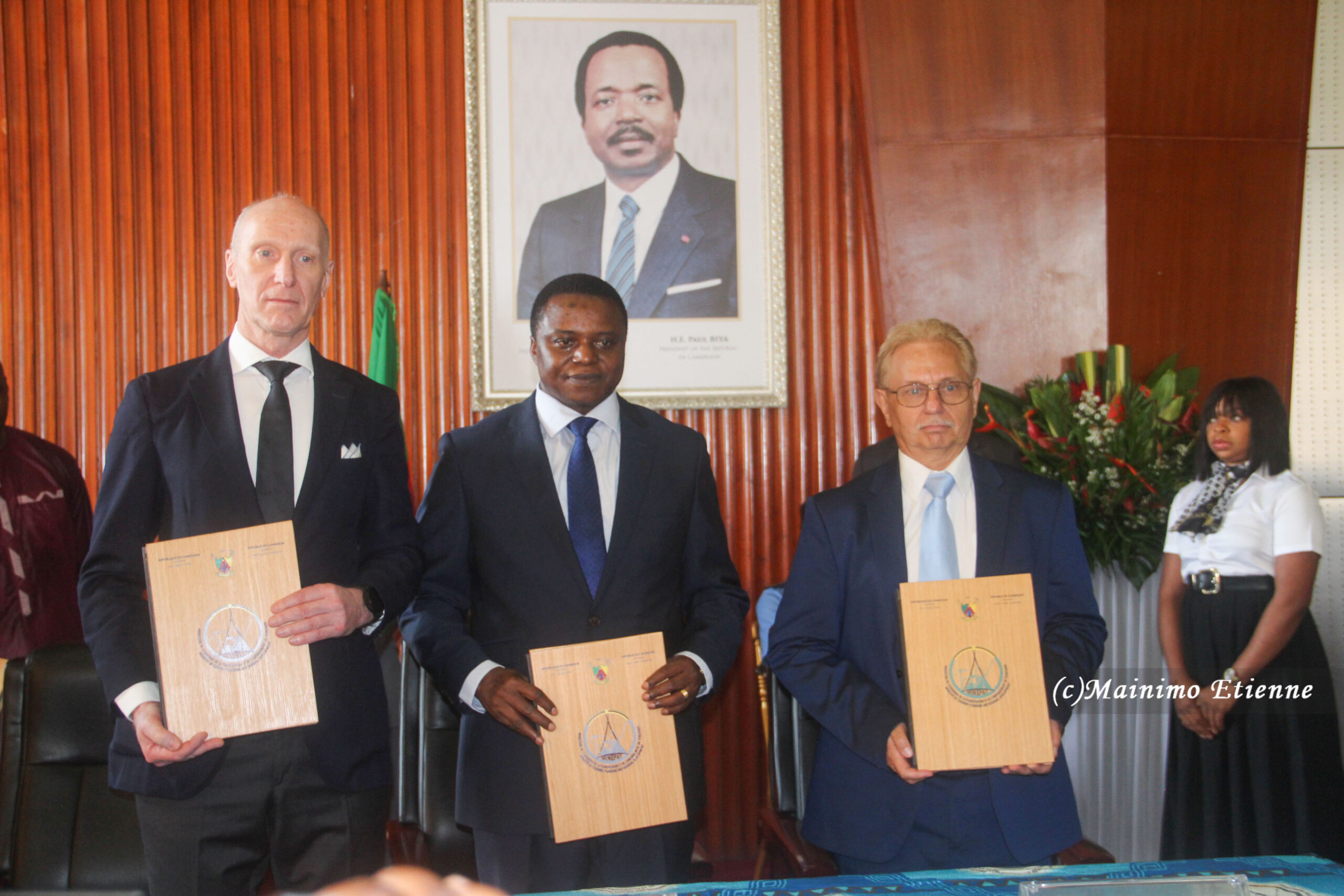
The project, totaling FCFA 111.6 billion, was signed by representatives from Cameroon, ING Bank of Belgium, Belfius Bank of Belgium, and Deutsche Bank of Italy. The financial instruments are designated for financing lots 1, 2, and 3 of the projects.
Implemented under the project management of the Ministry of Water and Energy, with CAMWATER acting as the delegated project owner, the initiative seeks to expand, modernize, and reconfigure drinking water distribution in Yaoundé and its surroundings to sustainably improve access, pressure, and service continuity while reducing technical and commercial losses.
It will particularly facilitate efficient water production absorption from the Yaoundé and Surroundings Areas Drinking Water Supply Project from the Sanaga River (PAEPYS), which is nearing completion.