By Etienne Mainimo Mengnjo
In the dim light of a WhatsApp video call, Steven sits in a cramped room in Douala, his eyes fixed on the floor. A few months ago, he was a businessman in the Bui Division of the Northwest Region.
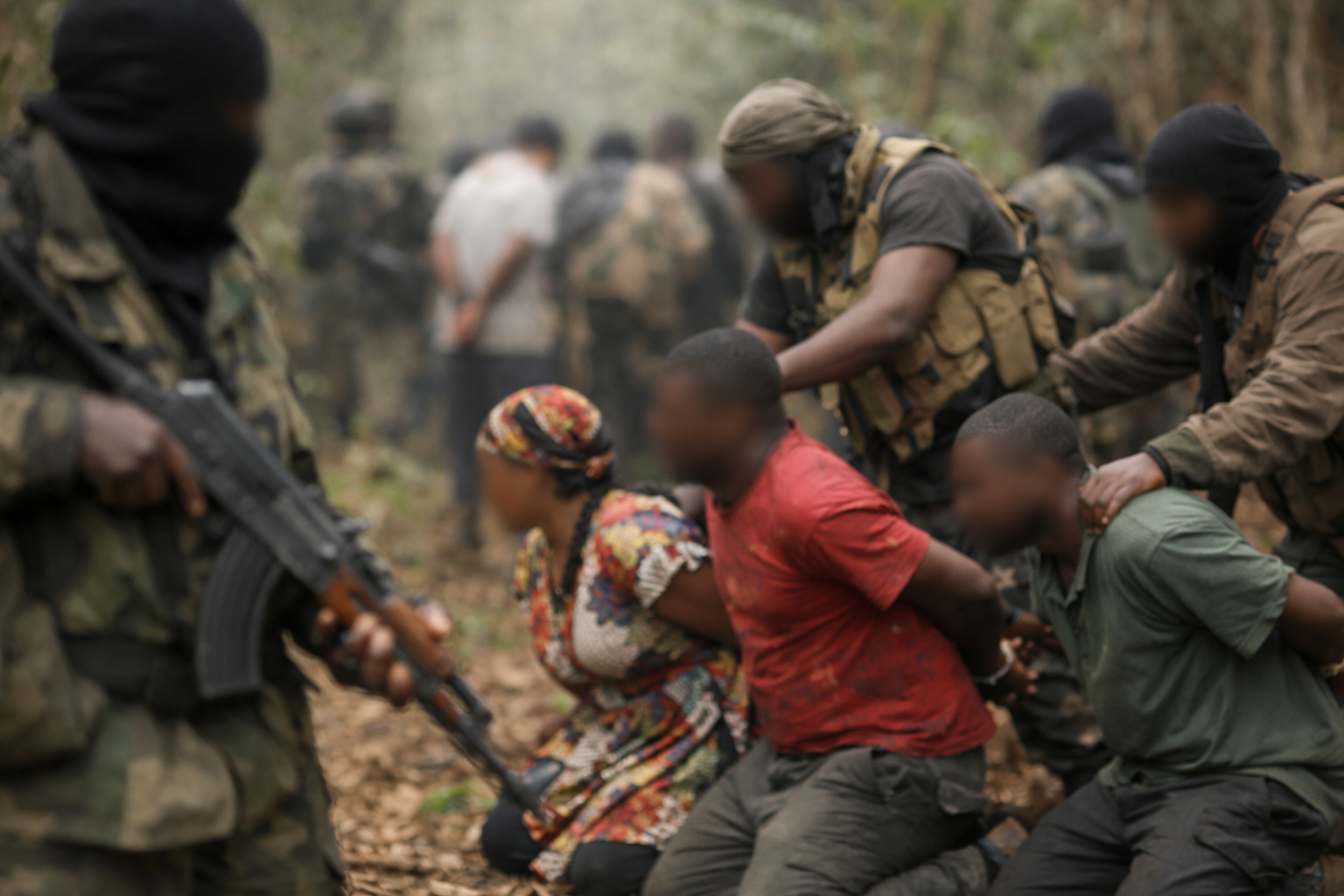
Today, he is a man with no capital, no home, and a memory haunted by the “Boys” — the local term for armed separatist fighters.
Steven, who is in his 30s, is a casualty of the “Anglophone Crisis,” a bloody conflict between the Cameroonian government and separatist forces that has simmered since 2017. His crime? The fighters suspected him of collaborating with the military.
At first, Steven believed his abduction was a mistake that would be cleared up in hours. But the atmosphere in the camp shifted when he realized his captors were men he had once shared meals with in his village. They demanded a ransom of FCFA 3 million.
“Each passing moment was hell because the torture was unbearable,” Steven said. “I sold everything I owned. My brothers in other cities had to borrow heavily.
In the end, we handed over FCFA 2 million—money that was supposed to be my business capital. Now, I have to start over in a city where I have nothing.”
Steven’s ordeal is not an isolated incident; it is part of what experts call a decentralized extortion racket that has replaced traditional commerce in the Northwest and Southwest regions.
According to reports, kidnappings for ransom surged by nearly 100 percent in 2023, with at least 450 documented cases. Analysts believe the actual number is much higher, as many families pay in silence to protect their loved ones.
“This is an economic weapon of mass destruction,” said one economic analyst. “By forcing families to liquidate land and life savings, these groups are performing a rapid, forced capital flight. The wealth of the community is being sucked into the machinery of war.”
The consequences extend far beyond individual families. The region’s “Ghost Towns”—mandatory protest days enforced by separatists—already paralyzed markets. Now, the fear of kidnapping has turned once-fertile farmland into “ghost farms.”
Traditionally, the region relied on communal farming and the “Njangi” (informal credit unions) to survive hard times. These safety nets have been systematically dismantled as every spare franc is redirected toward ransom payments.
“I have been taken several times,” said one local resident who requested anonymity. “Each time, the price goes up. Eventually, there is nothing left to give, and that is when people simply leave their homes forever.”
The original political grievances of the Anglophone regions—calls for better representation and judicial reform—have been largely overshadowed by this brutal pursuit of profit. The region is now slipping into a state of structural dependency on external humanitarian aid.
For survivors like Steven and Jude, the physical scars may heal, but the economic ruin is a life sentence. As the “ransom economy” continues to grow, it threatens to leave behind a hollowed-out society where the only thriving industry is the trade of human lives.